


Repositionable Labels Market Outlook
The repositionable labels market was valued at $5.21 billion in 2025 and is projected to reach $8.67 billion by 2034, growing at a CAGR of 5.8% during the forecast period 2026-2034. This market is witnessing significant growth due to the increasing demand for flexible and versatile labeling solutions across various industries. The rise in e-commerce and retail sectors has further fueled the need for repositionable labels, which offer the advantage of easy application and removal without leaving residue. Additionally, advancements in adhesive technologies and the growing trend of sustainable packaging are contributing to the market's expansion. The ability of repositionable labels to enhance product aesthetics and provide valuable information to consumers is also driving their adoption in the market.
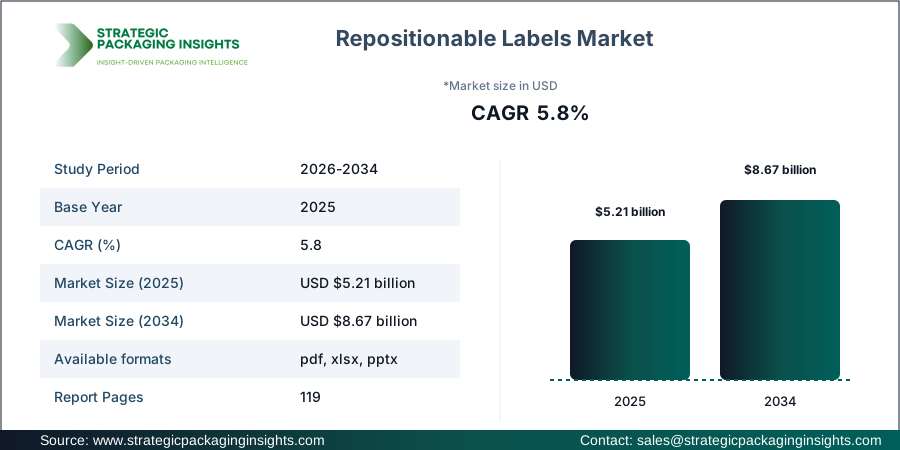
Despite the promising growth prospects, the repositionable labels market faces certain challenges that could hinder its progress. Regulatory constraints related to labeling standards and environmental concerns regarding the disposal of label materials are some of the key restraints. However, the market holds immense potential for growth, driven by the increasing focus on product differentiation and branding. The development of eco-friendly and biodegradable label materials presents lucrative opportunities for market players to tap into the growing demand for sustainable packaging solutions. Moreover, the integration of smart labeling technologies, such as QR codes and NFC tags, is expected to open new avenues for innovation and growth in the repositionable labels market.
Report Scope
| Attributes | Details |
| Report Title | Repositionable Labels Market Size, Future Growth and Forecast 2034 |
| Product Type | Removable Labels, Repositionable Adhesive Labels, Clean-Peel Labels |
| Material Type | Paper, Film, Synthetic Substrates |
| Application | Retail Labeling, Food Packaging, Logistics, Promotional Labels |
| End Use | Brand Owners, Retailers, Label Converters, E-commerce Firms |
| Region | Asia Pacific, North America, Latin America, Europe, Middle East & Africa |
| Base Year | 2025 |
| Historic Period | 2018-2024 |
| Forecast Period | 2026-2034 |
| Number of Pages | 119 |
| Customization Available | Yes* |
Opportunities & Threats
The repositionable labels market is poised for substantial growth, driven by several opportunities that are emerging across various sectors. One of the primary opportunities lies in the expanding e-commerce industry, where the demand for efficient and cost-effective labeling solutions is on the rise. Repositionable labels offer the flexibility and convenience needed for dynamic inventory management and product identification, making them an ideal choice for online retailers. Additionally, the growing trend of personalized and customized packaging is creating a significant demand for repositionable labels, as they allow brands to easily update and modify their packaging designs to cater to changing consumer preferences.
Another opportunity for the repositionable labels market is the increasing focus on sustainability and eco-friendly packaging solutions. As consumers become more environmentally conscious, there is a growing demand for labels that are not only functional but also sustainable. Repositionable labels made from biodegradable materials and featuring eco-friendly adhesives are gaining traction in the market. This trend is further supported by stringent regulations and policies aimed at reducing the environmental impact of packaging materials. Companies that can offer innovative and sustainable repositionable label solutions are likely to gain a competitive edge in the market.
However, the repositionable labels market also faces certain threats that could impact its growth trajectory. One of the major challenges is the fluctuating prices of raw materials, which can affect the overall cost of production and, subsequently, the pricing of repositionable labels. Additionally, the market is highly competitive, with numerous players vying for market share. This intense competition can lead to price wars and margin pressures, posing a threat to the profitability of market participants. Furthermore, the rapid pace of technological advancements in labeling solutions requires companies to continuously innovate and adapt to stay relevant in the market.
Drivers & Challenges
The repositionable labels market is driven by several key factors that are contributing to its growth and expansion. One of the primary drivers is the increasing demand for versatile and flexible labeling solutions across various industries. Repositionable labels offer the advantage of easy application and removal, making them ideal for dynamic environments such as retail and logistics. The rise in e-commerce and online retailing has further fueled the demand for repositionable labels, as they facilitate efficient inventory management and product identification. Additionally, the growing trend of personalized and customized packaging is driving the adoption of repositionable labels, as they allow brands to easily update and modify their packaging designs.
Another significant driver for the repositionable labels market is the advancements in adhesive technologies. The development of high-performance adhesives that offer strong adhesion while allowing for easy removal has enhanced the functionality and appeal of repositionable labels. These advancements have expanded the application scope of repositionable labels, enabling their use in a wide range of industries, including food packaging, logistics, and promotional labeling. Moreover, the increasing focus on sustainability and eco-friendly packaging solutions is driving the demand for repositionable labels made from biodegradable materials and featuring eco-friendly adhesives.
Despite the positive growth drivers, the repositionable labels market faces certain challenges that could hinder its progress. One of the major challenges is the regulatory constraints related to labeling standards and environmental concerns regarding the disposal of label materials. Compliance with stringent regulations and standards can increase the complexity and cost of production for repositionable labels. Additionally, the market is highly competitive, with numerous players vying for market share. This intense competition can lead to price wars and margin pressures, posing a threat to the profitability of market participants. Furthermore, the rapid pace of technological advancements in labeling solutions requires companies to continuously innovate and adapt to stay relevant in the market.
Market Share Analysis
The repositionable labels market is characterized by a competitive landscape with several key players dominating the market. These companies are actively engaged in strategic initiatives such as mergers and acquisitions, partnerships, and product innovations to strengthen their market position and expand their product offerings. The competitive landscape is marked by the presence of both established players and emerging companies, each vying for a share of the growing market. The market is highly fragmented, with a diverse range of players catering to different segments and applications within the repositionable labels market.
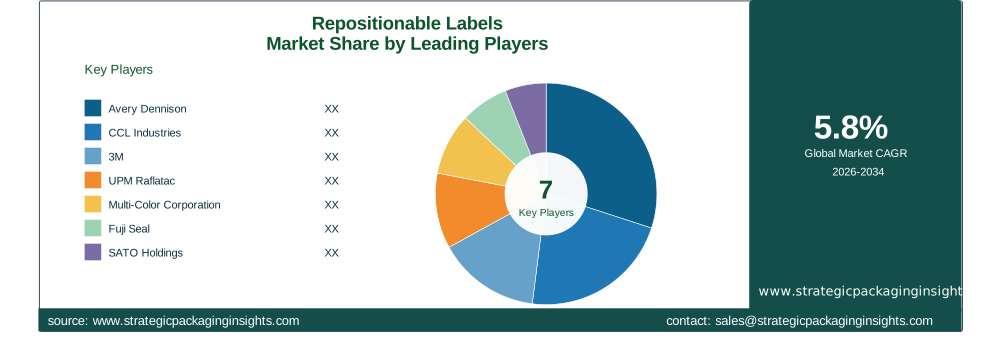
Avery Dennison is one of the leading companies in the repositionable labels market, known for its innovative labeling solutions and strong market presence. The company offers a wide range of repositionable labels that cater to various industries, including retail, logistics, and food packaging. CCL Industries is another major player in the market, renowned for its comprehensive portfolio of labeling solutions and global reach. The company's focus on sustainability and eco-friendly packaging solutions has further strengthened its position in the market.
3M is a prominent player in the repositionable labels market, known for its advanced adhesive technologies and innovative product offerings. The company's repositionable labels are widely used in various applications, including promotional labeling and logistics. UPM Raflatac is another key player in the market, offering a diverse range of repositionable labels that cater to different industries and applications. The company's focus on sustainability and environmental responsibility has positioned it as a leader in the market.
Other notable companies in the repositionable labels market include Multi-Color Corporation, Fuji Seal, SATO Holdings, Brady Corporation, Herma, and Lintec. These companies are actively engaged in product innovations and strategic collaborations to enhance their market presence and expand their product offerings. The competitive landscape of the repositionable labels market is dynamic, with companies continuously striving to differentiate themselves through innovative solutions and sustainable practices.
Key Highlights
- The repositionable labels market is projected to grow from $5.21 billion in 2025 to $8.67 billion by 2034, at a CAGR of 5.8%.
- Increasing demand for flexible and versatile labeling solutions is driving market growth.
- Advancements in adhesive technologies are enhancing the functionality of repositionable labels.
- The rise in e-commerce and online retailing is fueling the demand for repositionable labels.
- Growing focus on sustainability and eco-friendly packaging solutions is creating new opportunities.
- Regulatory constraints and environmental concerns pose challenges to market growth.
- The market is highly competitive, with key players engaging in strategic initiatives to strengthen their position.
Top Countries Insights
In the repositionable labels market, the United States stands out as a key player, with a market size of approximately $1.5 billion and a CAGR of 6%. The country's robust e-commerce sector and the increasing demand for efficient labeling solutions in retail and logistics are driving market growth. Additionally, the focus on sustainable packaging solutions and the adoption of advanced adhesive technologies are further propelling the market in the United States.
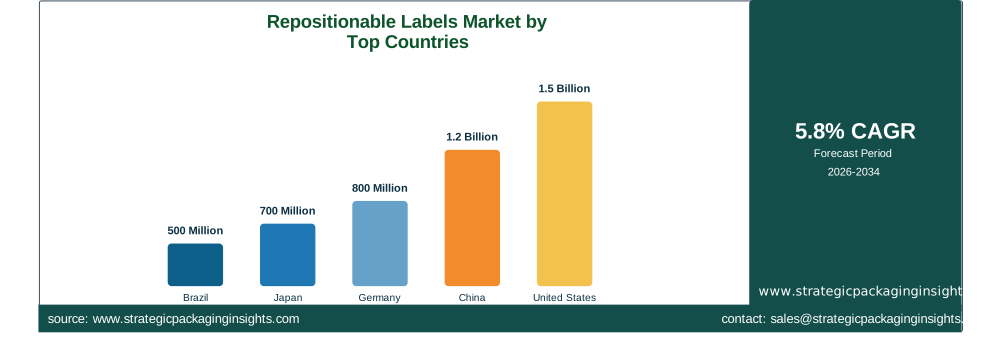
China is another significant market for repositionable labels, with a market size of around $1.2 billion and a CAGR of 7%. The country's booming e-commerce industry and the growing demand for flexible packaging solutions are key drivers of market growth. Moreover, the increasing focus on product differentiation and branding is fueling the demand for repositionable labels in China.
Germany is a prominent market for repositionable labels in Europe, with a market size of approximately $800 million and a CAGR of 5%. The country's strong manufacturing sector and the emphasis on sustainable packaging solutions are driving market growth. Additionally, the adoption of smart labeling technologies is creating new opportunities for repositionable labels in Germany.
Japan is a key market for repositionable labels in the Asia Pacific region, with a market size of around $700 million and a CAGR of 4%. The country's advanced manufacturing capabilities and the focus on innovative packaging solutions are driving market growth. Furthermore, the increasing demand for eco-friendly and biodegradable label materials is contributing to the market's expansion in Japan.
Brazil is an emerging market for repositionable labels in Latin America, with a market size of approximately $500 million and a CAGR of 6%. The country's growing retail sector and the increasing demand for efficient labeling solutions are key drivers of market growth. Additionally, the focus on sustainable packaging solutions and the adoption of advanced adhesive technologies are further propelling the market in Brazil.
Repositionable Labels Market Segments Insights

Product Type Analysis
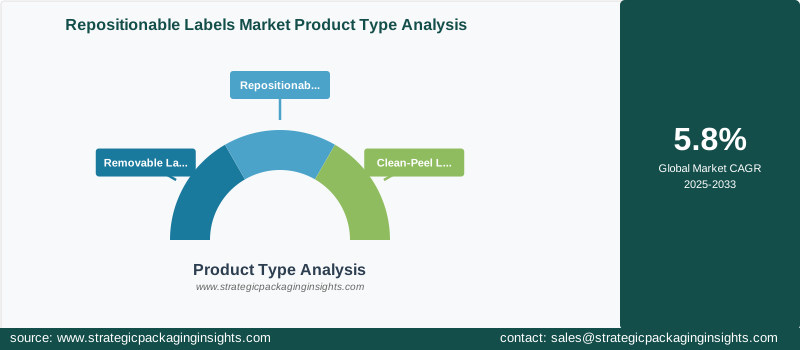
The repositionable labels market is segmented by product type into removable labels, repositionable adhesive labels, and clean-peel labels. Removable labels are gaining popularity due to their versatility and ease of use, making them ideal for applications where temporary labeling is required. These labels can be easily removed without leaving any residue, making them suitable for retail and promotional labeling. Repositionable adhesive labels, on the other hand, offer the advantage of being repositioned multiple times without losing their adhesive properties. This makes them ideal for logistics and inventory management applications, where labels may need to be adjusted or repositioned frequently. Clean-peel labels are designed to be easily removed without tearing or damaging the surface, making them suitable for applications where a clean and residue-free removal is essential.
The demand for repositionable labels is driven by the increasing need for flexible and versatile labeling solutions across various industries. The rise in e-commerce and online retailing has further fueled the demand for repositionable labels, as they facilitate efficient inventory management and product identification. Additionally, the growing trend of personalized and customized packaging is driving the adoption of repositionable labels, as they allow brands to easily update and modify their packaging designs. The development of high-performance adhesives that offer strong adhesion while allowing for easy removal has enhanced the functionality and appeal of repositionable labels, expanding their application scope across different industries.
Material Type Analysis
The repositionable labels market is segmented by material type into paper, film, and synthetic substrates. Paper-based repositionable labels are widely used due to their cost-effectiveness and ease of printing. These labels are ideal for applications where short-term labeling is required, such as promotional and retail labeling. Film-based repositionable labels offer superior durability and resistance to moisture and chemicals, making them suitable for applications in harsh environments, such as logistics and industrial labeling. Synthetic substrates, on the other hand, offer enhanced durability and flexibility, making them ideal for applications where long-term labeling is required.
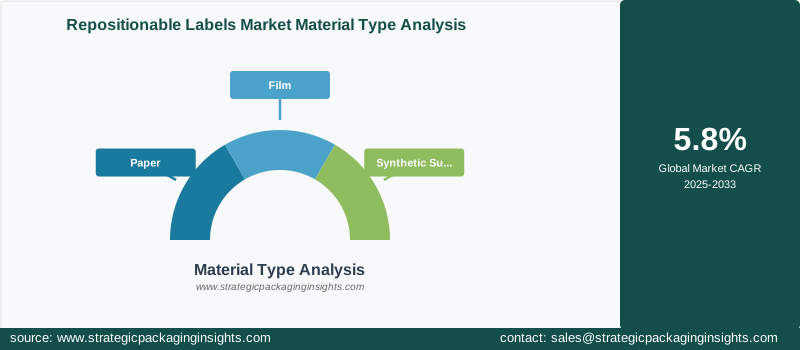
The choice of material type for repositionable labels is influenced by factors such as cost, durability, and environmental impact. The increasing focus on sustainability and eco-friendly packaging solutions is driving the demand for repositionable labels made from biodegradable materials and featuring eco-friendly adhesives. Companies that can offer innovative and sustainable repositionable label solutions are likely to gain a competitive edge in the market. Additionally, advancements in printing technologies and adhesive formulations are enhancing the functionality and appeal of repositionable labels, expanding their application scope across different industries.
Application Analysis
The repositionable labels market is segmented by application into retail labeling, food packaging, logistics, and promotional labels. Retail labeling is one of the largest application segments, driven by the increasing demand for efficient and cost-effective labeling solutions in the retail sector. Repositionable labels offer the flexibility and convenience needed for dynamic inventory management and product identification, making them an ideal choice for retailers. Food packaging is another significant application segment, where repositionable labels are used to provide important information such as product details, expiration dates, and nutritional information.
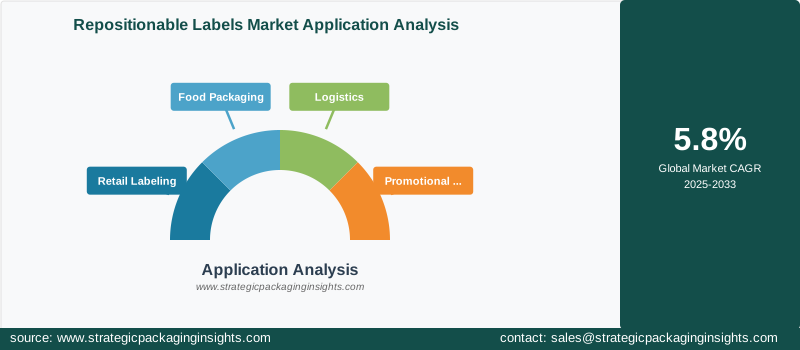
Logistics is a growing application segment for repositionable labels, driven by the increasing demand for efficient labeling solutions in supply chain management. Repositionable labels facilitate easy tracking and identification of products, enhancing the efficiency of logistics operations. Promotional labels are also gaining traction, as brands seek to differentiate themselves through innovative and eye-catching packaging designs. The ability of repositionable labels to enhance product aesthetics and provide valuable information to consumers is driving their adoption in the market. The integration of smart labeling technologies, such as QR codes and NFC tags, is expected to open new avenues for innovation and growth in the repositionable labels market.
End Use Analysis
The repositionable labels market is segmented by end use into brand owners, retailers, label converters, and e-commerce firms. Brand owners are one of the largest end-use segments, driven by the increasing focus on product differentiation and branding. Repositionable labels offer the flexibility and versatility needed for dynamic packaging designs, allowing brands to easily update and modify their packaging to cater to changing consumer preferences. Retailers are another significant end-use segment, where repositionable labels are used for efficient inventory management and product identification.
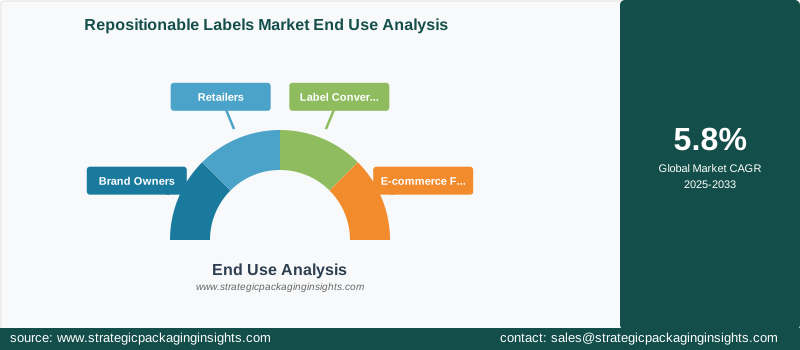
Label converters are a growing end-use segment, driven by the increasing demand for customized and personalized labeling solutions. Repositionable labels offer the flexibility and convenience needed for dynamic labeling applications, making them an ideal choice for label converters. E-commerce firms are also gaining traction as an end-use segment, driven by the increasing demand for efficient and cost-effective labeling solutions in the online retail sector. Repositionable labels facilitate easy tracking and identification of products, enhancing the efficiency of e-commerce operations. The growing trend of personalized and customized packaging is driving the adoption of repositionable labels in the e-commerce sector, as they allow brands to easily update and modify their packaging designs.
Repositionable Labels Market Segments
The Repositionable Labels market has been segmented on the basis ofProduct Type
- Removable Labels
- Repositionable Adhesive Labels
- Clean-Peel Labels
Material Type
- Paper
- Film
- Synthetic Substrates
Application
- Retail Labeling
- Food Packaging
- Logistics
- Promotional Labels
End Use
- Brand Owners
- Retailers
- Label Converters
- E-commerce Firms
Region
- Asia Pacific
- North America
- Latin America
- Europe
- Middle East & Africa




