


Reagent Bottle Market Outlook
The Reagent Bottle market size was valued at USD 480 million in 2025 and is anticipated to reach USD 750 million by 2034, growing at a CAGR of 5.10% during the forecast period according to Strategic Packaging Insights. The market is witnessing significant growth due to the increasing demand for laboratory glassware in various sectors such as pharmaceuticals, biotechnology, and chemical industries. Companies like DWK Life Sciences and Corning are at the forefront, providing innovative solutions that cater to the evolving needs of these industries. The rise in research and development activities, coupled with the expansion of pharmaceutical and biotechnology sectors, is driving the demand for high-quality reagent bottles.
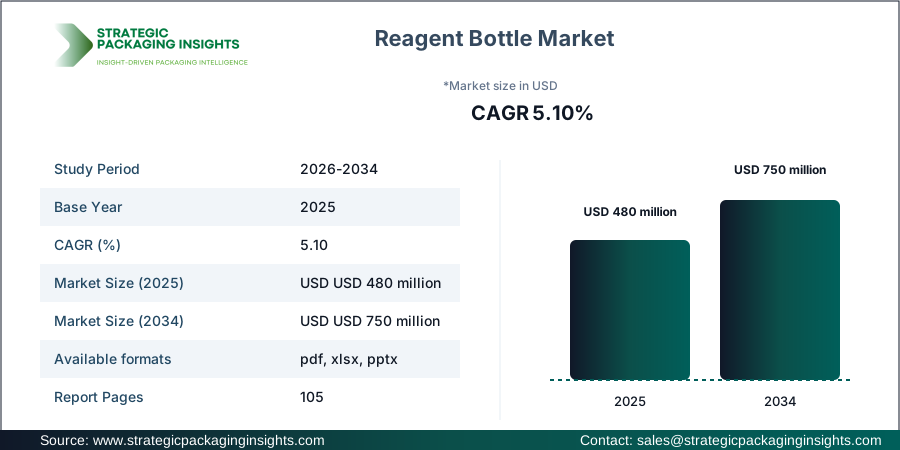
One of the most impactful drivers of the Reagent Bottle market is the stringent regulatory standards imposed by governments worldwide, which necessitate the use of high-quality, durable, and safe packaging solutions. This is particularly evident in the pharmaceutical and biotechnology sectors, where compliance with safety and quality standards is paramount. The increasing focus on sustainable and eco-friendly packaging solutions is also influencing market dynamics, as companies strive to reduce their environmental footprint. This trend is supported by government initiatives promoting sustainability and the circular economy, further propelling the market growth.
Report Scope
| Attributes | Details |
| Report Title | Reagent Bottle Market Size, Future Growth and Forecast 2034 |
| By Material | Borosilicate Glass (Type I), Soda-Lime Glass, Amber Glass, HDPE, Polypropylene, PET, PTFE / Fluoropolymer |
| By Capacity | Below 100 ml, 100-500 ml, 500 ml - 1 L, Above 1 L |
| By Closure | Screw Cap (GL45, GL32), Ground Glass Stopper, Dropper / Pipette Cap, Tamper-Evident |
| By End Use | Diagnostics & IVD Reagents, Pharmaceutical Labs & QC, Academic & Research Labs, Chemical Industry, Biotechnology |
| By Region | North America (U.S., Canada, Mexico), Europe (Germany, UK, France, Italy, Spain, Rest of Europe), Asia Pacific (China, India, Japan, South Korea, Australia, Rest of Asia Pacific), Latin America (Brazil, Argentina, Rest of Latin America), Middle East & Africa (GCC Countries, South Africa, Rest of MEA) |
| Base Year | 2025 |
| Historic Period | 2018-2024 |
| Forecast Period | 2026-2034 |
| Number of Pages | 105 |
| Customization Available | Yes* |
Sustainability & Circular Economy Analysis
Sustainability initiatives and circular economy practices are significantly shaping the Reagent Bottle market. The emphasis on using recyclable materials and developing reusable packaging solutions is driving innovation in packaging design and manufacturing. Companies are increasingly adopting lightweight packaging to reduce material usage and transportation costs, aligning with consumer preferences for eco-friendly products. The integration of eco-friendly material innovation is not only reducing the carbon footprint but also enhancing brand reputation and customer loyalty.
Extended Producer Responsibility (EPR) and packaging regulations are compelling manufacturers to adopt waste reduction strategies and improve their recycling networks. This shift towards sustainable practices is influencing investment decisions, as companies prioritize eco-friendly solutions to meet regulatory compliance and consumer demand. The focus on reducing carbon emissions and enhancing supply chain sustainability is becoming a critical factor in maintaining long-term market competitiveness.
As sustainability trends continue to evolve, they are reshaping the packaging value chain, impacting everything from raw material sourcing to supply chain strategies. Companies are investing in advanced technologies to enhance their production capabilities and improve supply chain efficiency. This transition towards sustainable practices is not only beneficial for the environment but also offers significant cost savings and operational efficiencies, making it a strategic priority for packaging manufacturers and brand owners.
Packaging Value Chain & Supply Chain Analysis
The packaging value chain for reagent bottles involves a complex ecosystem of raw material suppliers, packaging converters, manufacturers, and logistics providers. Raw material sourcing is a critical component, with companies focusing on securing high-quality materials to ensure product safety and compliance with industry standards. Packaging converters and manufacturers play a vital role in transforming these materials into finished products, utilizing advanced machinery and technologies to enhance production efficiency and quality.
Logistics and distribution channels are essential for ensuring timely delivery of reagent bottles to end-users, including pharmaceutical labs, research institutions, and chemical industries. Efficient inventory management and strategic partnerships with logistics providers are crucial for maintaining supply chain resilience and meeting customer demands. The localization of supply chains is becoming increasingly important, as companies seek to reduce transportation costs and enhance supply chain agility in response to global sourcing challenges.
Recycling networks are an integral part of the packaging value chain, supporting sustainability initiatives and circular economy practices. Companies are investing in recycling infrastructure and collaborating with stakeholders to enhance their recycling capabilities and reduce waste. This focus on sustainability is driving procurement strategies, as companies prioritize eco-friendly materials and suppliers that align with their sustainability goals. Overall, the efficiency of the packaging value chain and supply chain ecosystem is a key determinant of market performance and competitiveness.
Opportunities & Threats
The Reagent Bottle market presents numerous opportunities for growth, driven by the increasing demand for laboratory glassware in emerging markets. The expansion of the pharmaceutical and biotechnology sectors in regions like Asia Pacific and Latin America is creating significant opportunities for market players. Companies can capitalize on these opportunities by expanding their product portfolios and enhancing their distribution networks to cater to the growing demand. Additionally, the rising focus on research and development activities in academic and research institutions is further boosting the demand for reagent bottles.
Technological advancements in packaging design and manufacturing are opening new avenues for innovation and differentiation in the market. Companies that invest in advanced technologies and sustainable packaging solutions are well-positioned to gain a competitive edge. The growing emphasis on sustainability and eco-friendly packaging is also creating opportunities for companies to enhance their brand reputation and customer loyalty. By adopting sustainable practices and reducing their environmental footprint, companies can attract environmentally conscious consumers and strengthen their market position.
However, the market also faces certain threats, including the volatility of raw material prices and the stringent regulatory standards imposed by governments. These factors can increase production costs and pose challenges for market players in maintaining profitability. Additionally, the intense competition in the market, with numerous players vying for market share, can limit growth opportunities for smaller companies. To mitigate these threats, companies need to focus on enhancing their operational efficiencies and developing innovative solutions that meet regulatory requirements and consumer expectations.
Drivers & Challenges
The primary drivers of the Reagent Bottle market include the increasing demand for laboratory glassware in the pharmaceutical and biotechnology sectors. The expansion of these industries, driven by the rising prevalence of chronic diseases and the growing focus on research and development activities, is fueling the demand for high-quality reagent bottles. Companies like DWK Life Sciences and Thermo Fisher Scientific are leading the market by offering innovative solutions that cater to the evolving needs of these industries. The emphasis on safety and quality standards is also driving the demand for durable and reliable packaging solutions.
Another significant driver is the growing focus on sustainability and eco-friendly packaging solutions. Companies are increasingly adopting sustainable practices to reduce their environmental footprint and comply with regulatory standards. This trend is supported by government initiatives promoting sustainability and the circular economy, further propelling market growth. The integration of advanced technologies in packaging design and manufacturing is also driving innovation and enhancing product quality, providing companies with a competitive edge in the market.
Despite the positive growth prospects, the Reagent Bottle market faces several challenges, including the volatility of raw material prices and the stringent regulatory standards imposed by governments. These factors can increase production costs and pose challenges for market players in maintaining profitability. Additionally, the intense competition in the market, with numerous players vying for market share, can limit growth opportunities for smaller companies. To overcome these challenges, companies need to focus on enhancing their operational efficiencies and developing innovative solutions that meet regulatory requirements and consumer expectations.
Market Share Analysis
The Reagent Bottle market is characterized by a competitive landscape with several key players dominating the market. Companies like DWK Life Sciences, Corning, and Thermo Fisher Scientific hold significant market shares, driven by their extensive product portfolios and strong distribution networks. These companies are at the forefront of innovation, offering high-quality reagent bottles that cater to the diverse needs of the pharmaceutical, biotechnology, and chemical industries. Their focus on research and development, coupled with strategic partnerships and collaborations, has enabled them to maintain a competitive edge in the market.
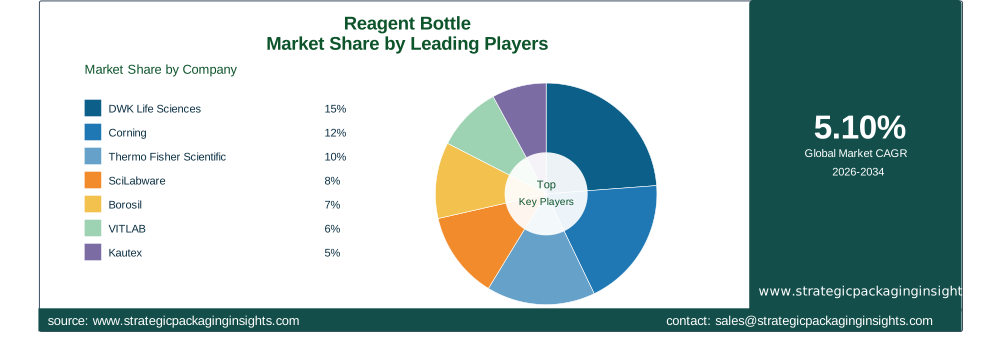
DWK Life Sciences, known for its brands Duran, Wheaton, and Kimble, is a leading player in the market, offering a wide range of laboratory glassware and packaging solutions. The company's commitment to quality and innovation has earned it a strong reputation in the industry. Corning, another major player, is renowned for its advanced glass technologies and extensive product offerings. The company's focus on sustainability and eco-friendly packaging solutions has further strengthened its market position.
Thermo Fisher Scientific, through its Nalgene brand, offers a comprehensive range of reagent bottles and laboratory solutions. The company's emphasis on quality and customer satisfaction has made it a preferred choice among end-users. Other notable players in the market include SciLabware, Borosil, VITLAB, Kautex, Greiner Bio-One, SGD Pharma, and Zhengzhou Linkway. These companies are continuously investing in research and development to enhance their product offerings and expand their market presence.
The competitive landscape of the Reagent Bottle market is further intensified by the presence of numerous regional and local players. These companies are leveraging their local expertise and customer relationships to gain a foothold in the market. However, the dominance of established players with extensive resources and global reach poses significant challenges for smaller companies. To succeed in this competitive environment, companies need to focus on innovation, quality, and customer satisfaction, while also exploring strategic partnerships and collaborations to enhance their market position.
Key Highlights
- Market Size: Valued at USD 480 million in 2025, projected to reach USD 750 million by 2034.
- Growth Rate: Expected CAGR of 5.10% during the forecast period.
- Leading Companies: DWK Life Sciences, Corning, Thermo Fisher Scientific, SciLabware, Borosil.
- Material Segment: Borosilicate Glass and HDPE are the most popular materials.
- Capacity Segment: 100-500 ml bottles are in high demand.
- End Use: Pharmaceutical Labs & QC and Diagnostics & IVD Reagents are key end-use sectors.
- Regional Growth: Asia Pacific is the fastest-growing region with significant market potential.
Reagent Bottle Market Segments Insights

By Material Analysis
The material segment of the Reagent Bottle market is diverse, with Borosilicate Glass (Type I) and HDPE being the most popular choices among end-users. Borosilicate Glass is favored for its superior chemical resistance and durability, making it ideal for storing sensitive reagents and chemicals. Companies like DWK Life Sciences and Corning are leading the market by offering high-quality borosilicate glass bottles that meet stringent industry standards. The demand for HDPE bottles is also on the rise, driven by their lightweight and cost-effective nature. These bottles are widely used in the pharmaceutical and biotechnology sectors, where safety and compliance are paramount.
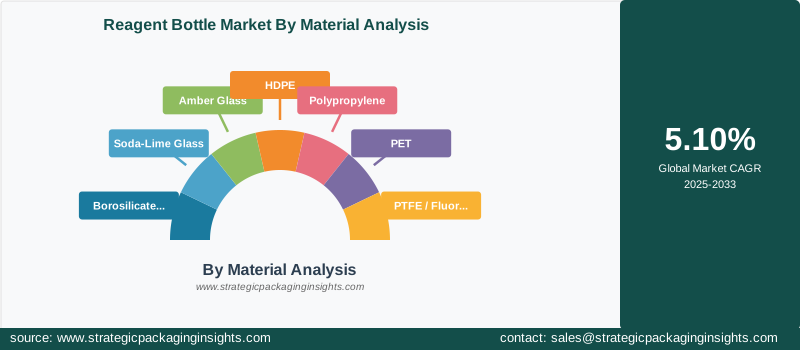
Soda-Lime Glass and Amber Glass are also gaining traction in the market, particularly in applications where UV protection and cost-effectiveness are critical. The growing focus on sustainability and eco-friendly packaging solutions is driving the demand for recyclable materials like PET and Polypropylene. Companies are investing in research and development to enhance the performance and sustainability of these materials, offering innovative solutions that cater to the evolving needs of end-users. The integration of advanced technologies in material manufacturing is further enhancing product quality and performance, providing companies with a competitive edge in the market.
By Capacity Analysis
The capacity segment of the Reagent Bottle market is segmented into Below 100 ml, 100-500 ml, 500 ml - 1 L, and Above 1 L. The 100-500 ml segment is the most popular, driven by its versatility and suitability for a wide range of applications. These bottles are widely used in pharmaceutical labs, research institutions, and chemical industries, where precise measurement and storage of reagents are critical. Companies like Thermo Fisher Scientific and SciLabware are leading the market by offering a comprehensive range of bottles in this capacity segment, catering to the diverse needs of end-users.
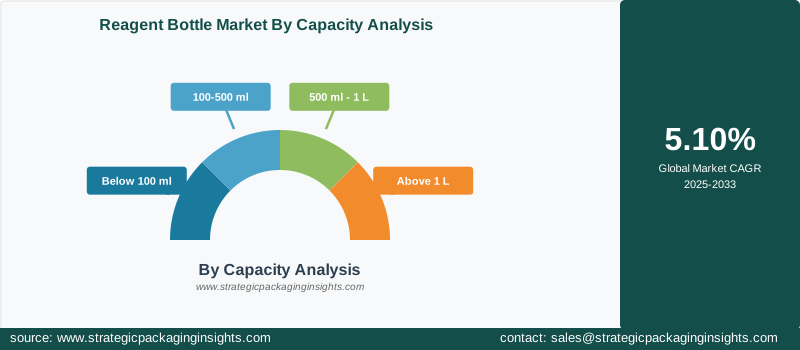
The demand for Below 100 ml bottles is also on the rise, particularly in applications where small quantities of reagents are required. These bottles are favored for their compact size and ease of handling, making them ideal for use in academic and research labs. The 500 ml - 1 L and Above 1 L segments are gaining traction in industrial applications, where larger quantities of reagents are needed. The growing focus on research and development activities in the pharmaceutical and biotechnology sectors is driving the demand for these larger capacity bottles, providing significant growth opportunities for market players.
By Closure Analysis
The closure segment of the Reagent Bottle market is segmented into Screw Cap (GL45, GL32), Ground Glass Stopper, Dropper / Pipette Cap, and Tamper-Evident. Screw Caps are the most popular choice among end-users, favored for their ease of use and secure sealing capabilities. Companies like DWK Life Sciences and VITLAB are leading the market by offering a wide range of screw cap bottles that cater to the diverse needs of the pharmaceutical and biotechnology sectors. The demand for Ground Glass Stoppers is also on the rise, particularly in applications where airtight sealing and chemical resistance are critical.
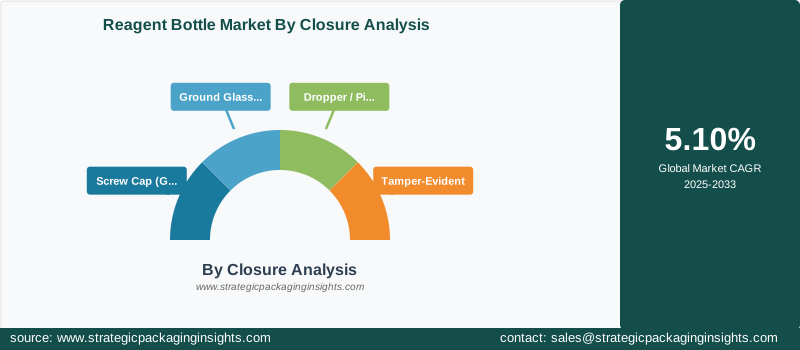
Dropper / Pipette Caps are gaining traction in the market, driven by their precision and ease of use in dispensing small quantities of reagents. These closures are widely used in academic and research labs, where accuracy and precision are paramount. The growing focus on safety and compliance is driving the demand for Tamper-Evident closures, which provide an added layer of security and assurance for end-users. Companies are investing in research and development to enhance the performance and functionality of these closures, offering innovative solutions that cater to the evolving needs of the market.
Reagent Bottle Market Segments
The Reagent Bottle market has been segmented on the basis ofBy Material
- Borosilicate Glass (Type I)
- Soda-Lime Glass
- Amber Glass
- HDPE
- Polypropylene
- PET
- PTFE / Fluoropolymer
By Capacity
- Below 100 ml
- 100-500 ml
- 500 ml - 1 L
- Above 1 L
By Closure
- Screw Cap (GL45, GL32)
- Ground Glass Stopper
- Dropper / Pipette Cap
- Tamper-Evident
By End Use
- Diagnostics & IVD Reagents
- Pharmaceutical Labs & QC
- Academic & Research Labs
- Chemical Industry
- Biotechnology
By Region
- North America (U.S., Canada, Mexico)
- Europe (Germany, UK, France, Italy, Spain, Rest of Europe)
- Asia Pacific (China, India, Japan, South Korea, Australia, Rest of Asia Pacific)
- Latin America (Brazil, Argentina, Rest of Latin America)
- Middle East & Africa (GCC Countries, South Africa, Rest of MEA)




