


PVC-Free Cap Liners Market Outlook
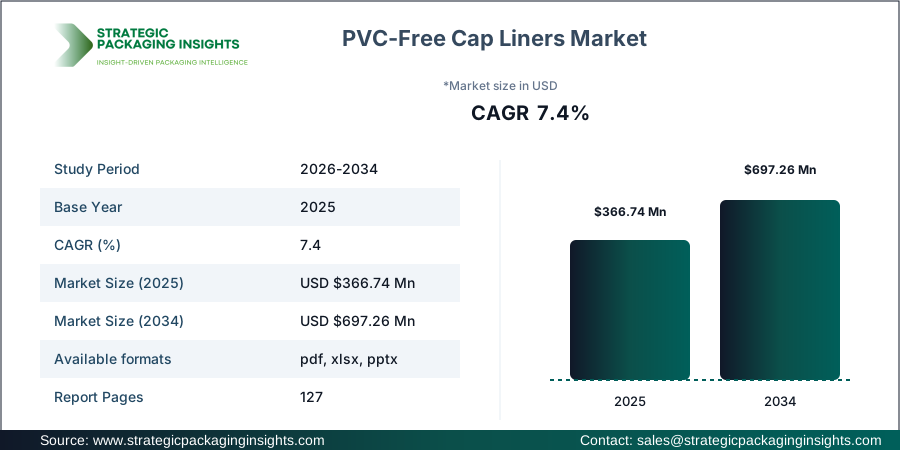
The PVC-Free Cap Liners market size was valued at USD 366.74 million in 2025 and is anticipated to reach USD 697.26 million by 2034, growing at a CAGR of 7.4% during the forecast period according to Strategic Packaging Insights. The market is witnessing significant growth due to increasing demand for sustainable packaging solutions across various industries. Companies like TekniPlex and Selig Group are at the forefront, driving innovation in PVC-free solutions that cater to the evolving consumer preferences for eco-friendly products. The shift towards non-PVC materials is largely driven by regulatory pressures and consumer demand for safer, more sustainable packaging options.
One of the most impactful drivers of the PVC-Free Cap Liners market is the growing environmental awareness and stringent regulations against the use of PVC in packaging. Governments worldwide are implementing policies to reduce plastic waste, which is propelling the demand for alternative materials like PE Foam and TPE. This regulatory push is complemented by consumer preferences shifting towards products that offer reduced environmental impact. Companies such as Tri-Seal and Pres-On are capitalizing on this trend by developing innovative, sustainable cap liner solutions that not only meet regulatory standards but also appeal to environmentally conscious consumers.
Report Scope
| Attributes | Details |
| Report Title | PVC-Free Cap Liners Market Size, Future Growth and Forecast 2034 |
| By Material Type | PE Foam, PP Foam, TPE, Induction Foil |
| By Product Type | Pressure-Sensitive Liners, Heat-Seal Liners, Induction Liners, Vented Liners |
| By Application | Food Jars, Pharma Bottles, Cosmetics, Chemicals |
| By End Use | Food & Beverage, Healthcare, Personal Care, Industrial |
| Region | Asia Pacific, North America, Latin America, Europe, Middle East & Africa |
| Base Year | 2025 |
| Historic Period | 2018-2024 |
| Forecast Period | 2026-2034 |
| Number of Pages | 127 |
| Customization Available | Yes* |
Sustainability & Circular Economy Analysis
Sustainability initiatives are reshaping the packaging industry, with a strong emphasis on recyclable materials and eco-friendly innovations. The PVC-Free Cap Liners market is no exception, as manufacturers are increasingly adopting recyclable and biodegradable materials to align with circular economy principles. This shift is driven by both regulatory mandates and consumer demand for sustainable packaging solutions. Companies are investing in R&D to develop lightweight, durable, and environmentally friendly cap liners that reduce waste and carbon footprint.
The influence of sustainability trends extends beyond material selection to impact packaging design and manufacturing processes. Companies are rethinking their supply chain strategies to incorporate eco-friendly practices, such as reducing energy consumption and minimizing waste during production. This not only helps in achieving regulatory compliance but also enhances brand reputation and market competitiveness. As a result, investments in sustainable packaging solutions are becoming a strategic priority for industry players.
Extended Producer Responsibility (EPR) regulations are further driving the adoption of sustainable practices in the PVC-Free Cap Liners market. These regulations require manufacturers to take responsibility for the entire lifecycle of their products, including end-of-life disposal. This has led to increased collaboration between packaging manufacturers, brand owners, and recycling networks to develop closed-loop systems that promote reuse and recycling. By embracing these sustainability trends, companies can enhance their long-term market competitiveness and meet the growing consumer demand for eco-friendly packaging solutions.
Packaging Value Chain & Supply Chain Analysis
The packaging value chain for PVC-Free Cap Liners involves multiple stakeholders, including raw material suppliers, packaging converters, manufacturers, and logistics providers. Efficient raw material sourcing is crucial for maintaining production capabilities and meeting market demand. Companies like Enercon Industries and Sonoco are optimizing their procurement strategies to ensure a steady supply of high-quality materials, which is essential for producing reliable and effective cap liners.
Supply chain efficiency plays a critical role in the overall performance of the PVC-Free Cap Liners market. Manufacturers are focusing on enhancing their logistics and distribution channels to ensure timely delivery of products to brand owners and retailers. Strategic partnerships with logistics providers and distributors are helping companies streamline their operations and reduce transportation costs. This not only improves market competitiveness but also enhances customer satisfaction by ensuring product availability and reliability.
Recycling networks are becoming an integral part of the packaging supply chain, as companies strive to meet sustainability goals and regulatory requirements. By collaborating with recycling partners, manufacturers can develop closed-loop systems that promote the reuse and recycling of cap liners. This not only reduces environmental impact but also supports the circular economy by minimizing waste and conserving resources. As a result, companies that invest in sustainable supply chain practices are better positioned to capitalize on market opportunities and mitigate potential risks associated with regulatory compliance and environmental concerns.
Opportunities & Threats
The PVC-Free Cap Liners market presents numerous opportunities for growth, driven by the increasing demand for sustainable packaging solutions. As consumers become more environmentally conscious, there is a growing preference for products that offer reduced environmental impact. This trend is creating opportunities for companies to develop innovative, eco-friendly cap liner solutions that cater to this demand. Additionally, advancements in material science and manufacturing technologies are enabling the development of high-performance, sustainable cap liners that meet the stringent requirements of various industries.
Another significant opportunity lies in the expansion of the PVC-Free Cap Liners market into emerging economies. As these regions experience economic growth and urbanization, there is an increasing demand for packaged goods, which in turn drives the need for effective packaging solutions. Companies that can establish a strong presence in these markets and offer competitive, sustainable products are well-positioned to capitalize on this growth potential. Furthermore, strategic partnerships and collaborations with local manufacturers and distributors can help companies navigate the complexities of these markets and enhance their market share.
Despite the numerous opportunities, the PVC-Free Cap Liners market also faces several threats. One of the primary challenges is the high cost of raw materials and production, which can impact profit margins and limit market growth. Additionally, the market is subject to stringent regulatory requirements, which can pose compliance challenges for manufacturers. Companies must invest in R&D and innovation to develop cost-effective, compliant solutions that meet the evolving needs of consumers and regulators. Failure to do so could result in lost market share and reduced competitiveness.
Drivers & Challenges
The PVC-Free Cap Liners market is driven by several key factors, including the growing demand for sustainable packaging solutions and the increasing regulatory pressure to reduce plastic waste. As consumers become more environmentally conscious, there is a strong preference for products that offer reduced environmental impact. This trend is driving the demand for PVC-free cap liners, which are perceived as safer and more sustainable alternatives to traditional PVC-based products. Companies that can develop innovative, eco-friendly solutions are well-positioned to capitalize on this growing demand.
Another significant driver of the PVC-Free Cap Liners market is the advancement in material science and manufacturing technologies. These advancements are enabling the development of high-performance, sustainable cap liners that meet the stringent requirements of various industries. Companies are investing in R&D to develop new materials and manufacturing processes that enhance the performance and sustainability of their products. This not only helps in meeting regulatory requirements but also enhances brand reputation and market competitiveness.
Despite the positive drivers, the PVC-Free Cap Liners market faces several challenges. One of the primary challenges is the high cost of raw materials and production, which can impact profit margins and limit market growth. Additionally, the market is subject to stringent regulatory requirements, which can pose compliance challenges for manufacturers. Companies must invest in R&D and innovation to develop cost-effective, compliant solutions that meet the evolving needs of consumers and regulators. Failure to do so could result in lost market share and reduced competitiveness.
Market Share Analysis
The PVC-Free Cap Liners market is characterized by a competitive landscape with several key players vying for market share. Companies like TekniPlex, Selig Group, and Tri-Seal are leading the market with their innovative product offerings and strong market presence. These companies are investing heavily in R&D to develop sustainable, high-performance cap liners that meet the evolving needs of consumers and regulators. Their focus on innovation and sustainability has helped them maintain a competitive edge in the market.
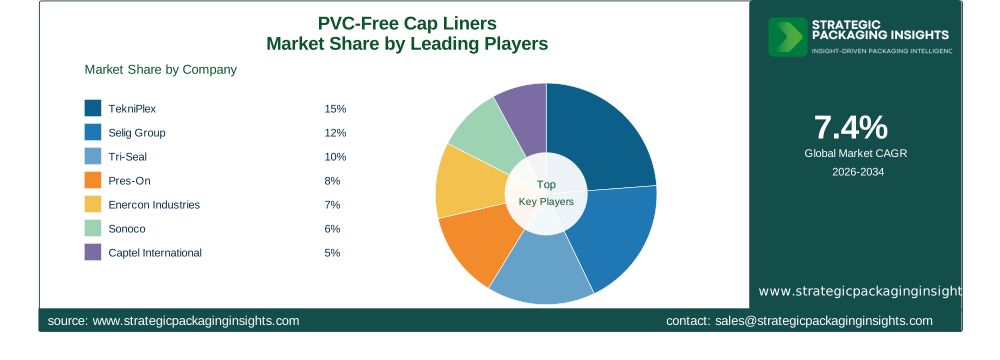
TekniPlex is a prominent player in the PVC-Free Cap Liners market, known for its commitment to sustainability and innovation. The company offers a wide range of eco-friendly cap liner solutions that cater to various industries, including food and beverage, healthcare, and personal care. TekniPlex's strong focus on R&D and its ability to adapt to changing market trends have helped it maintain a leading position in the market.
Selig Group is another key player in the market, renowned for its high-quality, sustainable cap liner solutions. The company has a strong global presence and is committed to developing innovative products that meet the stringent requirements of various industries. Selig Group's focus on sustainability and customer satisfaction has helped it build a loyal customer base and maintain a competitive edge in the market.
Tri-Seal, a division of TekniPlex, is a leading provider of PVC-free cap liners, offering a wide range of products that cater to the needs of various industries. The company's commitment to sustainability and innovation has helped it establish a strong market presence and maintain a competitive edge. Tri-Seal's focus on developing high-performance, eco-friendly solutions has made it a preferred choice for customers seeking sustainable packaging options.
Key Highlights
- Market Size: USD 366.74 million in 2025, projected to reach USD 697.26 million by 2034.
- Growth Rate: CAGR of 7.4% during the forecast period.
- Leading Companies: TekniPlex, Selig Group, Tri-Seal, Pres-On, Enercon Industries.
- Material Innovation: Focus on PE Foam, PP Foam, TPE, and Induction Foil.
- Product Types: Pressure-Sensitive Liners, Heat-Seal Liners, Induction Liners, Vented Liners.
- Applications: Food Jars, Pharma Bottles, Cosmetics, Chemicals.
- End Use Sectors: Food & Beverage, Healthcare, Personal Care, Industrial.
- Regional Growth: Significant opportunities in Asia Pacific and North America.
PVC-Free Cap Liners Market Segments Insights

By Material Type Analysis
The PVC-Free Cap Liners market is segmented by material type, including PE Foam, PP Foam, TPE, and Induction Foil. Each material type offers unique benefits and caters to specific industry needs. PE Foam is widely used due to its excellent sealing properties and cost-effectiveness, making it a popular choice for food and beverage applications. PP Foam, on the other hand, is favored for its lightweight and recyclable nature, aligning with the growing demand for sustainable packaging solutions. TPE is gaining traction in the market due to its flexibility and durability, making it suitable for a wide range of applications, including pharmaceuticals and personal care products.
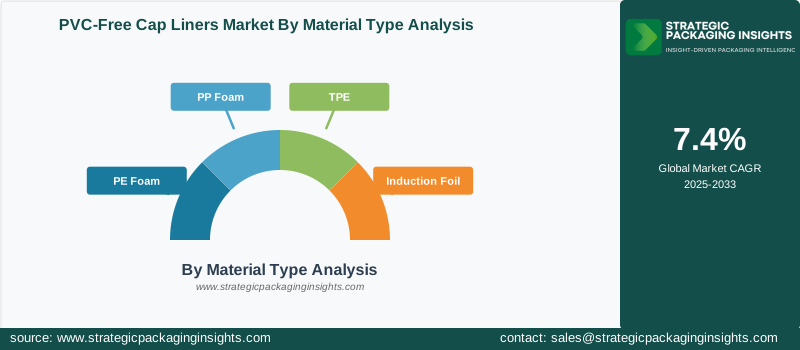
Induction Foil is another key material type in the PVC-Free Cap Liners market, known for its superior sealing capabilities and tamper-evident properties. This material is particularly popular in the pharmaceutical and chemical industries, where product safety and integrity are of utmost importance. The growing focus on sustainability and regulatory compliance is driving the demand for induction foil liners, as they offer a reliable and eco-friendly alternative to traditional PVC-based products. Companies are investing in R&D to enhance the performance and sustainability of these materials, ensuring they meet the evolving needs of consumers and regulators.
By Product Type Analysis
The PVC-Free Cap Liners market is also segmented by product type, including Pressure-Sensitive Liners, Heat-Seal Liners, Induction Liners, and Vented Liners. Pressure-Sensitive Liners are widely used due to their ease of application and versatility, making them suitable for a wide range of packaging applications. These liners are particularly popular in the food and beverage industry, where they provide a reliable seal and help maintain product freshness.
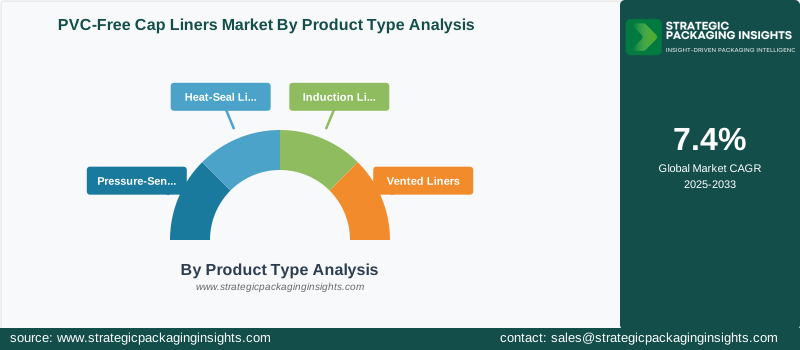
Heat-Seal Liners are another important product type in the market, known for their strong sealing capabilities and tamper-evident properties. These liners are commonly used in the pharmaceutical and chemical industries, where product safety and integrity are critical. Induction Liners are gaining popularity due to their superior sealing performance and ability to provide a tamper-evident seal. These liners are widely used in the food and beverage, pharmaceutical, and personal care industries, where product safety and consumer confidence are paramount.
By Application Analysis
The PVC-Free Cap Liners market is segmented by application, including Food Jars, Pharma Bottles, Cosmetics, and Chemicals. Each application segment has unique requirements and demands specific packaging solutions. Food Jars are a major application segment, driven by the growing demand for packaged food products and the need for reliable, sustainable packaging solutions. PVC-free cap liners are preferred in this segment due to their excellent sealing properties and ability to maintain product freshness.
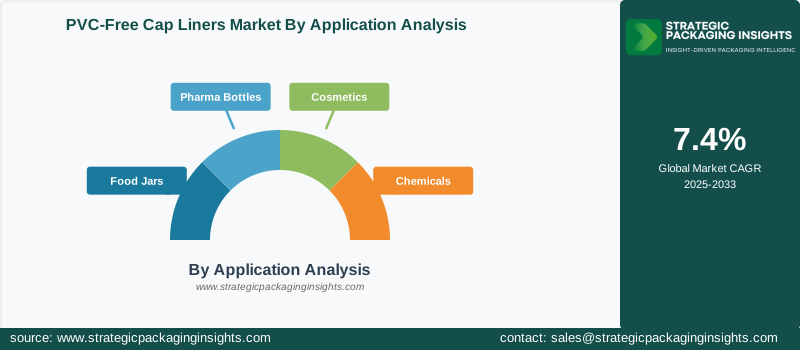
Pharma Bottles are another key application segment, where product safety and integrity are of utmost importance. PVC-free cap liners are widely used in this segment due to their tamper-evident properties and ability to provide a secure seal. The growing focus on sustainability and regulatory compliance is driving the demand for eco-friendly cap liners in the pharmaceutical industry. Cosmetics and Chemicals are also important application segments, where PVC-free cap liners are used to ensure product safety and integrity while meeting the evolving needs of consumers and regulators.
By End Use Analysis
The PVC-Free Cap Liners market is segmented by end use, including Food & Beverage, Healthcare, Personal Care, and Industrial. Each end-use segment has unique requirements and demands specific packaging solutions. The Food & Beverage industry is a major end-use segment, driven by the growing demand for packaged food products and the need for reliable, sustainable packaging solutions. PVC-free cap liners are preferred in this segment due to their excellent sealing properties and ability to maintain product freshness.
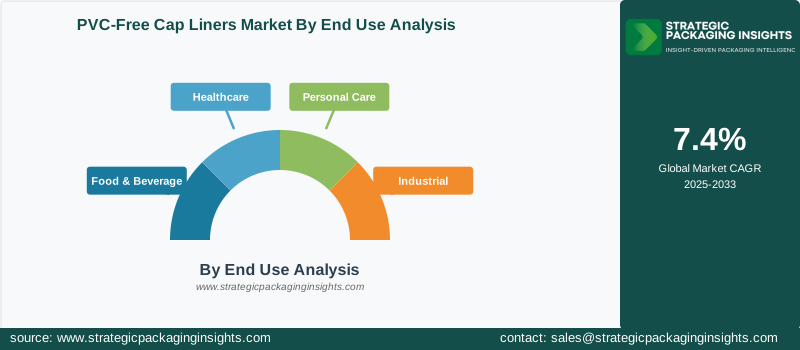
The Healthcare industry is another key end-use segment, where product safety and integrity are of utmost importance. PVC-free cap liners are widely used in this segment due to their tamper-evident properties and ability to provide a secure seal. The growing focus on sustainability and regulatory compliance is driving the demand for eco-friendly cap liners in the healthcare industry. Personal Care and Industrial are also important end-use segments, where PVC-free cap liners are used to ensure product safety and integrity while meeting the evolving needs of consumers and regulators.
PVC-Free Cap Liners Market Segments
The PVC-Free Cap Liners market has been segmented on the basis ofBy Material Type
- PE Foam
- PP Foam
- TPE
- Induction Foil
By Product Type
- Pressure-Sensitive Liners
- Heat-Seal Liners
- Induction Liners
- Vented Liners
By Application
- Food Jars
- Pharma Bottles
- Cosmetics
- Chemicals
By End Use
- Food & Beverage
- Healthcare
- Personal Care
- Industrial
Region
- Asia Pacific
- North America
- Latin America
- Europe
- Middle East & Africa




