


Particle Foam Molding Machines Market Outlook
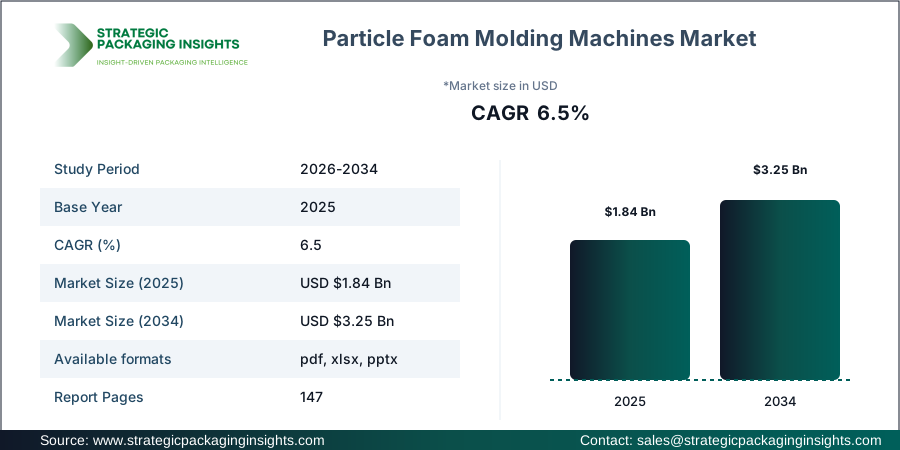
The Particle Foam Molding Machines market was valued at $1.84 billion in 2025 and is projected to reach $3.25 billion by 2034, growing at a CAGR of 6.5% during the forecast period 2026-2034. This market is experiencing significant growth due to the increasing demand for lightweight and durable materials across various industries. The automotive and packaging sectors are particularly driving this demand, as they seek to enhance product performance while reducing environmental impact. The adoption of advanced molding technologies and automation in manufacturing processes is further propelling market expansion. Additionally, the rise in consumer electronics and the need for protective packaging solutions are contributing to the market's upward trajectory.
Despite the promising growth prospects, the Particle Foam Molding Machines market faces certain challenges. Regulatory constraints related to environmental sustainability and the disposal of foam materials pose significant hurdles. However, these challenges also present opportunities for innovation in eco-friendly materials and recycling technologies. The market's growth potential is further bolstered by the increasing investments in research and development aimed at improving machine efficiency and reducing operational costs. As industries continue to prioritize sustainability, the demand for particle foam molding machines that offer energy-efficient and environmentally friendly solutions is expected to rise, creating new avenues for market players.
Report Scope
| Attributes | Details |
| Report Title | Particle Foam Molding Machines Market Size, Future Growth and Forecast 2034 |
| Machine Type | Automatic, Semi-automatic, Manual |
| Material | EPS, EPP, XPS |
| Application | Packaging, Automotive, Electronics, Consumer Goods |
| Region | Asia Pacific, North America, Latin America, Europe, Middle East & Africa |
| Base Year | 2025 |
| Historic Period | 2018-2024 |
| Forecast Period | 2026-2034 |
| Number of Pages | 147 |
| Customization Available | Yes* |
Opportunities & Threats
The Particle Foam Molding Machines market presents numerous opportunities, particularly in the realm of technological advancements. The integration of IoT and AI in molding machines is revolutionizing the industry by enhancing precision, reducing waste, and optimizing production processes. These smart technologies enable real-time monitoring and predictive maintenance, which significantly improve operational efficiency and reduce downtime. Furthermore, the growing trend of customization in consumer goods and packaging is driving the demand for versatile and adaptable molding machines. Manufacturers who can offer machines with advanced features and capabilities are likely to gain a competitive edge in the market.
Another significant opportunity lies in the expanding applications of particle foam materials. The automotive industry, for instance, is increasingly utilizing these materials for lightweight components that enhance fuel efficiency and reduce emissions. Similarly, the electronics sector is adopting foam materials for protective packaging and insulation purposes. As industries continue to explore new applications for particle foam, the demand for specialized molding machines is expected to rise. Companies that can innovate and cater to these emerging needs will likely capture a larger market share.
However, the market is not without its threats. One of the primary restrainers is the volatility in raw material prices, which can significantly impact production costs and profit margins. Additionally, stringent environmental regulations regarding the use and disposal of foam materials pose challenges for manufacturers. Companies must invest in sustainable practices and materials to comply with these regulations and maintain their market position. The competitive landscape is also intensifying, with numerous players vying for market share, which could lead to price wars and reduced profitability.
Drivers & Challenges
The Particle Foam Molding Machines market is driven by several key factors, including the increasing demand for lightweight and durable materials across various industries. The automotive sector, in particular, is a major driver, as manufacturers seek to enhance vehicle performance while reducing weight and emissions. The packaging industry is also contributing to market growth, with a rising need for protective and sustainable packaging solutions. Additionally, advancements in molding technologies, such as automation and precision engineering, are enhancing machine efficiency and output, further driving market expansion.
Another significant driver is the growing emphasis on sustainability and environmental responsibility. Industries are increasingly adopting eco-friendly practices and materials, which is boosting the demand for particle foam molding machines that offer energy-efficient and sustainable solutions. The rise in consumer awareness regarding environmental issues is also influencing purchasing decisions, leading to increased demand for products made from sustainable materials. As a result, manufacturers are investing in research and development to create innovative machines that meet these evolving consumer preferences.
Despite these drivers, the market faces several challenges. One of the primary challenges is the high initial investment required for advanced molding machines, which can be a barrier for small and medium-sized enterprises. Additionally, the complexity of integrating new technologies, such as IoT and AI, into existing manufacturing processes can pose difficulties for companies. The need for skilled labor to operate and maintain these advanced machines is another challenge, as there is a shortage of qualified personnel in the industry. Companies must address these challenges to fully capitalize on the market's growth potential.
Market Share Analysis
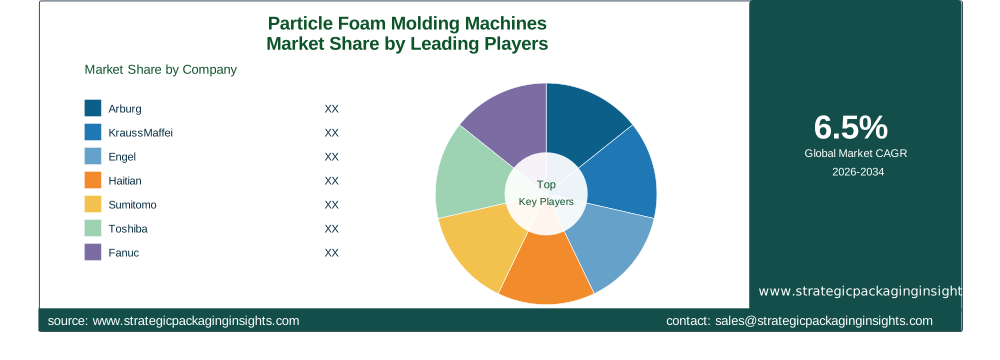
The competitive landscape of the Particle Foam Molding Machines market is characterized by the presence of several key players who are driving innovation and growth. Companies such as Arburg, KraussMaffei, Engel, Haitian, Sumitomo, Toshiba, Fanuc, Wittmann, Bekum, and Reifenhäuser are leading the market with their advanced technologies and extensive product portfolios. These companies are focusing on strategic partnerships, mergers, and acquisitions to expand their market presence and enhance their product offerings. The market is highly competitive, with players vying for market share through continuous innovation and customer-centric solutions.
Arburg is a prominent player in the market, known for its high-performance molding machines and commitment to sustainability. The company is investing in research and development to create energy-efficient machines that meet the evolving needs of its customers. KraussMaffei is another key player, offering a wide range of molding machines that cater to various industries, including automotive and packaging. The company's focus on automation and digitalization is enhancing its competitive edge in the market.
Engel is a leading manufacturer of injection molding machines, known for its innovative solutions and customer-centric approach. The company is expanding its product portfolio to include advanced machines that offer precision and efficiency. Haitian, a major player in the market, is focusing on expanding its global footprint through strategic partnerships and acquisitions. The company's emphasis on quality and innovation is driving its growth in the market.
Sumitomo and Toshiba are also significant players in the market, offering a range of molding machines that cater to diverse applications. These companies are investing in advanced technologies to enhance machine performance and reduce operational costs. Fanuc, Wittmann, Bekum, and Reifenhäuser are other notable players, known for their innovative solutions and commitment to customer satisfaction. These companies are focusing on expanding their product offerings and enhancing their market presence through strategic initiatives.
Key Highlights
- The Particle Foam Molding Machines market is projected to grow at a CAGR of 6.5% from 2026 to 2034.
- Increasing demand for lightweight and durable materials is driving market growth.
- Technological advancements, such as IoT and AI integration, are enhancing machine efficiency.
- The automotive and packaging industries are major drivers of market demand.
- Regulatory constraints and raw material price volatility pose challenges for manufacturers.
- Key players are focusing on strategic partnerships and acquisitions to expand their market presence.
- Innovation in eco-friendly materials and recycling technologies presents growth opportunities.
- The market is characterized by intense competition and continuous innovation.
- Companies are investing in research and development to create energy-efficient machines.
- Consumer awareness regarding environmental issues is influencing market trends.
Top Countries Insights
The Particle Foam Molding Machines market is witnessing significant growth across various countries, with the United States leading the charge. The U.S. market is valued at approximately $1.2 billion, with a CAGR of 5%. The country's robust automotive and packaging industries are major growth drivers, supported by technological advancements and a strong focus on sustainability. Government policies promoting eco-friendly practices and materials are further boosting market growth. However, challenges such as regulatory constraints and raw material price volatility remain.
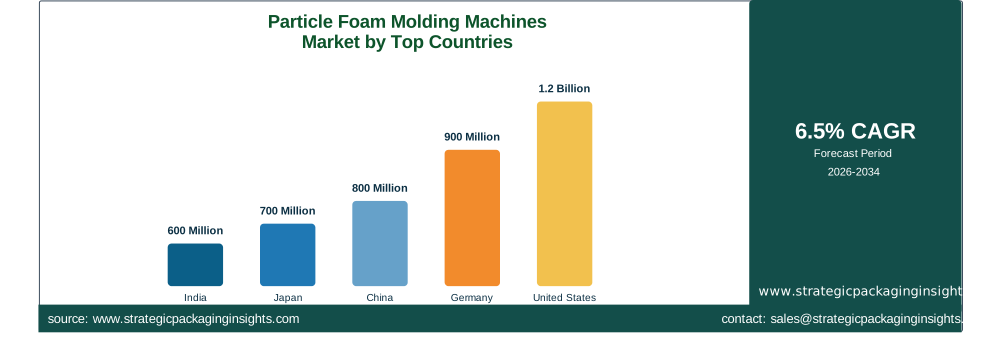
Germany is another key player in the market, with a market size of around $900 million and a CAGR of 4%. The country's strong manufacturing base and emphasis on innovation are driving demand for advanced molding machines. The automotive sector, in particular, is a major contributor to market growth, with companies investing in lightweight materials to enhance vehicle performance. However, the market faces challenges related to environmental regulations and the need for skilled labor.
China is experiencing rapid growth in the Particle Foam Molding Machines market, with a market size of approximately $800 million and a CAGR of 7%. The country's expanding automotive and electronics industries are driving demand for advanced molding machines. Government initiatives promoting industrial automation and innovation are further supporting market growth. However, challenges such as environmental concerns and the need for sustainable practices remain.
Japan is also a significant market for particle foam molding machines, with a market size of around $700 million and a CAGR of 3%. The country's strong focus on technology and innovation is driving demand for advanced machines that offer precision and efficiency. The electronics sector is a major contributor to market growth, with companies investing in protective packaging solutions. However, the market faces challenges related to regulatory constraints and the need for skilled labor.
India is emerging as a key market for particle foam molding machines, with a market size of approximately $600 million and a CAGR of 6%. The country's growing automotive and consumer goods industries are driving demand for advanced molding machines. Government initiatives promoting manufacturing and industrial automation are further supporting market growth. However, challenges such as infrastructure constraints and the need for skilled labor remain.
Particle Foam Molding Machines Market Segments Insights

Machine Type Analysis
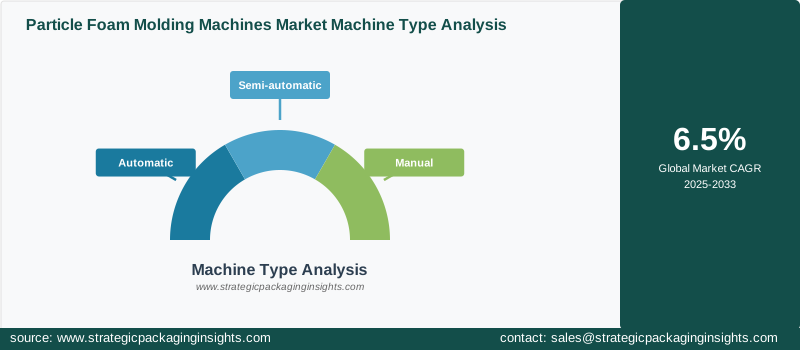
The Particle Foam Molding Machines market is segmented by machine type into automatic, semi-automatic, and manual machines. Automatic machines are gaining significant traction due to their ability to enhance production efficiency and reduce labor costs. These machines are equipped with advanced technologies such as IoT and AI, enabling real-time monitoring and predictive maintenance. The demand for automatic machines is particularly high in industries such as automotive and packaging, where precision and efficiency are critical. Semi-automatic machines, while less advanced, offer flexibility and are preferred by small and medium-sized enterprises due to their cost-effectiveness. Manual machines, although less popular, are still used in niche applications where customization and low-volume production are required.
The growing trend of automation in manufacturing processes is driving the demand for automatic machines. Companies are increasingly investing in these machines to enhance productivity and reduce operational costs. The integration of smart technologies is further boosting the adoption of automatic machines, as they offer enhanced precision and efficiency. However, the high initial investment required for these machines can be a barrier for small and medium-sized enterprises. Semi-automatic machines, on the other hand, offer a balance between cost and efficiency, making them an attractive option for companies with budget constraints. Manual machines, while less advanced, continue to find applications in industries where customization and low-volume production are required.
Material Analysis
The Particle Foam Molding Machines market is segmented by material into EPS, EPP, and XPS. EPS (Expanded Polystyrene) is the most widely used material, known for its lightweight and insulating properties. It is extensively used in packaging and construction applications, driving the demand for EPS molding machines. EPP (Expanded Polypropylene) is gaining popularity due to its superior impact resistance and recyclability, making it ideal for automotive and consumer goods applications. XPS (Extruded Polystyrene) is used in applications requiring high compressive strength and moisture resistance, such as insulation and construction.
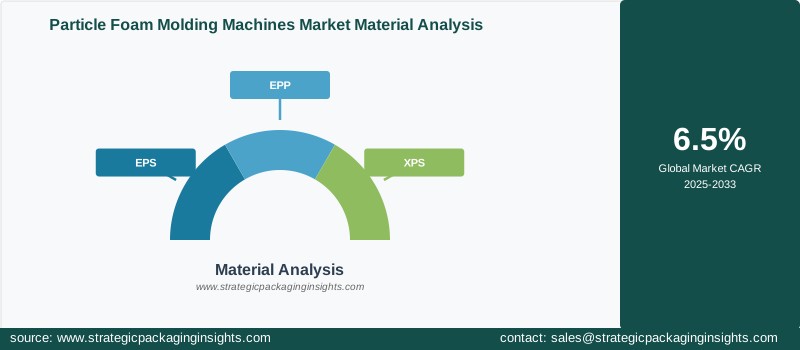
The demand for EPS molding machines is driven by the packaging and construction industries, where lightweight and insulating materials are in high demand. EPP molding machines are gaining traction in the automotive and consumer goods sectors, where impact resistance and recyclability are critical. The growing emphasis on sustainability and environmental responsibility is further boosting the demand for EPP machines. XPS molding machines, while less popular, are used in niche applications where high compressive strength and moisture resistance are required. Companies are investing in research and development to create innovative machines that cater to these diverse material needs.
Application Analysis
The Particle Foam Molding Machines market is segmented by application into packaging, automotive, electronics, and consumer goods. The packaging industry is a major driver of market demand, with a rising need for protective and sustainable packaging solutions. The automotive sector is also contributing to market growth, as manufacturers seek lightweight materials to enhance vehicle performance and reduce emissions. The electronics industry is adopting foam materials for protective packaging and insulation purposes, driving the demand for specialized molding machines. The consumer goods sector is witnessing increased demand for customized and versatile packaging solutions, further boosting market growth.
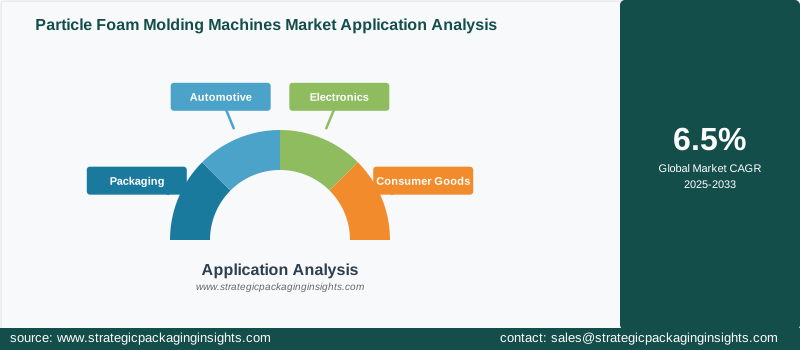
The packaging industry is a major driver of market demand, with a rising need for protective and sustainable packaging solutions. The automotive sector is also contributing to market growth, as manufacturers seek lightweight materials to enhance vehicle performance and reduce emissions. The electronics industry is adopting foam materials for protective packaging and insulation purposes, driving the demand for specialized molding machines. The consumer goods sector is witnessing increased demand for customized and versatile packaging solutions, further boosting market growth. Companies are investing in research and development to create innovative machines that cater to these diverse application needs.
Particle Foam Molding Machines Market Segments
The Particle Foam Molding Machines market has been segmented on the basis ofMachine Type
- Automatic
- Semi-automatic
- Manual
Material
- EPS
- EPP
- XPS
Application
- Packaging
- Automotive
- Electronics
- Consumer Goods
Region
- Asia Pacific
- North America
- Latin America
- Europe
- Middle East & Africa




