


Injection Molding Machines Market Outlook
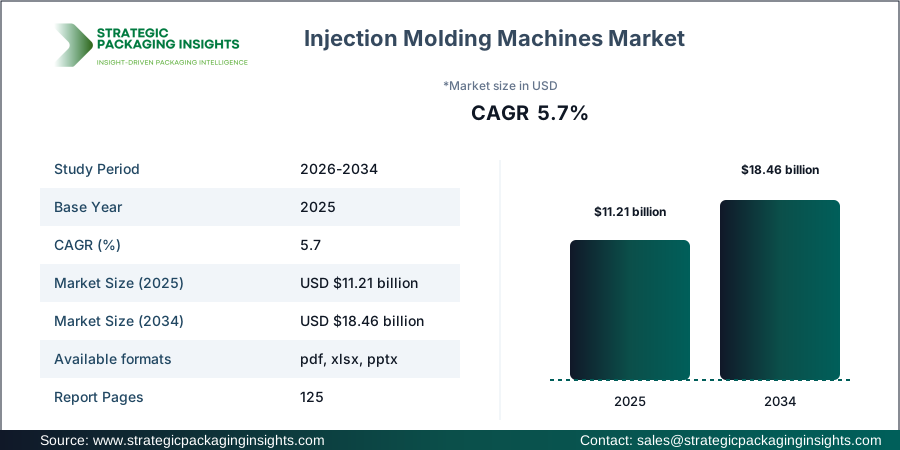
The Injection Molding Machines market was valued at $11.21 billion in 2025 and is projected to reach $18.46 billion by 2034, growing at a CAGR of 5.7% during the forecast period 2026-2034. This market is witnessing significant growth due to the increasing demand for lightweight and durable components across various industries such as automotive, packaging, and consumer goods. The adoption of advanced technologies in injection molding machines, such as automation and IoT integration, is further propelling market growth. Additionally, the rising focus on energy-efficient and sustainable manufacturing processes is driving the demand for electric and hybrid injection molding machines, which offer reduced energy consumption and enhanced precision.
Report Scope
| Attributes | Details |
| Report Title | Injection Molding Machines Market Size, Future Growth and Forecast 2034 |
| By Machine Type | Hydraulic, Electric, Hybrid |
| By Clamping Force | Below 200 Tons, 200–500 Tons, Above 500 Tons |
| By Application | Packaging, Automotive, Medical, Consumer Goods |
| By End Use | Manufacturers, Molders, Packaging Converters |
| Region | Asia Pacific, North America, Latin America, Europe, Middle East & Africa |
| Base Year | 2025 |
| Historic Period | 2018-2024 |
| Forecast Period | 2026-2034 |
| Number of Pages | 125 |
| Customization Available | Yes* |
Opportunities & Threats
The injection molding machines market presents numerous opportunities, particularly with the growing emphasis on sustainability and eco-friendly manufacturing practices. As industries strive to reduce their carbon footprint, there is a significant push towards adopting electric and hybrid machines that offer energy efficiency and lower emissions. This shift is creating a lucrative market for manufacturers who can provide innovative solutions that align with these environmental goals. Additionally, the increasing demand for customized and complex plastic products in sectors like automotive and medical is driving the need for advanced injection molding technologies, opening up new avenues for growth and innovation.
Another opportunity lies in the expanding applications of injection molding machines in emerging markets. As developing countries continue to industrialize, there is a rising demand for consumer goods, automotive components, and packaging solutions, all of which rely heavily on injection molding processes. This trend is particularly evident in the Asia Pacific region, where rapid urbanization and industrial growth are fueling the demand for injection molding machines. Companies that can establish a strong presence in these regions and offer cost-effective, high-quality solutions are likely to gain a competitive edge and capture significant market share.
However, the market also faces certain threats, primarily in the form of fluctuating raw material prices and stringent regulatory standards. The cost of raw materials, such as plastics and metals, can significantly impact the profitability of injection molding operations. Additionally, regulatory requirements related to environmental protection and product safety are becoming increasingly stringent, necessitating continuous investment in compliance and innovation. Companies that fail to adapt to these changing regulations and market dynamics may face challenges in maintaining their market position and profitability.
Drivers & Challenges
One of the primary drivers of the injection molding machines market is the increasing demand for lightweight and high-performance materials in the automotive industry. As automakers strive to improve fuel efficiency and reduce emissions, there is a growing need for lightweight components that can be produced using injection molding techniques. This demand is further fueled by the rising adoption of electric vehicles, which require specialized components that can be efficiently manufactured using advanced injection molding machines. Additionally, the trend towards miniaturization in electronics and medical devices is driving the demand for precision injection molding solutions, further boosting market growth.
Another significant driver is the technological advancements in injection molding machines, which are enhancing their efficiency, precision, and versatility. The integration of automation and IoT technologies is enabling manufacturers to optimize production processes, reduce waste, and improve product quality. These advancements are particularly beneficial in high-volume production environments, where efficiency and consistency are critical. Moreover, the development of new materials and additives that enhance the properties of molded products is expanding the range of applications for injection molding machines, creating new growth opportunities for market players.
Despite these drivers, the market faces several challenges, including the high initial investment required for advanced injection molding machines. The cost of acquiring and maintaining these machines can be prohibitive for small and medium-sized enterprises, limiting their adoption. Additionally, the complexity of the injection molding process requires skilled operators and technicians, which can be a barrier for companies in regions with a shortage of skilled labor. Furthermore, the increasing competition from alternative manufacturing technologies, such as 3D printing, poses a challenge to the growth of the injection molding machines market, as these technologies offer unique advantages in terms of customization and rapid prototyping.
Market Share Analysis
The competitive landscape of the injection molding machines market is characterized by the presence of several key players who are driving innovation and setting industry standards. Haitian International is a leading company in this market, known for its extensive range of hydraulic and electric injection molding machines. With a strong focus on research and development, Haitian International continues to expand its product portfolio and enhance its technological capabilities, maintaining a significant market share.
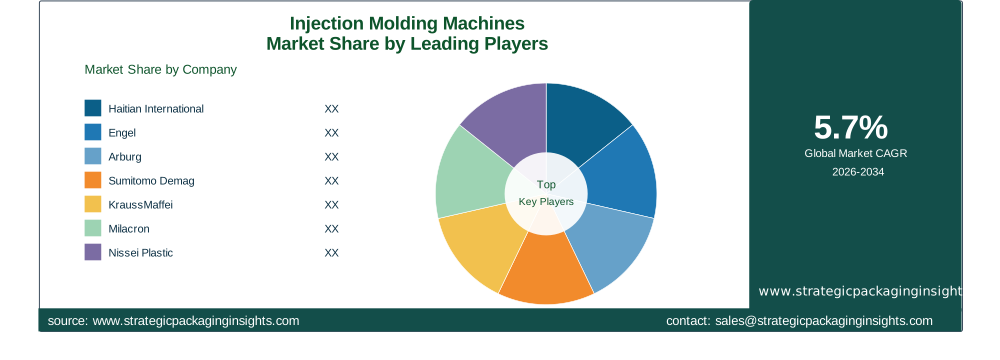
Engel is another major player in the injection molding machines market, renowned for its advanced manufacturing solutions and commitment to sustainability. Engel's innovative approach to machine design and its emphasis on energy efficiency have positioned it as a leader in the industry. The company's strategic partnerships and global presence further strengthen its market position, allowing it to cater to a diverse range of industries and applications.
Arburg is a key competitor in the market, offering a comprehensive range of injection molding machines that cater to various applications, including automotive, medical, and consumer goods. Arburg's focus on precision engineering and customer-centric solutions has earned it a strong reputation in the industry. The company's continuous investment in technology and its commitment to quality have enabled it to maintain a competitive edge and capture a significant share of the market.
Sumitomo Demag, KraussMaffei, and Milacron are also prominent players in the injection molding machines market, each with its unique strengths and market strategies. Sumitomo Demag is known for its high-performance electric injection molding machines, while KraussMaffei offers a diverse range of solutions, including hybrid machines that combine the benefits of hydraulic and electric technologies. Milacron, with its extensive experience and global reach, provides a wide array of injection molding solutions tailored to meet the specific needs of its customers.
Other notable companies in the market include Nissei Plastic, Husky Technologies, JSW, and Wittmann Battenfeld. These companies are continuously innovating and expanding their product offerings to meet the evolving demands of the market. Their focus on customer satisfaction, technological advancements, and strategic partnerships has enabled them to maintain a strong presence in the competitive landscape of the injection molding machines market.
Key Highlights
- The injection molding machines market is projected to grow from $11.21 billion in 2025 to $18.46 billion by 2034, at a CAGR of 5.7%.
- Technological advancements, such as automation and IoT integration, are driving market growth.
- Electric and hybrid machines are gaining popularity due to their energy efficiency and precision.
- The automotive industry is a major driver, with increasing demand for lightweight components.
- Asia Pacific is a key growth region, driven by rapid industrialization and urbanization.
- Fluctuating raw material prices and stringent regulations pose challenges to market growth.
- Key players include Haitian International, Engel, Arburg, and Sumitomo Demag.
- Emerging markets offer significant growth opportunities for injection molding machine manufacturers.
- Alternative manufacturing technologies, such as 3D printing, present competition to traditional injection molding.
Top Countries Insights
In the injection molding machines market, China stands out as a dominant player, with a market size of approximately $3.5 billion and a CAGR of 8%. The country's rapid industrialization and strong manufacturing base drive the demand for injection molding machines, particularly in the automotive and consumer goods sectors. Government initiatives promoting advanced manufacturing technologies and sustainable practices further bolster market growth. However, challenges such as environmental regulations and fluctuating raw material prices remain.
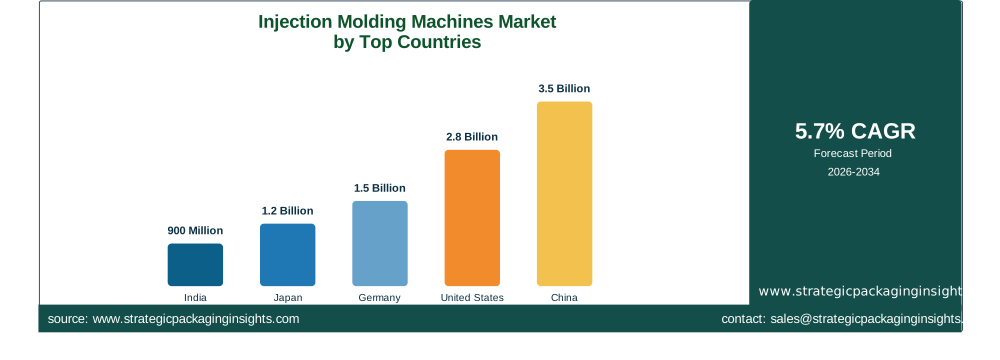
The United States is another significant market, valued at around $2.8 billion, with a CAGR of 5%. The country's robust automotive and packaging industries are key drivers of demand for injection molding machines. Technological advancements and a focus on energy efficiency are shaping the market landscape. However, the high cost of advanced machines and the need for skilled labor pose challenges to market expansion.
Germany, with a market size of $1.5 billion and a CAGR of 4%, is a leading market in Europe. The country's strong engineering capabilities and emphasis on precision manufacturing drive the demand for high-performance injection molding machines. The automotive and medical sectors are major contributors to market growth. However, stringent environmental regulations and competition from alternative technologies present challenges.
Japan, valued at $1.2 billion with a CAGR of 3%, is a key market in Asia. The country's focus on innovation and quality manufacturing supports the demand for advanced injection molding machines. The electronics and automotive industries are significant drivers of market growth. However, an aging population and economic challenges may impact future growth prospects.
India, with a market size of $900 million and a CAGR of 7%, is an emerging market with significant growth potential. The country's expanding manufacturing sector and increasing demand for consumer goods drive the need for injection molding machines. Government initiatives promoting industrialization and foreign investment further support market growth. However, infrastructure challenges and regulatory hurdles may pose obstacles to market expansion.
Injection Molding Machines Market Segments Insights

Machine Type Analysis
The injection molding machines market is segmented by machine type into hydraulic, electric, and hybrid machines. Hydraulic machines have traditionally dominated the market due to their robustness and ability to handle large-scale production. However, the trend is shifting towards electric and hybrid machines, which offer significant advantages in terms of energy efficiency and precision. Electric machines are particularly favored in applications requiring high precision and repeatability, such as medical and electronics manufacturing. Hybrid machines, which combine the benefits of both hydraulic and electric systems, are gaining traction in industries that require a balance between performance and energy efficiency.
The demand for electric and hybrid machines is driven by the increasing focus on sustainability and cost-effectiveness. These machines consume less energy and produce less waste, aligning with the growing emphasis on eco-friendly manufacturing practices. Additionally, advancements in technology have enhanced the capabilities of electric and hybrid machines, making them suitable for a wider range of applications. As industries continue to prioritize energy efficiency and environmental responsibility, the adoption of electric and hybrid injection molding machines is expected to rise, driving market growth.
Clamping Force Analysis
Based on clamping force, the injection molding machines market is segmented into below 200 tons, 200-500 tons, and above 500 tons. Machines with clamping forces below 200 tons are typically used for small-scale production and applications requiring high precision, such as medical devices and electronics. The 200-500 tons segment caters to medium-scale production, commonly used in the automotive and consumer goods industries. Machines with clamping forces above 500 tons are designed for large-scale production and are widely used in the packaging and automotive sectors.
The demand for machines with higher clamping forces is driven by the need for large and complex components in industries such as automotive and packaging. These machines offer the capability to produce large parts with high precision and consistency, meeting the stringent quality requirements of these industries. Additionally, the trend towards lightweight and durable materials in automotive manufacturing is driving the demand for machines with higher clamping forces, as they can efficiently process advanced materials and composites.
Application Analysis
The injection molding machines market is segmented by application into packaging, automotive, medical, and consumer goods. The packaging industry is a major consumer of injection molding machines, driven by the increasing demand for lightweight and sustainable packaging solutions. The automotive industry is another significant application area, with the growing emphasis on fuel efficiency and lightweight components driving the demand for injection molding machines.
In the medical sector, the demand for precision and high-quality components is driving the adoption of advanced injection molding machines. The consumer goods industry also relies heavily on injection molding for the production of a wide range of products, from household items to electronics. The versatility and efficiency of injection molding machines make them an ideal choice for these diverse applications, supporting market growth across various sectors.
End Use Analysis
The injection molding machines market is segmented by end use into manufacturers, molders, and packaging converters. Manufacturers are the primary end users of injection molding machines, utilizing them for the production of a wide range of components and products across various industries. Molders, who specialize in the production of molded parts, are also significant users of injection molding machines, particularly in the automotive and consumer goods sectors.
Packaging converters, who transform raw materials into packaging products, are increasingly adopting injection molding machines to meet the demand for innovative and sustainable packaging solutions. The growing emphasis on customization and rapid production in the packaging industry is driving the demand for advanced injection molding machines that offer flexibility and efficiency. As industries continue to evolve and demand more sophisticated solutions, the role of injection molding machines in the manufacturing process is expected to expand, driving market growth.
Injection Molding Machines Market Segments
The Injection Molding Machines market has been segmented on the basis ofBy Machine Type
- Hydraulic
- Electric
- Hybrid
By Clamping Force
- Below 200 Tons
- 200–500 Tons
- Above 500 Tons
By Application
- Packaging
- Automotive
- Medical
- Consumer Goods
By End Use
- Manufacturers
- Molders
- Packaging Converters
Region
- Asia Pacific
- North America
- Latin America
- Europe
- Middle East & Africa




