


Molded Fiber Egg Packaging Market Outlook
The Molded Fiber Egg Packaging market was valued at $841.30 million in 2025 and is projected to reach $1.41 billion by 2034, growing at a CAGR of 5.9% during the forecast period 2026-2034. This market is witnessing significant growth due to the increasing demand for sustainable and eco-friendly packaging solutions. The shift towards biodegradable materials in packaging is driven by stringent environmental regulations and growing consumer awareness about sustainability. The molded fiber egg packaging market is also benefiting from the rising consumption of eggs globally, which necessitates efficient and protective packaging solutions. The market is further propelled by advancements in manufacturing technologies that enhance the durability and design of molded fiber packaging products.
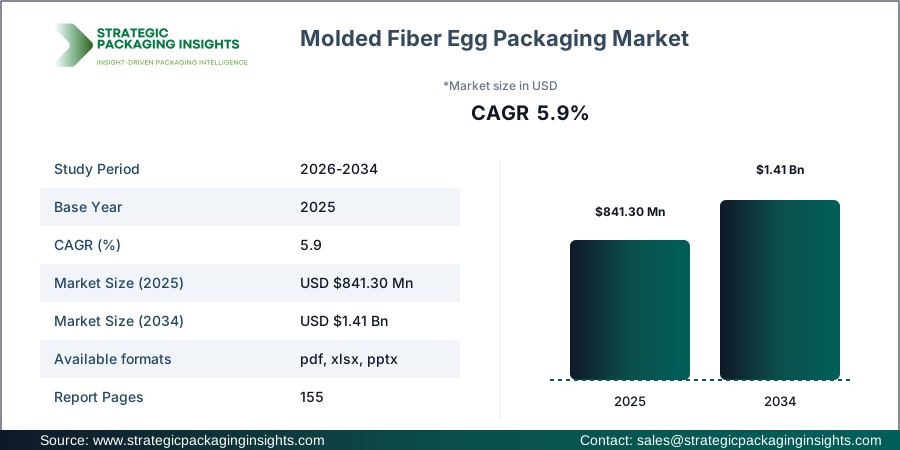
Despite the promising growth prospects, the molded fiber egg packaging market faces certain challenges. The high cost of raw materials and the complex manufacturing process can act as restraints to market growth. Additionally, the market is subject to regulatory constraints related to food safety and packaging standards, which can impact production and distribution. However, the market holds significant potential for growth, driven by innovations in material science and the development of cost-effective production techniques. The increasing adoption of molded fiber packaging in emerging economies presents lucrative opportunities for market players to expand their footprint and enhance their market share.
Report Scope
| Attributes | Details |
| Report Title | Molded Fiber Egg Packaging Market Size, Future Growth and Forecast 2034 |
| By Product Type | Egg Trays, Egg Cartons, Egg Flats |
| By Material Type | Recycled Paper, Molded Pulp, Agricultural Fiber |
| By Application | Retail Eggs, Transport Eggs, Foodservice |
| By End Use | Egg Producers, Retailers, Distributors |
| Region | Asia Pacific, North America, Latin America, Europe, Middle East & Africa |
| Base Year | 2025 |
| Historic Period | 2018-2024 |
| Forecast Period | 2026-2034 |
| Number of Pages | 155 |
| Customization Available | Yes* |
Opportunities & Threats
The molded fiber egg packaging market presents numerous opportunities for growth, primarily driven by the increasing demand for sustainable packaging solutions. As consumers become more environmentally conscious, there is a growing preference for biodegradable and recyclable packaging materials. This trend is encouraging manufacturers to innovate and develop new products that meet these consumer demands. Additionally, the expansion of the retail sector, particularly in emerging markets, is creating new avenues for market growth. Retailers are increasingly adopting molded fiber packaging due to its cost-effectiveness and ability to protect eggs during transportation and storage.
Another significant opportunity lies in the technological advancements in manufacturing processes. Innovations in molding techniques and material compositions are enabling the production of more durable and aesthetically pleasing packaging solutions. These advancements are not only enhancing the functionality of molded fiber egg packaging but also reducing production costs, thereby increasing profitability for manufacturers. Furthermore, the growing trend of online grocery shopping is boosting the demand for protective packaging solutions, providing an additional growth avenue for the molded fiber egg packaging market.
However, the market is not without its threats. One of the primary challenges is the volatility in raw material prices, which can significantly impact production costs and profit margins. The availability of alternative packaging materials, such as plastic and foam, also poses a threat to the market. These materials are often cheaper and more readily available, making them attractive options for some manufacturers. Additionally, stringent regulations related to food safety and packaging standards can pose compliance challenges for market players, potentially hindering market growth.
Drivers & Challenges
The molded fiber egg packaging market is driven by several key factors, including the increasing demand for sustainable packaging solutions. As environmental concerns continue to rise, consumers and businesses alike are seeking eco-friendly alternatives to traditional packaging materials. Molded fiber packaging, made from renewable resources, offers a sustainable solution that aligns with these environmental goals. Additionally, the growing consumption of eggs globally is driving the demand for efficient and protective packaging solutions, further propelling market growth.
Another significant driver is the advancement in manufacturing technologies. Innovations in molding techniques and material compositions are enabling the production of more durable and aesthetically pleasing packaging solutions. These advancements are not only enhancing the functionality of molded fiber egg packaging but also reducing production costs, thereby increasing profitability for manufacturers. Furthermore, the increasing adoption of molded fiber packaging in emerging economies presents lucrative opportunities for market players to expand their footprint and enhance their market share.
Despite these drivers, the market faces several challenges. One of the primary challenges is the high cost of raw materials, which can significantly impact production costs and profit margins. The availability of alternative packaging materials, such as plastic and foam, also poses a threat to the market. These materials are often cheaper and more readily available, making them attractive options for some manufacturers. Additionally, stringent regulations related to food safety and packaging standards can pose compliance challenges for market players, potentially hindering market growth.
Market Share Analysis
The competitive landscape of the molded fiber egg packaging market is characterized by the presence of several key players who are actively engaged in product innovation and strategic partnerships to enhance their market position. Companies such as Huhtamaki, Brødrene Hartmann, and Pactiv Evergreen are leading the market with their extensive product portfolios and strong distribution networks. These companies are focusing on expanding their production capacities and investing in research and development to introduce new and innovative products that cater to the evolving needs of consumers.
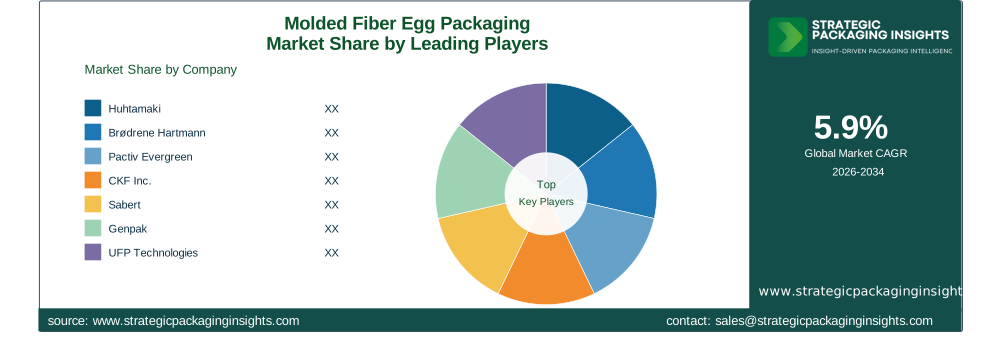
Huhtamaki, a global leader in sustainable packaging solutions, holds a significant share in the molded fiber egg packaging market. The company is known for its innovative product offerings and commitment to sustainability, which have helped it maintain a strong market position. Brødrene Hartmann, another major player, is renowned for its high-quality molded fiber packaging solutions and strong focus on environmental sustainability. The company has a robust presence in Europe and is expanding its operations in other regions to capitalize on the growing demand for eco-friendly packaging solutions.
Pactiv Evergreen, a leading manufacturer of foodservice and food packaging products, is also a key player in the molded fiber egg packaging market. The company offers a wide range of molded fiber packaging solutions that are designed to meet the diverse needs of its customers. CKF Inc., Sabert, and Genpak are other notable players in the market, each with their unique product offerings and strategic initiatives aimed at enhancing their market presence.
UFP Technologies, DFM Packaging, Eco-Products, and Henry Molded Products are also significant contributors to the market, with each company focusing on innovation and sustainability to drive growth. These companies are investing in research and development to introduce new products that meet the changing demands of consumers and comply with stringent environmental regulations. The competitive landscape of the molded fiber egg packaging market is dynamic, with companies continuously striving to enhance their product offerings and expand their market reach.
Key Highlights
- The molded fiber egg packaging market is projected to grow at a CAGR of 5.9% from 2026 to 2034.
- Increasing demand for sustainable and eco-friendly packaging solutions is driving market growth.
- Technological advancements in manufacturing processes are enhancing product durability and design.
- Volatility in raw material prices poses a challenge to market growth.
- Stringent regulations related to food safety and packaging standards can impact production and distribution.
- Key players in the market include Huhtamaki, Brødrene Hartmann, and Pactiv Evergreen.
- The market is witnessing significant growth in emerging economies due to rising consumption of eggs.
- Online grocery shopping is boosting the demand for protective packaging solutions.
- Innovations in material science are creating new growth opportunities for market players.
Top Countries Insights
In the molded fiber egg packaging market, the United States stands out as a key player, with a market size of approximately $300 million and a CAGR of 6%. The country's growth is driven by the increasing demand for sustainable packaging solutions and the expansion of the retail sector. The presence of major market players and technological advancements in manufacturing processes further contribute to the market's growth in the United States.
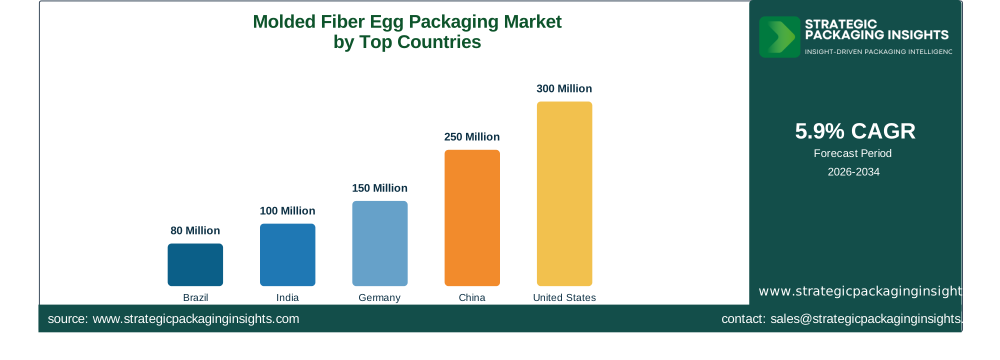
China is another significant market for molded fiber egg packaging, with a market size of around $250 million and a CAGR of 7%. The country's growth is fueled by the rising consumption of eggs and the increasing adoption of eco-friendly packaging solutions. Government initiatives promoting sustainable practices and the expansion of the retail sector are also driving market growth in China.
Germany, with a market size of approximately $150 million and a CAGR of 5%, is a key market in Europe. The country's growth is driven by the increasing demand for sustainable packaging solutions and the presence of major market players. The stringent environmental regulations in Germany also encourage the adoption of eco-friendly packaging solutions, contributing to market growth.
India, with a market size of around $100 million and a CAGR of 8%, is an emerging market for molded fiber egg packaging. The country's growth is driven by the rising consumption of eggs and the increasing demand for sustainable packaging solutions. The expansion of the retail sector and government initiatives promoting sustainable practices further contribute to market growth in India.
Brazil, with a market size of approximately $80 million and a CAGR of 6%, is a key market in Latin America. The country's growth is driven by the increasing demand for sustainable packaging solutions and the expansion of the retail sector. The presence of major market players and technological advancements in manufacturing processes further contribute to the market's growth in Brazil.
Molded Fiber Egg Packaging Market Segments Insights

Product Type Analysis
The molded fiber egg packaging market is segmented by product type into egg trays, egg cartons, and egg flats. Egg trays are the most widely used product type, owing to their cost-effectiveness and ability to protect eggs during transportation and storage. The demand for egg trays is driven by the increasing consumption of eggs globally and the need for efficient packaging solutions. Egg cartons, on the other hand, are gaining popularity due to their aesthetic appeal and ability to enhance brand visibility. The demand for egg cartons is particularly high in the retail sector, where they are used to attract consumers and promote brand loyalty.
Egg flats, although less commonly used, are gaining traction in the market due to their versatility and ability to accommodate different egg sizes. The demand for egg flats is driven by the increasing adoption of molded fiber packaging in the foodservice sector, where they are used to transport and store eggs in bulk. The growing trend of online grocery shopping is also boosting the demand for egg flats, as they provide a convenient and cost-effective solution for packaging and transporting eggs.
Material Type Analysis
The molded fiber egg packaging market is segmented by material type into recycled paper, molded pulp, and agricultural fiber. Recycled paper is the most commonly used material type, owing to its cost-effectiveness and environmental benefits. The demand for recycled paper is driven by the increasing focus on sustainability and the need for eco-friendly packaging solutions. Molded pulp, on the other hand, is gaining popularity due to its durability and ability to protect eggs during transportation and storage. The demand for molded pulp is particularly high in the retail sector, where it is used to enhance product protection and reduce breakage.
Agricultural fiber, although less commonly used, is gaining traction in the market due to its biodegradability and ability to reduce environmental impact. The demand for agricultural fiber is driven by the increasing adoption of sustainable packaging solutions and the need for innovative materials that align with environmental goals. The growing trend of online grocery shopping is also boosting the demand for agricultural fiber, as it provides a sustainable and cost-effective solution for packaging and transporting eggs.
Application Analysis
The molded fiber egg packaging market is segmented by application into retail eggs, transport eggs, and foodservice. Retail eggs are the largest application segment, driven by the increasing consumption of eggs globally and the need for efficient packaging solutions. The demand for retail eggs is particularly high in the retail sector, where they are used to attract consumers and promote brand loyalty. Transport eggs, on the other hand, are gaining popularity due to their ability to protect eggs during transportation and storage. The demand for transport eggs is driven by the increasing adoption of molded fiber packaging in the foodservice sector, where they are used to transport and store eggs in bulk.
Foodservice, although a smaller application segment, is gaining traction in the market due to the growing trend of online grocery shopping and the need for protective packaging solutions. The demand for foodservice is driven by the increasing adoption of molded fiber packaging in the foodservice sector, where it is used to enhance product protection and reduce breakage. The growing trend of online grocery shopping is also boosting the demand for foodservice, as it provides a convenient and cost-effective solution for packaging and transporting eggs.
End Use Analysis
The molded fiber egg packaging market is segmented by end use into egg producers, retailers, and distributors. Egg producers are the largest end-use segment, driven by the increasing consumption of eggs globally and the need for efficient packaging solutions. The demand for egg producers is particularly high in the retail sector, where they are used to attract consumers and promote brand loyalty. Retailers, on the other hand, are gaining popularity due to their ability to protect eggs during transportation and storage. The demand for retailers is driven by the increasing adoption of molded fiber packaging in the foodservice sector, where they are used to transport and store eggs in bulk.
Distributors, although a smaller end-use segment, are gaining traction in the market due to the growing trend of online grocery shopping and the need for protective packaging solutions. The demand for distributors is driven by the increasing adoption of molded fiber packaging in the foodservice sector, where it is used to enhance product protection and reduce breakage. The growing trend of online grocery shopping is also boosting the demand for distributors, as it provides a convenient and cost-effective solution for packaging and transporting eggs.
Molded Fiber Egg Packaging Market Segments
The Molded Fiber Egg Packaging market has been segmented on the basis ofBy Product Type
- Egg Trays
- Egg Cartons
- Egg Flats
By Material Type
- Recycled Paper
- Molded Pulp
- Agricultural Fiber
By Application
- Retail Eggs
- Transport Eggs
- Foodservice
By End Use
- Egg Producers
- Retailers
- Distributors
Region
- Asia Pacific
- North America
- Latin America
- Europe
- Middle East & Africa




