


Low-Migration EB-Curable Food-Contact Flexo Inks Market Outlook
The Low-Migration EB-Curable Food-Contact Flexo Inks market was valued at $105.85 million in 2025 and is projected to reach $204.65 million by 2034, growing at a CAGR of 7.6% during the forecast period 2026-2034. This market is driven by the increasing demand for safe and sustainable packaging solutions, particularly in the food and beverage industry. The need for inks that do not migrate into food products is becoming more critical as consumers and regulatory bodies demand higher safety standards. The growth is further fueled by advancements in ink formulations that enhance print quality while ensuring compliance with stringent food safety regulations. As the market expands, innovations in electron beam (EB) curing technology are expected to play a pivotal role in enhancing the performance and application range of these inks.
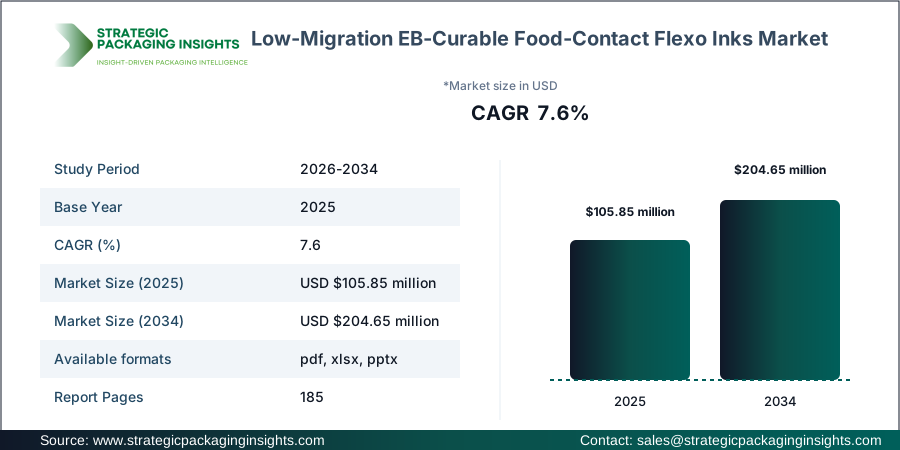
Despite the promising growth trajectory, the market faces challenges such as high initial costs associated with EB-curable ink systems and the need for specialized equipment. Regulatory compliance remains a significant hurdle, as manufacturers must navigate complex international standards to ensure their products are market-ready. However, the potential for growth is substantial, particularly as emerging markets in Asia Pacific and Latin America begin to adopt these advanced ink solutions. The market's expansion is also supported by the increasing focus on eco-friendly packaging, which aligns with global sustainability goals. As a result, companies are investing in research and development to create inks that not only meet safety standards but also reduce environmental impact.
Report Scope
| Attributes | Details |
| Report Title | Low-Migration EB-Curable Food-Contact Flexo Inks Market Size, Future Growth and Forecast 2034 |
| Ink Type | EB-curable inks, Low-migration flexo inks, Food-contact inks |
| Substrate | Films, Paperboard, Labels |
| Application | Food packaging, Beverage labels, Flexible packs |
| End Use | Food brands, Converters, Label printers |
| Region | Asia Pacific, North America, Latin America, Europe, Middle East & Africa |
| Base Year | 2025 |
| Historic Period | 2018-2024 |
| Forecast Period | 2026-2034 |
| Number of Pages | 185 |
| Customization Available | Yes* |
Opportunities & Threats
The Low-Migration EB-Curable Food-Contact Flexo Inks market presents significant opportunities, particularly in the realm of sustainable packaging. As consumers become more environmentally conscious, there is a growing demand for packaging solutions that minimize ecological impact. This trend is driving innovation in ink formulations that are not only safe for food contact but also environmentally friendly. Companies that can develop inks with reduced volatile organic compounds (VOCs) and enhanced biodegradability are likely to gain a competitive edge. Additionally, the rise of e-commerce and the subsequent increase in demand for packaged goods offer a lucrative opportunity for market expansion. As online shopping continues to grow, so does the need for safe and sustainable packaging solutions, further boosting the demand for low-migration inks.
Another opportunity lies in the technological advancements in EB-curing processes. These innovations are enhancing the efficiency and effectiveness of ink curing, leading to improved print quality and faster production times. As the technology becomes more accessible and cost-effective, it is expected to drive wider adoption across various industries. Furthermore, the increasing regulatory focus on food safety is prompting manufacturers to invest in compliant ink solutions, creating a robust market for low-migration inks. Companies that can navigate the regulatory landscape and offer certified products are well-positioned to capitalize on this growing demand.
However, the market is not without its threats. One of the primary challenges is the high cost of EB-curable ink systems, which can be a barrier to entry for smaller companies. The need for specialized equipment and training can also deter potential adopters. Additionally, the market is subject to stringent regulatory requirements, which can vary significantly across regions. Navigating these complex regulations can be costly and time-consuming, posing a threat to market growth. Companies must also contend with the risk of technological obsolescence, as rapid advancements in ink formulations and curing technologies could render existing products outdated.
Drivers & Challenges
The primary drivers of the Low-Migration EB-Curable Food-Contact Flexo Inks market include the increasing demand for safe and sustainable packaging solutions. As consumers become more aware of the potential health risks associated with ink migration, there is a growing preference for packaging that ensures food safety. This demand is further amplified by stringent regulatory standards that require manufacturers to comply with food safety guidelines. The rise of eco-friendly packaging is another significant driver, as companies seek to reduce their environmental footprint. Innovations in ink formulations that minimize VOC emissions and enhance biodegradability are gaining traction, aligning with global sustainability goals.
Technological advancements in EB-curing processes are also driving market growth. These innovations are improving the efficiency and effectiveness of ink curing, resulting in higher print quality and faster production times. As the technology becomes more accessible and cost-effective, it is expected to drive wider adoption across various industries. The increasing focus on food safety regulations is prompting manufacturers to invest in compliant ink solutions, creating a robust market for low-migration inks. Companies that can navigate the regulatory landscape and offer certified products are well-positioned to capitalize on this growing demand.
Despite these drivers, the market faces several challenges. One of the primary obstacles is the high cost of EB-curable ink systems, which can be a barrier to entry for smaller companies. The need for specialized equipment and training can also deter potential adopters. Additionally, the market is subject to stringent regulatory requirements, which can vary significantly across regions. Navigating these complex regulations can be costly and time-consuming, posing a threat to market growth. Companies must also contend with the risk of technological obsolescence, as rapid advancements in ink formulations and curing technologies could render existing products outdated.
Market Share Analysis
The competitive landscape of the Low-Migration EB-Curable Food-Contact Flexo Inks market is characterized by the presence of several key players who are driving innovation and growth. Companies such as Siegwerk, Sun Chemical, Toyo Ink, and Flint Group are leading the charge with their advanced ink formulations and commitment to sustainability. These companies are investing heavily in research and development to create inks that meet stringent food safety standards while also reducing environmental impact. Their focus on innovation and compliance has positioned them as leaders in the market, capturing significant market share.
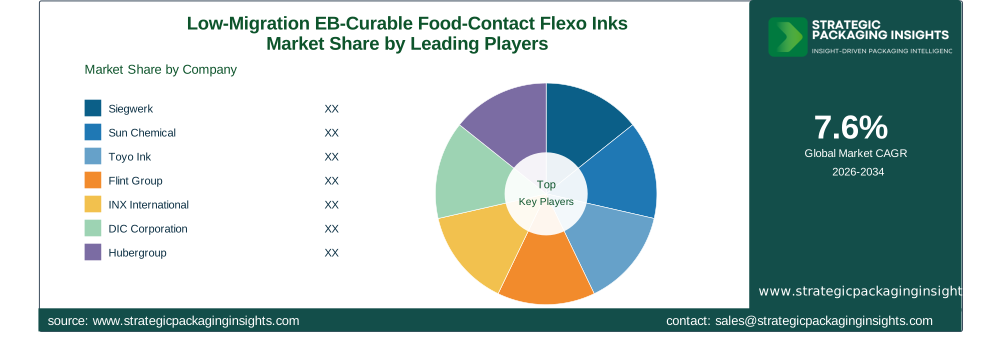
Siegwerk is a prominent player in the market, known for its comprehensive range of low-migration inks that cater to various packaging needs. The company's commitment to sustainability and innovation has helped it maintain a strong market position. Sun Chemical, another major player, is renowned for its advanced ink technologies that ensure food safety and compliance with international standards. The company's focus on research and development has enabled it to offer a diverse portfolio of inks that meet the evolving needs of the packaging industry.
Toyo Ink and Flint Group are also key players in the market, known for their innovative ink solutions and commitment to quality. Toyo Ink's focus on eco-friendly formulations and advanced curing technologies has helped it capture a significant share of the market. Flint Group, with its extensive range of low-migration inks, is a leader in providing safe and sustainable packaging solutions. The company's emphasis on compliance and innovation has positioned it as a trusted partner for packaging manufacturers worldwide.
Other notable companies in the market include INX International, DIC Corporation, Hubergroup, Zeller+Gmelin, Sakata INX, and Wikoff Color. These companies are actively investing in research and development to enhance their product offerings and meet the growing demand for low-migration inks. Their focus on innovation and compliance has enabled them to capture a significant share of the market, contributing to the overall growth and competitiveness of the industry.
Key Highlights
- The market is projected to grow at a CAGR of 7.6% from 2026 to 2034, driven by increasing demand for safe and sustainable packaging solutions.
- Technological advancements in EB-curing processes are enhancing ink performance and driving market growth.
- Stringent food safety regulations are prompting manufacturers to invest in compliant ink solutions.
- The rise of e-commerce is boosting demand for packaged goods, further driving market expansion.
- Companies are focusing on eco-friendly ink formulations to align with global sustainability goals.
- High initial costs and regulatory compliance remain significant challenges for market growth.
- Key players such as Siegwerk, Sun Chemical, and Toyo Ink are leading the market with innovative ink solutions.
- The Asia Pacific region is expected to witness significant growth due to increasing adoption of advanced ink technologies.
- Emerging markets in Latin America are presenting new opportunities for market expansion.
- Companies are investing in research and development to enhance product offerings and meet evolving consumer demands.
Top Countries Insights
In the Low-Migration EB-Curable Food-Contact Flexo Inks market, the United States stands out as a key player, with a market size of approximately $45 million and a CAGR of 6%. The country's stringent food safety regulations and strong demand for sustainable packaging solutions are driving market growth. The presence of major industry players and a robust research and development infrastructure further bolster the market's expansion. However, the high cost of EB-curable ink systems and regulatory compliance challenges remain significant hurdles.
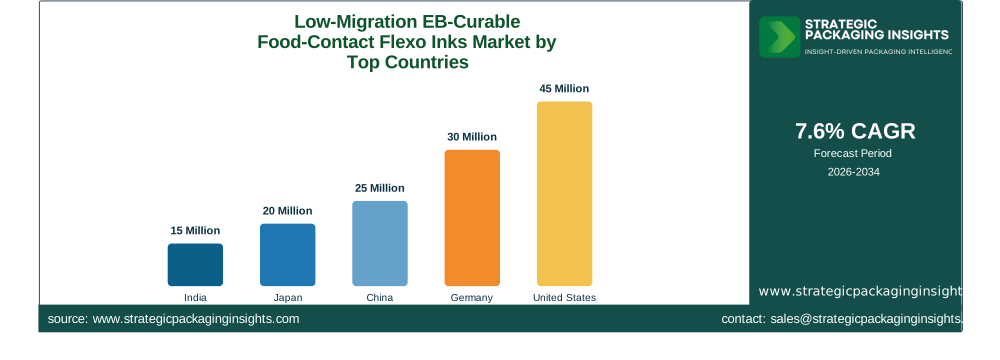
Germany is another significant market, with a market size of around $30 million and a CAGR of 5%. The country's focus on sustainability and innovation in packaging solutions is driving demand for low-migration inks. Germany's strong manufacturing base and commitment to environmental standards make it a key market for advanced ink technologies. However, the market faces challenges related to regulatory compliance and the high cost of specialized equipment.
China is emerging as a major player in the market, with a market size of approximately $25 million and a CAGR of 8%. The country's rapid industrialization and growing demand for packaged goods are driving market growth. China's focus on food safety and environmental sustainability is prompting manufacturers to adopt advanced ink solutions. However, the market faces challenges related to regulatory compliance and the need for specialized equipment.
Japan, with a market size of around $20 million and a CAGR of 4%, is a key market for low-migration inks. The country's focus on innovation and quality in packaging solutions is driving demand for advanced ink technologies. Japan's strong research and development infrastructure and commitment to environmental standards make it a significant market for low-migration inks. However, the market faces challenges related to regulatory compliance and the high cost of specialized equipment.
India is also emerging as a significant market, with a market size of approximately $15 million and a CAGR of 7%. The country's growing demand for packaged goods and focus on food safety are driving market growth. India's commitment to sustainability and innovation in packaging solutions is prompting manufacturers to adopt advanced ink technologies. However, the market faces challenges related to regulatory compliance and the need for specialized equipment.
Low-Migration EB-Curable Food-Contact Flexo Inks Market Segments Insights

Ink Type Analysis
The ink type segment of the Low-Migration EB-Curable Food-Contact Flexo Inks market is categorized into EB-curable inks, low-migration flexo inks, and food-contact inks. EB-curable inks are gaining traction due to their superior curing properties and ability to meet stringent food safety standards. These inks offer enhanced print quality and faster production times, making them ideal for high-volume packaging applications. The demand for low-migration flexo inks is also on the rise, driven by the need for safe and sustainable packaging solutions. These inks are formulated to minimize the risk of ink migration into food products, ensuring compliance with international safety standards. Food-contact inks, designed specifically for direct contact with food, are witnessing increased adoption as manufacturers prioritize consumer safety and regulatory compliance.
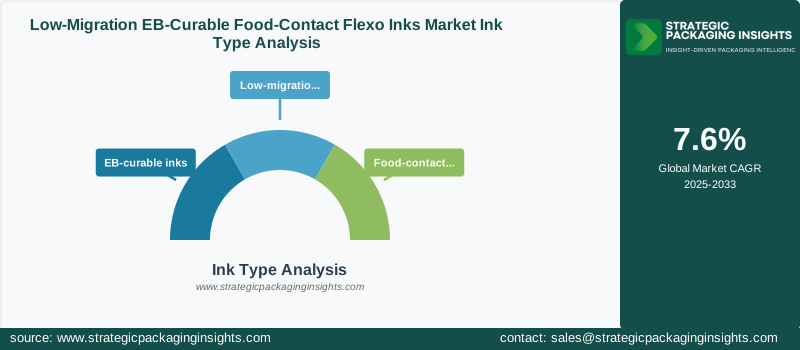
The market for EB-curable inks is expected to grow significantly, driven by advancements in curing technology and increasing demand for high-quality print solutions. As the technology becomes more accessible and cost-effective, it is anticipated to drive wider adoption across various industries. The low-migration flexo inks segment is also poised for growth, supported by the rising focus on eco-friendly packaging and the need for inks that meet stringent safety standards. Companies are investing in research and development to enhance ink formulations and expand their product offerings, catering to the evolving needs of the packaging industry.
Substrate Analysis
The substrate segment of the Low-Migration EB-Curable Food-Contact Flexo Inks market includes films, paperboard, and labels. Films are the most widely used substrate, owing to their versatility and ability to provide a high-quality print surface. The demand for films is driven by the increasing use of flexible packaging solutions in the food and beverage industry. Paperboard is another significant substrate, favored for its rigidity and ability to provide a sturdy packaging solution. The demand for paperboard is supported by the growing trend towards sustainable packaging, as it is easily recyclable and biodegradable. Labels, used extensively in the beverage industry, are witnessing increased demand due to the rise of e-commerce and the need for effective branding and product identification.

The market for films is expected to grow significantly, driven by the increasing demand for flexible packaging solutions and advancements in film technology. The paperboard segment is also poised for growth, supported by the rising focus on sustainability and the need for eco-friendly packaging solutions. Companies are investing in research and development to enhance substrate formulations and expand their product offerings, catering to the evolving needs of the packaging industry. The labels segment is witnessing increased adoption, driven by the rise of e-commerce and the need for effective branding and product identification.
Application Analysis
The application segment of the Low-Migration EB-Curable Food-Contact Flexo Inks market includes food packaging, beverage labels, and flexible packs. Food packaging is the largest application segment, driven by the increasing demand for safe and sustainable packaging solutions. The need for inks that do not migrate into food products is becoming more critical as consumers and regulatory bodies demand higher safety standards. Beverage labels are another significant application, supported by the rise of e-commerce and the need for effective branding and product identification. Flexible packs, used extensively in the food and beverage industry, are witnessing increased demand due to their versatility and ability to provide a high-quality print surface.
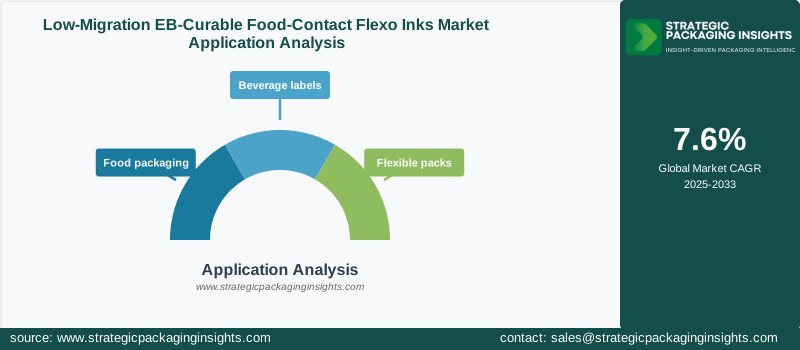
The market for food packaging is expected to grow significantly, driven by the increasing demand for safe and sustainable packaging solutions and advancements in ink formulations. The beverage labels segment is also poised for growth, supported by the rise of e-commerce and the need for effective branding and product identification. Companies are investing in research and development to enhance ink formulations and expand their product offerings, catering to the evolving needs of the packaging industry. The flexible packs segment is witnessing increased adoption, driven by the increasing demand for versatile packaging solutions and advancements in film technology.
End Use Analysis
The end-use segment of the Low-Migration EB-Curable Food-Contact Flexo Inks market includes food brands, converters, and label printers. Food brands are the largest end-use segment, driven by the increasing demand for safe and sustainable packaging solutions. The need for inks that do not migrate into food products is becoming more critical as consumers and regulatory bodies demand higher safety standards. Converters, responsible for transforming raw materials into finished packaging products, are another significant end-use segment. The demand for converters is supported by the growing trend towards sustainable packaging, as they play a crucial role in ensuring compliance with international safety standards. Label printers, used extensively in the beverage industry, are witnessing increased demand due to the rise of e-commerce and the need for effective branding and product identification.
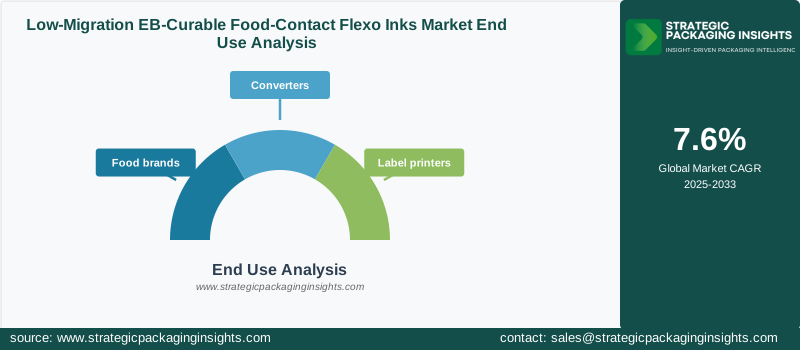
The market for food brands is expected to grow significantly, driven by the increasing demand for safe and sustainable packaging solutions and advancements in ink formulations. The converters segment is also poised for growth, supported by the rising focus on sustainability and the need for inks that meet stringent safety standards. Companies are investing in research and development to enhance ink formulations and expand their product offerings, catering to the evolving needs of the packaging industry. The label printers segment is witnessing increased adoption, driven by the rise of e-commerce and the need for effective branding and product identification.
Low-Migration EB-Curable Food-Contact Flexo Inks Market Segments
The Low-Migration EB-Curable Food-Contact Flexo Inks market has been segmented on the basis ofInk Type
- EB-curable inks
- Low-migration flexo inks
- Food-contact inks
Substrate
- Films
- Paperboard
- Labels
Application
- Food packaging
- Beverage labels
- Flexible packs
End Use
- Food brands
- Converters
- Label printers
Region
- Asia Pacific
- North America
- Latin America
- Europe
- Middle East & Africa




