


Interlock Vials Market Outlook
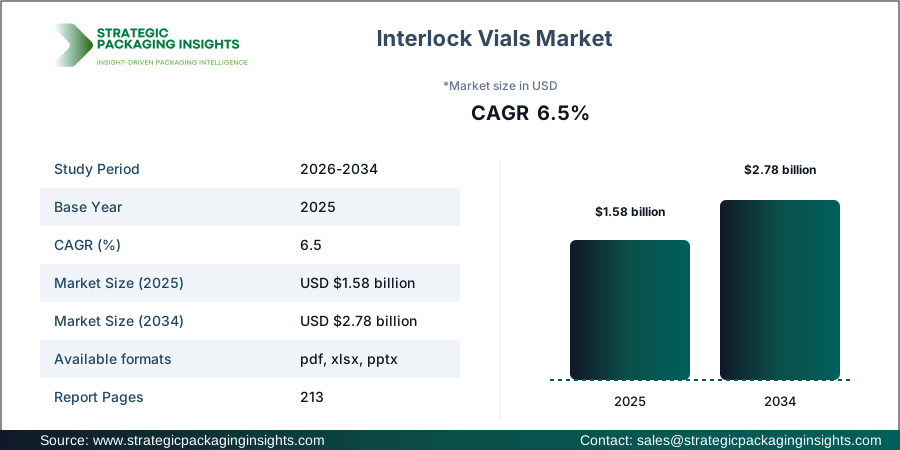
The Interlock Vials market was valued at $1.58 billion in 2025 and is projected to reach $2.78 billion by 2034, growing at a CAGR of 6.5% during the forecast period 2026-2034. This growth is driven by the increasing demand for secure and contamination-free packaging solutions in the pharmaceutical and healthcare sectors. The rising prevalence of chronic diseases and the subsequent increase in diagnostic procedures are further propelling the demand for interlock vials. Additionally, advancements in material science have led to the development of more durable and reliable vial options, enhancing their adoption across various applications.
Report Scope
| Attributes | Details |
| Report Title | Interlock Vials Market Size, Future Growth and Forecast 2034 |
| By Material Type | Glass, Polypropylene, Cyclic Olefin Polymer |
| By Capacity | Micro Vials, Small-Volume Vials, Standard Vials |
| By Application | Diagnostics, Biologics, Specialty Chemicals, Laboratory Samples |
| By End Use | Pharma Companies, Diagnostic Labs, Research Institutes, Hospitals |
| Region | Asia Pacific, North America, Latin America, Europe, Middle East & Africa |
| Base Year | 2025 |
| Historic Period | 2018-2024 |
| Forecast Period | 2026-2034 |
| Number of Pages | 213 |
| Customization Available | Yes* |
Opportunities & Threats
The Interlock Vials market presents significant opportunities, particularly in the realm of personalized medicine and biologics. As the healthcare industry shifts towards more personalized treatment options, the demand for specialized packaging solutions like interlock vials is expected to rise. These vials offer superior protection against contamination, which is crucial for maintaining the integrity of sensitive biological samples. Furthermore, the growing trend of home healthcare and point-of-care diagnostics is likely to boost the demand for interlock vials, as they provide a reliable means of sample collection and transportation.
Another opportunity lies in the expanding pharmaceutical industry in emerging markets. Countries in Asia Pacific and Latin America are witnessing rapid growth in their pharmaceutical sectors, driven by increasing healthcare expenditure and improving healthcare infrastructure. This growth is expected to create a substantial demand for interlock vials, as pharmaceutical companies in these regions seek to enhance their packaging solutions to meet international standards. Additionally, the increasing focus on sustainability and eco-friendly packaging solutions presents an opportunity for manufacturers to develop interlock vials using recyclable and biodegradable materials.
However, the market faces certain restraints, primarily related to the high cost of advanced materials used in the production of interlock vials. The use of high-quality materials such as cyclic olefin polymers can significantly increase the production costs, which may limit their adoption, especially among small and medium-sized enterprises. Additionally, stringent regulatory requirements for pharmaceutical packaging can pose challenges for manufacturers, as they need to ensure compliance with various international standards, which can be both time-consuming and costly.
Drivers & Challenges
The primary driver of the Interlock Vials market is the increasing demand for safe and secure packaging solutions in the pharmaceutical industry. With the rise in the production of biologics and specialty chemicals, there is a growing need for packaging solutions that can prevent contamination and ensure the integrity of the contents. Interlock vials, with their superior sealing capabilities, are well-suited to meet these requirements, making them a preferred choice among pharmaceutical companies. Additionally, the growing focus on patient safety and the need for compliance with stringent regulatory standards are further driving the demand for interlock vials.
Technological advancements in material science are also playing a crucial role in driving the market. The development of new materials such as cyclic olefin polymers has led to the production of vials that offer enhanced durability and chemical resistance. These materials are not only lightweight but also provide excellent barrier properties, making them ideal for storing sensitive pharmaceutical products. Furthermore, the increasing adoption of automation in the pharmaceutical packaging process is expected to boost the demand for interlock vials, as they are compatible with automated filling and sealing systems.
Despite these drivers, the market faces challenges related to the high cost of production and the need for compliance with regulatory standards. The use of advanced materials in the production of interlock vials can significantly increase the overall cost, which may deter some manufacturers from adopting these solutions. Additionally, the need to comply with various international regulatory standards can be a complex and costly process, particularly for small and medium-sized enterprises. These challenges may hinder the growth of the market to some extent, although the overall outlook remains positive.
Market Share Analysis
The Interlock Vials market is characterized by a competitive landscape with several key players vying for market share. Companies such as SCHOTT Pharma, Gerresheimer, and DWK Life Sciences are among the leading players in the market, known for their extensive product portfolios and strong distribution networks. These companies have established themselves as leaders in the market by consistently investing in research and development to introduce innovative products that meet the evolving needs of the pharmaceutical industry.
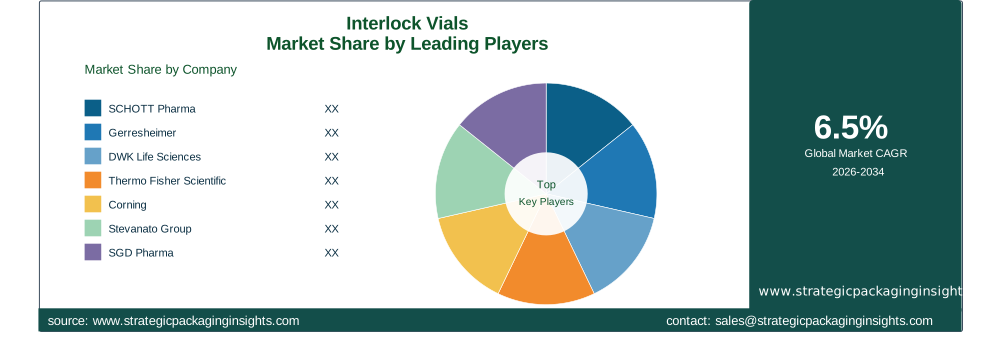
SCHOTT Pharma holds a significant market share, leveraging its expertise in glass manufacturing to produce high-quality interlock vials that offer superior protection against contamination. The company's focus on sustainability and eco-friendly packaging solutions has further strengthened its position in the market. Gerresheimer, another major player, is known for its comprehensive range of packaging solutions, including glass and plastic vials. The company's strong focus on customer satisfaction and its ability to offer customized solutions have contributed to its success in the market.
DWK Life Sciences is a prominent player in the interlock vials market, offering a wide range of laboratory glassware and packaging solutions. The company's commitment to quality and innovation has enabled it to maintain a strong presence in the market. Thermo Fisher Scientific, a global leader in scientific research and laboratory equipment, also holds a significant market share. The company's extensive distribution network and strong focus on research and development have allowed it to introduce cutting-edge packaging solutions that cater to the needs of the pharmaceutical industry.
Other notable players in the market include Corning, Stevanato Group, SGD Pharma, Nipro, Qorpak, and West Pharmaceutical Services. These companies are actively engaged in expanding their product portfolios and enhancing their manufacturing capabilities to meet the growing demand for interlock vials. The competitive landscape of the market is expected to remain dynamic, with companies focusing on strategic partnerships and collaborations to strengthen their market positions.
Key Highlights
- The Interlock Vials market is projected to grow at a CAGR of 6.5% from 2026 to 2034.
- Advancements in material science are driving the development of more durable and reliable interlock vials.
- The increasing demand for biologics and specialty chemicals is boosting the adoption of interlock vials.
- Emerging markets in Asia Pacific and Latin America present significant growth opportunities for the market.
- Stringent regulatory requirements for pharmaceutical packaging pose challenges for manufacturers.
- The market is characterized by a competitive landscape with several key players vying for market share.
- Companies are focusing on sustainability and eco-friendly packaging solutions to meet consumer demand.
- Technological advancements in automation are expected to boost the demand for interlock vials.
- The growing trend of home healthcare and point-of-care diagnostics is driving the demand for interlock vials.
Top Countries Insights
In the Interlock Vials market, the United States holds a significant share, with a market size of approximately $500 million and a CAGR of 5%. The country's well-established pharmaceutical industry and stringent regulatory standards drive the demand for high-quality packaging solutions. Additionally, the increasing focus on biologics and personalized medicine is expected to further boost the demand for interlock vials in the U.S.
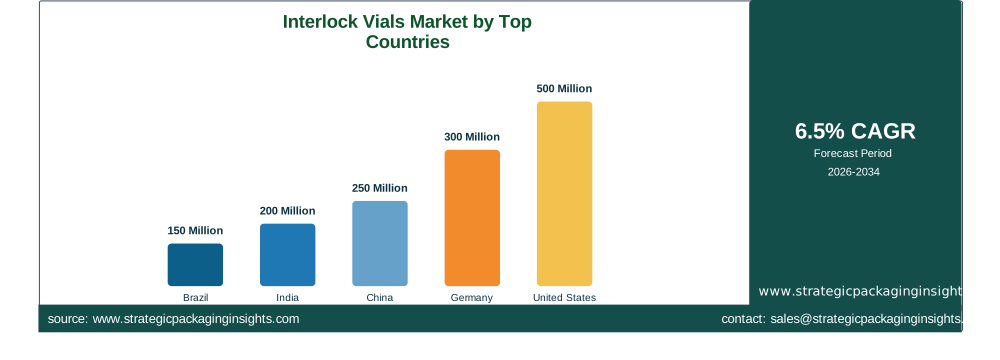
Germany is another key market, with a market size of around $300 million and a CAGR of 6%. The country's strong focus on research and development, coupled with its robust healthcare infrastructure, makes it a lucrative market for interlock vials. The presence of major pharmaceutical companies and research institutes further drives the demand for secure and reliable packaging solutions.
China is witnessing rapid growth in the Interlock Vials market, with a market size of approximately $250 million and a CAGR of 8%. The country's expanding pharmaceutical industry and increasing healthcare expenditure are key drivers of market growth. Additionally, the government's focus on improving healthcare infrastructure and promoting domestic manufacturing is expected to create significant opportunities for market players.
India, with a market size of around $200 million and a CAGR of 7%, is emerging as a key market for interlock vials. The country's growing pharmaceutical industry, driven by increasing healthcare needs and government initiatives, is expected to boost the demand for advanced packaging solutions. Furthermore, the rising trend of home healthcare and point-of-care diagnostics is likely to drive the adoption of interlock vials in India.
Brazil, with a market size of approximately $150 million and a CAGR of 6%, is another important market for interlock vials. The country's growing pharmaceutical sector and increasing focus on healthcare infrastructure development are key factors driving market growth. Additionally, the rising prevalence of chronic diseases and the subsequent increase in diagnostic procedures are expected to boost the demand for interlock vials in Brazil.
Interlock Vials Market Segments Insights

Material Type Analysis
The Interlock Vials market is segmented by material type into glass, polypropylene, and cyclic olefin polymer. Glass vials are traditionally preferred due to their excellent barrier properties and chemical resistance. However, the demand for polypropylene and cyclic olefin polymer vials is increasing due to their lightweight nature and superior durability. These materials offer enhanced protection against contamination and are ideal for storing sensitive pharmaceutical products. The growing focus on sustainability is also driving the demand for recyclable and biodegradable materials in vial production.
Polypropylene vials are gaining popularity due to their cost-effectiveness and versatility. They are widely used in applications where chemical resistance and durability are crucial. Cyclic olefin polymer vials, on the other hand, are known for their exceptional clarity and low extractables, making them suitable for high-purity applications. The increasing adoption of these advanced materials is expected to drive the growth of the Interlock Vials market during the forecast period.
Capacity Analysis
The market is also segmented by capacity into micro vials, small-volume vials, and standard vials. Micro vials are primarily used in applications requiring small sample volumes, such as laboratory testing and diagnostics. The demand for micro vials is driven by the increasing focus on precision medicine and the need for accurate diagnostic results. Small-volume vials are commonly used in pharmaceutical applications, where precise dosing and secure storage are essential.
Standard vials, with their larger capacity, are widely used in the storage and transportation of bulk pharmaceutical products. The growing demand for biologics and specialty chemicals is expected to boost the adoption of standard vials, as they offer the necessary protection and stability for these sensitive products. The increasing focus on automation in the pharmaceutical industry is also driving the demand for vials that are compatible with automated filling and sealing systems.
Application Analysis
The Interlock Vials market is segmented by application into diagnostics, biologics, specialty chemicals, and laboratory samples. The diagnostics segment is expected to witness significant growth, driven by the increasing prevalence of chronic diseases and the subsequent rise in diagnostic procedures. Interlock vials offer superior protection against contamination, making them ideal for storing and transporting diagnostic samples.
The biologics segment is also expected to grow rapidly, as the demand for biologic drugs continues to rise. Interlock vials provide the necessary protection and stability for these sensitive products, ensuring their efficacy and safety. The specialty chemicals segment is driven by the increasing demand for high-purity chemicals in various industries, while the laboratory samples segment is expected to grow due to the rising focus on research and development activities.
End Use Analysis
The market is segmented by end use into pharma companies, diagnostic labs, research institutes, and hospitals. Pharma companies are the largest end users of interlock vials, as they require secure and reliable packaging solutions for their products. The increasing production of biologics and specialty chemicals is expected to drive the demand for interlock vials in this segment.
Diagnostic labs are also significant end users, as they require vials for the storage and transportation of diagnostic samples. The growing focus on precision medicine and personalized healthcare is expected to boost the demand for interlock vials in this segment. Research institutes and hospitals are also key end users, as they require secure packaging solutions for their research and clinical applications.
Interlock Vials Market Segments
The Interlock Vials market has been segmented on the basis ofBy Material Type
- Glass
- Polypropylene
- Cyclic Olefin Polymer
By Capacity
- Micro Vials
- Small-Volume Vials
- Standard Vials
By Application
- Diagnostics
- Biologics
- Specialty Chemicals
- Laboratory Samples
By End Use
- Pharma Companies
- Diagnostic Labs
- Research Institutes
- Hospitals
Region
- Asia Pacific
- North America
- Latin America
- Europe
- Middle East & Africa




