


Cyclic Olefin Polymers Market Outlook
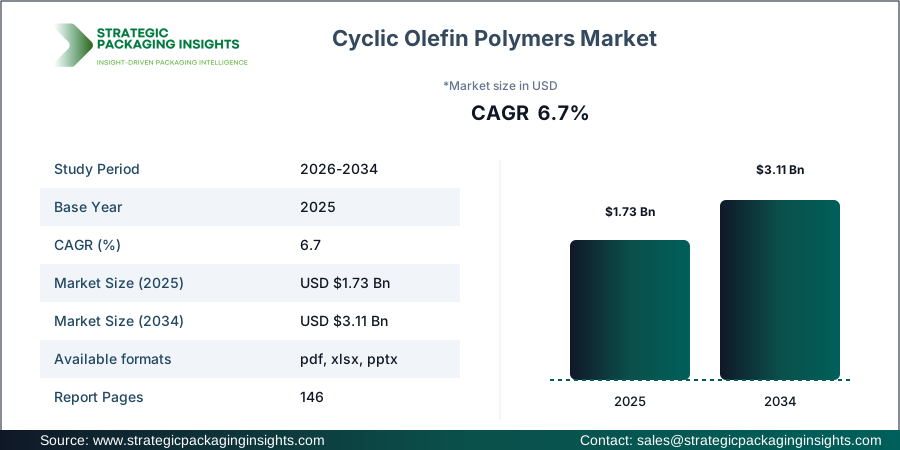
The Cyclic Olefin Polymers market size was valued at USD 1.73 billion in 2025 and is anticipated to reach USD 3.11 billion by 2034, growing at a CAGR of 6.7% during the forecast period according to Strategic Packaging Insights. Zeon Corporation, a leading player in this market, has been instrumental in driving growth through innovative product offerings and strategic partnerships. The demand for cyclic olefin polymers is primarily driven by their superior properties such as high transparency, low moisture absorption, and excellent chemical resistance, making them ideal for applications in healthcare, electronics, and packaging industries. The increasing adoption of these polymers in pharmaceutical packaging and medical devices further fuels market expansion.
One of the most impactful drivers of the cyclic olefin polymers market is the growing emphasis on sustainable and eco-friendly materials. Governments worldwide are implementing stringent regulations to reduce carbon footprints and promote the use of recyclable materials. This trend is encouraging manufacturers like TOPAS Advanced Polymers to invest in research and development to create more sustainable polymer solutions. The shift towards lightweight and durable packaging solutions is also contributing to the market's growth, as cyclic olefin polymers offer significant advantages in terms of weight reduction and durability. These factors, combined with the rising consumer awareness regarding environmental sustainability, are expected to propel the market forward.
Report Scope
| Attributes | Details |
| Report Title | Cyclic Olefin Polymers Market Size, Future Growth and Forecast 2034 |
| Product Type | Cyclic Olefin Polymer, Cyclic Olefin Copolymer |
| Application | Pharma Packaging, Medical Devices, Optics, Diagnostics |
| End Use | Healthcare, Electronics, Packaging, Laboratory |
| Processing Type | Injection Molding, Extrusion, Blow Molding |
| Region | Asia Pacific, North America, Latin America, Europe, Middle East & Africa |
| Base Year | 2025 |
| Historic Period | 2018-2024 |
| Forecast Period | 2026-2034 |
| Number of Pages | 146 |
| Customization Available | Yes* |
Sustainability & Circular Economy Analysis
Sustainability initiatives and circular economy practices are significantly influencing the cyclic olefin polymers market. The push towards recyclable materials and reusable packaging is reshaping the industry, with companies like Mitsui Chemicals leading the charge in developing eco-friendly material innovations. These initiatives are not only reducing waste but also enhancing the overall lifecycle of packaging products. The integration of lightweight packaging solutions is becoming increasingly important as companies strive to minimize their carbon footprint and meet stringent environmental regulations.
Eco-friendly material innovation is at the forefront of the cyclic olefin polymers market, with companies investing heavily in research and development to create sustainable alternatives. Waste reduction strategies are being implemented across the supply chain, from raw material sourcing to end-product recycling. Extended Producer Responsibility (EPR) is gaining traction, compelling manufacturers to take responsibility for the entire lifecycle of their products. This shift is influencing packaging design and manufacturing processes, as companies aim to create products that are not only functional but also environmentally responsible.
Consumer preferences are increasingly leaning towards sustainable packaging solutions, driving demand for cyclic olefin polymers. Packaging regulations are becoming more stringent, with governments enforcing policies that promote the use of eco-friendly materials. This regulatory landscape is pushing companies to innovate and invest in sustainable packaging solutions to remain competitive. The focus on reducing carbon footprints and enhancing supply chain resilience is shaping investment decisions and long-term market competitiveness, making sustainability a key driver of growth in the cyclic olefin polymers market.
Packaging Value Chain & Supply Chain Analysis
The packaging value chain for cyclic olefin polymers is complex, involving multiple stakeholders from raw material suppliers to end-product manufacturers. Raw material sourcing is a critical component, with companies like JSR Corporation ensuring a steady supply of high-quality polymers to meet growing demand. Packaging converters and manufacturers play a pivotal role in transforming these raw materials into functional packaging solutions. The efficiency of this process is crucial, as it directly impacts production capabilities and market performance.
Supply chain efficiency is a key determinant of success in the cyclic olefin polymers market. Strategic partnerships and collaborations are essential for optimizing logistics and distribution channels. Companies like Polyplastics are leveraging their global presence to enhance supply chain resilience and ensure timely delivery of products. Inventory management and procurement strategies are being refined to address challenges related to raw material availability and transportation. Localization is becoming increasingly important as companies seek to reduce dependency on global sourcing and enhance supply chain agility.
Recycling networks are an integral part of the cyclic olefin polymers supply chain, with companies investing in infrastructure to support the collection and processing of used materials. This focus on recycling is not only reducing waste but also creating new business opportunities. Brand owners and retailers are increasingly prioritizing sustainable packaging solutions, driving demand for cyclic olefin polymers. The integration of advanced packaging machinery is enhancing production capabilities, enabling companies to meet the evolving needs of consumers and maintain a competitive edge in the market.
Opportunities & Threats
The cyclic olefin polymers market presents numerous opportunities for growth, driven by the increasing demand for sustainable and high-performance materials. The healthcare sector, in particular, offers significant potential, with cyclic olefin polymers being used extensively in pharmaceutical packaging and medical devices. The growing emphasis on patient safety and product integrity is driving demand for these polymers, as they offer superior barrier properties and chemical resistance. Additionally, the electronics industry is witnessing a surge in demand for cyclic olefin polymers, as they provide excellent optical clarity and dimensional stability, making them ideal for applications in optics and diagnostics.
Another opportunity lies in the development of innovative processing techniques, such as injection molding and extrusion, which are enhancing the versatility and application range of cyclic olefin polymers. Companies are investing in research and development to create new formulations and processing methods that improve product performance and reduce production costs. The shift towards lightweight and durable packaging solutions is also creating opportunities for market expansion, as cyclic olefin polymers offer significant advantages in terms of weight reduction and durability.
However, the cyclic olefin polymers market is not without its challenges. One of the primary restrainers is the high cost of production, which can limit the adoption of these polymers in price-sensitive markets. Additionally, the availability of raw materials can be a concern, as fluctuations in supply can impact production capabilities and market performance. Regulatory compliance is another challenge, with companies needing to navigate complex regulations related to environmental sustainability and product safety. Despite these challenges, the market is poised for growth, driven by the increasing demand for sustainable and high-performance materials.
Drivers & Challenges
The cyclic olefin polymers market is driven by several key factors, including the growing demand for sustainable and high-performance materials. The healthcare sector is a major driver, with cyclic olefin polymers being used extensively in pharmaceutical packaging and medical devices. The increasing emphasis on patient safety and product integrity is driving demand for these polymers, as they offer superior barrier properties and chemical resistance. Additionally, the electronics industry is witnessing a surge in demand for cyclic olefin polymers, as they provide excellent optical clarity and dimensional stability, making them ideal for applications in optics and diagnostics.
Another significant driver is the development of innovative processing techniques, such as injection molding and extrusion, which are enhancing the versatility and application range of cyclic olefin polymers. Companies are investing in research and development to create new formulations and processing methods that improve product performance and reduce production costs. The shift towards lightweight and durable packaging solutions is also driving market growth, as cyclic olefin polymers offer significant advantages in terms of weight reduction and durability. These factors, combined with the rising consumer awareness regarding environmental sustainability, are expected to propel the market forward.
Despite the positive drivers, the cyclic olefin polymers market faces several challenges. One of the primary challenges is the high cost of production, which can limit the adoption of these polymers in price-sensitive markets. Additionally, the availability of raw materials can be a concern, as fluctuations in supply can impact production capabilities and market performance. Regulatory compliance is another challenge, with companies needing to navigate complex regulations related to environmental sustainability and product safety. Despite these challenges, the market is poised for growth, driven by the increasing demand for sustainable and high-performance materials.
Market Share Analysis
The cyclic olefin polymers market is characterized by a competitive landscape, with several key players vying for market share. Companies like Zeon Corporation, TOPAS Advanced Polymers, and Mitsui Chemicals are leading the market, leveraging their extensive product portfolios and strong distribution networks to maintain a competitive edge. These companies are investing heavily in research and development to create innovative products that meet the evolving needs of consumers. The focus on sustainability and eco-friendly materials is driving market competition, with companies striving to develop products that are not only functional but also environmentally responsible.
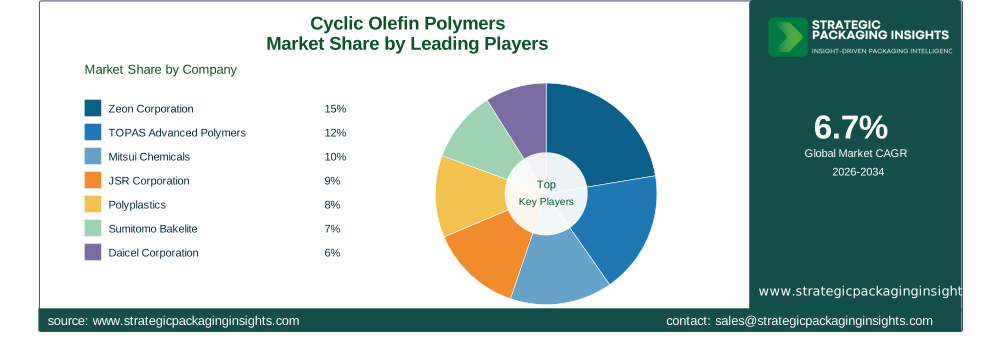
Zeon Corporation is a major player in the cyclic olefin polymers market, known for its innovative product offerings and strategic partnerships. The company has a strong presence in the healthcare and electronics sectors, providing high-performance polymers that meet the stringent requirements of these industries. TOPAS Advanced Polymers is another key player, offering a wide range of cyclic olefin copolymers that are used in various applications, including pharmaceutical packaging and medical devices. The company's focus on sustainability and eco-friendly materials is driving its growth in the market.
Mitsui Chemicals is a leading manufacturer of cyclic olefin polymers, known for its commitment to innovation and sustainability. The company offers a diverse range of products that cater to the needs of various industries, including healthcare, electronics, and packaging. JSR Corporation is another prominent player, offering high-quality cyclic olefin polymers that are used in a wide range of applications. The company's focus on research and development is driving its growth in the market, as it continues to create innovative products that meet the evolving needs of consumers.
Polyplastics is a key player in the cyclic olefin polymers market, known for its extensive product portfolio and strong distribution network. The company offers a wide range of polymers that are used in various applications, including pharmaceutical packaging and medical devices. Sumitomo Bakelite is another major player, offering high-performance polymers that are used in the healthcare and electronics sectors. The company's focus on sustainability and eco-friendly materials is driving its growth in the market, as it continues to develop innovative products that meet the evolving needs of consumers.
Key Highlights
- Market Size: The cyclic olefin polymers market was valued at USD 1.73 billion in 2025 and is projected to reach USD 3.11 billion by 2034.
- Growth Rate: The market is expected to grow at a CAGR of 6.7% during the forecast period.
- Leading Companies: Key players include Zeon Corporation, TOPAS Advanced Polymers, and Mitsui Chemicals.
- Product Segments: Cyclic Olefin Polymer and Cyclic Olefin Copolymer are the primary product types.
- Application Areas: Major applications include Pharma Packaging, Medical Devices, Optics, and Diagnostics.
- End Use Industries: Healthcare, Electronics, Packaging, and Laboratory are the main end-use sectors.
- Processing Techniques: Injection Molding, Extrusion, and Blow Molding are the key processing methods.
- Regional Insights: Asia Pacific is expected to witness significant growth, driven by increasing demand in healthcare and electronics sectors.
Cyclic Olefin Polymers Market Segments Insights

Product Type Analysis
The cyclic olefin polymers market is segmented by product type into Cyclic Olefin Polymer (COP) and Cyclic Olefin Copolymer (COC). COPs are known for their excellent optical properties, low moisture absorption, and high chemical resistance, making them ideal for applications in optics and diagnostics. The demand for COPs is driven by their superior performance in high-precision applications, particularly in the healthcare and electronics sectors. COCs, on the other hand, offer a unique combination of transparency, rigidity, and heat resistance, making them suitable for a wide range of applications, including pharmaceutical packaging and medical devices. The growing emphasis on sustainable and eco-friendly materials is driving the demand for both COPs and COCs, as manufacturers seek to develop innovative products that meet the evolving needs of consumers.
Companies like TOPAS Advanced Polymers are leading the market in the development of high-performance COCs, leveraging their extensive research and development capabilities to create innovative products that cater to the needs of various industries. The focus on sustainability and eco-friendly materials is driving market competition, with companies striving to develop products that are not only functional but also environmentally responsible. The increasing adoption of COPs and COCs in the healthcare and electronics sectors is expected to drive market growth, as these polymers offer significant advantages in terms of performance and sustainability.
Application Analysis
The cyclic olefin polymers market is segmented by application into Pharma Packaging, Medical Devices, Optics, and Diagnostics. Pharma packaging is a major application area, with cyclic olefin polymers being used extensively in the production of vials, syringes, and other pharmaceutical packaging solutions. The demand for these polymers is driven by their superior barrier properties and chemical resistance, which ensure the safety and integrity of pharmaceutical products. Medical devices are another key application area, with cyclic olefin polymers being used in the production of various medical components, including catheters, connectors, and diagnostic devices. The growing emphasis on patient safety and product integrity is driving demand for these polymers, as they offer significant advantages in terms of performance and reliability.
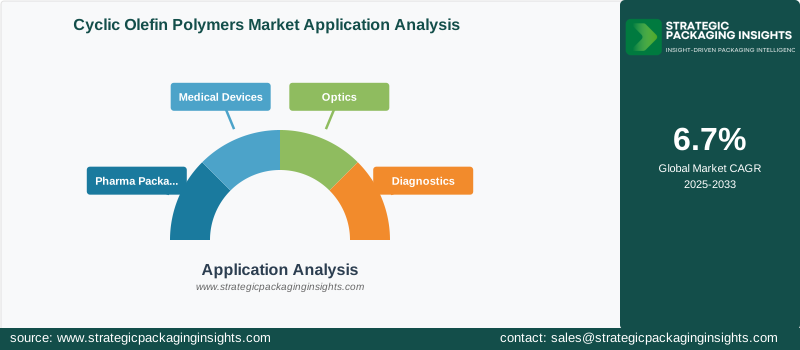
Optics and diagnostics are also important application areas for cyclic olefin polymers, with these materials being used in the production of lenses, optical components, and diagnostic devices. The demand for cyclic olefin polymers in these applications is driven by their excellent optical clarity and dimensional stability, which ensure the accuracy and reliability of optical and diagnostic devices. The increasing adoption of cyclic olefin polymers in these applications is expected to drive market growth, as manufacturers seek to develop innovative products that meet the evolving needs of consumers.
End Use Analysis
The cyclic olefin polymers market is segmented by end use into Healthcare, Electronics, Packaging, and Laboratory. The healthcare sector is a major end-use industry, with cyclic olefin polymers being used extensively in pharmaceutical packaging and medical devices. The demand for these polymers is driven by their superior barrier properties and chemical resistance, which ensure the safety and integrity of healthcare products. The electronics industry is another key end-use sector, with cyclic olefin polymers being used in the production of various electronic components, including lenses, optical components, and diagnostic devices. The demand for these polymers is driven by their excellent optical clarity and dimensional stability, which ensure the accuracy and reliability of electronic devices.
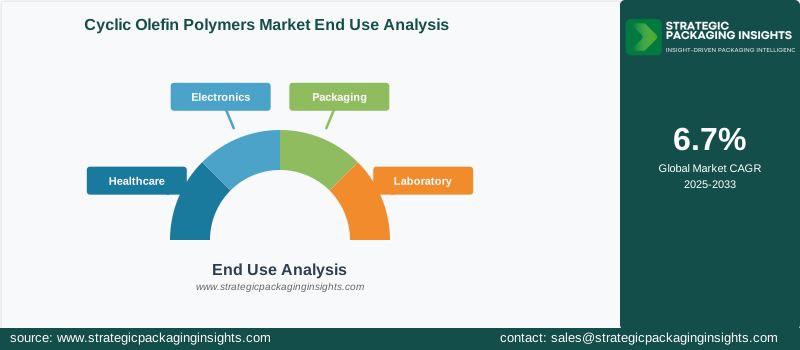
Packaging is also an important end-use industry for cyclic olefin polymers, with these materials being used in the production of various packaging solutions, including vials, syringes, and other pharmaceutical packaging solutions. The demand for cyclic olefin polymers in the packaging industry is driven by their superior barrier properties and chemical resistance, which ensure the safety and integrity of packaged products. The laboratory sector is another important end-use industry, with cyclic olefin polymers being used in the production of various laboratory components, including connectors, catheters, and diagnostic devices. The demand for these polymers is driven by their superior performance and reliability, which ensure the accuracy and reliability of laboratory devices.
Processing Type Analysis
The cyclic olefin polymers market is segmented by processing type into Injection Molding, Extrusion, and Blow Molding. Injection molding is a widely used processing technique, with cyclic olefin polymers being used in the production of various components, including lenses, optical components, and diagnostic devices. The demand for these polymers in injection molding is driven by their excellent optical clarity and dimensional stability, which ensure the accuracy and reliability of molded components. Extrusion is another important processing technique, with cyclic olefin polymers being used in the production of various packaging solutions, including vials, syringes, and other pharmaceutical packaging solutions. The demand for these polymers in extrusion is driven by their superior barrier properties and chemical resistance, which ensure the safety and integrity of extruded products.
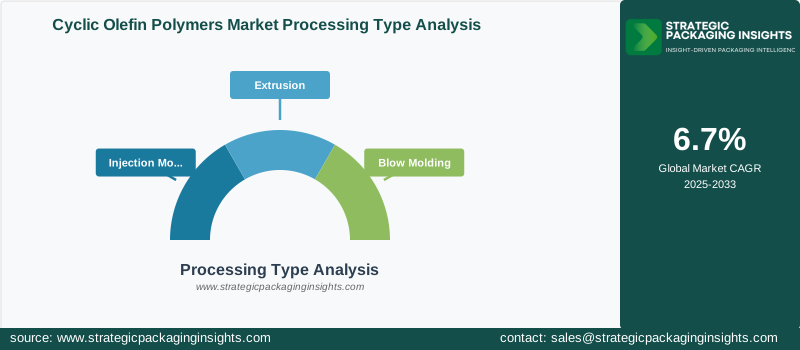
Blow molding is also an important processing technique for cyclic olefin polymers, with these materials being used in the production of various components, including connectors, catheters, and diagnostic devices. The demand for cyclic olefin polymers in blow molding is driven by their superior performance and reliability, which ensure the accuracy and reliability of molded components. The increasing adoption of cyclic olefin polymers in these processing techniques is expected to drive market growth, as manufacturers seek to develop innovative products that meet the evolving needs of consumers.
Cyclic Olefin Polymers Market Segments
The Cyclic Olefin Polymers market has been segmented on the basis ofProduct Type
- Cyclic Olefin Polymer
- Cyclic Olefin Copolymer
Application
- Pharma Packaging
- Medical Devices
- Optics
- Diagnostics
End Use
- Healthcare
- Electronics
- Packaging
- Laboratory
Processing Type
- Injection Molding
- Extrusion
- Blow Molding
Region
- Asia Pacific
- North America
- Latin America
- Europe
- Middle East & Africa




