


Micro Vials Market Outlook
The micro vials market was valued at $3.15 billion in 2025 and is projected to reach $5.51 billion by 2034, growing at a CAGR of 6.4% during the forecast period 2026-2034. This growth is driven by the increasing demand for precise and reliable sample storage solutions in the pharmaceutical and biotechnology sectors. The rising prevalence of chronic diseases and the subsequent increase in diagnostic testing are also contributing to the market's expansion. Additionally, advancements in material science have led to the development of more durable and chemically resistant vials, further boosting market demand.

Despite the promising growth prospects, the micro vials market faces certain challenges. Regulatory constraints and stringent quality standards imposed by health authorities can pose significant hurdles for market players. Moreover, the high cost of raw materials and manufacturing processes may limit the market's growth potential. However, the increasing focus on personalized medicine and the growing trend of outsourcing pharmaceutical manufacturing to emerging economies present lucrative opportunities for market expansion. As companies continue to innovate and improve their product offerings, the micro vials market is expected to witness sustained growth over the forecast period.
Report Scope
| Attributes | Details |
| Report Title | Micro Vials Market Size, Future Growth and Forecast 2034 |
| Material Type | Glass, Cyclic Olefin Polymer, Polypropylene, Specialty Polymers |
| Capacity | Below 1 mL, 1–3 mL, 3–5 mL |
| Application | Diagnostics, Biologics, Laboratory Samples, Specialty Injectables |
| End Use | Pharma Companies, Diagnostic Labs, Research Institutes, Hospitals |
| Region | Asia Pacific, North America, Latin America, Europe, Middle East & Africa |
| Base Year | 2025 |
| Historic Period | 2018-2024 |
| Forecast Period | 2026-2034 |
| Number of Pages | 231 |
| Customization Available | Yes* |
Opportunities & Threats
The micro vials market presents numerous opportunities, particularly in the realm of personalized medicine. As healthcare providers increasingly tailor treatments to individual patients, the demand for precise and reliable sample storage solutions is expected to rise. This trend is particularly evident in the field of oncology, where personalized treatment plans are becoming more common. Additionally, the growing emphasis on preventive healthcare and early diagnosis is driving demand for diagnostic testing, further boosting the need for micro vials. The expansion of the pharmaceutical industry in emerging markets also presents significant growth opportunities, as these regions invest in healthcare infrastructure and increase their focus on research and development.
Another opportunity lies in the development of eco-friendly and sustainable packaging solutions. With increasing awareness of environmental issues, there is a growing demand for packaging materials that are biodegradable and recyclable. Companies that can offer sustainable micro vial solutions are likely to gain a competitive edge in the market. Furthermore, advancements in material science and manufacturing technologies are enabling the production of more durable and chemically resistant vials, which can withstand harsh storage conditions and extend the shelf life of samples.
However, the micro vials market is not without its threats. One of the primary challenges is the stringent regulatory environment governing the production and use of micro vials. Compliance with international quality standards and regulations can be costly and time-consuming, posing a barrier to entry for new market players. Additionally, the high cost of raw materials and manufacturing processes can impact profit margins and limit market growth. The presence of counterfeit products in the market also poses a threat, as they can undermine the credibility of genuine products and erode consumer trust.
Drivers & Challenges
The micro vials market is driven by several key factors, including the increasing demand for diagnostic testing and the growing prevalence of chronic diseases. As healthcare providers focus on early diagnosis and preventive care, the need for reliable sample storage solutions is on the rise. The pharmaceutical and biotechnology industries are also major drivers of market growth, as they require high-quality vials for the storage and transportation of sensitive samples. Additionally, advancements in material science have led to the development of more durable and chemically resistant vials, further boosting market demand.
Another significant driver is the expansion of the pharmaceutical industry in emerging markets. As these regions invest in healthcare infrastructure and increase their focus on research and development, the demand for micro vials is expected to grow. The increasing trend of outsourcing pharmaceutical manufacturing to countries with lower production costs also presents opportunities for market expansion. Furthermore, the growing emphasis on personalized medicine and the development of targeted therapies are driving demand for precise and reliable sample storage solutions.
Despite these drivers, the micro vials market faces several challenges. One of the primary challenges is the stringent regulatory environment governing the production and use of micro vials. Compliance with international quality standards and regulations can be costly and time-consuming, posing a barrier to entry for new market players. Additionally, the high cost of raw materials and manufacturing processes can impact profit margins and limit market growth. The presence of counterfeit products in the market also poses a threat, as they can undermine the credibility of genuine products and erode consumer trust.
Market Share Analysis
The competitive landscape of the micro vials market is characterized by the presence of several key players, each vying for market share through innovation and strategic partnerships. SCHOTT Pharma is a leading player in the market, known for its high-quality glass vials and commitment to sustainability. The company has a strong presence in both developed and emerging markets, and its focus on research and development has enabled it to maintain a competitive edge. Gerresheimer is another major player, offering a wide range of vials made from various materials, including glass and cyclic olefin polymer. The company's extensive product portfolio and global distribution network have contributed to its strong market position.
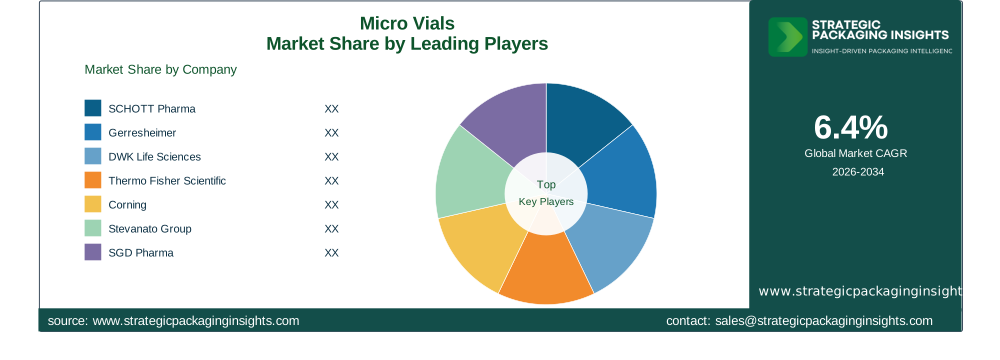
DWK Life Sciences is a prominent player in the micro vials market, known for its innovative solutions and commitment to quality. The company offers a comprehensive range of vials for various applications, including diagnostics and biologics. Thermo Fisher Scientific is also a key player, leveraging its extensive expertise in laboratory equipment and consumables to offer high-quality micro vials. The company's focus on customer satisfaction and continuous improvement has helped it maintain a strong market presence.
Corning is a well-established player in the micro vials market, known for its advanced material technologies and commitment to sustainability. The company's focus on innovation and product development has enabled it to offer a wide range of vials for various applications. Stevanato Group is another key player, offering high-quality vials made from glass and specialty polymers. The company's focus on customer-centric solutions and continuous improvement has helped it maintain a competitive edge in the market.
SGD Pharma, West Pharmaceutical Services, Nipro, and Qorpak are also significant players in the micro vials market, each offering a diverse range of products and solutions. These companies have established strong market positions through strategic partnerships, product innovation, and a focus on customer satisfaction. As the market continues to evolve, these key players are expected to play a crucial role in shaping the future of the micro vials industry.
Key Highlights
- The micro vials market is projected to grow at a CAGR of 6.4% from 2026 to 2034.
- Increasing demand for diagnostic testing and personalized medicine is driving market growth.
- Advancements in material science are leading to the development of more durable and chemically resistant vials.
- Emerging markets present significant growth opportunities due to investments in healthcare infrastructure.
- Stringent regulatory environment poses challenges for market players.
- High cost of raw materials and manufacturing processes can impact profit margins.
- Presence of counterfeit products in the market poses a threat to genuine products.
Top Countries Insights
The United States is a leading market for micro vials, with a current market size of approximately $1.2 billion and a CAGR of 5%. The country's well-established pharmaceutical and biotechnology industries drive demand for high-quality vials. Additionally, the focus on personalized medicine and preventive healthcare further boosts market growth. However, stringent regulatory requirements and high production costs pose challenges for market players.

Germany is another key market, with a market size of around $800 million and a CAGR of 4%. The country's strong focus on research and development, coupled with its advanced healthcare infrastructure, drives demand for micro vials. The presence of leading pharmaceutical companies and research institutes further supports market growth. However, the high cost of raw materials and compliance with stringent quality standards can impact market expansion.
China is a rapidly growing market for micro vials, with a market size of approximately $600 million and a CAGR of 8%. The country's expanding pharmaceutical industry and increasing investments in healthcare infrastructure drive demand for micro vials. Additionally, the growing focus on research and development and the trend of outsourcing pharmaceutical manufacturing to China present significant growth opportunities. However, the presence of counterfeit products and regulatory challenges can pose threats to market growth.
India is another emerging market, with a market size of around $500 million and a CAGR of 7%. The country's growing pharmaceutical and biotechnology industries, coupled with increasing investments in healthcare infrastructure, drive demand for micro vials. The focus on affordable healthcare and the trend of outsourcing pharmaceutical manufacturing to India further support market growth. However, regulatory challenges and the presence of counterfeit products can impact market expansion.
Brazil is a key market in Latin America, with a market size of approximately $400 million and a CAGR of 6%. The country's expanding healthcare infrastructure and growing focus on research and development drive demand for micro vials. Additionally, the presence of leading pharmaceutical companies and research institutes further supports market growth. However, economic instability and regulatory challenges can pose threats to market expansion.
Micro Vials Market Segments Insights

Material Type Analysis
The material type segment of the micro vials market is crucial, as it determines the vial's durability, chemical resistance, and suitability for various applications. Glass vials are the most commonly used due to their excellent chemical resistance and transparency, which allows for easy inspection of the contents. However, they are fragile and can break easily, which has led to the development of alternative materials such as cyclic olefin polymer (COP) and polypropylene. COP vials offer superior chemical resistance and are less prone to breakage, making them ideal for sensitive applications. Polypropylene vials are lightweight and cost-effective, making them suitable for high-volume applications. Specialty polymers are also gaining traction due to their unique properties, such as enhanced barrier protection and compatibility with a wide range of substances.

The choice of material is often influenced by the specific requirements of the application, such as the need for sterilization, storage conditions, and compatibility with the sample. As the demand for more durable and chemically resistant vials increases, manufacturers are investing in research and development to create innovative materials that meet these needs. The growing focus on sustainability is also driving the development of eco-friendly materials, which are biodegradable and recyclable. As a result, the material type segment is expected to witness significant growth over the forecast period, driven by advancements in material science and the increasing demand for high-quality vials.
Capacity Analysis
The capacity segment of the micro vials market is categorized into below 1 mL, 1-3 mL, and 3-5 mL. The choice of capacity is often determined by the specific requirements of the application, such as the volume of the sample and the need for precise measurement. Vials with a capacity below 1 mL are commonly used for high-value samples, where precision and accuracy are critical. These vials are often used in applications such as biologics and specialty injectables, where even small variations in volume can impact the efficacy of the product.

Vials with a capacity of 1-3 mL are widely used in diagnostic applications, where larger sample volumes are required for accurate testing. These vials offer a balance between capacity and precision, making them suitable for a wide range of applications. Vials with a capacity of 3-5 mL are typically used in applications where larger sample volumes are needed, such as laboratory samples and certain diagnostic tests. As the demand for diagnostic testing and personalized medicine continues to grow, the capacity segment is expected to witness significant growth over the forecast period.
Application Analysis
The application segment of the micro vials market is diverse, encompassing diagnostics, biologics, laboratory samples, and specialty injectables. Diagnostics is a major application area, driven by the increasing demand for early diagnosis and preventive healthcare. Micro vials are used to store and transport samples for various diagnostic tests, ensuring the integrity and reliability of the results. The growing prevalence of chronic diseases and the focus on personalized medicine are further boosting demand for diagnostic applications.

Biologics is another key application area, as these products require precise and reliable storage solutions to maintain their efficacy. Micro vials are used to store and transport biologics, ensuring their stability and integrity. Laboratory samples also represent a significant application area, as micro vials are used to store and transport samples for research and development purposes. Specialty injectables, which require precise dosing and storage conditions, are also driving demand for micro vials. As the demand for these applications continues to grow, the application segment is expected to witness significant growth over the forecast period.
End Use Analysis
The end use segment of the micro vials market includes pharma companies, diagnostic labs, research institutes, and hospitals. Pharma companies are major users of micro vials, as they require high-quality vials for the storage and transportation of sensitive samples. The growing focus on research and development and the trend of outsourcing pharmaceutical manufacturing to emerging markets are driving demand for micro vials in this segment.

Diagnostic labs are also significant users of micro vials, as they require reliable sample storage solutions for various diagnostic tests. The increasing demand for early diagnosis and preventive healthcare is further boosting demand for micro vials in this segment. Research institutes, which focus on the development of new drugs and therapies, also represent a significant end use segment. Hospitals, which require reliable sample storage solutions for various medical applications, are also driving demand for micro vials. As the demand for these end use applications continues to grow, the end use segment is expected to witness significant growth over the forecast period.
Micro Vials Market Segments
The Micro Vials market has been segmented on the basis ofMaterial Type
- Glass
- Cyclic Olefin Polymer
- Polypropylene
- Specialty Polymers
Capacity
- Below 1 mL
- 1–3 mL
- 3–5 mL
Application
- Diagnostics
- Biologics
- Laboratory Samples
- Specialty Injectables
End Use
- Pharma Companies
- Diagnostic Labs
- Research Institutes
- Hospitals
Region
- Asia Pacific
- North America
- Latin America
- Europe
- Middle East & Africa




