


High-Opacity White Inks for Recyclable PE and PP Films Market Outlook
The High-Opacity White Inks for Recyclable PE and PP Films market was valued at $1.02 billion in 2025 and is projected to reach $1.86 billion by 2034, growing at a CAGR of 6.9% during the forecast period 2026-2034. This market is witnessing significant growth due to the increasing demand for sustainable packaging solutions. The shift towards recyclable materials in packaging is driving the need for high-opacity white inks that can maintain print quality while being environmentally friendly. The market is also benefiting from advancements in ink formulations that enhance the recyclability of PE and PP films without compromising on performance. The growing awareness and regulatory push towards reducing plastic waste are further propelling the market forward.
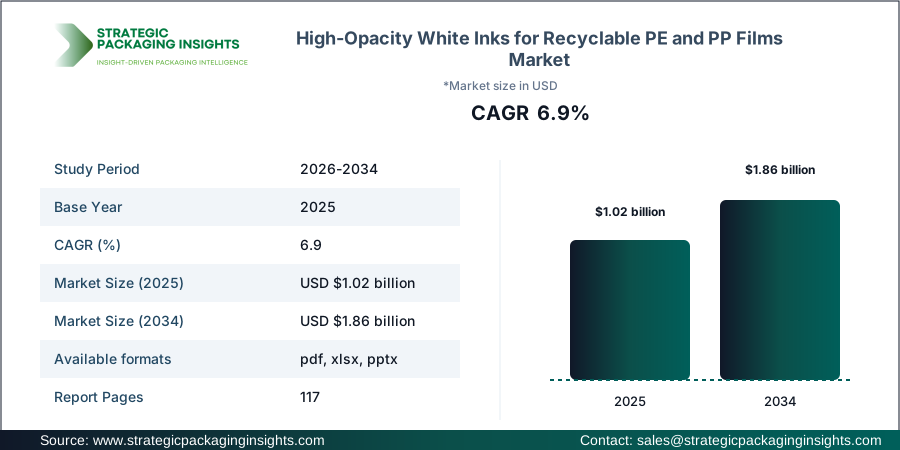
However, the market faces challenges such as the high cost of raw materials and the complexity of developing inks that meet both performance and environmental standards. Regulatory restrictions on certain chemicals used in ink formulations are also a significant restraint. Despite these challenges, the market holds substantial growth potential, driven by innovations in ink technology and the increasing adoption of recyclable packaging by major brands. The ongoing research and development efforts aimed at improving the performance and sustainability of these inks are expected to open new avenues for market expansion.
Report Scope
| Attributes | Details |
| Report Title | High-Opacity White Inks for Recyclable PE and PP Films Market Size, Future Growth and Forecast 2034 |
| Ink Type | Solvent-Based, Water-Based, UV-Curable |
| Substrate | PE Films, PP Films, Mono-Material Films |
| Application | Flexible Packaging, Labels, Pouches |
| End Use | Food, Personal Care, Household Care, Retail Packaging |
| Region | Asia Pacific, North America, Latin America, Europe, Middle East & Africa |
| Base Year | 2025 |
| Historic Period | 2018-2024 |
| Forecast Period | 2026-2034 |
| Number of Pages | 117 |
| Customization Available | Yes* |
Opportunities & Threats
The High-Opacity White Inks for Recyclable PE and PP Films market presents numerous opportunities, particularly in the realm of sustainable packaging. As consumers and regulatory bodies push for more eco-friendly packaging solutions, companies are investing in the development of inks that not only provide high opacity but also enhance the recyclability of packaging materials. This trend is particularly strong in regions like Europe and North America, where environmental regulations are stringent. The demand for flexible packaging solutions in the food and beverage industry is another significant opportunity, as these sectors seek to reduce their environmental footprint by adopting recyclable materials.
Another opportunity lies in the technological advancements in ink formulations. Companies are focusing on developing inks that offer superior print quality and durability while being compatible with a wide range of substrates. The rise of digital printing technologies is also creating new opportunities for high-opacity white inks, as these technologies require specialized inks that can deliver consistent results. Additionally, the growing trend of personalized and customized packaging is driving the demand for high-quality inks that can produce vibrant and detailed prints.
Despite these opportunities, the market faces threats from the volatility in raw material prices, which can impact the cost structure of ink manufacturers. The availability of cheaper alternatives, such as conventional inks that do not prioritize recyclability, poses a competitive threat. Furthermore, the stringent regulatory landscape, particularly concerning the use of certain chemicals in ink formulations, can pose compliance challenges for manufacturers. Companies need to navigate these regulatory hurdles while ensuring that their products meet the evolving demands of the market.
Drivers & Challenges
The primary drivers of the High-Opacity White Inks for Recyclable PE and PP Films market include the increasing demand for sustainable packaging solutions and the growing awareness of environmental issues. As consumers become more environmentally conscious, there is a rising demand for packaging materials that are not only recyclable but also maintain high print quality. This has led to increased investments in the development of high-opacity white inks that can meet these requirements. The food and beverage industry, in particular, is a major driver, as it seeks to reduce its environmental impact by adopting recyclable packaging solutions.
Technological advancements in ink formulations are another significant driver of market growth. Companies are investing in research and development to create inks that offer superior performance while being environmentally friendly. The development of UV-curable inks, for example, has opened new possibilities for high-opacity white inks, as these inks offer excellent adhesion and durability on a variety of substrates. The rise of digital printing technologies is also driving demand, as these technologies require specialized inks that can deliver consistent and high-quality results.
However, the market faces several challenges, including the high cost of raw materials and the complexity of developing inks that meet both performance and environmental standards. The volatility in raw material prices can impact the cost structure of ink manufacturers, making it challenging to maintain competitive pricing. Additionally, the stringent regulatory landscape, particularly concerning the use of certain chemicals in ink formulations, poses compliance challenges for manufacturers. Companies need to navigate these regulatory hurdles while ensuring that their products meet the evolving demands of the market.
Market Share Analysis
The competitive landscape of the High-Opacity White Inks for Recyclable PE and PP Films market is characterized by the presence of several key players who are actively engaged in product innovation and strategic partnerships. Sun Chemical, a leading player in the market, holds a significant market share due to its extensive product portfolio and strong distribution network. The company is known for its innovative ink formulations that cater to the needs of the packaging industry. Siegwerk, another major player, is recognized for its focus on sustainability and its commitment to developing eco-friendly ink solutions.
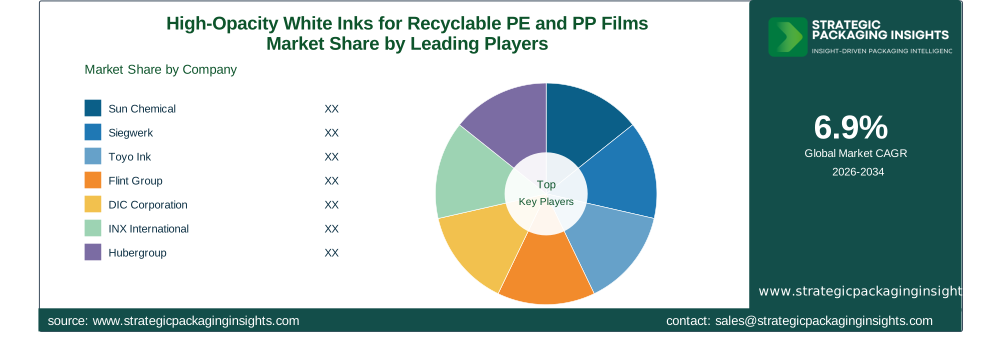
Toyo Ink is a prominent player in the market, known for its advanced ink technologies and strong presence in the Asia Pacific region. The company has been investing in research and development to enhance the performance and sustainability of its ink products. Flint Group, with its comprehensive range of ink solutions, is also a key player in the market. The company has a strong focus on customer-centric innovation and has been expanding its product offerings to meet the evolving needs of the packaging industry.
DIC Corporation, a global leader in the ink industry, holds a significant market share due to its extensive product range and strong global presence. The company is committed to sustainability and has been actively developing inks that enhance the recyclability of packaging materials. INX International, a subsidiary of Sakata INX, is known for its high-quality ink solutions and strong focus on customer satisfaction. The company has been expanding its product portfolio to include inks that meet the growing demand for sustainable packaging solutions.
Hubergroup, a family-owned company, is recognized for its innovative ink solutions and strong commitment to sustainability. The company has been investing in research and development to create inks that offer superior performance while being environmentally friendly. Sakata INX, a leading player in the market, is known for its advanced ink technologies and strong focus on customer satisfaction. The company has been expanding its product offerings to meet the evolving needs of the packaging industry. Wikoff Color and Zeller+Gmelin are also notable players in the market, known for their high-quality ink solutions and strong focus on innovation.
Key Highlights
- The market is projected to grow at a CAGR of 6.9% from 2026 to 2034.
- Increasing demand for sustainable packaging solutions is driving market growth.
- Technological advancements in ink formulations are opening new opportunities.
- The food and beverage industry is a major driver of market demand.
- Regulatory restrictions on certain chemicals pose a challenge for manufacturers.
- Volatility in raw material prices can impact the cost structure of ink manufacturers.
- Key players are focusing on product innovation and strategic partnerships.
- Digital printing technologies are driving demand for specialized inks.
- Companies are investing in research and development to enhance ink performance.
- The market is characterized by the presence of several key players with strong global presence.
Top Countries Insights
In the High-Opacity White Inks for Recyclable PE and PP Films market, the United States stands out as a leading country, with a market size of approximately $350 million and a CAGR of 5%. The country's strong focus on sustainability and the presence of major packaging companies drive demand for high-opacity white inks. Regulatory policies promoting recyclable packaging further boost market growth. However, challenges such as high raw material costs and stringent environmental regulations persist.
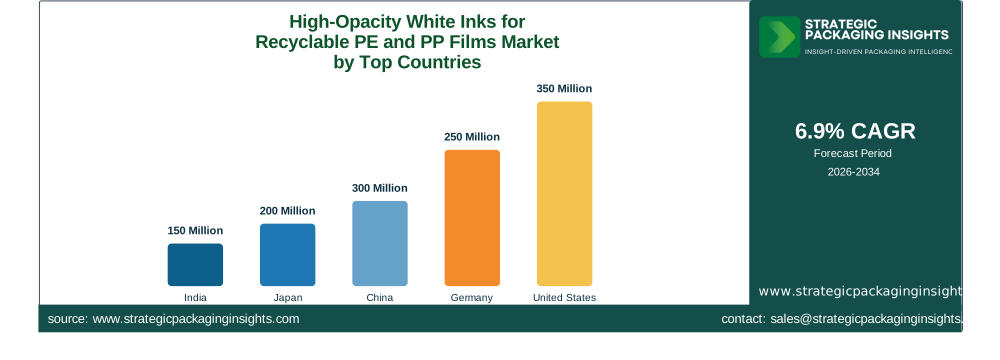
Germany is another key player in the market, with a market size of around $250 million and a CAGR of 6%. The country's advanced manufacturing capabilities and strong emphasis on eco-friendly packaging solutions contribute to market growth. Innovations in ink formulations and the adoption of digital printing technologies are significant growth drivers. However, the market faces challenges from regulatory restrictions on certain chemicals used in ink formulations.
China, with a market size of approximately $300 million and a CAGR of 8%, is a rapidly growing market for high-opacity white inks. The country's expanding packaging industry and increasing demand for sustainable solutions drive market growth. Government initiatives promoting environmental sustainability and the adoption of recyclable materials further support market expansion. However, the market faces challenges from the availability of cheaper alternatives and the complexity of developing inks that meet both performance and environmental standards.
Japan, with a market size of around $200 million and a CAGR of 4%, is a significant market for high-opacity white inks. The country's strong focus on innovation and technological advancements in ink formulations drive market growth. The adoption of digital printing technologies and the demand for high-quality packaging solutions are key growth drivers. However, the market faces challenges from the high cost of raw materials and the stringent regulatory landscape.
India, with a market size of approximately $150 million and a CAGR of 7%, is an emerging market for high-opacity white inks. The country's growing packaging industry and increasing demand for eco-friendly solutions drive market growth. Government initiatives promoting sustainable packaging and the adoption of recyclable materials further support market expansion. However, the market faces challenges from the availability of cheaper alternatives and the complexity of developing inks that meet both performance and environmental standards.
High-Opacity White Inks for Recyclable PE and PP Films Market Segments Insights

Ink Type Analysis
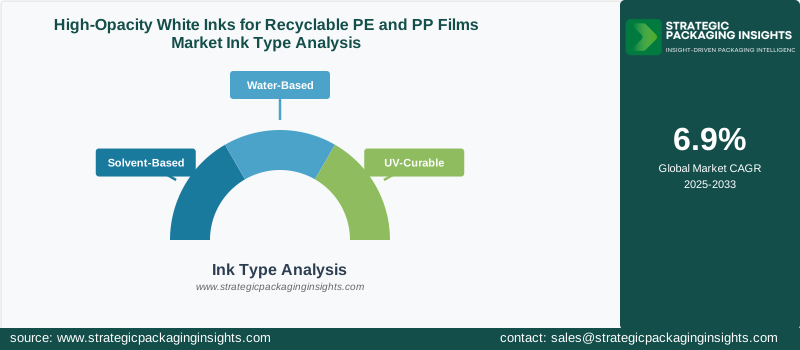
The Ink Type segment of the High-Opacity White Inks for Recyclable PE and PP Films market is categorized into solvent-based, water-based, and UV-curable inks. Solvent-based inks are known for their excellent adhesion and durability, making them a popular choice for various packaging applications. However, the environmental concerns associated with volatile organic compounds (VOCs) in solvent-based inks are driving the demand for more sustainable alternatives. Water-based inks, on the other hand, are gaining traction due to their eco-friendly nature and low VOC emissions. These inks are particularly favored in regions with stringent environmental regulations, such as Europe and North America. UV-curable inks are also witnessing increased adoption due to their fast curing times and superior print quality. The technological advancements in UV-curable ink formulations are further enhancing their performance and expanding their application scope.
The demand for high-opacity white inks is driven by the need for vibrant and high-quality prints on recyclable PE and PP films. The growing trend of personalized and customized packaging is also contributing to the demand for specialized inks that can deliver consistent and detailed prints. Companies are investing in research and development to create inks that offer superior performance while being environmentally friendly. The rise of digital printing technologies is further driving demand for high-opacity white inks, as these technologies require specialized inks that can deliver consistent results. The ongoing innovations in ink formulations are expected to open new avenues for market growth.
Substrate Analysis
The Substrate segment of the High-Opacity White Inks for Recyclable PE and PP Films market includes PE films, PP films, and mono-material films. PE films are widely used in the packaging industry due to their excellent barrier properties and flexibility. The demand for high-opacity white inks for PE films is driven by the need for high-quality prints that enhance the visual appeal of packaging. PP films, known for their strength and clarity, are also a popular choice for packaging applications. The demand for high-opacity white inks for PP films is driven by the need for vibrant and durable prints that can withstand various environmental conditions.
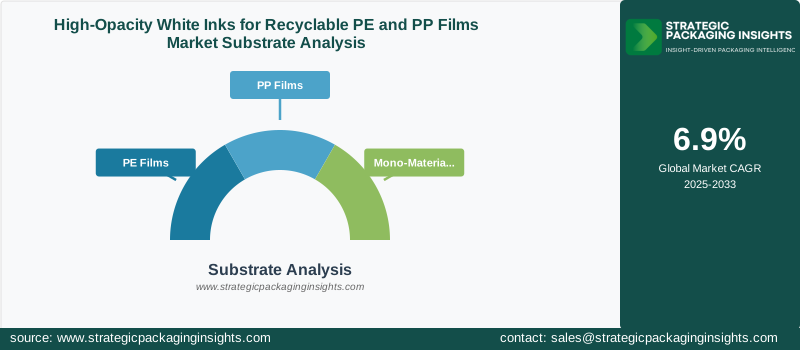
Mono-material films, which are made from a single type of polymer, are gaining popularity due to their recyclability and ease of processing. The demand for high-opacity white inks for mono-material films is driven by the need for sustainable packaging solutions that do not compromise on print quality. The growing awareness of environmental issues and the regulatory push towards reducing plastic waste are further propelling the demand for high-opacity white inks for recyclable substrates. Companies are focusing on developing inks that offer superior adhesion and durability on a variety of substrates, while also being environmentally friendly.
Application Analysis
The Application segment of the High-Opacity White Inks for Recyclable PE and PP Films market includes flexible packaging, labels, and pouches. Flexible packaging is a major application area for high-opacity white inks, driven by the demand for lightweight and sustainable packaging solutions. The food and beverage industry, in particular, is a significant driver of demand for flexible packaging, as it seeks to reduce its environmental impact by adopting recyclable materials. The demand for high-opacity white inks for flexible packaging is driven by the need for vibrant and high-quality prints that enhance the visual appeal of packaging.
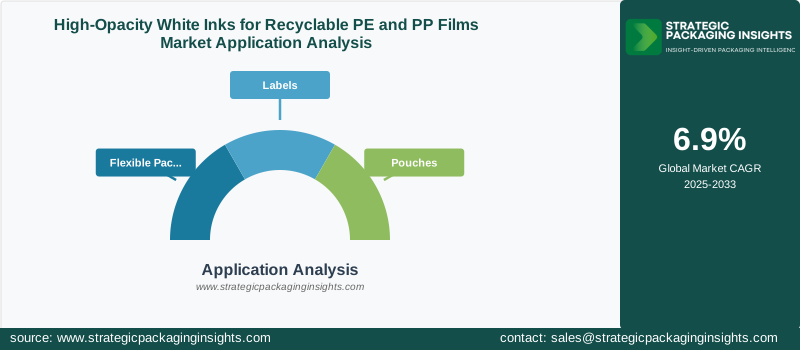
Labels are another important application area for high-opacity white inks, driven by the need for high-quality prints that convey important product information. The demand for high-opacity white inks for labels is driven by the need for durable and vibrant prints that can withstand various environmental conditions. Pouches, known for their convenience and versatility, are also a popular choice for packaging applications. The demand for high-opacity white inks for pouches is driven by the need for high-quality prints that enhance the visual appeal of packaging. The growing trend of personalized and customized packaging is also contributing to the demand for high-opacity white inks for various applications.
End Use Analysis
The End Use segment of the High-Opacity White Inks for Recyclable PE and PP Films market includes food, personal care, household care, and retail packaging. The food industry is a major driver of demand for high-opacity white inks, as it seeks to reduce its environmental impact by adopting recyclable packaging solutions. The demand for high-opacity white inks for food packaging is driven by the need for high-quality prints that enhance the visual appeal of packaging and convey important product information.
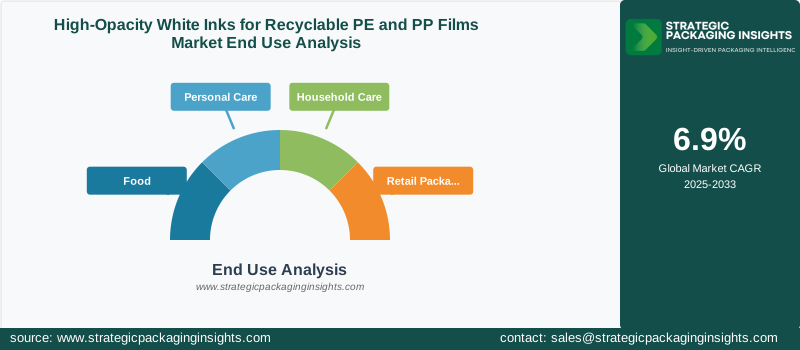
Personal care and household care products are also significant end-use segments for high-opacity white inks, driven by the need for high-quality prints that enhance the visual appeal of packaging. The demand for high-opacity white inks for personal care and household care packaging is driven by the need for durable and vibrant prints that can withstand various environmental conditions. Retail packaging, known for its convenience and versatility, is also a popular choice for packaging applications. The demand for high-opacity white inks for retail packaging is driven by the need for high-quality prints that enhance the visual appeal of packaging and convey important product information.
High-Opacity White Inks for Recyclable PE and PP Films Market Segments
The High-Opacity White Inks for Recyclable PE and PP Films market has been segmented on the basis ofInk Type
- Solvent-Based
- Water-Based
- UV-Curable
Substrate
- PE Films
- PP Films
- Mono-Material Films
Application
- Flexible Packaging
- Labels
- Pouches
End Use
- Food
- Personal Care
- Household Care
- Retail Packaging
Region
- Asia Pacific
- North America
- Latin America
- Europe
- Middle East & Africa




