


High Barrier Lidding Film Market Outlook
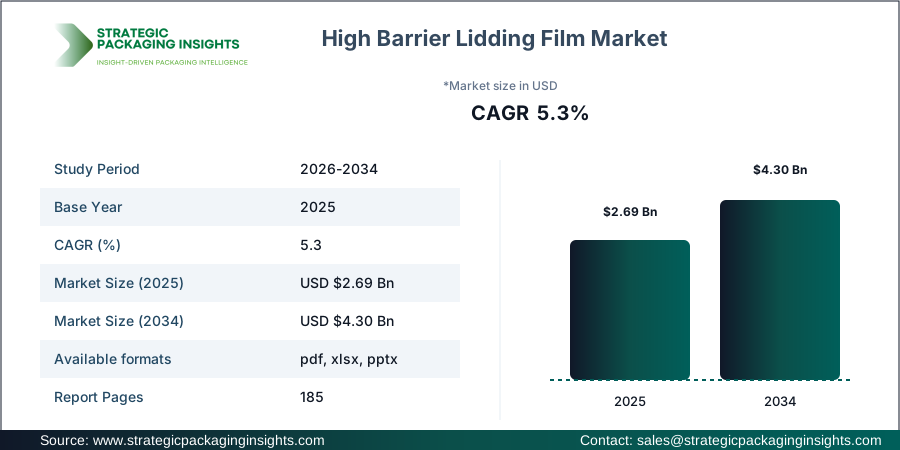
The High Barrier Lidding Film market was valued at $2.69 billion in 2025 and is projected to reach $4.30 billion by 2034, growing at a CAGR of 5.3% during the forecast period 2026-2034. This market is experiencing significant growth due to the increasing demand for packaging solutions that offer extended shelf life and enhanced protection for perishable goods. The rising consumer preference for convenient and sustainable packaging options is also driving the market forward. High barrier lidding films are particularly favored in the food and beverage industry, where they help maintain product freshness and prevent contamination. Additionally, advancements in material science and technology are enabling the development of more efficient and cost-effective lidding films, further boosting market growth.
However, the market faces certain challenges, including stringent regulatory requirements and environmental concerns related to plastic waste. Governments and regulatory bodies across the globe are implementing policies to reduce plastic usage and promote recycling, which could impact the growth of the high barrier lidding film market. Despite these challenges, the market holds significant growth potential, driven by the increasing adoption of eco-friendly and biodegradable materials. Companies are investing in research and development to create innovative solutions that align with sustainability goals, which is expected to open new avenues for market expansion.
Report Scope
| Attributes | Details |
| Report Title | High Barrier Lidding Film Market Size, Future Growth and Forecast 2034 |
| Material | EVOH, PVDC |
| Structure | Mono, Multi-layer |
| Application | Food Trays, Medical |
| Sterilization | Yes, No |
| Region | Asia Pacific, North America, Latin America, Europe, Middle East & Africa |
| Base Year | 2025 |
| Historic Period | 2018-2024 |
| Forecast Period | 2026-2034 |
| Number of Pages | 185 |
| Customization Available | Yes* |
Opportunities & Threats
The High Barrier Lidding Film market presents numerous opportunities, particularly in the realm of sustainable packaging solutions. As consumers become more environmentally conscious, there is a growing demand for packaging materials that are not only effective but also eco-friendly. This trend is pushing manufacturers to innovate and develop high barrier lidding films made from biodegradable and recyclable materials. Additionally, the increasing popularity of ready-to-eat meals and convenience foods is driving the demand for high barrier lidding films, as they offer superior protection and extend the shelf life of packaged products. The expansion of the food and beverage industry, particularly in emerging markets, is also creating lucrative opportunities for market players.
Another significant opportunity lies in the medical and pharmaceutical sectors, where high barrier lidding films are used to package sensitive products that require protection from moisture, oxygen, and other external factors. The growing demand for medical supplies and pharmaceuticals, driven by an aging population and increasing healthcare needs, is expected to boost the demand for high barrier lidding films. Furthermore, advancements in technology are enabling the development of films with enhanced barrier properties, which can cater to the specific needs of different industries, thereby expanding the market's potential.
On the other hand, the market faces threats from regulatory pressures and environmental concerns. Governments worldwide are implementing stringent regulations to curb plastic waste, which could impact the production and use of high barrier lidding films. Additionally, fluctuations in raw material prices and the availability of alternatives such as glass and metal packaging could pose challenges to market growth. Companies need to navigate these challenges by adopting sustainable practices and investing in the development of innovative solutions that meet regulatory standards and consumer expectations.
Drivers & Challenges
The primary drivers of the High Barrier Lidding Film market include the increasing demand for packaged food products and the need for extended shelf life. As consumers lead busier lifestyles, the demand for convenient and ready-to-eat meals is on the rise, driving the need for effective packaging solutions. High barrier lidding films offer superior protection against moisture, oxygen, and other external factors, making them ideal for preserving the freshness and quality of packaged foods. Additionally, the growing awareness of food safety and hygiene is prompting manufacturers to adopt high barrier lidding films to prevent contamination and ensure product integrity.
Technological advancements are also playing a crucial role in driving market growth. Innovations in material science have led to the development of high-performance films with enhanced barrier properties, which can cater to the specific needs of various industries. The introduction of multi-layer films, for instance, has significantly improved the barrier performance of lidding films, making them suitable for a wide range of applications. Furthermore, the increasing focus on sustainability is encouraging manufacturers to develop eco-friendly films that align with environmental goals, thereby expanding the market's potential.
Despite these drivers, the market faces several challenges, including regulatory pressures and environmental concerns. The growing emphasis on reducing plastic waste and promoting recycling is compelling manufacturers to adopt sustainable practices, which can be costly and time-consuming. Additionally, the availability of alternative packaging materials such as glass and metal poses a threat to the growth of the high barrier lidding film market. Companies need to invest in research and development to create innovative solutions that meet regulatory standards and consumer expectations while maintaining cost-effectiveness.
Market Share Analysis
The High Barrier Lidding Film market is characterized by intense competition, with several key players vying for market share. Companies such as Amcor, Huhtamaki, Bemis, Constantia Flexibles, and Coveris are leading the market, leveraging their extensive product portfolios and strong distribution networks to maintain their competitive edge. These companies are focusing on innovation and sustainability to meet the evolving needs of consumers and regulatory requirements. Additionally, strategic partnerships and acquisitions are common strategies employed by market players to expand their market presence and enhance their product offerings.
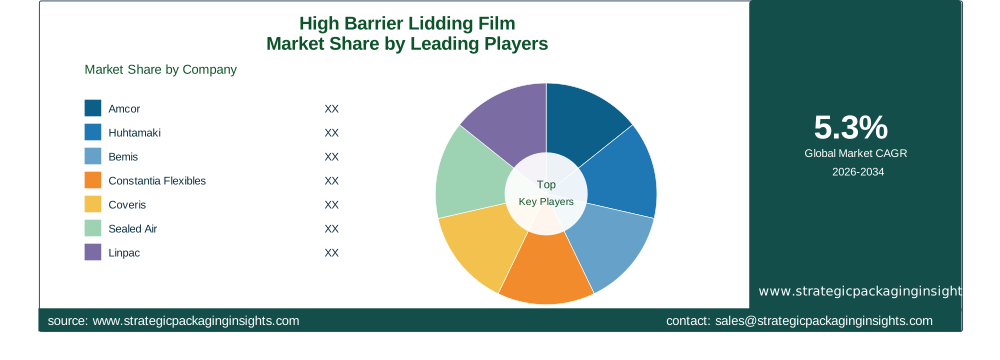
Amcor, a global leader in packaging solutions, holds a significant share of the high barrier lidding film market. The company's focus on sustainability and innovation has enabled it to develop a wide range of high-performance films that cater to various industries. Huhtamaki, another major player, is known for its commitment to sustainability and has been actively investing in the development of eco-friendly packaging solutions. Bemis, now part of Amcor, has a strong presence in the market, offering a diverse range of high barrier lidding films that meet the needs of the food and beverage industry.
Constantia Flexibles is a key player in the market, known for its innovative solutions and focus on sustainability. The company offers a wide range of high barrier lidding films that cater to the needs of the food, beverage, and pharmaceutical industries. Coveris, a leading packaging company, is also a significant player in the market, offering a diverse range of high barrier lidding films that provide superior protection and extend the shelf life of packaged products. Sealed Air, Linpac, Berry Global, ProAmpac, and Sonoco are other notable players in the market, each with their unique strengths and product offerings.
These companies are continuously investing in research and development to create innovative solutions that meet the evolving needs of consumers and regulatory requirements. The focus on sustainability and eco-friendly packaging solutions is a common theme among market players, as they strive to reduce their environmental impact and align with global sustainability goals. Additionally, strategic partnerships and acquisitions are common strategies employed by these companies to expand their market presence and enhance their product offerings.
Key Highlights
- The High Barrier Lidding Film market is projected to grow at a CAGR of 5.3% from 2026 to 2034.
- Increasing demand for packaged food products is a major driver of market growth.
- Technological advancements are enabling the development of high-performance films with enhanced barrier properties.
- Regulatory pressures and environmental concerns are key challenges facing the market.
- Companies are focusing on sustainability and eco-friendly packaging solutions to meet consumer and regulatory demands.
- Strategic partnerships and acquisitions are common strategies employed by market players to expand their market presence.
- The food and beverage industry is the largest end-user of high barrier lidding films.
- Emerging markets offer significant growth opportunities for market players.
- Advancements in material science are driving the development of innovative packaging solutions.
- The medical and pharmaceutical sectors are key growth areas for high barrier lidding films.
Top Countries Insights
In the High Barrier Lidding Film market, the United States holds a significant share, driven by the strong demand for packaged food products and the presence of major market players. The market in the U.S. is expected to grow at a CAGR of 4%, supported by advancements in packaging technology and the increasing focus on sustainability. Government regulations promoting recycling and reducing plastic waste are also influencing market dynamics, encouraging companies to adopt eco-friendly practices.
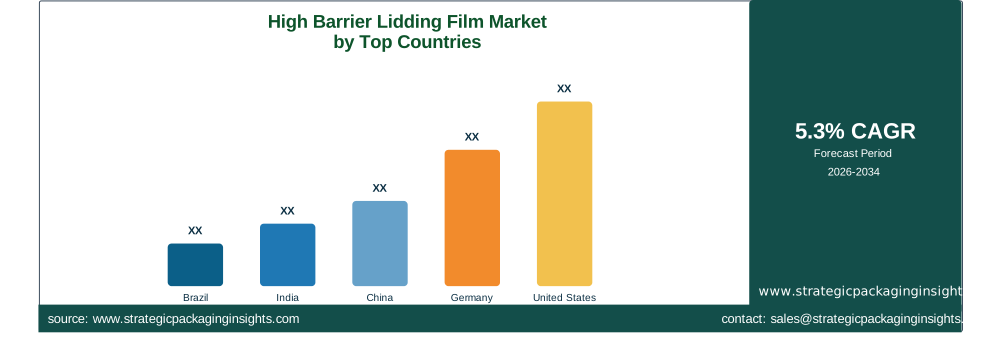
Germany is another key market for high barrier lidding films, with a CAGR of 5%. The country's strong manufacturing base and emphasis on quality and innovation are driving the demand for advanced packaging solutions. The food and beverage industry is a major consumer of high barrier lidding films in Germany, with companies focusing on extending product shelf life and ensuring food safety. Additionally, the growing trend of convenience foods is boosting the demand for effective packaging solutions.
China is experiencing rapid growth in the high barrier lidding film market, with a CAGR of 7%. The expanding middle class and increasing disposable incomes are driving the demand for packaged food products, creating opportunities for market players. The government's focus on food safety and quality standards is also contributing to market growth, as companies invest in advanced packaging solutions to meet regulatory requirements.
In India, the high barrier lidding film market is growing at a CAGR of 6%, driven by the increasing demand for convenience foods and the expansion of the food and beverage industry. The government's initiatives to promote sustainable packaging solutions and reduce plastic waste are influencing market dynamics, encouraging companies to adopt eco-friendly practices. Additionally, the growing awareness of food safety and hygiene is driving the demand for high barrier lidding films.
Brazil is another important market for high barrier lidding films, with a CAGR of 5%. The country's growing food and beverage industry and increasing consumer preference for packaged foods are driving the demand for effective packaging solutions. The government's focus on sustainability and environmental protection is also influencing market dynamics, encouraging companies to develop eco-friendly packaging solutions.
High Barrier Lidding Film Market Segments Insights

Material Analysis
The High Barrier Lidding Film market is segmented by material into EVOH and PVDC. EVOH is widely used due to its excellent barrier properties against gases and moisture, making it ideal for food packaging applications. The demand for EVOH is driven by its ability to extend the shelf life of packaged products and maintain product freshness. Additionally, EVOH is favored for its recyclability and eco-friendly nature, aligning with the growing trend towards sustainable packaging solutions. PVDC, on the other hand, is known for its superior barrier properties and is commonly used in applications where high moisture and oxygen barriers are required. The demand for PVDC is driven by its effectiveness in preserving the quality and integrity of packaged products, particularly in the food and pharmaceutical industries.
The competition in the material segment is intense, with companies focusing on innovation and sustainability to gain a competitive edge. Manufacturers are investing in research and development to create advanced materials that offer enhanced barrier properties while being environmentally friendly. The growing emphasis on reducing plastic waste and promoting recycling is encouraging companies to develop materials that align with sustainability goals. Additionally, the increasing demand for convenience foods and ready-to-eat meals is driving the need for high-performance materials that can provide superior protection and extend the shelf life of packaged products.
Structure Analysis
The High Barrier Lidding Film market is segmented by structure into mono and multi-layer films. Multi-layer films are gaining popularity due to their enhanced barrier properties and ability to cater to the specific needs of various industries. These films are designed to provide superior protection against moisture, oxygen, and other external factors, making them ideal for preserving the freshness and quality of packaged products. The demand for multi-layer films is driven by the increasing need for effective packaging solutions in the food and beverage industry, where product shelf life and safety are of utmost importance.
Mono-layer films, while less complex, are favored for their cost-effectiveness and ease of production. These films are commonly used in applications where basic barrier properties are sufficient, such as in the packaging of dry goods and non-perishable items. The competition in the structure segment is driven by the need for innovation and sustainability, with companies focusing on developing films that offer enhanced performance while being environmentally friendly. The growing emphasis on reducing plastic waste and promoting recycling is encouraging manufacturers to adopt sustainable practices and develop eco-friendly solutions.
Application Analysis
The High Barrier Lidding Film market is segmented by application into food trays and medical. The food trays segment is the largest end-user of high barrier lidding films, driven by the increasing demand for packaged food products and the need for extended shelf life. High barrier lidding films are favored in the food industry for their ability to preserve the freshness and quality of packaged products, preventing contamination and ensuring food safety. The growing trend of convenience foods and ready-to-eat meals is further driving the demand for effective packaging solutions, creating opportunities for market players.
The medical segment is also a significant consumer of high barrier lidding films, with the demand driven by the need for effective packaging solutions for sensitive products. High barrier lidding films are used to package medical supplies and pharmaceuticals, providing protection against moisture, oxygen, and other external factors. The growing demand for medical supplies and pharmaceuticals, driven by an aging population and increasing healthcare needs, is expected to boost the demand for high barrier lidding films. Additionally, advancements in technology are enabling the development of films with enhanced barrier properties, catering to the specific needs of the medical industry.
Sterilization Analysis
The High Barrier Lidding Film market is segmented by sterilization into yes and no. The demand for sterilizable high barrier lidding films is driven by the need for effective packaging solutions in the medical and pharmaceutical industries. These films are designed to withstand sterilization processes, providing protection against contamination and ensuring the safety and integrity of packaged products. The growing demand for medical supplies and pharmaceuticals, driven by an aging population and increasing healthcare needs, is expected to boost the demand for sterilizable high barrier lidding films.
Non-sterilizable high barrier lidding films are commonly used in the food and beverage industry, where the focus is on preserving the freshness and quality of packaged products. These films offer superior barrier properties against moisture, oxygen, and other external factors, making them ideal for extending the shelf life of packaged foods. The competition in the sterilization segment is driven by the need for innovation and sustainability, with companies focusing on developing films that offer enhanced performance while being environmentally friendly. The growing emphasis on reducing plastic waste and promoting recycling is encouraging manufacturers to adopt sustainable practices and develop eco-friendly solutions.
High Barrier Lidding Film Market Segments
The High Barrier Lidding Film market has been segmented on the basis ofMaterial
- EVOH
- PVDC
Structure
- Mono
- Multi-layer
Application
- Food Trays
- Medical
Sterilization
- Yes
- No
Region
- Asia Pacific
- North America
- Latin America
- Europe
- Middle East & Africa




