


Generative AI in Packaging Market Outlook
The Generative AI in Packaging market was valued at $22.23 billion in 2025 and is projected to reach $126.83 billion by 2034, growing at a CAGR of 21.3% during the forecast period 2026-2034. This remarkable growth trajectory is driven by the increasing demand for innovative packaging solutions that leverage AI technologies to enhance design efficiency and quality control. The integration of AI in packaging is revolutionizing the industry by enabling more personalized and sustainable packaging solutions, which are increasingly sought after by consumers and businesses alike. The market is also benefiting from advancements in AI algorithms and the growing adoption of cloud-based solutions, which offer scalability and flexibility to packaging companies.
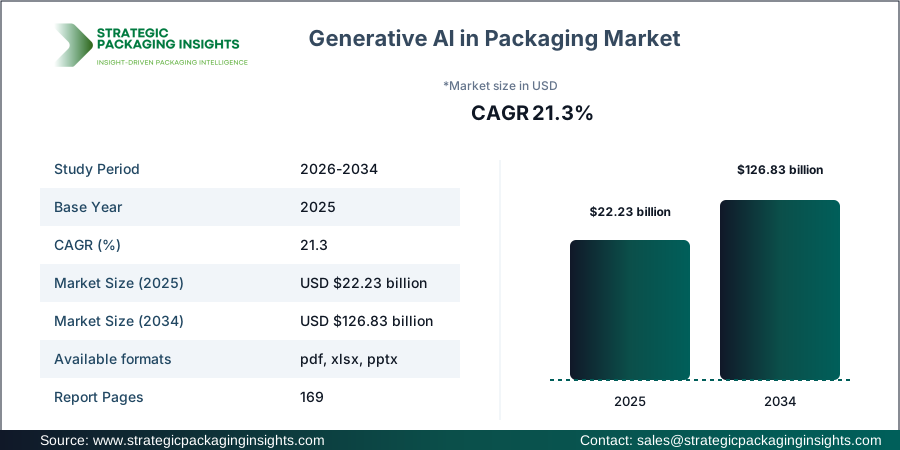
Despite the promising growth prospects, the Generative AI in Packaging market faces certain challenges. Regulatory constraints and the high initial investment required for AI integration can act as barriers to entry for smaller players. However, the potential for cost savings and improved operational efficiency presents significant growth opportunities for companies willing to invest in AI technologies. Additionally, the increasing focus on sustainability and eco-friendly packaging solutions is expected to drive further innovation and adoption of AI in the packaging sector. As companies continue to explore the potential of AI to transform their packaging processes, the market is poised for substantial growth in the coming years.
Report Scope
| Attributes | Details |
| Report Title | Generative AI in Packaging Market Size, Future Growth and Forecast 2034 |
| Component | Software, Services |
| Application | Design, Quality Control |
| Deployment | Cloud, On-premise |
| End Use | Food, Pharma |
| Region | Asia Pacific, North America, Latin America, Europe, Middle East & Africa |
| Base Year | 2025 |
| Historic Period | 2018-2024 |
| Forecast Period | 2026-2034 |
| Number of Pages | 169 |
| Customization Available | Yes* |
Opportunities & Threats
The Generative AI in Packaging market presents numerous opportunities for growth and innovation. One of the key opportunities lies in the ability of AI to enhance the design process, allowing for more creative and customized packaging solutions. This is particularly important in industries such as food and pharmaceuticals, where packaging plays a crucial role in product differentiation and consumer appeal. AI-driven design tools can help companies create unique packaging that stands out on the shelves, thereby increasing brand visibility and customer engagement. Furthermore, the use of AI in quality control processes can significantly reduce defects and improve product safety, which is a critical concern for both manufacturers and consumers.
Another significant opportunity in the Generative AI in Packaging market is the potential for cost savings and operational efficiency. By automating various aspects of the packaging process, AI can help companies reduce labor costs and minimize waste, leading to more sustainable and cost-effective operations. Additionally, AI can provide valuable insights into consumer preferences and market trends, enabling companies to make more informed decisions about their packaging strategies. As the demand for eco-friendly and sustainable packaging solutions continues to grow, AI can play a pivotal role in helping companies meet these demands while maintaining profitability.
However, the market also faces certain threats that could hinder its growth. One of the primary challenges is the high initial investment required for AI integration, which can be a significant barrier for smaller companies. Additionally, there are concerns about data privacy and security, as the use of AI involves the collection and analysis of large amounts of data. Companies must ensure that they have robust data protection measures in place to mitigate these risks. Furthermore, regulatory constraints and the need for compliance with industry standards can pose challenges for companies looking to adopt AI technologies in their packaging processes.
Drivers & Challenges
The Generative AI in Packaging market is driven by several key factors that are contributing to its rapid growth. One of the primary drivers is the increasing demand for innovative and sustainable packaging solutions. As consumers become more environmentally conscious, there is a growing need for packaging that is not only functional but also eco-friendly. AI technologies can help companies develop packaging solutions that meet these demands by optimizing material usage and reducing waste. Additionally, the ability of AI to enhance design and quality control processes is driving its adoption in the packaging industry, as companies seek to improve product safety and consumer satisfaction.
Another significant driver of the Generative AI in Packaging market is the advancements in AI algorithms and the growing adoption of cloud-based solutions. Cloud computing offers scalability and flexibility, allowing companies to easily integrate AI technologies into their existing operations. This is particularly beneficial for small and medium-sized enterprises (SMEs) that may not have the resources to invest in on-premise AI solutions. Furthermore, the increasing availability of AI tools and platforms is making it easier for companies to experiment with and implement AI technologies in their packaging processes, thereby driving market growth.
Despite these drivers, the Generative AI in Packaging market faces several challenges that could impact its growth. One of the main challenges is the high cost of AI integration, which can be prohibitive for smaller companies. Additionally, there are concerns about data privacy and security, as the use of AI involves the collection and analysis of large amounts of data. Companies must ensure that they have robust data protection measures in place to mitigate these risks. Furthermore, regulatory constraints and the need for compliance with industry standards can pose challenges for companies looking to adopt AI technologies in their packaging processes.
Market Share Analysis
The competitive landscape of the Generative AI in Packaging market is characterized by the presence of several key players who are driving innovation and growth in the industry. Companies such as IBM, Google Cloud, Microsoft Azure, Siemens, and Dassault Systèmes are at the forefront of AI technology development, offering a range of solutions that cater to the diverse needs of the packaging industry. These companies are leveraging their expertise in AI and cloud computing to provide scalable and flexible solutions that enable packaging companies to enhance their design and quality control processes.
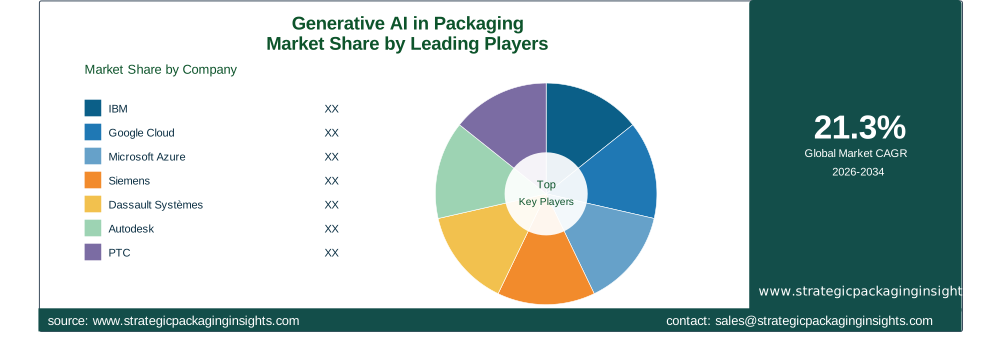
IBM, with its strong focus on AI and machine learning, is a major player in the Generative AI in Packaging market. The company offers a range of AI-driven solutions that help packaging companies optimize their operations and improve product quality. Google Cloud is another key player, providing cloud-based AI tools that enable companies to easily integrate AI technologies into their existing processes. Microsoft Azure, with its comprehensive suite of AI and cloud computing services, is also a significant player in the market, offering solutions that cater to the specific needs of the packaging industry.
Siemens and Dassault Systèmes are also prominent players in the Generative AI in Packaging market, offering a range of solutions that focus on enhancing design and quality control processes. Siemens, with its expertise in industrial automation and digitalization, provides AI-driven solutions that help packaging companies improve their operational efficiency and reduce costs. Dassault Systèmes, known for its 3D design and engineering software, offers AI tools that enable companies to create innovative and customized packaging solutions.
Other notable players in the market include Autodesk, PTC, Ansys, Stability AI, and Runway ML. These companies are contributing to the growth of the Generative AI in Packaging market by offering a range of AI-driven solutions that cater to the diverse needs of the industry. Autodesk, with its focus on design and engineering software, provides AI tools that help companies create unique and customized packaging solutions. PTC and Ansys, known for their expertise in simulation and engineering software, offer AI-driven solutions that enhance quality control processes and improve product safety.
Key Highlights
- The Generative AI in Packaging market is projected to grow at a CAGR of 21.3% from 2026 to 2034.
- Key players in the market include IBM, Google Cloud, Microsoft Azure, Siemens, and Dassault Systèmes.
- AI-driven design tools are enabling companies to create more innovative and customized packaging solutions.
- The use of AI in quality control processes is reducing defects and improving product safety.
- Cloud-based AI solutions offer scalability and flexibility, making them accessible to SMEs.
- Regulatory constraints and data privacy concerns are key challenges for the market.
- The demand for eco-friendly and sustainable packaging solutions is driving market growth.
Top Countries Insights
In the Generative AI in Packaging market, the United States stands out as a leader, with a market size of approximately $35 billion and a CAGR of 18%. The country's strong focus on innovation and technology adoption, coupled with a robust regulatory framework, drives the growth of AI in packaging. The demand for sustainable packaging solutions and the presence of major AI technology providers further bolster the market in the U.S.
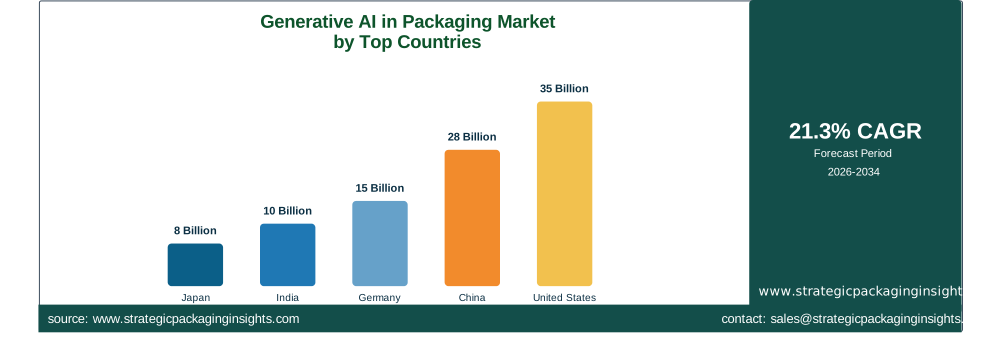
China is another key player in the Generative AI in Packaging market, with a market size of around $28 billion and a CAGR of 22%. The country's rapid industrialization and increasing consumer demand for innovative packaging solutions are driving the adoption of AI technologies. Government initiatives to promote AI development and the presence of a large manufacturing base contribute to the market's growth in China.
Germany, with a market size of approximately $15 billion and a CAGR of 16%, is a significant player in the European Generative AI in Packaging market. The country's strong engineering and manufacturing capabilities, along with a focus on sustainability, drive the adoption of AI technologies in packaging. The presence of leading AI technology providers and a supportive regulatory environment further enhance the market's growth prospects in Germany.
India, with a market size of around $10 billion and a CAGR of 25%, is emerging as a key player in the Generative AI in Packaging market. The country's growing consumer base and increasing demand for innovative packaging solutions are driving the adoption of AI technologies. Government initiatives to promote digitalization and the presence of a large manufacturing sector contribute to the market's growth in India.
Japan, with a market size of approximately $8 billion and a CAGR of 14%, is a notable player in the Generative AI in Packaging market. The country's strong focus on technology and innovation, along with a well-established manufacturing sector, drives the adoption of AI technologies in packaging. The demand for sustainable packaging solutions and the presence of leading AI technology providers further support the market's growth in Japan.
Generative AI in Packaging Market Segments Insights

Component Analysis
The Generative AI in Packaging market is segmented by component into software and services. The software segment is expected to dominate the market, driven by the increasing demand for AI-driven design and quality control tools. These software solutions enable companies to create innovative and customized packaging solutions, enhancing brand visibility and consumer engagement. The services segment, which includes consulting and implementation services, is also expected to grow significantly as companies seek to integrate AI technologies into their existing operations.
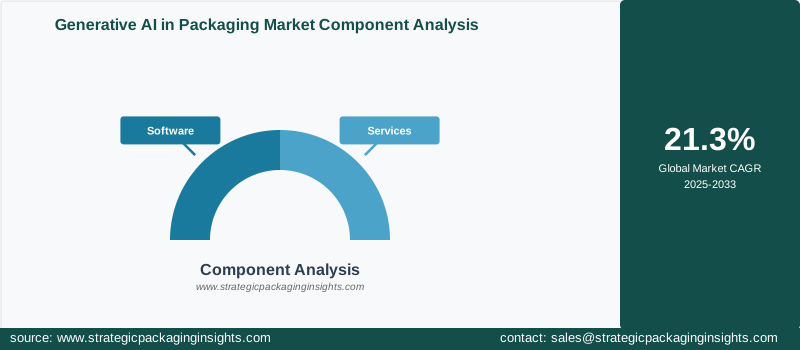
The software segment is characterized by the presence of several key players, including IBM, Google Cloud, and Microsoft Azure, who offer a range of AI-driven solutions that cater to the diverse needs of the packaging industry. These companies are leveraging their expertise in AI and cloud computing to provide scalable and flexible solutions that enable packaging companies to enhance their design and quality control processes. The services segment is also witnessing significant growth, driven by the increasing demand for consulting and implementation services that help companies integrate AI technologies into their existing operations.
Application Analysis
The Generative AI in Packaging market is segmented by application into design and quality control. The design segment is expected to dominate the market, driven by the increasing demand for innovative and customized packaging solutions. AI-driven design tools enable companies to create unique packaging that stands out on the shelves, thereby increasing brand visibility and customer engagement. The quality control segment is also expected to grow significantly, as AI technologies help companies reduce defects and improve product safety.
The design segment is characterized by the presence of several key players, including Autodesk, Dassault Systèmes, and Siemens, who offer a range of AI-driven design tools that cater to the diverse needs of the packaging industry. These companies are leveraging their expertise in design and engineering software to provide solutions that enable companies to create innovative and customized packaging solutions. The quality control segment is also witnessing significant growth, driven by the increasing demand for AI-driven solutions that help companies improve product safety and reduce defects.
Deployment Analysis
The Generative AI in Packaging market is segmented by deployment into cloud and on-premise. The cloud segment is expected to dominate the market, driven by the increasing demand for scalable and flexible AI solutions. Cloud-based AI solutions offer several advantages, including cost savings, scalability, and ease of integration, making them accessible to small and medium-sized enterprises (SMEs). The on-premise segment is also expected to grow, driven by the demand for customized AI solutions that cater to the specific needs of large enterprises.
The cloud segment is characterized by the presence of several key players, including Google Cloud, Microsoft Azure, and IBM, who offer a range of cloud-based AI solutions that cater to the diverse needs of the packaging industry. These companies are leveraging their expertise in cloud computing to provide scalable and flexible solutions that enable packaging companies to enhance their design and quality control processes. The on-premise segment is also witnessing significant growth, driven by the demand for customized AI solutions that cater to the specific needs of large enterprises.
End Use Analysis
The Generative AI in Packaging market is segmented by end use into food and pharma. The food segment is expected to dominate the market, driven by the increasing demand for innovative and sustainable packaging solutions. AI technologies enable companies to create packaging that is not only functional but also eco-friendly, meeting the demands of environmentally conscious consumers. The pharma segment is also expected to grow significantly, as AI technologies help companies improve product safety and compliance with industry standards.
The food segment is characterized by the presence of several key players, including IBM, Siemens, and Dassault Systèmes, who offer a range of AI-driven solutions that cater to the diverse needs of the food packaging industry. These companies are leveraging their expertise in AI and engineering to provide solutions that enable companies to create innovative and sustainable packaging solutions. The pharma segment is also witnessing significant growth, driven by the increasing demand for AI-driven solutions that help companies improve product safety and compliance with industry standards.
Generative AI in Packaging Market Segments
The Generative AI in Packaging market has been segmented on the basis ofComponent
- Software
- Services
Application
- Design
- Quality Control
Deployment
- Cloud
- On-premise
End Use
- Food
- Pharma
Region
- Asia Pacific
- North America
- Latin America
- Europe
- Middle East & Africa




