


Foam Tape Market Outlook
The Foam Tape market was valued at $9.82 billion in 2025 and is projected to reach $18.59 billion by 2034, growing at a CAGR of 7.3% during the forecast period 2026-2034. Foam tapes are increasingly being adopted across various industries due to their superior adhesive properties and versatility. The market is driven by the rising demand in the construction and automotive sectors, where foam tapes are used for mounting, sealing, and insulation purposes. The growing trend towards lightweight and efficient materials in these industries further propels the demand for foam tapes. Additionally, advancements in adhesive technologies and the development of eco-friendly foam tapes are expected to create new growth opportunities in the market.
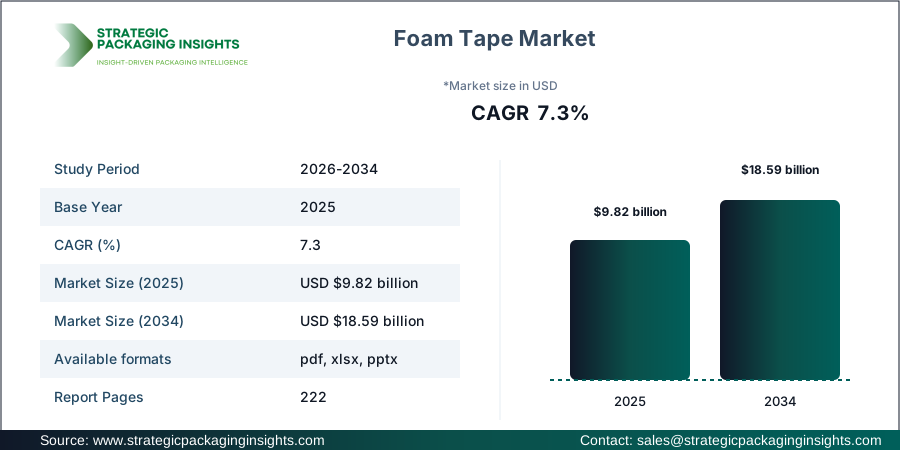
However, the market faces certain challenges that could hinder its growth. The volatility in raw material prices, particularly for petroleum-based products, poses a significant restraint. Additionally, stringent environmental regulations regarding the use of certain chemicals in foam tapes could impact production processes and increase costs. Despite these challenges, the foam tape market holds substantial growth potential, driven by innovations in product formulations and the expansion of application areas. The increasing focus on sustainable and recyclable materials is likely to open new avenues for market players, encouraging them to invest in research and development activities.
Report Scope
| Attributes | Details |
| Report Title | Foam Tape Market Size, Future Growth and Forecast 2034 |
| Type | Acrylic, PE Foam, PU Foam |
| Application | Mounting, Sealing, Insulation |
| End Use | Construction, Automotive, Electronics |
| Adhesive | Pressure-Sensitive, Solvent-Based |
| Region | Asia Pacific, North America, Latin America, Europe, Middle East & Africa |
| Base Year | 2025 |
| Historic Period | 2018-2024 |
| Forecast Period | 2026-2034 |
| Number of Pages | 222 |
| Customization Available | Yes* |
Opportunities & Threats
The foam tape market presents numerous opportunities for growth, particularly in emerging economies where industrialization and urbanization are on the rise. The construction industry in these regions is expanding rapidly, leading to increased demand for efficient and durable adhesive solutions like foam tapes. Additionally, the automotive sector's shift towards lightweight materials to improve fuel efficiency and reduce emissions is creating a significant demand for foam tapes. These tapes are used extensively for bonding and sealing applications in vehicles, offering manufacturers a cost-effective and reliable solution. Furthermore, the growing trend of miniaturization in the electronics industry is driving the need for high-performance adhesive solutions, providing further opportunities for foam tape manufacturers.
Another opportunity lies in the development of eco-friendly and sustainable foam tapes. With increasing environmental awareness and regulatory pressures, there is a growing demand for products that have a minimal environmental impact. Manufacturers are investing in research and development to create foam tapes that are recyclable, biodegradable, and free from harmful chemicals. This shift towards sustainable products not only meets regulatory requirements but also aligns with consumer preferences, offering a competitive advantage to companies that can deliver such solutions.
Despite the opportunities, the foam tape market faces certain threats that could impact its growth trajectory. One of the primary challenges is the fluctuating prices of raw materials, particularly petroleum-based products, which can affect production costs and profit margins. Additionally, the market is subject to stringent environmental regulations that govern the use of certain chemicals in adhesive formulations. Compliance with these regulations can increase production costs and limit the availability of certain raw materials. Moreover, the presence of alternative adhesive solutions, such as liquid adhesives and mechanical fasteners, poses a threat to the foam tape market, as these alternatives may offer cost or performance advantages in certain applications.
Drivers & Challenges
The foam tape market is driven by several key factors, including the growing demand from the construction and automotive industries. In the construction sector, foam tapes are widely used for sealing, mounting, and insulation applications due to their excellent adhesive properties and ability to withstand harsh environmental conditions. The increasing focus on energy-efficient buildings and the need for effective insulation solutions are further boosting the demand for foam tapes. In the automotive industry, the shift towards lightweight materials to improve fuel efficiency and reduce emissions is driving the adoption of foam tapes for bonding and sealing applications. These tapes offer a reliable and cost-effective solution for manufacturers looking to enhance vehicle performance and reduce weight.
Another significant driver is the advancement in adhesive technologies, which has led to the development of high-performance foam tapes with enhanced properties. Manufacturers are focusing on creating tapes that offer superior adhesion, durability, and resistance to environmental factors such as temperature and moisture. The development of pressure-sensitive and solvent-based adhesives has expanded the application areas for foam tapes, making them suitable for a wide range of industries. Additionally, the growing trend towards miniaturization in the electronics industry is driving the demand for foam tapes that can provide reliable bonding solutions in compact and intricate electronic devices.
Despite the positive drivers, the foam tape market faces several challenges that could impact its growth. One of the primary challenges is the volatility in raw material prices, particularly for petroleum-based products, which can affect production costs and profit margins. Additionally, the market is subject to stringent environmental regulations that govern the use of certain chemicals in adhesive formulations. Compliance with these regulations can increase production costs and limit the availability of certain raw materials. Moreover, the presence of alternative adhesive solutions, such as liquid adhesives and mechanical fasteners, poses a threat to the foam tape market, as these alternatives may offer cost or performance advantages in certain applications.
Market Share Analysis
The foam tape market is characterized by a competitive landscape with several key players dominating the industry. Companies such as 3M, tesa, Nitto Denko, Avery Dennison, and Saint-Gobain hold significant market shares due to their extensive product portfolios and strong distribution networks. These companies have established themselves as leaders in the market by consistently investing in research and development to innovate and improve their product offerings. Their focus on developing high-performance and sustainable foam tapes has allowed them to maintain a competitive edge in the market.
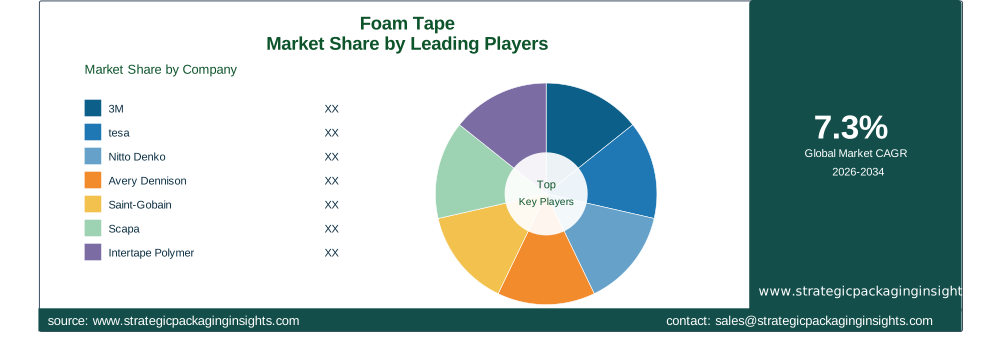
3M is one of the leading players in the foam tape market, known for its innovative adhesive solutions and strong brand reputation. The company offers a wide range of foam tapes for various applications, including automotive, construction, and electronics. tesa, another major player, is recognized for its high-quality adhesive products and strong presence in the European market. The company's focus on sustainability and eco-friendly products has helped it gain a competitive advantage in the industry.
Nitto Denko, a Japanese company, is a prominent player in the foam tape market, offering a diverse range of adhesive solutions for industrial and consumer applications. The company's strong focus on research and development has enabled it to introduce innovative products that cater to the evolving needs of its customers. Avery Dennison, known for its pressure-sensitive adhesive technologies, is another key player in the market. The company's extensive product portfolio and global presence have contributed to its strong market position.
Saint-Gobain, a French multinational, is a leading manufacturer of foam tapes, offering a wide range of products for construction and industrial applications. The company's focus on sustainability and innovation has helped it maintain a strong market presence. Other notable players in the market include Scapa, Intertape Polymer, Shurtape, Henkel, and Lohmann, each contributing to the competitive landscape with their unique product offerings and strategic initiatives.
Key Highlights
- The foam tape market is projected to grow at a CAGR of 7.3% from 2026 to 2034.
- Key drivers include demand from construction and automotive industries.
- Advancements in adhesive technologies are expanding application areas.
- Eco-friendly and sustainable foam tapes are gaining traction.
- Volatility in raw material prices poses a significant challenge.
- Stringent environmental regulations impact production processes.
- 3M, tesa, and Nitto Denko are leading players in the market.
Top Countries Insights
In the foam tape market, the United States holds a significant share, driven by the robust demand from the construction and automotive industries. The market size in the U.S. is substantial, with a CAGR of 6% expected over the forecast period. The country's focus on energy-efficient buildings and lightweight automotive materials is a key growth driver. However, regulatory challenges related to environmental standards pose a potential hurdle for manufacturers.
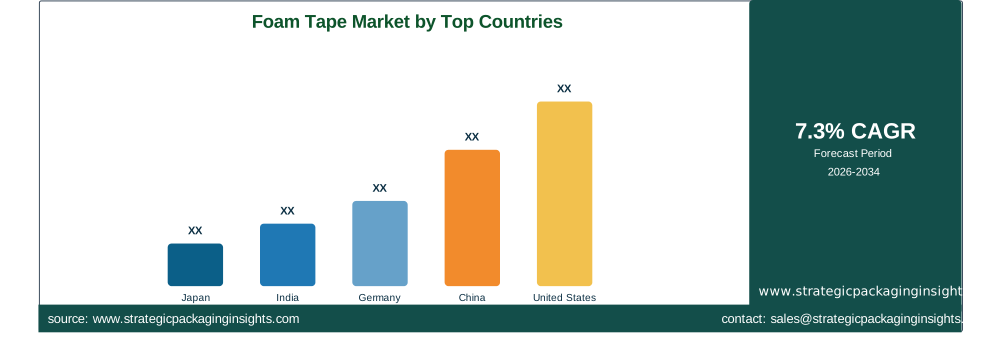
China is another major player in the foam tape market, with rapid industrialization and urbanization fueling demand. The market in China is expected to grow at a CAGR of 8%, driven by the booming construction sector and the increasing adoption of foam tapes in the automotive industry. Government initiatives promoting sustainable construction practices are further boosting market growth.
Germany, known for its strong automotive industry, is a key market for foam tapes in Europe. The market is projected to grow at a CAGR of 5%, supported by the demand for high-performance adhesive solutions in the automotive and electronics sectors. The country's focus on innovation and sustainability is driving the development of eco-friendly foam tapes.
India is witnessing significant growth in the foam tape market, with a CAGR of 9% expected over the forecast period. The rapid expansion of the construction and automotive industries, coupled with government initiatives promoting infrastructure development, is driving demand for foam tapes. However, challenges related to raw material availability and pricing could impact market growth.
Japan, with its advanced electronics industry, is a key market for foam tapes, particularly in applications requiring precision and reliability. The market is expected to grow at a CAGR of 4%, driven by the demand for high-quality adhesive solutions in the electronics and automotive sectors. The country's focus on technological advancements and innovation is supporting market growth.
Foam Tape Market Segments Insights

Type Analysis
The foam tape market is segmented by type into acrylic, PE foam, and PU foam. Acrylic foam tapes are widely used due to their excellent adhesive properties and resistance to environmental factors such as temperature and moisture. These tapes are ideal for applications in the automotive and construction industries, where durability and reliability are crucial. The demand for acrylic foam tapes is driven by their ability to provide strong bonding solutions in challenging conditions, making them a preferred choice for manufacturers.
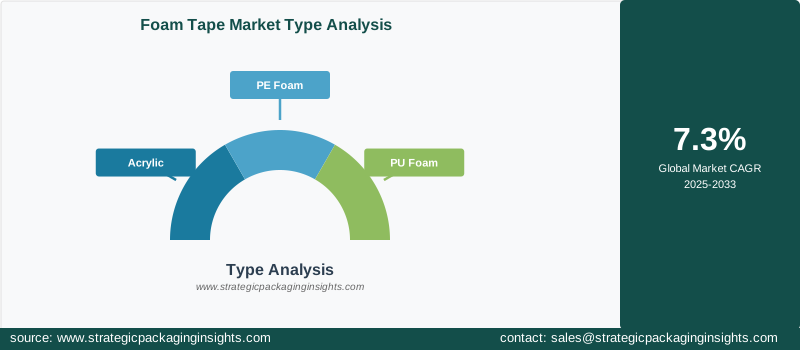
PE foam tapes, known for their flexibility and cushioning properties, are gaining popularity in the electronics and packaging industries. These tapes offer excellent shock absorption and insulation, making them suitable for applications that require protection against impact and vibration. The growing trend towards miniaturization in the electronics industry is driving the demand for PE foam tapes, as they provide reliable bonding solutions in compact and intricate devices.
PU foam tapes, with their superior cushioning and sealing properties, are widely used in the construction and automotive sectors. These tapes offer excellent thermal insulation and soundproofing, making them ideal for applications that require enhanced comfort and energy efficiency. The increasing focus on energy-efficient buildings and vehicles is driving the demand for PU foam tapes, as they contribute to improved insulation and reduced energy consumption.
Application Analysis
The foam tape market is segmented by application into mounting, sealing, and insulation. Mounting applications account for a significant share of the market, driven by the demand from the construction and automotive industries. Foam tapes are widely used for mounting applications due to their strong adhesive properties and ability to withstand harsh environmental conditions. The growing trend towards lightweight materials in these industries is further boosting the demand for foam tapes in mounting applications.
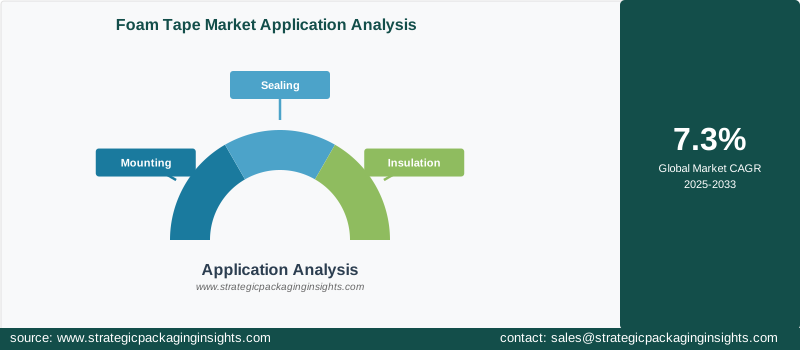
Sealing applications are another key segment in the foam tape market, with demand driven by the need for effective sealing solutions in construction and automotive applications. Foam tapes offer excellent sealing properties, providing a reliable barrier against moisture, dust, and air infiltration. The increasing focus on energy-efficient buildings and vehicles is driving the demand for foam tapes in sealing applications, as they contribute to improved insulation and reduced energy consumption.
Insulation applications are gaining traction in the foam tape market, driven by the demand for energy-efficient solutions in the construction and automotive industries. Foam tapes offer excellent thermal insulation and soundproofing properties, making them ideal for applications that require enhanced comfort and energy efficiency. The growing trend towards sustainable and eco-friendly building practices is further boosting the demand for foam tapes in insulation applications.
End Use Analysis
The foam tape market is segmented by end use into construction, automotive, and electronics. The construction industry is a major end user of foam tapes, driven by the demand for efficient and durable adhesive solutions. Foam tapes are widely used in construction applications for sealing, mounting, and insulation purposes, offering excellent adhesive properties and resistance to environmental factors. The increasing focus on energy-efficient buildings and sustainable construction practices is driving the demand for foam tapes in the construction industry.
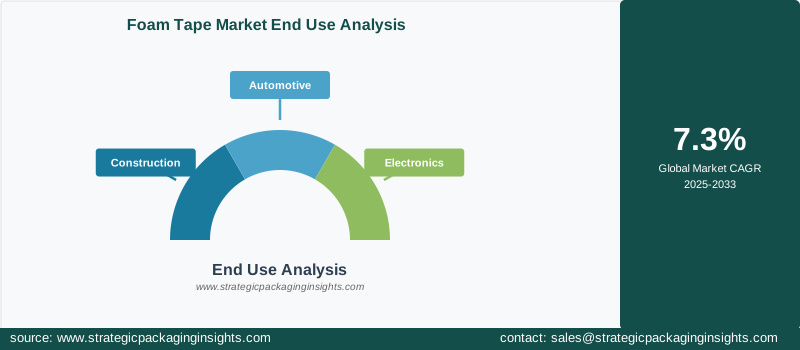
The automotive industry is another key end user of foam tapes, with demand driven by the shift towards lightweight materials and the need for reliable bonding solutions. Foam tapes are used extensively in automotive applications for bonding and sealing purposes, offering a cost-effective and reliable solution for manufacturers. The growing trend towards electric vehicles and the need for improved fuel efficiency are further boosting the demand for foam tapes in the automotive industry.
The electronics industry is witnessing significant growth in the demand for foam tapes, driven by the trend towards miniaturization and the need for high-performance adhesive solutions. Foam tapes offer reliable bonding solutions in compact and intricate electronic devices, providing excellent adhesion and resistance to environmental factors. The increasing focus on innovation and technological advancements in the electronics industry is driving the demand for foam tapes in this sector.
Adhesive Analysis
The foam tape market is segmented by adhesive type into pressure-sensitive and solvent-based adhesives. Pressure-sensitive adhesives are widely used in foam tapes due to their ease of application and strong bonding properties. These adhesives offer excellent adhesion to a variety of surfaces, making them suitable for a wide range of applications in the construction, automotive, and electronics industries. The demand for pressure-sensitive adhesives is driven by their ability to provide reliable bonding solutions in challenging conditions, making them a preferred choice for manufacturers.
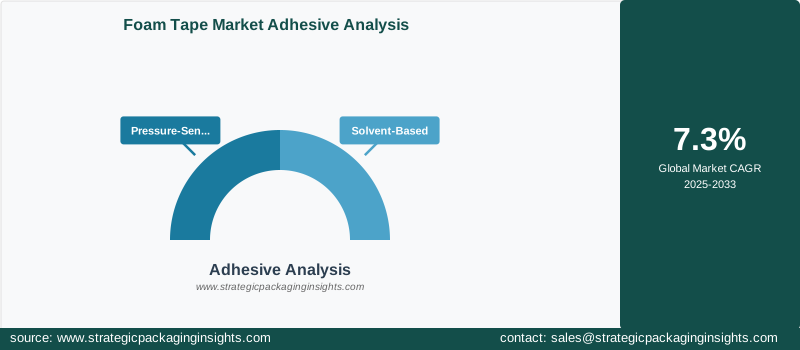
Solvent-based adhesives, known for their strong bonding properties and resistance to environmental factors, are gaining popularity in the foam tape market. These adhesives offer excellent adhesion to a variety of surfaces, making them suitable for applications that require strong and durable bonding solutions. The demand for solvent-based adhesives is driven by their ability to provide reliable bonding solutions in challenging conditions, making them a preferred choice for manufacturers in the construction and automotive industries.
Foam Tape Market Segments
The Foam Tape market has been segmented on the basis ofType
- Acrylic
- PE Foam
- PU Foam
Application
- Mounting
- Sealing
- Insulation
End Use
- Construction
- Automotive
- Electronics
Adhesive
- Pressure-Sensitive
- Solvent-Based
Region
- Asia Pacific
- North America
- Latin America
- Europe
- Middle East & Africa




