


Tapes Market Outlook
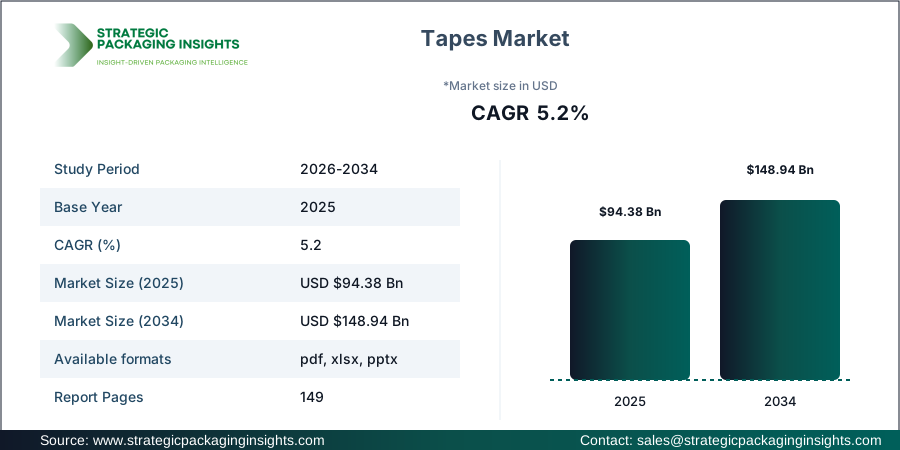
The Tapes market size was valued at USD 94.38 billion in 2025 and is anticipated to reach USD 148.94 billion by 2034, growing at a CAGR of 5.2% during the forecast period according to Strategic Packaging Insights. The market is witnessing robust growth driven by the increasing demand for tapes across various industries such as packaging, automotive, and electronics. Companies like 3M and Tesa are leading the charge with innovative products that cater to the evolving needs of these sectors. The rise in e-commerce and the need for efficient packaging solutions are further propelling the demand for tapes, making them an indispensable component in the logistics and supply chain industry.
One of the most impactful drivers of the tapes market is the growing emphasis on sustainable and eco-friendly packaging solutions. Governments worldwide are implementing stringent regulations to reduce plastic waste, which has led to an increased demand for tapes made from biodegradable materials. For instance, the European Union's directive on single-use plastics is pushing manufacturers to innovate and develop tapes that are not only effective but also environmentally friendly. Companies like Avery Dennison are investing heavily in research and development to create sustainable adhesive solutions that meet these regulatory requirements, thereby gaining a competitive edge in the market.
Report Scope
| Attributes | Details |
| Report Title | Tapes Market Size, Future Growth and Forecast 2034 |
| Product Type | Packaging Tapes, Masking Tapes, Double-Sided Tapes, Specialty Tapes |
| Adhesive Type | Acrylic, Rubber-Based, Silicone, Hot Melt |
| Application | Packaging, Bonding, Masking, Insulation |
| End Use | Packaging, Automotive, Electronics, Construction, Healthcare |
| Region | Asia Pacific, North America, Latin America, Europe, Middle East & Africa |
| Base Year | 2025 |
| Historic Period | 2018-2024 |
| Forecast Period | 2026-2034 |
| Number of Pages | 149 |
| Customization Available | Yes* |
Opportunities & Threats
The tapes market presents significant opportunities, particularly in the realm of technological advancements and product innovations. With the rise of smart packaging, there is a growing demand for tapes that can integrate with digital technologies to provide enhanced functionality. This includes features like tamper-evidence, RFID integration, and temperature monitoring, which are becoming increasingly important in sectors like pharmaceuticals and food packaging. Companies that can leverage these technologies to offer advanced tape solutions are likely to capture a substantial share of the market.
Another opportunity lies in the expansion of the automotive and electronics industries, particularly in emerging markets. As these industries continue to grow, the demand for high-performance tapes that can withstand extreme conditions and provide reliable bonding solutions is expected to rise. Manufacturers like Nitto Denko and Henkel are well-positioned to capitalize on this trend by offering specialized tapes that cater to the specific needs of these industries, such as heat resistance and electrical insulation.
However, the market also faces certain restraints, primarily due to the volatility in raw material prices. The production of tapes relies heavily on petrochemical derivatives, which are subject to fluctuations in oil prices. This can lead to increased production costs and affect the profitability of manufacturers. Additionally, the presence of stringent environmental regulations regarding the use of certain chemicals in adhesives poses a challenge for companies, as they need to continuously innovate to comply with these standards while maintaining product performance.
Drivers & Challenges
One of the primary drivers of the tapes market is the increasing demand for efficient and reliable packaging solutions. With the growth of e-commerce and the need for secure transportation of goods, tapes have become an essential component in the packaging industry. Companies like Intertape Polymer Group and Berry Global are focusing on developing high-strength tapes that offer superior adhesion and durability, ensuring that packages remain intact during transit. This demand is further fueled by the rise in consumer awareness regarding product safety and the need for tamper-proof packaging.
Another significant driver is the advancement in adhesive technologies, which has led to the development of tapes with enhanced properties such as heat resistance, UV protection, and chemical resistance. These advancements have broadened the application scope of tapes, making them suitable for use in harsh environments and specialized industries like construction and healthcare. Manufacturers are investing in research and development to create innovative adhesive solutions that meet the evolving needs of these industries, thereby driving market growth.
Despite these drivers, the tapes market faces challenges such as intense competition and the need for continuous innovation. With numerous players vying for market share, companies must differentiate themselves through product innovation and superior customer service. Additionally, the rapid pace of technological advancements requires manufacturers to constantly update their product offerings to stay relevant in the market. This necessitates significant investment in research and development, which can be a barrier for smaller companies with limited resources.
Market Growth Factors
- U.S. battery manufacturing policy support is expanding downstream demand for specialty tapes used in EV cells, modules, and packs. The U.S. Department of Energy reopened a third-round funding opportunity for battery materials processing and battery manufacturing projects on March 13, 2026, and the same program page notes a related notice of intent issued on August 13, 2025 for up to 0 million to expand U.S. critical mineral, battery manufacturing, and recycling capacity.
- Electrification is creating demand for application-specific pressure-sensitive tapes with thermal, dielectric, and vibration-management functions. Avery Dennison's April 2026 launch of tapes for EV battery cell connection systems highlights current OEM requirements for flame-retardant, high-temperature-resistant, and dielectric protection tapes in battery designs.
- Building-envelope performance needs are supporting tape adoption in construction. Avery Dennison's April 2025 flashing and seaming portfolio targeted windows, doors, wall systems, roofing, and foundation insulation, reflecting ongoing demand for peel-and-stick tapes that help manage air and water intrusion and support building energy efficiency. [Avery Dennison Performance Tapes ]
- New packaging regulation in Europe is pushing tape suppliers toward recyclable and lower-impact constructions. The European Commission states that the Packaging and Packaging Waste Regulation (PPWR) entered into force on February 11, 2025 and will generally apply from August 12, 2026, setting requirements for packaging manufacturing, composition, and reusable or recoverable design.
- Sustainability and supply-chain localization are driving fresh tape manufacturing investment in North America. South Carolina announced in March 2025 that ALLTAPE would invest million in Lexington County for a 125,000-square-foot facility producing sustainable, solvent-free adhesive products, with operations expected online in July 2026.
- Automotive electronics are moving toward automated, repairable, and more circular bonding methods, which favors higher-value technical tape systems. In April 2026, tesa and AUMOVIO introduced a robotically applied debondable adhesive tape solution for automotive displays that supports rework, repair, and easier component recovery.
- Capacity expansion for high-performance acrylic adhesive tapes is improving supply availability for e-mobility and electronics applications. Coroplast's March 2026 opening of its Schönebeck site expanded production capacity for acrylic adhesive tapes and specifically targeted additional applications in high-voltage battery manufacturing. [Coroplast Tape ]
Recent Developments
- In January 2025, tesa commercially launched tesafilm Paper, its first tesafilm product with a paper-based carrier, expanding its adhesive tape range with a solvent-free format made from paper sourced from certified forests and other controlled sources and positioned for paper and cardboard recycling compatibility. [tesa ]
- In April 2025, Avery Dennison Performance Tapes introduced its Flashing and Seaming Portfolio for building envelope applications, adding pressure-sensitive adhesive tape solutions for windows, doors, wall systems, roofing, and foundation or concrete insulation, with the featured FT 0088 flashing tape meeting AAMA 711-13 requirements.
- In March 2026, Coroplast Group opened a new production site in Schönebeck, Germany, expanding Coroplast Tape's manufacturing capacity for high-performance acrylic adhesive tapes; the first construction phase involved an investment of about €25 million and supports additional applications including high-voltage battery manufacturing for the automotive and electronics industries.
- In April 2026, Avery Dennison announced a new pressure-sensitive adhesive tapes portfolio for EV battery cell connection systems, adding functional bonding and protection tapes engineered for flame retardancy, vibration absorption, high-temperature resistance, and dielectric protection in electric vehicle battery assemblies. [Avery Dennison Performance Tapes ]
Market Share Analysis
The competitive landscape of the tapes market is characterized by the presence of several key players who dominate the industry with their extensive product portfolios and strong distribution networks. Companies like 3M, Tesa, and Nitto Denko hold significant market shares due to their innovative product offerings and focus on research and development. These companies have established themselves as leaders in the market by continuously introducing new products that cater to the diverse needs of various industries.
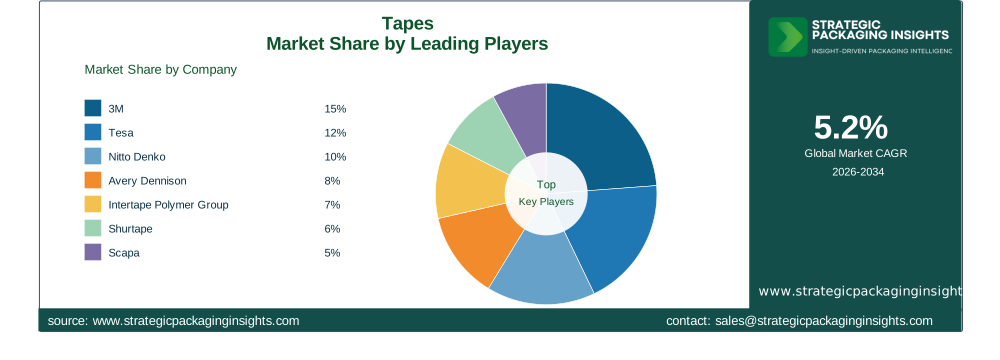
3M, for instance, is renowned for its wide range of adhesive solutions that are used in multiple applications, from packaging to automotive. The company's commitment to innovation and sustainability has enabled it to maintain a strong position in the market. Similarly, Tesa is known for its high-quality tapes that are used in industrial and consumer applications. The company's focus on customer-centric solutions and its ability to adapt to changing market dynamics have contributed to its success.
Nitto Denko, another major player, has a strong presence in the electronics and automotive sectors, offering specialized tapes that meet the stringent requirements of these industries. The company's emphasis on technological advancements and its strategic partnerships with key players in the industry have helped it to expand its market share. Avery Dennison, known for its pressure-sensitive adhesive products, has also made significant strides in the market by focusing on sustainable solutions and expanding its global footprint.
Other notable companies in the market include Intertape Polymer Group, Shurtape, Scapa, Berry Global, Saint-Gobain, and Henkel. These companies have carved out niches in the market by offering specialized products and services that cater to specific industry needs. For example, Henkel's expertise in adhesive technologies has enabled it to develop innovative tape solutions for the construction and healthcare industries. Similarly, Berry Global's focus on sustainable packaging solutions has positioned it as a key player in the market.
Key Highlights
- The tapes market is projected to grow from USD 94.38 billion in 2025 to USD 148.94 billion by 2034, at a CAGR of 5.2%.
- Key drivers include the rise of e-commerce, demand for sustainable packaging, and advancements in adhesive technologies.
- Challenges include raw material price volatility and stringent environmental regulations.
- Opportunities exist in smart packaging and the expansion of automotive and electronics industries.
- 3M, Tesa, and Nitto Denko are leading players with significant market shares.
- Technological advancements are broadening the application scope of tapes across various industries.
- Intense competition and the need for continuous innovation are major challenges for market players.
Tapes Market Segments Insights

Product Type Analysis
The tapes market is segmented by product type into packaging tapes, masking tapes, double-sided tapes, and specialty tapes. Packaging tapes dominate the market due to their extensive use in the logistics and e-commerce sectors. The rise in online shopping has led to an increased demand for secure and reliable packaging solutions, driving the growth of this segment. Companies like 3M and Intertape Polymer Group are focusing on developing high-performance packaging tapes that offer superior adhesion and durability, ensuring the safe transportation of goods.

Masking tapes, on the other hand, are widely used in the automotive and construction industries for their ability to provide clean lines and protect surfaces during painting and finishing processes. The demand for masking tapes is expected to grow as these industries continue to expand, particularly in emerging markets. Double-sided tapes are gaining popularity in the electronics and automotive sectors due to their ability to provide strong bonding solutions without the need for mechanical fasteners. Specialty tapes, which include products like anti-slip and reflective tapes, are also witnessing increased demand due to their unique properties and applications in various industries.
Adhesive Type Analysis
The market is further segmented by adhesive type into acrylic, rubber-based, silicone, and hot melt adhesives. Acrylic adhesives are the most widely used due to their versatility and ability to provide strong adhesion across a wide range of surfaces. They are particularly popular in the packaging and construction industries, where they offer excellent resistance to environmental factors such as UV light and moisture. Companies like Avery Dennison and Henkel are investing in the development of advanced acrylic adhesives that offer enhanced performance and sustainability.

Rubber-based adhesives are known for their flexibility and quick bonding properties, making them ideal for applications in the automotive and electronics industries. Silicone adhesives, on the other hand, are preferred for their high-temperature resistance and durability, making them suitable for use in harsh environments. Hot melt adhesives are gaining traction due to their fast-setting properties and ability to bond a variety of materials, including plastics and metals. The demand for these adhesives is expected to grow as manufacturers seek efficient and cost-effective bonding solutions.
Application Analysis
By application, the tapes market is segmented into packaging, bonding, masking, and insulation. Packaging remains the largest application segment, driven by the growth of the e-commerce industry and the need for secure and efficient packaging solutions. The demand for tapes in packaging is further fueled by the increasing focus on sustainability and the development of eco-friendly adhesive solutions. Companies like Berry Global and Shurtape are leading the way in offering sustainable packaging tapes that meet the evolving needs of consumers and businesses.

Bonding applications are also witnessing significant growth, particularly in the automotive and electronics industries, where tapes are used to provide strong and reliable bonding solutions. Masking tapes are essential in the construction and automotive sectors for their ability to protect surfaces during painting and finishing processes. Insulation tapes, which are used to provide electrical and thermal insulation, are gaining popularity in the electronics and construction industries due to their ability to enhance safety and performance.
End Use Analysis
The tapes market is segmented by end use into packaging, automotive, electronics, construction, and healthcare. The packaging industry is the largest end-use segment, driven by the growth of e-commerce and the need for efficient and reliable packaging solutions. The demand for tapes in the automotive industry is also on the rise, as manufacturers seek high-performance bonding solutions that can withstand extreme conditions and provide reliable adhesion.
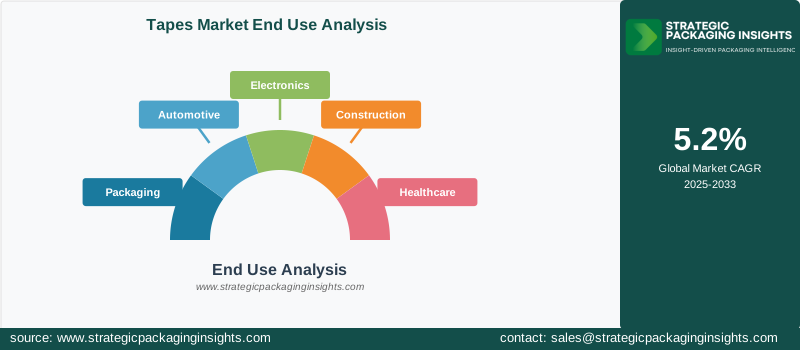
The electronics industry is another key end-use segment, where tapes are used for applications such as bonding, insulation, and protection. The demand for tapes in this industry is expected to grow as the demand for electronic devices continues to rise. The construction industry is also a significant end-use segment, where tapes are used for applications such as masking, bonding, and insulation. The healthcare industry is witnessing increased demand for tapes due to their use in medical devices and applications such as wound care and surgical drapes.
Tapes Market Segments
The Tapes market has been segmented on the basis ofProduct Type
- Packaging Tapes
- Masking Tapes
- Double-Sided Tapes
- Specialty Tapes
Adhesive Type
- Acrylic
- Rubber-Based
- Silicone
- Hot Melt
Application
- Packaging
- Bonding
- Masking
- Insulation
End Use
- Packaging
- Automotive
- Electronics
- Construction
- Healthcare
Region
- Asia Pacific
- North America
- Latin America
- Europe
- Middle East & Africa




