


Flocking Tape Market Outlook
The Flocking Tape market was valued at $3.52 billion in 2025 and is projected to reach $5.69 billion by 2034, growing at a CAGR of 5.5% during the forecast period 2026-2034. This market is experiencing significant growth due to the increasing demand for noise reduction and cushioning solutions in various industries, particularly automotive and packaging. The versatility of flocking tape, which offers both aesthetic appeal and functional benefits, is driving its adoption across diverse applications. The automotive sector, in particular, is a major consumer of flocking tape, utilizing it for sealing and noise reduction purposes. Additionally, the rise in consumer goods and industrial applications is further propelling market growth.
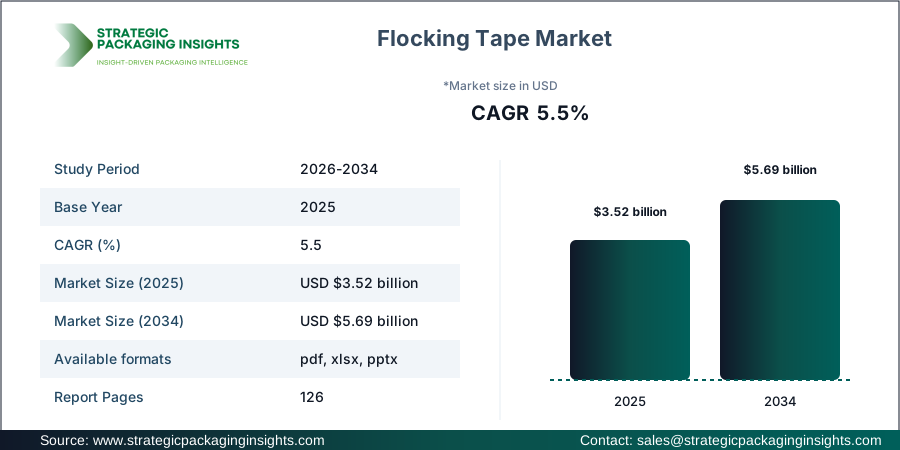
Despite the promising growth trajectory, the flocking tape market faces certain challenges that could hinder its expansion. Regulatory constraints related to the use of specific adhesive materials and environmental concerns regarding the disposal of synthetic flocking materials pose significant hurdles. However, the market holds substantial growth potential, driven by innovations in eco-friendly materials and the development of advanced adhesive technologies. The increasing focus on sustainable packaging solutions is expected to create new opportunities for market players, as they strive to meet the evolving demands of environmentally conscious consumers.
Report Scope
| Attributes | Details |
| Report Title | Flocking Tape Market Size, Future Growth and Forecast 2034 |
| By Material Type | Polyester Flock, Nylon Flock, Rayon Flock |
| By Adhesive Type | Acrylic, Rubber-Based, Silicone-Based |
| By Application | Automotive Sealing, Furniture Protection, Decorative Packaging, Industrial Cushioning |
| By End Use | Automotive, Packaging, Consumer Goods, Industrial |
| Region | Asia Pacific, North America, Latin America, Europe, Middle East & Africa |
| Base Year | 2025 |
| Historic Period | 2018-2024 |
| Forecast Period | 2026-2034 |
| Number of Pages | 126 |
| Customization Available | Yes* |
Opportunities & Threats
The flocking tape market presents numerous opportunities for growth, particularly in the automotive and packaging sectors. The automotive industry is increasingly adopting flocking tape for its noise reduction and sealing properties, which enhance vehicle comfort and performance. As the demand for electric vehicles rises, the need for effective noise insulation solutions is expected to drive the adoption of flocking tape. Additionally, the packaging industry is witnessing a shift towards decorative and protective packaging solutions, where flocking tape plays a crucial role. The aesthetic appeal and protective qualities of flocking tape make it an ideal choice for high-end packaging applications, creating new avenues for market expansion.
Another significant opportunity lies in the development of eco-friendly flocking materials and adhesives. With growing environmental concerns and stringent regulations, manufacturers are focusing on sustainable alternatives to traditional flocking materials. The introduction of biodegradable and recyclable flocking tapes is expected to gain traction, catering to the increasing demand for sustainable packaging solutions. Furthermore, advancements in adhesive technologies, such as the development of low-VOC and solvent-free adhesives, are anticipated to enhance the market's growth prospects by addressing environmental and health concerns.
However, the flocking tape market also faces certain threats that could impede its growth. One of the primary challenges is the volatility in raw material prices, which can significantly impact production costs and profit margins. Additionally, the presence of alternative solutions, such as foam tapes and rubber seals, poses a competitive threat to flocking tape manufacturers. These alternatives offer similar benefits and are often preferred due to their cost-effectiveness and ease of application. To mitigate these threats, market players need to focus on product differentiation and innovation, ensuring that flocking tape remains a preferred choice for various applications.
Drivers & Challenges
The flocking tape market is driven by several key factors, including the growing demand for noise reduction and cushioning solutions in the automotive industry. As consumers increasingly prioritize comfort and performance, automakers are incorporating flocking tape into vehicle designs to enhance noise insulation and sealing capabilities. This trend is further supported by the rise in electric vehicle production, where noise reduction is a critical consideration. Additionally, the packaging industry's shift towards decorative and protective solutions is driving the demand for flocking tape, as it offers both aesthetic appeal and functional benefits.
Another significant driver of the flocking tape market is the increasing focus on sustainable packaging solutions. With environmental concerns gaining prominence, manufacturers are exploring eco-friendly flocking materials and adhesives to meet the evolving demands of consumers and regulatory bodies. The development of biodegradable and recyclable flocking tapes is expected to gain traction, providing a competitive edge to market players. Furthermore, advancements in adhesive technologies, such as low-VOC and solvent-free adhesives, are anticipated to enhance the market's growth prospects by addressing environmental and health concerns.
Despite these drivers, the flocking tape market faces several challenges that could hinder its growth. One of the primary challenges is the volatility in raw material prices, which can significantly impact production costs and profit margins. Additionally, the presence of alternative solutions, such as foam tapes and rubber seals, poses a competitive threat to flocking tape manufacturers. These alternatives offer similar benefits and are often preferred due to their cost-effectiveness and ease of application. To overcome these challenges, market players need to focus on product differentiation and innovation, ensuring that flocking tape remains a preferred choice for various applications.
Market Share Analysis
The competitive landscape of the flocking tape market is characterized by the presence of several key players, each striving to enhance their market share through strategic initiatives and product innovations. Companies such as Tesa, 3M, and Nitto Denko are leading the market, leveraging their extensive product portfolios and strong distribution networks to maintain a competitive edge. These companies are focusing on expanding their product offerings and investing in research and development to introduce advanced flocking tapes that cater to the evolving demands of various industries.
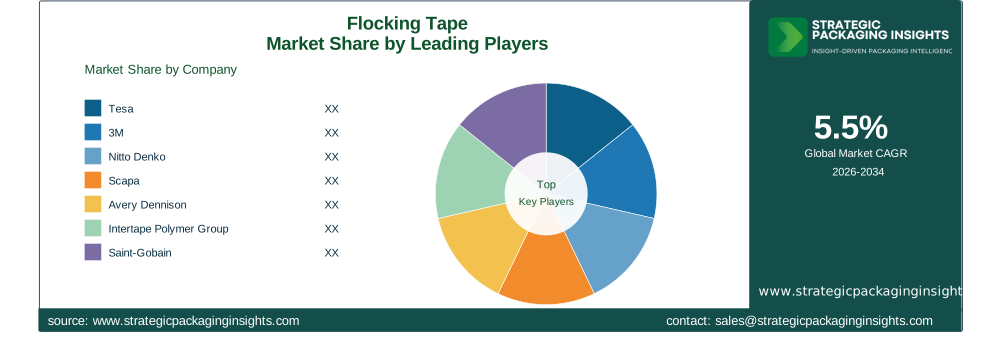
Tesa, a prominent player in the flocking tape market, holds a significant market share due to its comprehensive range of adhesive solutions and strong brand reputation. The company is known for its innovative products and commitment to sustainability, which have helped it establish a strong foothold in the market. Similarly, 3M is a major player, renowned for its cutting-edge adhesive technologies and extensive global presence. The company's focus on research and development has enabled it to introduce high-performance flocking tapes that meet the diverse needs of its customers.
Nitto Denko, another key player in the market, is recognized for its advanced adhesive solutions and strong focus on innovation. The company's commitment to quality and customer satisfaction has helped it maintain a competitive position in the flocking tape market. Other notable players include Scapa, Avery Dennison, and Intertape Polymer Group, each contributing to the market's growth through their unique product offerings and strategic initiatives. These companies are actively investing in research and development to enhance their product portfolios and expand their market presence.
Saint-Gobain, Shurtape, and Advance Tapes are also significant contributors to the flocking tape market, each offering a diverse range of adhesive solutions tailored to meet the specific needs of various industries. These companies are focusing on expanding their distribution networks and enhancing their product offerings to capture a larger share of the market. Berry Global, another key player, is known for its innovative packaging solutions and commitment to sustainability, which have helped it establish a strong presence in the flocking tape market.
Key Highlights
- The flocking tape market is projected to grow from $3.52 billion in 2025 to $5.69 billion by 2034, at a CAGR of 5.5%.
- Key drivers include the demand for noise reduction and cushioning solutions in the automotive and packaging industries.
- Eco-friendly flocking materials and adhesives are gaining traction due to environmental concerns and regulatory pressures.
- Major players include Tesa, 3M, Nitto Denko, Scapa, and Avery Dennison, among others.
- The automotive sector is a significant consumer of flocking tape, utilizing it for sealing and noise reduction purposes.
- Advancements in adhesive technologies, such as low-VOC and solvent-free adhesives, are enhancing market growth prospects.
- Challenges include raw material price volatility and competition from alternative solutions like foam tapes and rubber seals.
Top Countries Insights
In the flocking tape market, the United States stands out as a key player, with a market size of approximately $1.2 billion and a CAGR of 6%. The country's strong automotive industry and focus on advanced manufacturing technologies drive the demand for flocking tape. Additionally, the increasing emphasis on sustainable packaging solutions is expected to further boost market growth. However, regulatory challenges related to adhesive materials and environmental concerns pose potential hurdles for market expansion.
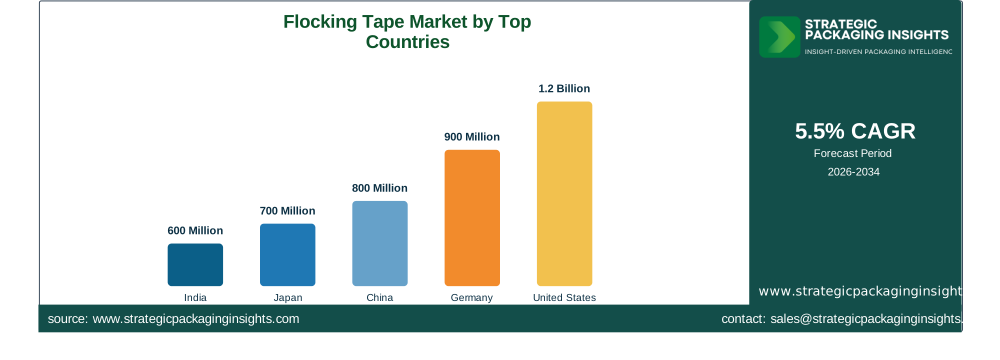
Germany is another significant market for flocking tape, with a market size of around $900 million and a CAGR of 5%. The country's robust automotive sector and focus on innovation and quality drive the demand for flocking tape. Additionally, the growing emphasis on eco-friendly materials and sustainable packaging solutions is expected to create new opportunities for market players. However, the presence of alternative solutions and raw material price volatility pose challenges for market growth.
China, with a market size of approximately $800 million and a CAGR of 7%, is a rapidly growing market for flocking tape. The country's expanding automotive industry and increasing focus on advanced manufacturing technologies drive the demand for flocking tape. Additionally, the rising emphasis on sustainable packaging solutions and eco-friendly materials is expected to further boost market growth. However, regulatory challenges and competition from alternative solutions pose potential hurdles for market expansion.
Japan, with a market size of around $700 million and a CAGR of 4%, is a key market for flocking tape. The country's strong focus on innovation and quality drives the demand for flocking tape, particularly in the automotive and packaging industries. Additionally, the increasing emphasis on sustainable materials and eco-friendly packaging solutions is expected to create new opportunities for market players. However, the presence of alternative solutions and raw material price volatility pose challenges for market growth.
India, with a market size of approximately $600 million and a CAGR of 8%, is an emerging market for flocking tape. The country's growing automotive industry and increasing focus on advanced manufacturing technologies drive the demand for flocking tape. Additionally, the rising emphasis on sustainable packaging solutions and eco-friendly materials is expected to further boost market growth. However, regulatory challenges and competition from alternative solutions pose potential hurdles for market expansion.
Flocking Tape Market Segments Insights

Material Type Analysis
The flocking tape market is segmented by material type into polyester flock, nylon flock, and rayon flock. Polyester flock is the most widely used material due to its durability, cost-effectiveness, and versatility. It is favored in applications requiring high resistance to wear and tear, such as automotive sealing and industrial cushioning. Nylon flock, known for its superior strength and elasticity, is preferred in applications demanding high performance and flexibility. Rayon flock, although less common, is valued for its soft texture and aesthetic appeal, making it suitable for decorative packaging and consumer goods applications.
Polyester flock dominates the market due to its widespread availability and cost advantages. Its ability to withstand harsh environmental conditions and provide effective noise reduction makes it a popular choice in the automotive industry. Nylon flock, on the other hand, is gaining traction in high-performance applications, where its strength and flexibility offer significant advantages. Rayon flock, while less prevalent, is increasingly used in decorative applications, where its soft texture and visual appeal enhance product aesthetics.
Adhesive Type Analysis
The adhesive type segment of the flocking tape market includes acrylic, rubber-based, and silicone-based adhesives. Acrylic adhesives are the most commonly used due to their strong bonding properties and resistance to environmental factors. They are favored in applications requiring long-lasting adhesion and durability. Rubber-based adhesives, known for their flexibility and ease of application, are preferred in applications where quick bonding and repositionability are essential. Silicone-based adhesives, although less common, offer superior temperature resistance and are used in high-performance applications.
Acrylic adhesives dominate the market due to their versatility and strong bonding capabilities. They are widely used in automotive and industrial applications, where durability and resistance to environmental factors are critical. Rubber-based adhesives, while less prevalent, are gaining popularity in applications requiring quick bonding and repositionability. Silicone-based adhesives, although niche, are valued for their temperature resistance and are increasingly used in high-performance applications, particularly in the automotive and industrial sectors.
Application Analysis
The flocking tape market is segmented by application into automotive sealing, furniture protection, decorative packaging, and industrial cushioning. Automotive sealing is the largest application segment, driven by the demand for noise reduction and sealing solutions in the automotive industry. Flocking tape is used to enhance vehicle comfort and performance by providing effective noise insulation and sealing capabilities. Furniture protection is another significant application, where flocking tape is used to prevent scratches and damage to furniture surfaces.
Decorative packaging is a growing application segment, driven by the demand for aesthetically appealing and protective packaging solutions. Flocking tape is used to enhance the visual appeal of packaging and provide additional protection to packaged goods. Industrial cushioning is another important application, where flocking tape is used to provide cushioning and protection to industrial equipment and components. The versatility and functional benefits of flocking tape make it a preferred choice in various applications, driving its demand across different industries.
End Use Analysis
The flocking tape market is segmented by end use into automotive, packaging, consumer goods, and industrial. The automotive sector is the largest end-use segment, driven by the demand for noise reduction and sealing solutions in vehicles. Flocking tape is used to enhance vehicle comfort and performance by providing effective noise insulation and sealing capabilities. The packaging industry is another significant end-use segment, where flocking tape is used to enhance the visual appeal and protective qualities of packaging solutions.
Consumer goods is a growing end-use segment, driven by the demand for aesthetically appealing and protective solutions in consumer products. Flocking tape is used to enhance the visual appeal and functionality of consumer goods, making it a preferred choice in various applications. The industrial sector is another important end-use segment, where flocking tape is used to provide cushioning and protection to industrial equipment and components. The versatility and functional benefits of flocking tape make it a preferred choice in various end-use applications, driving its demand across different industries.
Flocking Tape Market Segments
The Flocking Tape market has been segmented on the basis ofBy Material Type
- Polyester Flock
- Nylon Flock
- Rayon Flock
By Adhesive Type
- Acrylic
- Rubber-Based
- Silicone-Based
By Application
- Automotive Sealing
- Furniture Protection
- Decorative Packaging
- Industrial Cushioning
By End Use
- Automotive
- Packaging
- Consumer Goods
- Industrial
Region
- Asia Pacific
- North America
- Latin America
- Europe
- Middle East & Africa




