


Flexible Packaging Adhesives Market Outlook
The flexible packaging adhesives market was valued at $11.5 billion in 2024 and is projected to reach $18.3 billion by 2033, growing at a CAGR of 5.2% during the forecast period 2025-2033. This market is driven by the increasing demand for lightweight, durable, and sustainable packaging solutions across various industries such as food and beverages, healthcare, and cosmetics. The shift towards eco-friendly packaging materials and the rising consumer preference for convenient and easy-to-use packaging formats are further propelling the market growth. Additionally, technological advancements in adhesive formulations, which enhance the performance and efficiency of packaging, are contributing to the market's expansion.
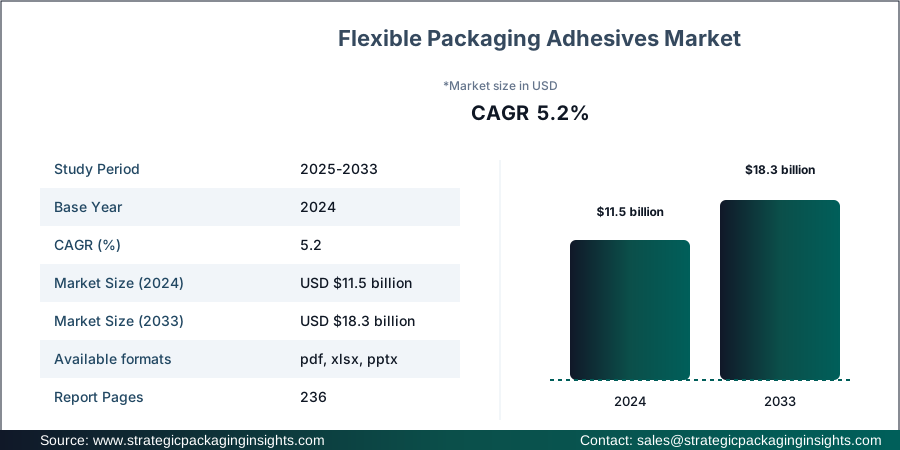
However, the market faces certain restraints, including stringent environmental regulations and the volatility of raw material prices. The regulatory landscape is becoming increasingly complex, with governments worldwide imposing strict guidelines on the use of certain chemicals in packaging adhesives. This is pushing manufacturers to innovate and develop new formulations that comply with these regulations while maintaining performance standards. Despite these challenges, the market holds significant growth potential, particularly in emerging economies where the demand for packaged goods is on the rise. The increasing urbanization and changing lifestyles in these regions are expected to create lucrative opportunities for market players.
Report Scope
| Attributes | Details |
| Report Title | Flexible Packaging Adhesives Market Size, Future Growth and Forecast 2033 |
| Type | Water-Based, Solvent-Based, Hot-Melt, Reactive |
| Application | Food & Beverages, Healthcare, Cosmetics & Toiletries, Industrial |
| Technology | Polyurethane, Acrylic, Others |
| Region | North America, Europe, Asia Pacific, Latin America, Middle East & Africa |
| Base Year | 2024 |
| Historic Period | 2017-2023 |
| Forecast Period | 2025-2033 |
| Number of Pages | 236 |
| Customization Available | Yes* |
Opportunities & Threats
The flexible packaging adhesives market presents numerous opportunities, particularly in the realm of sustainable and eco-friendly solutions. As consumers become more environmentally conscious, there is a growing demand for packaging materials that are recyclable and biodegradable. This trend is encouraging manufacturers to invest in research and development to create adhesives that meet these criteria. Additionally, the rise of e-commerce and online retailing is driving the need for innovative packaging solutions that can withstand the rigors of shipping and handling. This is opening up new avenues for adhesive manufacturers to develop products that offer superior bonding strength and durability.
Another significant opportunity lies in the healthcare sector, where the demand for flexible packaging is increasing due to its ability to provide better protection and shelf life for pharmaceutical products. The growing focus on patient safety and the need for tamper-evident packaging are further boosting the demand for advanced adhesive solutions. Moreover, the expansion of the food and beverage industry, particularly in emerging markets, is creating a substantial demand for flexible packaging adhesives. As consumers seek convenience and portability in their food products, manufacturers are increasingly adopting flexible packaging formats, thereby driving the market growth.
Despite these opportunities, the market faces certain threats, primarily from the fluctuating prices of raw materials used in adhesive production. The cost of key raw materials such as resins and polymers is subject to volatility due to factors like supply chain disruptions and geopolitical tensions. This can impact the profitability of manufacturers and pose a challenge to market growth. Additionally, the stringent regulatory environment, particularly in developed regions, can hinder the market expansion. Manufacturers need to navigate these regulations carefully to ensure compliance while maintaining product performance and cost-effectiveness.
Market Share Analysis
The competitive landscape of the flexible packaging adhesives market is characterized by the presence of several key players who are actively engaged in product innovation and strategic collaborations to strengthen their market position. The market is moderately fragmented, with a mix of global and regional players competing for market share. Companies are focusing on expanding their product portfolios and enhancing their production capabilities to cater to the growing demand for flexible packaging solutions. The increasing emphasis on sustainability and eco-friendly products is also driving companies to invest in research and development to develop new adhesive formulations that meet environmental standards.
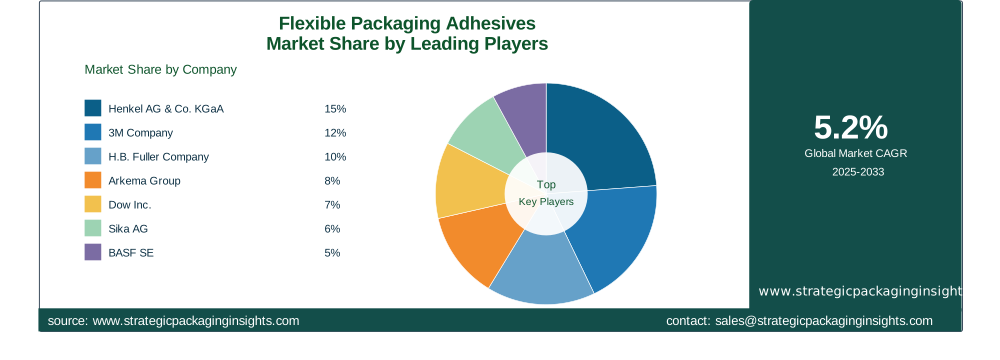
Major companies in the market include Henkel AG & Co. KGaA, 3M Company, H.B. Fuller Company, Arkema Group, and Dow Inc. These companies hold a significant share of the market due to their extensive product offerings and strong distribution networks. Henkel AG & Co. KGaA, for instance, is a leading player in the market, known for its innovative adhesive solutions that cater to various industries. The company has a strong focus on sustainability and has been actively developing eco-friendly products to meet the growing demand for green packaging solutions.
3M Company is another prominent player, renowned for its advanced adhesive technologies that offer superior performance and reliability. The company has a robust research and development infrastructure, enabling it to continuously innovate and introduce new products to the market. H.B. Fuller Company is also a key player, with a diverse range of adhesive solutions that cater to the flexible packaging industry. The company has been expanding its global footprint through strategic acquisitions and partnerships, enhancing its market presence and customer base.
Arkema Group and Dow Inc. are also significant contributors to the market, with a strong focus on developing high-performance adhesive solutions that meet the evolving needs of the packaging industry. These companies are investing heavily in research and development to create innovative products that offer enhanced bonding strength and durability. The competitive landscape is further intensified by the presence of regional players who are leveraging their local expertise and customer relationships to gain a competitive edge in the market.
Key Highlights
- The flexible packaging adhesives market is projected to grow at a CAGR of 5.2% from 2025 to 2033.
- Increasing demand for eco-friendly and sustainable packaging solutions is driving market growth.
- Technological advancements in adhesive formulations are enhancing product performance.
- The food and beverage industry is a major end-user of flexible packaging adhesives.
- Emerging economies offer significant growth opportunities for market players.
- Stringent environmental regulations pose a challenge to market expansion.
- Key players are focusing on product innovation and strategic collaborations.
- The healthcare sector is a growing application area for flexible packaging adhesives.
- Fluctuating raw material prices can impact market profitability.
- Regional players are gaining traction by leveraging local expertise.
Top Countries Insights
In the flexible packaging adhesives market, the United States holds a significant share, with a market size of approximately $3.2 billion and a CAGR of 4%. The country's well-established packaging industry and the presence of major market players contribute to its dominance. The demand for flexible packaging adhesives in the U.S. is driven by the growing food and beverage sector and the increasing adoption of sustainable packaging solutions. However, stringent environmental regulations and the need for compliance with safety standards pose challenges for manufacturers.
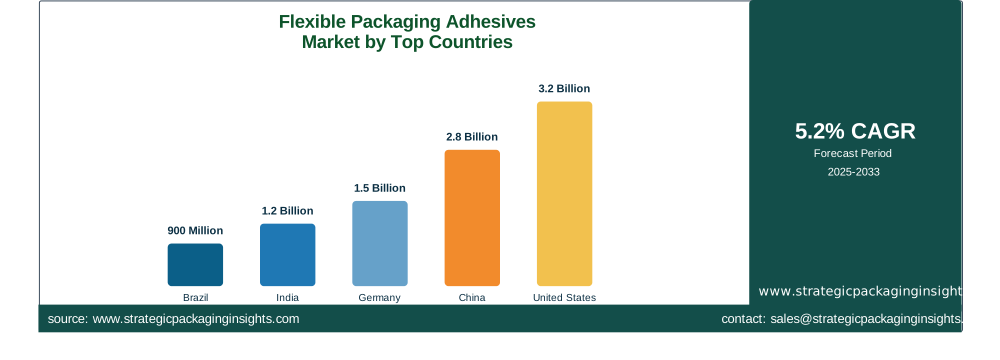
China is another key market, with a market size of around $2.8 billion and a CAGR of 6%. The rapid industrialization and urbanization in the country are driving the demand for flexible packaging adhesives. The expanding food and beverage industry, coupled with the rising consumer preference for convenient packaging formats, is fueling market growth. Additionally, government initiatives to promote sustainable packaging practices are encouraging manufacturers to develop eco-friendly adhesive solutions.
Germany, with a market size of $1.5 billion and a CAGR of 3%, is a prominent player in the European market. The country's strong focus on sustainability and innovation in packaging technologies is driving the demand for flexible packaging adhesives. The presence of leading packaging companies and a well-developed infrastructure further support market growth. However, the stringent regulatory environment and high production costs can pose challenges for manufacturers.
India, with a market size of $1.2 billion and a CAGR of 7%, offers significant growth opportunities for the flexible packaging adhesives market. The country's booming e-commerce sector and the increasing demand for packaged food products are key growth drivers. The government's push for sustainable packaging solutions and the rising awareness among consumers about eco-friendly products are further boosting market growth. However, the lack of standardization and the fragmented nature of the market can be challenging for manufacturers.
Brazil, with a market size of $900 million and a CAGR of 5%, is a growing market for flexible packaging adhesives in Latin America. The country's expanding food and beverage industry and the increasing demand for convenient packaging solutions are driving market growth. The government's focus on promoting sustainable packaging practices and the rising consumer awareness about environmental issues are encouraging manufacturers to develop eco-friendly adhesive solutions. However, economic instability and fluctuating raw material prices can pose challenges for market players.
Evolving Market Dynamics (2018-2024) and Strategic Foresight (2025-2033)
| Metrics | 2018-2024 | 2025-2033 |
|---|---|---|
| CAGR | 4.5% | 5.2% |
| Market Size Evolution | $9.8 billion to $11.5 billion | $11.5 billion to $18.3 billion |
| Segment Distribution Shifts | Food & Beverages dominant | Healthcare gaining traction |
| Regional Contribution Changes | North America leading | Asia Pacific emerging |
| Technological Impact Factors | Basic adhesive formulations | Advanced eco-friendly solutions |
| Client Demand Transformations | Focus on durability | Emphasis on sustainability |
Flexible Packaging Adhesives Market Segments Insights

Type Analysis
The flexible packaging adhesives market is segmented by type into water-based, solvent-based, hot-melt, and reactive adhesives. Water-based adhesives are gaining popularity due to their eco-friendly nature and low VOC emissions, making them a preferred choice for manufacturers aiming to comply with environmental regulations. Solvent-based adhesives, while offering strong bonding capabilities, are facing challenges due to their environmental impact and regulatory restrictions. Hot-melt adhesives are favored for their quick setting time and versatility across various applications, while reactive adhesives are known for their superior bonding strength and durability, making them ideal for demanding applications.
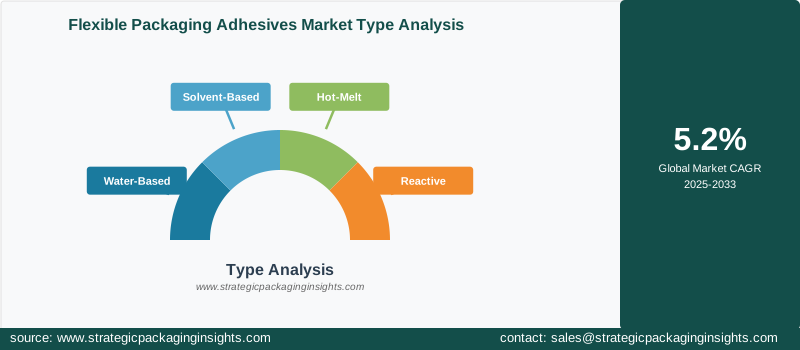
Water-based adhesives are expected to witness significant growth during the forecast period, driven by the increasing demand for sustainable packaging solutions. Manufacturers are focusing on developing advanced formulations that offer enhanced performance while minimizing environmental impact. Solvent-based adhesives, although facing regulatory challenges, continue to be used in applications where strong bonding is critical. Hot-melt adhesives are gaining traction in the food and beverage industry due to their ability to provide reliable sealing and tamper-evident properties. Reactive adhesives are increasingly being adopted in the healthcare sector, where the need for secure and durable packaging is paramount.
Application Analysis
The application segment of the flexible packaging adhesives market includes food & beverages, healthcare, cosmetics & toiletries, industrial, and others. The food & beverages sector is the largest application area, driven by the increasing demand for convenient and portable packaging solutions. The growing trend of on-the-go consumption and the rising popularity of ready-to-eat meals are further boosting the demand for flexible packaging adhesives in this sector. The healthcare industry is also a significant application area, with the need for secure and tamper-evident packaging driving the demand for advanced adhesive solutions.
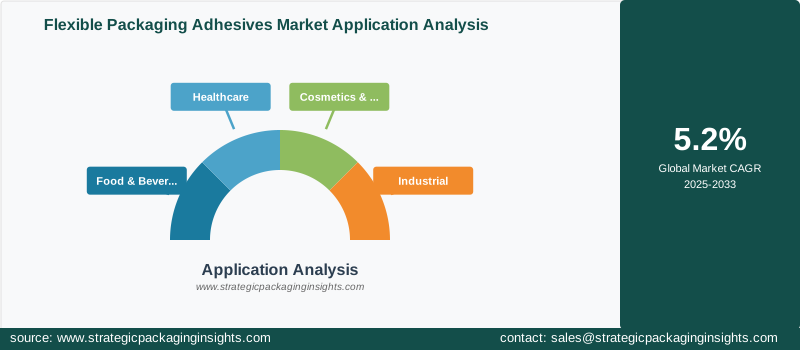
The cosmetics & toiletries segment is witnessing growth due to the increasing demand for aesthetically appealing and functional packaging solutions. The industrial segment, although smaller, is experiencing growth driven by the need for durable and reliable packaging in various industrial applications. The demand for flexible packaging adhesives in the food & beverages sector is expected to remain strong, with manufacturers focusing on developing innovative solutions that enhance product shelf life and safety. The healthcare sector is anticipated to witness significant growth, driven by the increasing focus on patient safety and the need for secure packaging solutions.
Technology Analysis
The technology segment of the flexible packaging adhesives market includes polyurethane, acrylic, and others. Polyurethane adhesives are widely used due to their excellent bonding strength and versatility across various applications. They are particularly favored in the food & beverages and healthcare sectors, where strong and durable bonds are essential. Acrylic adhesives are gaining popularity due to their fast curing time and resistance to environmental factors, making them suitable for a wide range of applications. Other technologies, including silicone and epoxy adhesives, are used in niche applications where specific performance characteristics are required.
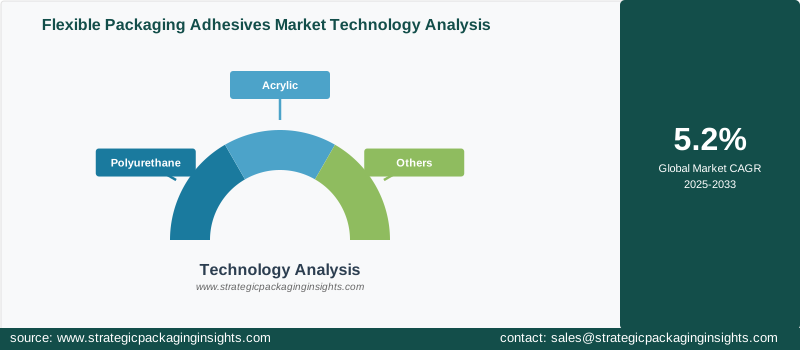
Polyurethane adhesives are expected to maintain their dominance in the market, driven by their superior performance and versatility. Manufacturers are focusing on developing advanced formulations that offer enhanced bonding strength and durability while minimizing environmental impact. Acrylic adhesives are anticipated to witness significant growth, driven by their fast curing time and resistance to environmental factors. The demand for other adhesive technologies is expected to remain stable, with manufacturers focusing on niche applications where specific performance characteristics are required.
Region Analysis
The flexible packaging adhesives market is segmented by region into North America, Europe, Asia Pacific, Latin America, and Middle East & Africa. North America is a leading market, driven by the presence of major market players and a well-established packaging industry. The demand for flexible packaging adhesives in the region is driven by the growing food & beverage sector and the increasing adoption of sustainable packaging solutions. Europe is another significant market, with a strong focus on sustainability and innovation in packaging technologies driving the demand for flexible packaging adhesives.
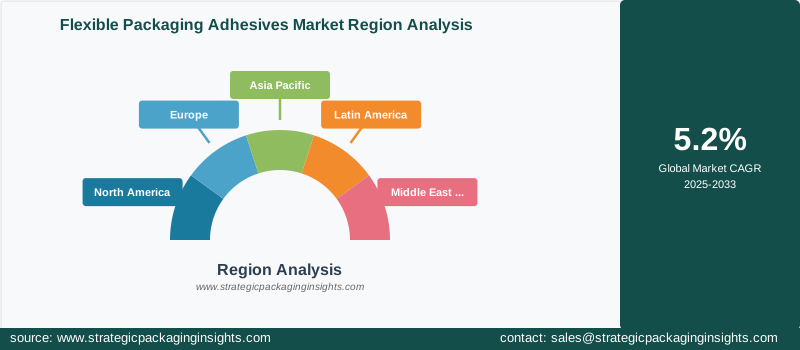
Asia Pacific is emerging as a key market, driven by rapid industrialization and urbanization in countries like China and India. The expanding food & beverage industry and the rising consumer preference for convenient packaging formats are fueling market growth in the region. Latin America and Middle East & Africa are also witnessing growth, driven by the increasing demand for flexible packaging solutions in the food & beverage and healthcare sectors. The demand for flexible packaging adhesives in North America and Europe is expected to remain strong, with manufacturers focusing on developing innovative solutions that meet environmental standards. Asia Pacific is anticipated to witness significant growth, driven by the expanding food & beverage industry and the rising consumer preference for convenient packaging formats.
Flexible Packaging Adhesives Market Segments
The Flexible Packaging Adhesives market has been segmented on the basis ofType
- Water-Based
- Solvent-Based
- Hot-Melt
- Reactive
Application
- Food & Beverages
- Healthcare
- Cosmetics & Toiletries
- Industrial
Technology
- Polyurethane
- Acrylic
- Others
Region
- North America
- Europe
- Asia Pacific
- Latin America
- Middle East & Africa




