


Filament Tapes Market Outlook
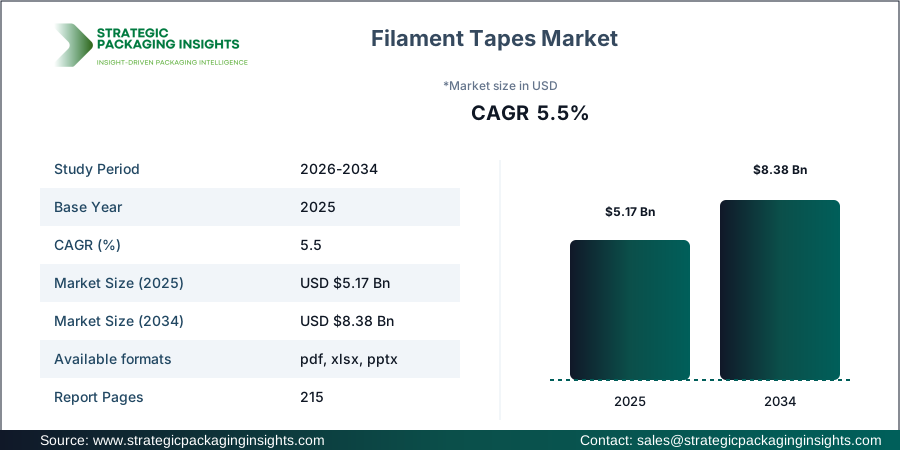
The Filament Tapes market size was valued at USD 5.17 billion in 2025 and is anticipated to reach USD 8.38 billion by 2034, growing at a CAGR of 5.5% during the forecast period according to Strategic Packaging Insights. The market is witnessing robust growth driven by the increasing demand for durable and high-strength packaging solutions across various industries. Companies like 3M and Tesa are at the forefront, leveraging their extensive product portfolios and innovative technologies to cater to the evolving needs of end-users. The rise in e-commerce and logistics activities has further propelled the demand for filament tapes, as they offer superior tensile strength and reliability for bundling and palletizing applications.
One of the most impactful drivers of the Filament Tapes market is the growing emphasis on sustainable packaging solutions. As environmental concerns continue to rise, industries are increasingly adopting eco-friendly materials and practices. This shift is supported by government regulations and consumer preferences for sustainable products. Companies like Nitto Denko and Intertape Polymer Group are investing in research and development to create recyclable and biodegradable filament tapes, aligning with global sustainability goals. This trend not only enhances brand reputation but also opens new avenues for growth in the market.
Report Scope
| Attributes | Details |
| Report Title | Filament Tapes Market Size, Future Growth and Forecast 2034 |
| Product Type | Mono-Directional Filament Tape, Cross-Weave Filament Tape, Heavy-Duty Filament Tape |
| Adhesive Type | Synthetic Rubber, Acrylic, Hot Melt |
| Application | Bundling, Palletizing, Reinforcement, Appliance Packaging |
| End Use | Logistics, Manufacturing, Automotive, Electronics |
| Region | Asia Pacific, North America, Latin America, Europe, Middle East & Africa |
| Base Year | 2025 |
| Historic Period | 2018-2024 |
| Forecast Period | 2026-2034 |
| Number of Pages | 215 |
| Customization Available | Yes* |
Sustainability & Circular Economy Analysis
Sustainability initiatives are significantly shaping the filament tapes market, with a strong focus on reducing environmental impact through innovative packaging solutions. The integration of recyclable materials and the development of reusable packaging options are becoming standard practices among leading manufacturers. Companies are investing in lightweight packaging designs that not only reduce material usage but also lower transportation costs and carbon emissions. This shift towards eco-friendly material innovation is driven by both regulatory pressures and consumer demand for sustainable products.
The circular economy model is gaining traction in the filament tapes market, encouraging manufacturers to adopt waste reduction strategies and extended producer responsibility (EPR) programs. By implementing these practices, companies like Berry Global and Avery Dennison are enhancing their supply chain efficiency and minimizing waste generation. These efforts are crucial for maintaining regulatory compliance and achieving long-term market competitiveness. As a result, sustainability trends are influencing packaging design, manufacturing processes, and investment decisions across the industry.
Consumer preferences for sustainable packaging are also driving change in the filament tapes market. As awareness of environmental issues grows, consumers are increasingly choosing products with lower carbon footprints. This shift is prompting companies to prioritize ESG initiatives and invest in carbon footprint reduction technologies. The adoption of sustainable practices not only meets regulatory requirements but also enhances brand loyalty and market positioning. Overall, sustainability trends are reshaping the filament tapes market, offering opportunities for innovation and growth while addressing environmental challenges.
Packaging Value Chain & Supply Chain Analysis
The filament tapes market is characterized by a complex value chain that involves multiple stakeholders, from raw material suppliers to end-users. Raw material sourcing is a critical component, with manufacturers relying on high-quality materials to produce durable and reliable tapes. Packaging converters and manufacturers play a pivotal role in transforming these materials into finished products, utilizing advanced machinery and technologies to ensure efficiency and quality. Strategic partnerships with suppliers and converters are essential for maintaining a steady supply of raw materials and optimizing production capabilities.
Logistics and distribution channels are integral to the filament tapes market, ensuring timely delivery of products to end-users across various industries. Efficient transportation and inventory management strategies are crucial for minimizing costs and enhancing supply chain resilience. Companies like Shurtape and Scapa are investing in localization and global sourcing strategies to mitigate risks associated with supply chain disruptions. By optimizing logistics and distribution networks, these companies can maintain a competitive edge in the market and meet the growing demand for filament tapes.
Recycling networks and procurement strategies are also vital components of the filament tapes supply chain. As sustainability becomes a priority, companies are focusing on developing recycling programs and sourcing eco-friendly materials. This approach not only aligns with regulatory requirements but also enhances brand reputation and customer loyalty. By adopting sustainable procurement practices, companies can reduce their environmental impact and contribute to a circular economy. Overall, the packaging value chain and supply chain dynamics are critical to the success of the filament tapes market, influencing business competitiveness and market performance.
Opportunities & Threats
The filament tapes market presents numerous opportunities for growth, driven by the increasing demand for high-performance packaging solutions across various industries. The rise of e-commerce and logistics activities has created a significant demand for durable and reliable tapes for bundling and palletizing applications. Companies can capitalize on this trend by expanding their product portfolios and investing in innovative technologies to meet the evolving needs of end-users. Additionally, the growing emphasis on sustainability offers opportunities for companies to develop eco-friendly filament tapes, aligning with consumer preferences and regulatory requirements.
Another opportunity lies in the expansion of the automotive and electronics industries, which require specialized packaging solutions for their products. Filament tapes offer superior tensile strength and reliability, making them ideal for securing heavy and bulky items during transportation. By targeting these industries, companies can tap into new revenue streams and enhance their market presence. Furthermore, the increasing adoption of automation and advanced manufacturing technologies presents opportunities for companies to improve production efficiency and reduce costs, further driving market growth.
Despite the opportunities, the filament tapes market faces several threats that could hinder growth. One of the primary challenges is the volatility of raw material prices, which can impact production costs and profit margins. Companies must develop effective procurement strategies and establish strong relationships with suppliers to mitigate these risks. Additionally, the market is highly competitive, with numerous players vying for market share. Companies must differentiate themselves through innovation and quality to maintain a competitive edge. Regulatory compliance and environmental concerns also pose challenges, requiring companies to invest in sustainable practices and technologies to meet industry standards.
Drivers & Challenges
The filament tapes market is driven by several key factors, including the increasing demand for durable and high-strength packaging solutions. The rise of e-commerce and logistics activities has created a significant demand for filament tapes, as they offer superior tensile strength and reliability for bundling and palletizing applications. Companies like 3M and Tesa are leveraging their extensive product portfolios and innovative technologies to cater to the evolving needs of end-users. Additionally, the growing emphasis on sustainability is driving the adoption of eco-friendly materials and practices, further propelling market growth.
Another driver of the filament tapes market is the expansion of the automotive and electronics industries, which require specialized packaging solutions for their products. Filament tapes offer superior tensile strength and reliability, making them ideal for securing heavy and bulky items during transportation. By targeting these industries, companies can tap into new revenue streams and enhance their market presence. Furthermore, the increasing adoption of automation and advanced manufacturing technologies presents opportunities for companies to improve production efficiency and reduce costs, further driving market growth.
Despite the drivers, the filament tapes market faces several challenges that could hinder growth. One of the primary challenges is the volatility of raw material prices, which can impact production costs and profit margins. Companies must develop effective procurement strategies and establish strong relationships with suppliers to mitigate these risks. Additionally, the market is highly competitive, with numerous players vying for market share. Companies must differentiate themselves through innovation and quality to maintain a competitive edge. Regulatory compliance and environmental concerns also pose challenges, requiring companies to invest in sustainable practices and technologies to meet industry standards.
Market Share Analysis
The filament tapes market is characterized by intense competition, with several key players dominating the landscape. Companies like 3M, Tesa, and Nitto Denko hold significant market shares, leveraging their extensive product portfolios and innovative technologies to maintain a competitive edge. These companies are known for their high-quality products and strong brand reputation, which have helped them establish a loyal customer base across various industries. Additionally, their global presence and strategic partnerships with suppliers and distributors enable them to effectively meet the growing demand for filament tapes.
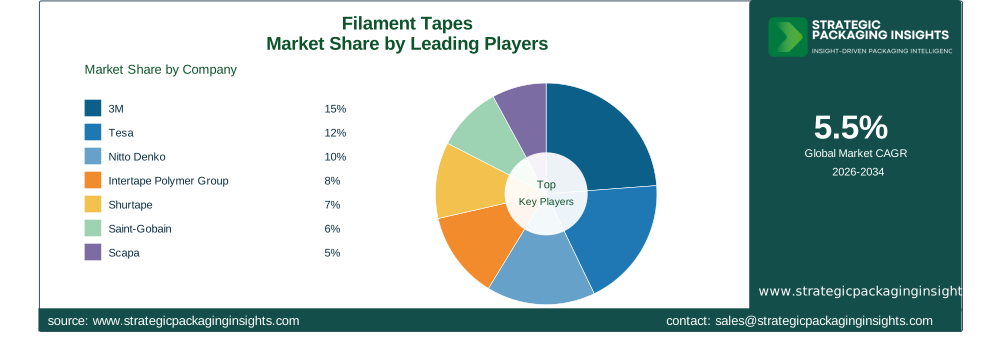
Intertape Polymer Group and Shurtape are also prominent players in the filament tapes market, known for their focus on innovation and sustainability. These companies are investing in research and development to create eco-friendly and recyclable filament tapes, aligning with global sustainability goals. By prioritizing sustainability, they are enhancing their brand reputation and attracting environmentally conscious consumers. Furthermore, their strong distribution networks and strategic partnerships with retailers and distributors enable them to effectively reach a wide range of end-users.
Saint-Gobain, Scapa, and Berry Global are other key players in the market, known for their diverse product offerings and strong market presence. These companies are focusing on expanding their product portfolios and investing in advanced manufacturing technologies to improve production efficiency and reduce costs. By leveraging their expertise and resources, they are able to effectively compete in the highly competitive filament tapes market. Additionally, their commitment to sustainability and innovation positions them well for future growth and success.
Avery Dennison and Advance Tapes are also notable players in the filament tapes market, known for their high-quality products and strong customer relationships. These companies are focusing on expanding their global presence and investing in new technologies to enhance their product offerings. By prioritizing customer satisfaction and innovation, they are able to maintain a competitive edge in the market. Overall, the filament tapes market is characterized by intense competition, with key players leveraging their strengths and resources to maintain their market positions and drive growth.
Key Highlights
- Market Size: The filament tapes market was valued at USD 5.17 billion in 2025 and is projected to reach USD 8.38 billion by 2034.
- Growth Rate: The market is expected to grow at a CAGR of 5.5% during the forecast period.
- Leading Companies: Key players include 3M, Tesa, Nitto Denko, and Intertape Polymer Group.
- Product Segments: Mono-Directional, Cross-Weave, and Heavy-Duty Filament Tapes are major product types.
- Adhesive Types: Synthetic Rubber, Acrylic, and Hot Melt are prominent adhesive types.
- Application Areas: Bundling, Palletizing, Reinforcement, and Appliance Packaging are key applications.
- Regional Insights: Asia Pacific and North America are leading regions in terms of market share and growth.
Filament Tapes Market Segments Insights

Product Type Analysis
The filament tapes market is segmented by product type into Mono-Directional Filament Tape, Cross-Weave Filament Tape, and Heavy-Duty Filament Tape. Mono-Directional Filament Tape is widely used for bundling and palletizing applications due to its high tensile strength and durability. It is particularly popular in the logistics and manufacturing industries, where secure packaging is essential. Cross-Weave Filament Tape, on the other hand, offers enhanced strength and tear resistance, making it ideal for heavy-duty applications. This type of tape is commonly used in the automotive and electronics industries, where secure packaging is crucial for protecting valuable components.

Heavy-Duty Filament Tape is designed for the most demanding applications, offering superior strength and reliability. It is often used in the construction and industrial sectors, where heavy and bulky items need to be securely packaged and transported. The demand for heavy-duty filament tape is driven by the increasing need for secure packaging solutions in these industries. Overall, the product type segment of the filament tapes market is characterized by a diverse range of applications, with each type of tape offering unique benefits and features to meet the specific needs of end-users.
Adhesive Type Analysis
The filament tapes market is also segmented by adhesive type, with Synthetic Rubber, Acrylic, and Hot Melt being the most common types. Synthetic Rubber adhesive is known for its strong bonding properties and resistance to temperature fluctuations, making it ideal for a wide range of applications. It is particularly popular in the logistics and manufacturing industries, where secure packaging is essential. Acrylic adhesive, on the other hand, offers excellent clarity and UV resistance, making it suitable for applications where aesthetics are important. This type of adhesive is commonly used in the electronics and automotive industries, where clear and durable packaging is required.

Hot Melt adhesive is known for its quick bonding properties and versatility, making it suitable for a wide range of applications. It is particularly popular in the construction and industrial sectors, where fast and reliable bonding is essential. The demand for hot melt adhesive is driven by the increasing need for efficient and cost-effective packaging solutions in these industries. Overall, the adhesive type segment of the filament tapes market is characterized by a diverse range of applications, with each type of adhesive offering unique benefits and features to meet the specific needs of end-users.
Application Analysis
The filament tapes market is segmented by application into Bundling, Palletizing, Reinforcement, and Appliance Packaging. Bundling is one of the most common applications for filament tapes, as they offer superior tensile strength and reliability for securing items during transportation. This application is particularly popular in the logistics and manufacturing industries, where secure packaging is essential. Palletizing is another key application, with filament tapes being used to secure pallets and prevent shifting during transit. This application is driven by the increasing demand for efficient and reliable packaging solutions in the logistics and transportation sectors.
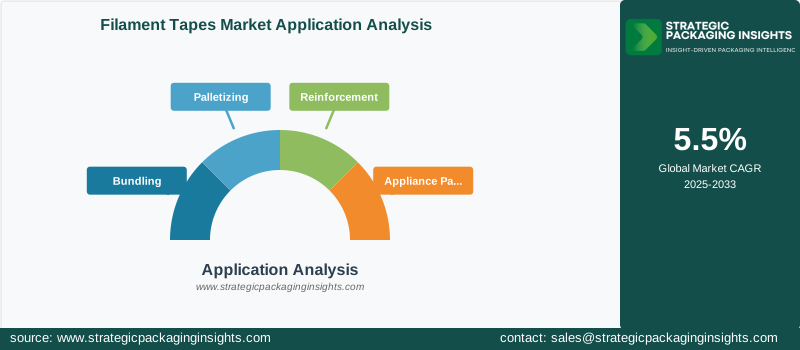
Reinforcement is another important application for filament tapes, with their high strength and durability making them ideal for reinforcing packaging materials. This application is particularly popular in the construction and industrial sectors, where secure packaging is essential for protecting valuable components. Appliance Packaging is also a key application, with filament tapes being used to secure appliances during transportation and storage. This application is driven by the increasing demand for durable and reliable packaging solutions in the electronics and appliance industries. Overall, the application segment of the filament tapes market is characterized by a diverse range of applications, with each offering unique benefits and features to meet the specific needs of end-users.
End Use Analysis
The filament tapes market is segmented by end use into Logistics, Manufacturing, Automotive, and Electronics. The logistics industry is one of the largest end-users of filament tapes, with their high tensile strength and reliability making them ideal for bundling and palletizing applications. This industry is driven by the increasing demand for efficient and reliable packaging solutions, as well as the rise of e-commerce and logistics activities. The manufacturing industry is another key end-user, with filament tapes being used to secure items during production and transportation. This industry is driven by the increasing demand for durable and reliable packaging solutions in various sectors.
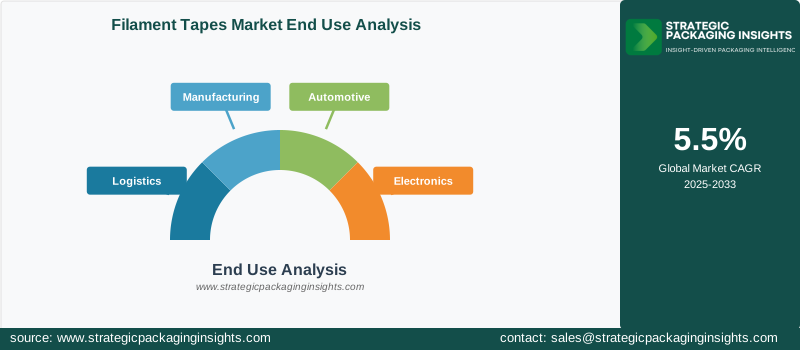
The automotive industry is also a significant end-user of filament tapes, with their high strength and durability making them ideal for securing heavy and bulky items during transportation. This industry is driven by the increasing demand for specialized packaging solutions for automotive components. The electronics industry is another key end-user, with filament tapes being used to secure electronic components during transportation and storage. This industry is driven by the increasing demand for durable and reliable packaging solutions in the electronics sector. Overall, the end-use segment of the filament tapes market is characterized by a diverse range of applications, with each offering unique benefits and features to meet the specific needs of end-users.
Filament Tapes Market Segments
The Filament Tapes market has been segmented on the basis ofProduct Type
- Mono-Directional Filament Tape
- Cross-Weave Filament Tape
- Heavy-Duty Filament Tape
Adhesive Type
- Synthetic Rubber
- Acrylic
- Hot Melt
Application
- Bundling
- Palletizing
- Reinforcement
- Appliance Packaging
End Use
- Logistics
- Manufacturing
- Automotive
- Electronics
Region
- Asia Pacific
- North America
- Latin America
- Europe
- Middle East & Africa




