


Fiber-Based Protective Mailers Market Outlook
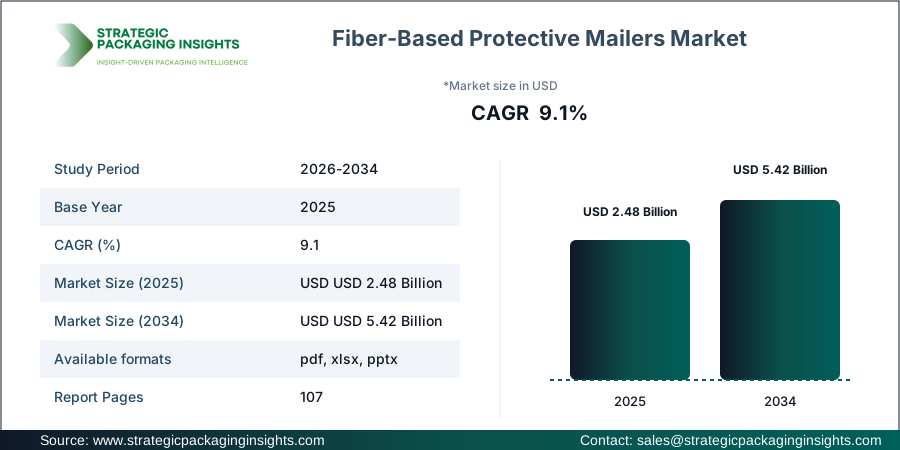
The Fiber-Based Protective Mailers market size was valued at USD 2.48 Billion in 2025 and is anticipated to reach USD 5.42 Billion by 2034, growing at a CAGR of 9.1% during the forecast period according to Strategic Packaging Insights. This growth is driven by the increasing demand for sustainable packaging solutions, particularly in the e-commerce sector, where companies like Ranpak Holdings and Mondi plc are leading the charge. The shift towards eco-friendly packaging is not just a trend but a necessity, as consumers and businesses alike are becoming more environmentally conscious. The market is also benefiting from advancements in material technology, which are making fiber-based mailers more durable and cost-effective.
One of the most impactful drivers of the Fiber-Based Protective Mailers market is the growing regulatory pressure to reduce plastic waste. Governments worldwide are implementing stricter regulations to curb plastic pollution, which is pushing companies to adopt more sustainable packaging solutions. For instance, the European Union's directive on single-use plastics is a significant regulatory measure that is influencing packaging choices across industries. Companies like Sealed Air Corporation and Smurfit Westrock are responding by innovating in fiber-based solutions that meet these regulatory requirements while also appealing to environmentally conscious consumers. This regulatory landscape is creating a fertile ground for growth in the fiber-based protective mailers market.
Report Scope
| Attributes | Details |
| Report Title | Fiber-Based Protective Mailers Market Size, Future Growth and Forecast 2034 |
| By Product Type | Padded Paper Mailers, Honeycomb Paper Mailers, Kraft Paper Mailers, Recycled Fiber Mailers, Tamper-Evident Paper Mailers |
| By Cushioning Material | Honeycomb Paper, Recycled Paper Fiber, Corrugated Paper Inserts, Molded Fiber |
| By Application | E-Commerce, Consumer Electronics, Fashion & Apparel, Healthcare, Cosmetics & Personal Care, Books & Stationery |
| By End User | E-Commerce Retailers, Courier & Logistics Companies, Packaging Manufacturers, Retail Chains, Direct-to-Consumer Brands |
| Region | Asia Pacific, North America, Latin America, Europe, Middle East & Africa |
| Base Year | 2025 |
| Historic Period | 2018-2024 |
| Forecast Period | 2026-2034 |
| Number of Pages | 107 |
| Customization Available | Yes* |
Sustainability & Circular Economy Analysis
Sustainability initiatives and circular economy practices are significantly shaping the fiber-based protective mailers market. As consumers become more environmentally conscious, there is a growing demand for packaging solutions that are not only recyclable but also made from renewable resources. Companies are increasingly investing in eco-friendly material innovations, such as recyclable and biodegradable fibers, to meet these consumer preferences. This shift is driving the adoption of lightweight packaging solutions that reduce material usage and transportation costs, thereby minimizing the carbon footprint of packaging operations.
The influence of sustainability trends extends beyond consumer preferences to impact packaging design and manufacturing processes. Companies are adopting waste reduction strategies and extended producer responsibility (EPR) initiatives to ensure that their packaging solutions are not only sustainable but also compliant with evolving regulations. This focus on sustainability is prompting packaging manufacturers to rethink their supply chain strategies, investing in technologies and processes that enhance the recyclability and reusability of their products. As a result, fiber-based protective mailers are becoming a preferred choice for businesses looking to align with ESG initiatives and reduce their environmental impact.
Moreover, the emphasis on sustainability is influencing investment decisions within the packaging industry. Investors are increasingly prioritizing companies that demonstrate a commitment to sustainable practices, recognizing the long-term market competitiveness that comes with eco-friendly innovations. This trend is encouraging packaging manufacturers to integrate sustainability into their core business strategies, ensuring that they remain competitive in a market that is rapidly evolving towards a circular economy. As regulatory compliance becomes more stringent, companies that proactively adopt sustainable practices are likely to gain a competitive edge, driving growth in the fiber-based protective mailers market.
Packaging Value Chain & Supply Chain Analysis
The packaging value chain for fiber-based protective mailers is a complex ecosystem that involves multiple stakeholders, from raw material suppliers to end-users. Raw material sourcing is a critical component, with companies relying on sustainable sources of fiber to produce eco-friendly mailers. Packaging converters and manufacturers play a pivotal role in transforming these raw materials into finished products, utilizing advanced machinery and technologies to enhance production efficiency and product quality. Companies like DS Smith and EcoEnclose are at the forefront of this transformation, leveraging their expertise to deliver innovative packaging solutions that meet the demands of a rapidly evolving market.
Logistics and distribution channels are equally important in the packaging value chain, ensuring that fiber-based protective mailers reach their intended destinations efficiently and cost-effectively. Supply chain resilience is a key consideration, with companies investing in robust procurement strategies and inventory management systems to mitigate potential disruptions. The localization of supply chains is becoming increasingly important, as companies seek to reduce transportation costs and carbon emissions by sourcing materials and manufacturing products closer to their end markets. This trend is particularly evident in regions like North America and Europe, where sustainability and cost-efficiency are top priorities.
Strategic partnerships and collaborations are also playing a crucial role in enhancing supply chain efficiency and competitiveness. Companies are forming alliances with logistics providers, retailers, and recycling networks to streamline operations and improve the recyclability of their products. These partnerships are enabling companies to offer end-to-end packaging solutions that not only meet the needs of their customers but also align with broader sustainability goals. As the fiber-based protective mailers market continues to grow, companies that can effectively navigate the complexities of the packaging value chain are likely to gain a significant competitive advantage.
Opportunities & Threats
The Fiber-Based Protective Mailers market presents numerous opportunities for growth, driven by the increasing demand for sustainable packaging solutions. One of the most significant opportunities lies in the e-commerce sector, where the need for protective packaging is paramount. As online shopping continues to grow, companies like PAC Worldwide and International Paper are well-positioned to capitalize on this trend by offering innovative fiber-based solutions that meet the needs of e-commerce retailers. Additionally, the growing awareness of environmental issues among consumers is driving demand for eco-friendly packaging, creating opportunities for companies to differentiate themselves through sustainable practices and products.
Another opportunity in the market is the potential for innovation in material technology. Companies that invest in research and development to create new, more durable, and cost-effective fiber-based materials are likely to gain a competitive edge. This innovation can lead to the development of new product lines and applications, expanding the market for fiber-based protective mailers. Furthermore, the increasing regulatory pressure to reduce plastic waste is creating a favorable environment for companies that offer sustainable alternatives, providing a significant growth opportunity for the market.
However, the market also faces several threats that could hinder its growth. One of the primary challenges is the competition from alternative packaging materials, such as plastic and foam, which are often cheaper and more readily available. Additionally, the high cost of raw materials and production can be a barrier for companies looking to enter the market or expand their operations. Companies must also navigate complex regulatory environments, which can vary significantly across regions, adding to the cost and complexity of compliance. These challenges highlight the need for companies to continuously innovate and adapt to changing market conditions to remain competitive.
Drivers & Challenges
The Fiber-Based Protective Mailers market is driven by several key factors, including the growing demand for sustainable packaging solutions and the increasing regulatory pressure to reduce plastic waste. As consumers become more environmentally conscious, there is a growing preference for packaging solutions that are not only recyclable but also made from renewable resources. This trend is driving companies to invest in eco-friendly material innovations, such as recyclable and biodegradable fibers, to meet these consumer preferences. Additionally, the rise of e-commerce is creating a significant demand for protective packaging solutions, as online retailers seek to ensure the safe delivery of their products.
Another important driver of the market is the advancement in material technology, which is making fiber-based mailers more durable and cost-effective. Companies are investing in research and development to create new, more durable, and cost-effective fiber-based materials, which are expanding the market for fiber-based protective mailers. Furthermore, the increasing regulatory pressure to reduce plastic waste is creating a favorable environment for companies that offer sustainable alternatives, providing a significant growth opportunity for the market.
Despite these drivers, the market also faces several challenges that could hinder its growth. One of the primary challenges is the competition from alternative packaging materials, such as plastic and foam, which are often cheaper and more readily available. Additionally, the high cost of raw materials and production can be a barrier for companies looking to enter the market or expand their operations. Companies must also navigate complex regulatory environments, which can vary significantly across regions, adding to the cost and complexity of compliance. These challenges highlight the need for companies to continuously innovate and adapt to changing market conditions to remain competitive.
Market Share Analysis
The Fiber-Based Protective Mailers market is characterized by a competitive landscape with several key players vying for market share. Companies like Ranpak Holdings, Mondi plc, and Pregis LLC are leading the market with their innovative packaging solutions and strong focus on sustainability. These companies have established themselves as leaders in the industry by investing in research and development to create new, more durable, and cost-effective fiber-based materials. Their commitment to sustainability and innovation has allowed them to capture a significant share of the market, positioning them as key players in the industry.
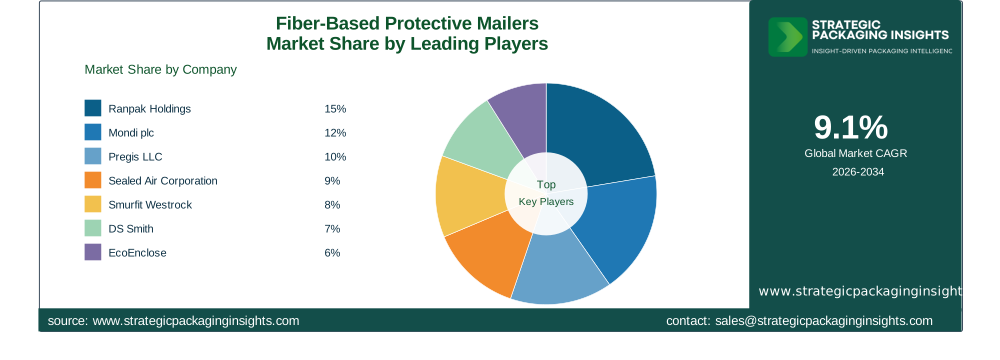
Sealed Air Corporation and Smurfit Westrock are also major players in the market, known for their extensive product portfolios and strong distribution networks. These companies have a global presence, allowing them to serve a wide range of customers across different regions. Their focus on sustainability and innovation has enabled them to maintain a competitive edge in the market, as they continue to develop new products and solutions that meet the evolving needs of their customers.
Other notable companies in the market include DS Smith, EcoEnclose, and PAC Worldwide, which have carved out a niche for themselves by offering specialized packaging solutions for specific industries. These companies have a strong focus on customer service and customization, allowing them to meet the unique needs of their clients. Their ability to adapt to changing market conditions and customer preferences has enabled them to maintain a strong position in the market.
International Paper, Nefab Group, and Uline are also key players in the market, known for their extensive product offerings and strong focus on sustainability. These companies have a global presence, allowing them to serve a wide range of customers across different regions. Their commitment to sustainability and innovation has enabled them to maintain a competitive edge in the market, as they continue to develop new products and solutions that meet the evolving needs of their customers.
Key Highlights
- Market Size: USD 2.48 Billion in 2025, projected to reach USD 5.42 Billion by 2034.
- Growth Rate: CAGR of 9.1% during the forecast period.
- Leading Companies: Ranpak Holdings, Mondi plc, Pregis LLC, Sealed Air Corporation, Smurfit Westrock.
- Key Segments: Padded Paper Mailers, Honeycomb Paper Mailers, Kraft Paper Mailers.
- Regional Insights: Significant growth expected in Asia Pacific and North America.
- Market Drivers: Increasing demand for sustainable packaging solutions and regulatory pressure to reduce plastic waste.
- Challenges: Competition from alternative packaging materials and high production costs.
Fiber-Based Protective Mailers Market Segments Insights

By Product Type Analysis
The Fiber-Based Protective Mailers market is segmented by product type into Padded Paper Mailers, Honeycomb Paper Mailers, Kraft Paper Mailers, Recycled Fiber Mailers, and Tamper-Evident Paper Mailers. Padded Paper Mailers are gaining popularity due to their lightweight and protective properties, making them ideal for e-commerce applications. Companies like Ranpak Holdings and Mondi plc are leading the market with their innovative padded mailer solutions that offer enhanced protection and sustainability. Honeycomb Paper Mailers are also seeing increased demand, particularly in the consumer electronics and fashion & apparel sectors, where protection and aesthetics are key considerations.
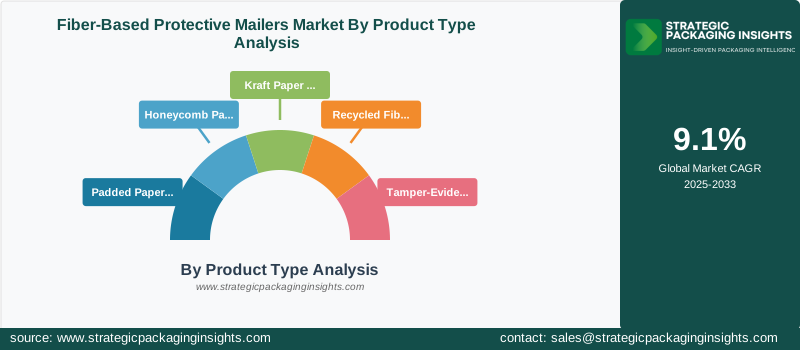
Kraft Paper Mailers are favored for their durability and eco-friendly attributes, making them a preferred choice for companies looking to reduce their environmental impact. Recycled Fiber Mailers are gaining traction as businesses seek to align with sustainability goals and reduce waste. Tamper-Evident Paper Mailers are becoming increasingly important in sectors like healthcare and cosmetics, where product integrity and security are paramount. The diverse range of product types available in the market allows companies to choose solutions that best meet their specific needs, driving growth and innovation in the fiber-based protective mailers market.
By Cushioning Material Analysis
The market is also segmented by cushioning material, including Honeycomb Paper, Recycled Paper Fiber, Corrugated Paper Inserts, and Molded Fiber. Honeycomb Paper is widely used for its excellent cushioning properties and lightweight nature, making it ideal for protecting fragile items during transit. Companies like Pregis LLC and Sealed Air Corporation are at the forefront of developing advanced honeycomb paper solutions that offer superior protection and sustainability. Recycled Paper Fiber is gaining popularity as businesses seek to reduce their environmental impact and align with sustainability goals.
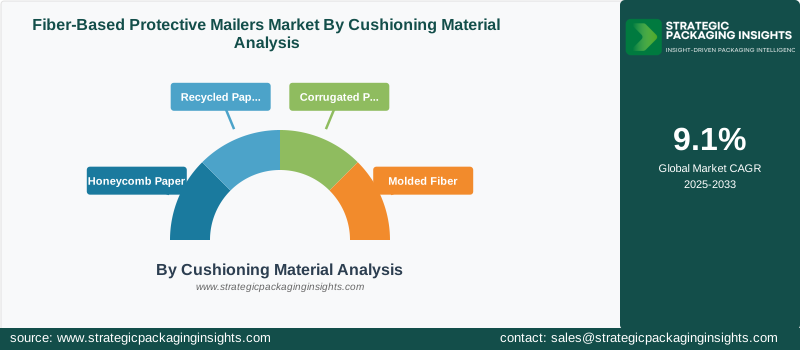
Corrugated Paper Inserts are favored for their strength and versatility, providing excellent protection for a wide range of products. Molded Fiber is becoming increasingly important in sectors like consumer electronics and healthcare, where protection and sustainability are key considerations. The diverse range of cushioning materials available in the market allows companies to choose solutions that best meet their specific needs, driving growth and innovation in the fiber-based protective mailers market.
By Application Analysis
The Fiber-Based Protective Mailers market is segmented by application into E-Commerce, Consumer Electronics, Fashion & Apparel, Healthcare, Cosmetics & Personal Care, and Books & Stationery. The e-commerce sector is a major driver of demand for fiber-based protective mailers, as online retailers seek to ensure the safe delivery of their products. Companies like PAC Worldwide and International Paper are well-positioned to capitalize on this trend by offering innovative fiber-based solutions that meet the needs of e-commerce retailers.
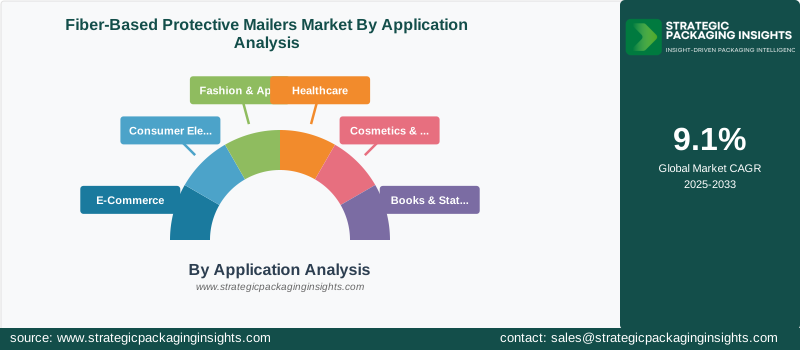
The consumer electronics sector is also a significant market for fiber-based protective mailers, as companies seek to protect their products during transit. Fashion & Apparel, Healthcare, and Cosmetics & Personal Care are other key application areas, where protection and aesthetics are important considerations. The diverse range of applications for fiber-based protective mailers allows companies to choose solutions that best meet their specific needs, driving growth and innovation in the market.
By End User Analysis
The market is segmented by end user into E-Commerce Retailers, Courier & Logistics Companies, Packaging Manufacturers, Retail Chains, and Direct-to-Consumer Brands. E-commerce retailers are a major driver of demand for fiber-based protective mailers, as they seek to ensure the safe delivery of their products. Courier & Logistics Companies are also significant users of fiber-based protective mailers, as they seek to protect their shipments during transit.
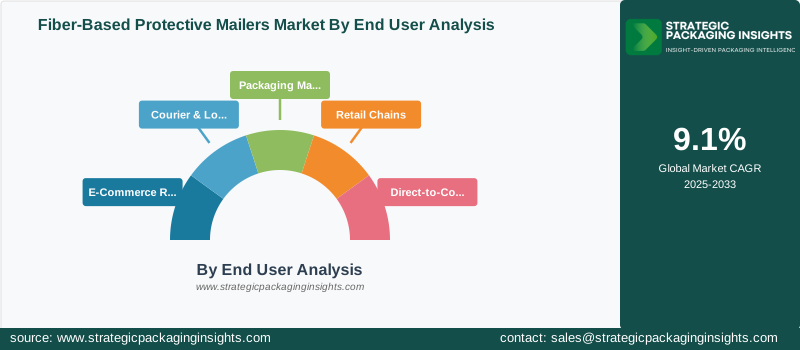
Packaging Manufacturers are increasingly adopting fiber-based protective mailers as they seek to align with sustainability goals and reduce waste. Retail Chains and Direct-to-Consumer Brands are also significant users of fiber-based protective mailers, as they seek to protect their products and enhance their brand image. The diverse range of end users for fiber-based protective mailers allows companies to choose solutions that best meet their specific needs, driving growth and innovation in the market.
Fiber-Based Protective Mailers Market Segments
The Fiber-Based Protective Mailers market has been segmented on the basis ofBy Product Type
- Padded Paper Mailers
- Honeycomb Paper Mailers
- Kraft Paper Mailers
- Recycled Fiber Mailers
- Tamper-Evident Paper Mailers
By Cushioning Material
- Honeycomb Paper
- Recycled Paper Fiber
- Corrugated Paper Inserts
- Molded Fiber
By Application
- E-Commerce
- Consumer Electronics
- Fashion & Apparel
- Healthcare
- Cosmetics & Personal Care
- Books & Stationery
By End User
- E-Commerce Retailers
- Courier & Logistics Companies
- Packaging Manufacturers
- Retail Chains
- Direct-to-Consumer Brands
Region
- Asia Pacific
- North America
- Latin America
- Europe
- Middle East & Africa




