


EPE Liner Market Outlook
The EPE Liner market size was valued at USD 1.50 billion in 2025 and is anticipated to reach USD 2.42 billion by 2034, growing at a CAGR of 5.5% during the forecast period according to Strategic Packaging Insights. The market is witnessing significant growth due to the increasing demand for effective sealing solutions across various industries such as food & beverage, pharmaceuticals, and cosmetics. Companies like TekniPlex and Selig Group are at the forefront, driving innovation and expanding their product portfolios to cater to the evolving needs of these sectors. The rise in e-commerce and the need for secure packaging solutions further bolster the demand for EPE liners, making them an integral component in the packaging industry.
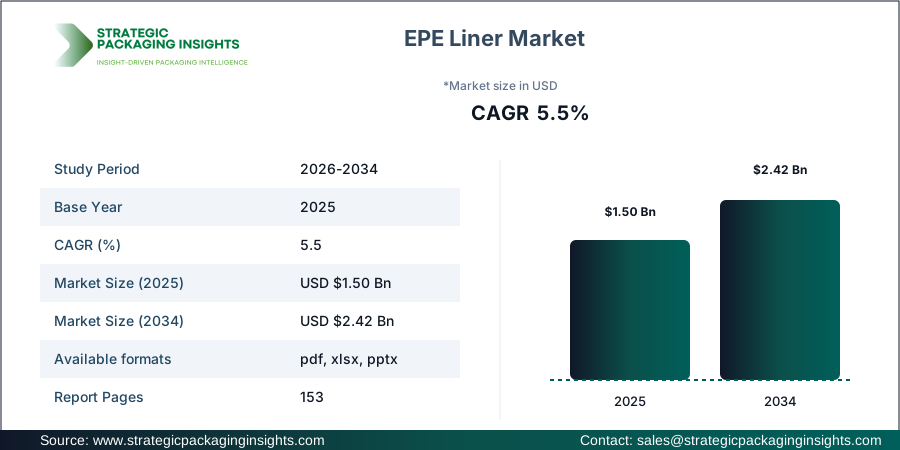
One of the most impactful drivers of the EPE Liner market is the growing emphasis on sustainability and eco-friendly packaging solutions. Governments and regulatory bodies worldwide are implementing stringent regulations to reduce plastic waste, which is pushing manufacturers to adopt recyclable and biodegradable materials. This shift is supported by consumer preferences leaning towards sustainable products, creating a favorable environment for companies like Tri-Seal and Pres-On to innovate and offer greener alternatives. The increasing awareness and demand for sustainable packaging are expected to significantly influence the market dynamics, encouraging more players to invest in research and development to meet these regulatory and consumer demands.
Report Scope
| Attributes | Details |
| Report Title | EPE Liner Market Size, Future Growth and Forecast 2034 |
| By Product Type | EPE Cap Liners, EPE Foam Liners, Induction-Compatible Liners |
| By Application | Bottles, Jars, Closures, Containers |
| By End Use | Food & Beverage, Pharmaceuticals, Cosmetics, Chemicals |
| By Thickness | Thin, Medium, Thick |
| Region | Asia Pacific, North America, Latin America, Europe, Middle East & Africa |
| Base Year | 2025 |
| Historic Period | 2018-2024 |
| Forecast Period | 2026-2034 |
| Number of Pages | 153 |
| Customization Available | Yes* |
Sustainability & Circular Economy Analysis
Sustainability initiatives are reshaping the EPE Liner market as companies strive to align with circular economy practices. The focus on recyclable materials and reusable packaging is driving innovation in the industry, with manufacturers exploring eco-friendly material innovations to reduce environmental impact. Companies like Ziling Packaging and Captel International are investing in research to develop lightweight packaging solutions that not only minimize waste but also reduce transportation costs and carbon footprints. These efforts are crucial as they align with consumer sustainability preferences and regulatory requirements, ensuring long-term market competitiveness.
The integration of waste reduction strategies and ESG initiatives is becoming a standard practice among EPE liner manufacturers. By adopting extended producer responsibility (EPR) frameworks, companies are taking accountability for the entire lifecycle of their products, from production to disposal. This approach not only enhances brand reputation but also fosters trust among environmentally conscious consumers. As a result, packaging design and manufacturing processes are evolving to incorporate sustainable practices, influencing investment decisions and supply chain strategies across the industry.
Regulatory compliance is a significant factor driving the adoption of sustainable practices in the EPE Liner market. Governments are imposing stricter regulations on packaging waste, prompting companies to innovate and comply with these standards. This regulatory landscape is encouraging manufacturers to explore new materials and technologies that meet environmental criteria while maintaining product integrity and performance. As sustainability becomes a key differentiator, companies that prioritize eco-friendly solutions are likely to gain a competitive edge, attracting investors and partners who value environmental responsibility.
Packaging Value Chain & Supply Chain Analysis
The packaging value chain for EPE liners involves a complex ecosystem of raw material sourcing, manufacturing, and distribution. Raw material availability plays a crucial role in determining production capabilities and cost efficiency. Companies like Enercon Industries and Sonoco are focusing on securing reliable sources of raw materials to ensure consistent supply and quality. Strategic partnerships with suppliers and converters are essential to streamline operations and enhance supply chain resilience, enabling companies to respond swiftly to market demands and fluctuations.
Packaging converters and manufacturers are pivotal in transforming raw materials into finished products that meet industry standards and consumer expectations. The use of advanced packaging machinery and technologies is enhancing production efficiency and reducing lead times. Logistics and distribution channels are equally important, as they ensure timely delivery of products to brand owners and retailers. Efficient inventory management and procurement strategies are critical to maintaining a seamless flow of goods across the supply chain, minimizing disruptions and optimizing costs.
Global sourcing and localization strategies are influencing the EPE Liner market's supply chain dynamics. Companies are balancing the benefits of global reach with the need for localized production to reduce transportation costs and carbon emissions. This approach not only enhances supply chain efficiency but also aligns with sustainability goals. Recycling networks are becoming integral to the value chain, as they facilitate the recovery and reuse of materials, contributing to a circular economy. By integrating these elements, companies can enhance their market performance and competitiveness, ensuring long-term success in the evolving packaging landscape.
Opportunities & Threats
The EPE Liner market presents numerous opportunities for growth, driven by the increasing demand for sustainable packaging solutions. As consumers become more environmentally conscious, there is a growing preference for products that minimize environmental impact. This trend is encouraging manufacturers to innovate and develop eco-friendly EPE liners that meet these demands. Companies that invest in research and development to create biodegradable and recyclable liners are likely to gain a competitive advantage, attracting environmentally conscious consumers and expanding their market share.
Another significant opportunity lies in the expanding e-commerce sector, which is driving the demand for secure and efficient packaging solutions. EPE liners play a crucial role in protecting products during transit, making them an essential component in the e-commerce packaging industry. As online shopping continues to grow, the demand for EPE liners is expected to rise, providing manufacturers with opportunities to expand their product offerings and cater to a broader range of applications. Companies that can adapt to the evolving needs of the e-commerce sector are well-positioned to capitalize on this growth potential.
Despite the opportunities, the EPE Liner market faces challenges such as fluctuating raw material prices and stringent regulatory requirements. The volatility in raw material costs can impact production expenses and profit margins, posing a threat to manufacturers. Additionally, compliance with environmental regulations requires significant investment in sustainable practices and technologies, which can be a barrier for smaller companies. To overcome these challenges, manufacturers need to adopt efficient procurement strategies and invest in innovative solutions that align with regulatory standards while maintaining cost-effectiveness.
Drivers & Challenges
The EPE Liner market is driven by several key factors, including the growing demand for effective sealing solutions across various industries. The food & beverage, pharmaceuticals, and cosmetics sectors are major consumers of EPE liners, as they require reliable packaging to ensure product safety and integrity. The increasing focus on product safety and quality is driving manufacturers to develop advanced EPE liners that offer superior sealing properties and protection against contamination. This demand is further fueled by the rise in e-commerce, which necessitates secure packaging solutions to protect products during transit.
Technological advancements in packaging materials and manufacturing processes are also driving the growth of the EPE Liner market. Companies are investing in research and development to create innovative liners that offer enhanced performance and sustainability. The development of induction-compatible liners, for example, is expanding the application scope of EPE liners, providing manufacturers with new opportunities to cater to diverse industry needs. As technology continues to evolve, manufacturers that leverage these advancements are likely to gain a competitive edge and drive market growth.
However, the EPE Liner market faces challenges such as environmental concerns and regulatory compliance. The increasing focus on sustainability and waste reduction is prompting manufacturers to adopt eco-friendly practices, which can be costly and time-consuming. Compliance with stringent environmental regulations requires significant investment in sustainable materials and technologies, posing a challenge for companies. Additionally, the volatility in raw material prices can impact production costs and profitability, necessitating efficient procurement strategies and cost management practices to mitigate these challenges.
Market Share Analysis
The EPE Liner market is characterized by a competitive landscape with several key players vying for market share. Companies like TekniPlex, Selig Group, and Tri-Seal are leading the market, leveraging their extensive product portfolios and strong distribution networks to maintain their competitive positions. These companies are focusing on innovation and sustainability to meet the evolving needs of consumers and comply with regulatory requirements. By investing in research and development, they are able to offer advanced EPE liners that cater to a wide range of applications, enhancing their market presence.
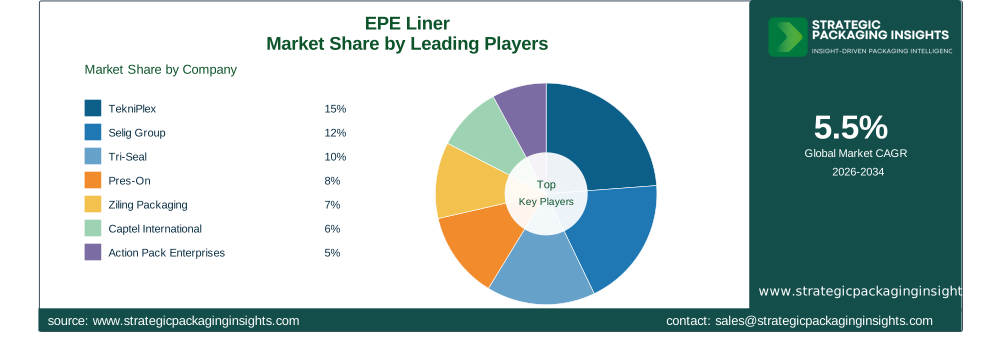
Pres-On and Ziling Packaging are also significant players in the EPE Liner market, known for their commitment to quality and customer satisfaction. These companies are expanding their product offerings to include eco-friendly and recyclable liners, aligning with the growing demand for sustainable packaging solutions. By adopting advanced manufacturing technologies and optimizing their supply chains, they are able to deliver high-quality products efficiently and cost-effectively, strengthening their market positions.
Captel International and Action Pack Enterprises are emerging players in the market, focusing on niche applications and customized solutions to differentiate themselves from competitors. These companies are leveraging their expertise in packaging design and innovation to develop unique EPE liners that meet specific customer requirements. By building strong relationships with clients and partners, they are able to expand their market reach and enhance their competitive advantage.
Enercon Industries and Sonoco are well-established companies in the EPE Liner market, known for their extensive industry experience and global presence. These companies are investing in sustainable practices and technologies to reduce their environmental impact and comply with regulatory standards. By focusing on operational efficiency and strategic partnerships, they are able to maintain their competitive positions and drive market growth. UPM Raflatac is also a key player, recognized for its commitment to sustainability and innovation in the packaging industry.
Key Highlights
- The EPE Liner market size was valued at USD 1.50 billion in 2025
- Forecast to reach USD 2.42 billion by 2034
- Growing at a CAGR of 5.5% during the forecast period
- Key players include TekniPlex, Selig Group, and Tri-Seal
- Significant demand from food & beverage and pharmaceuticals sectors
- Increasing focus on sustainable and eco-friendly packaging solutions
- Asia Pacific region expected to witness significant growth
EPE Liner Market Segments Insights

By Product Type Analysis
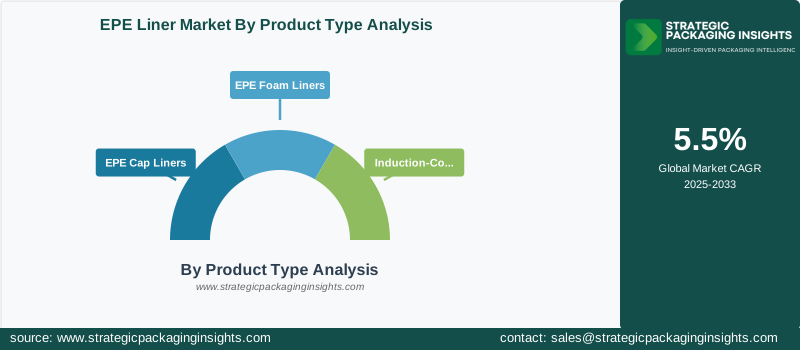
The EPE Liner market is segmented by product type into EPE Cap Liners, EPE Foam Liners, and Induction-Compatible Liners. EPE Cap Liners are widely used in the packaging industry due to their excellent sealing properties and compatibility with various container types. These liners are particularly popular in the food & beverage and pharmaceuticals sectors, where product safety and integrity are paramount. EPE Foam Liners, on the other hand, offer superior cushioning and protection, making them ideal for applications that require impact resistance. Induction-Compatible Liners are gaining traction due to their ability to provide a hermetic seal, ensuring product freshness and preventing leakage.
The demand for EPE Cap Liners is driven by the increasing need for secure and reliable packaging solutions across various industries. As manufacturers focus on product safety and quality, the adoption of EPE Cap Liners is expected to rise, contributing to market growth. EPE Foam Liners are also witnessing significant demand, particularly in the e-commerce sector, where product protection during transit is crucial. The development of Induction-Compatible Liners is expanding the application scope of EPE liners, providing manufacturers with new opportunities to cater to diverse industry needs. As technology continues to evolve, manufacturers that leverage these advancements are likely to gain a competitive edge and drive market growth.
By Application Analysis
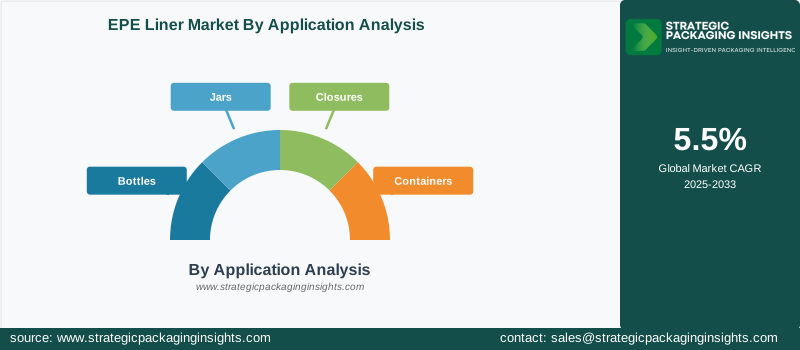
The EPE Liner market is segmented by application into Bottles, Jars, Closures, and Containers. Bottles and jars are the primary applications for EPE liners, as they require effective sealing solutions to ensure product safety and integrity. The demand for EPE liners in these applications is driven by the growing consumption of packaged food and beverages, pharmaceuticals, and cosmetics. Closures and containers also represent significant applications for EPE liners, as they require reliable sealing solutions to prevent leakage and contamination.
The increasing focus on product safety and quality is driving the demand for EPE liners in the bottles and jars segment. As consumers become more health-conscious, the need for secure and reliable packaging solutions is rising, contributing to market growth. The closures and containers segment is also witnessing significant demand, particularly in the e-commerce sector, where product protection during transit is crucial. Manufacturers are investing in research and development to create innovative EPE liners that offer enhanced performance and sustainability, catering to the evolving needs of these applications.
By End Use Analysis
The EPE Liner market is segmented by end use into Food & Beverage, Pharmaceuticals, Cosmetics, and Chemicals. The food & beverage sector is the largest consumer of EPE liners, as they require reliable packaging solutions to ensure product safety and integrity. The demand for EPE liners in this sector is driven by the growing consumption of packaged food and beverages, as well as the increasing focus on product safety and quality. The pharmaceuticals sector is also a significant consumer of EPE liners, as they require secure and reliable packaging solutions to protect sensitive products from contamination.
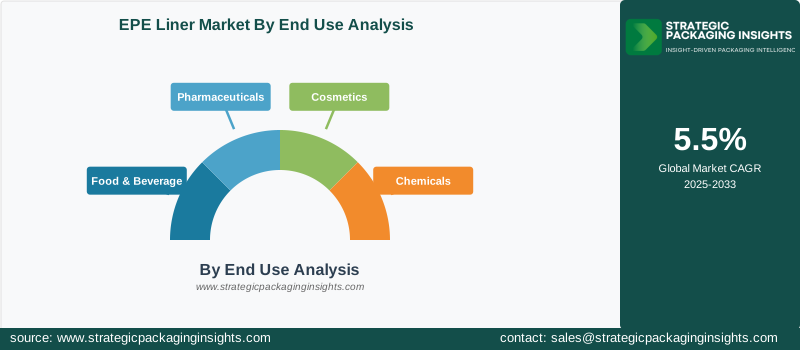
The cosmetics and chemicals sectors also represent significant end-use applications for EPE liners, as they require effective sealing solutions to prevent leakage and contamination. The increasing focus on sustainability and eco-friendly packaging solutions is driving the demand for EPE liners in these sectors, as manufacturers seek to align with consumer preferences and regulatory requirements. Companies that invest in research and development to create innovative and sustainable EPE liners are likely to gain a competitive advantage, attracting environmentally conscious consumers and expanding their market share.
By Thickness Analysis
The EPE Liner market is segmented by thickness into Thin, Medium, and Thick liners. Thin liners are widely used in applications that require lightweight and cost-effective packaging solutions. These liners are particularly popular in the food & beverage and pharmaceuticals sectors, where product safety and integrity are paramount. Medium liners offer a balance between cost and performance, making them ideal for applications that require moderate protection and sealing properties. Thick liners provide superior cushioning and protection, making them suitable for applications that require impact resistance.
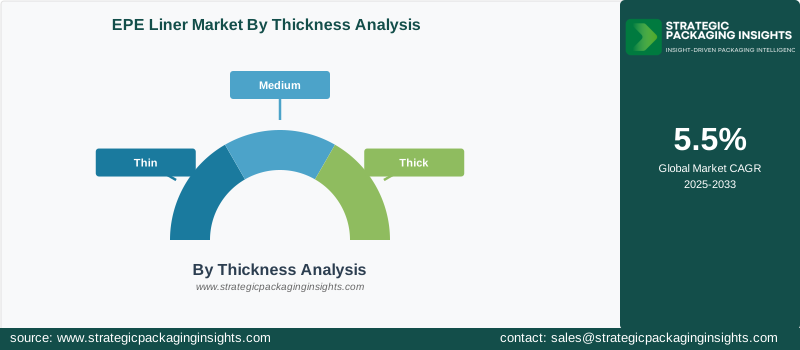
The demand for thin liners is driven by the increasing need for lightweight and cost-effective packaging solutions across various industries. As manufacturers focus on reducing packaging costs and environmental impact, the adoption of thin liners is expected to rise, contributing to market growth. Medium liners are also witnessing significant demand, particularly in the e-commerce sector, where product protection during transit is crucial. The development of thick liners is expanding the application scope of EPE liners, providing manufacturers with new opportunities to cater to diverse industry needs. As technology continues to evolve, manufacturers that leverage these advancements are likely to gain a competitive edge and drive market growth.
EPE Liner Market Segments
The EPE Liner market has been segmented on the basis ofBy Product Type
- EPE Cap Liners
- EPE Foam Liners
- Induction-Compatible Liners
By Application
- Bottles
- Jars
- Closures
- Containers
By End Use
- Food & Beverage
- Pharmaceuticals
- Cosmetics
- Chemicals
By Thickness
- Thin
- Medium
- Thick
Region
- Asia Pacific
- North America
- Latin America
- Europe
- Middle East & Africa




