


Drink Cans Market Outlook
The drink cans market was valued at $62.63 billion in 2025 and is projected to reach $97.22 billion by 2034, growing at a CAGR of 5.0% during the forecast period 2026-2034. This growth is driven by increasing consumer preference for canned beverages due to their convenience, recyclability, and ability to preserve the taste and quality of the drink. The market is also benefiting from the rising demand for ready-to-drink beverages, including carbonated drinks, energy drinks, and alcoholic beverages, which are predominantly packaged in cans. The shift towards sustainable packaging solutions is further propelling the demand for drink cans, as they are highly recyclable and have a lower environmental impact compared to other packaging materials.
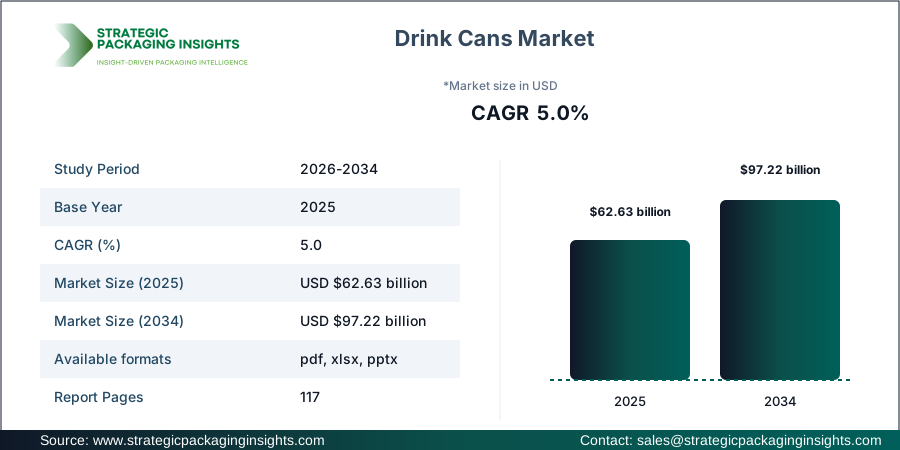
Despite the promising growth prospects, the drink cans market faces certain challenges. Regulatory restrictions on the use of certain materials and the environmental concerns associated with metal mining and processing could pose significant hurdles. However, advancements in can manufacturing technologies and the development of eco-friendly materials are expected to mitigate these challenges. The market also presents significant growth potential in emerging economies, where increasing urbanization and changing consumer lifestyles are driving the demand for convenient and portable beverage packaging solutions. As a result, the drink cans market is poised for substantial growth, with opportunities for innovation and expansion in both developed and developing regions.
Report Scope
| Attributes | Details |
| Report Title | Drink Cans Market Size, Future Growth and Forecast 2034 |
| Material Type | Aluminum, Steel, Tinplate |
| Can Type | Standard Cans, Slim Cans, Sleek Cans |
| Application | Carbonated Drinks, Beer, Energy Drinks, Water |
| End Use | Beverage Brands, Breweries, Contract Fillers |
| Region | Asia Pacific, North America, Latin America, Europe, Middle East & Africa |
| Base Year | 2025 |
| Historic Period | 2018-2024 |
| Forecast Period | 2026-2034 |
| Number of Pages | 117 |
| Customization Available | Yes* |
Opportunities & Threats
The drink cans market is ripe with opportunities, particularly in the realm of sustainability and innovation. As consumers become more environmentally conscious, there is a growing demand for sustainable packaging solutions. Drink cans, being highly recyclable, are well-positioned to meet this demand. Companies that invest in developing eco-friendly can designs and materials stand to gain a competitive edge. Additionally, the rise of the craft beverage industry presents a significant opportunity for the drink cans market. Craft breweries and small beverage companies are increasingly opting for cans due to their cost-effectiveness and ability to preserve the quality of the beverage. This trend is expected to drive the demand for drink cans in the coming years.
Another opportunity lies in the expanding market for ready-to-drink beverages. With busy lifestyles and a growing preference for convenience, consumers are increasingly opting for ready-to-drink options, such as canned cocktails, iced teas, and cold brews. This trend is particularly pronounced among younger consumers, who value convenience and portability. As a result, beverage companies are increasingly turning to cans as their packaging of choice, driving the growth of the drink cans market. Furthermore, the development of innovative can designs, such as resealable cans and cans with unique shapes and sizes, is expected to create new opportunities for market growth.
However, the drink cans market also faces certain threats. One of the primary challenges is the volatility in raw material prices, particularly aluminum, which is a key material used in can production. Fluctuations in aluminum prices can significantly impact the profitability of can manufacturers. Additionally, the market faces competition from alternative packaging solutions, such as plastic and glass bottles, which offer their own set of advantages. To mitigate these threats, companies in the drink cans market need to focus on cost optimization and innovation to maintain their competitive position.
Drivers & Challenges
The drink cans market is driven by several key factors, including the increasing demand for convenient and portable beverage packaging solutions. As consumers lead busier lifestyles, there is a growing preference for ready-to-drink beverages that can be easily consumed on the go. Drink cans, with their lightweight and portable nature, are ideally suited to meet this demand. Additionally, the recyclability of drink cans is a significant driver of market growth. With increasing awareness of environmental issues, consumers are seeking sustainable packaging options, and drink cans, being highly recyclable, are gaining popularity as an eco-friendly choice.
Another major driver of the drink cans market is the growth of the beverage industry, particularly the rise of craft beverages and ready-to-drink options. The craft beverage industry, including craft beers and artisanal sodas, is experiencing significant growth, and many of these products are packaged in cans due to their ability to preserve the quality and flavor of the beverage. Similarly, the increasing popularity of ready-to-drink beverages, such as canned cocktails and iced coffees, is driving the demand for drink cans. These trends are expected to continue, providing a strong impetus for market growth.
Despite these drivers, the drink cans market faces several challenges. One of the primary challenges is the competition from alternative packaging solutions, such as plastic and glass bottles. While drink cans offer several advantages, including recyclability and portability, plastic and glass bottles also have their own set of benefits, such as transparency and resealability. Additionally, the volatility in raw material prices, particularly aluminum, poses a significant challenge for can manufacturers. Fluctuations in aluminum prices can impact production costs and profitability, making it essential for companies to implement effective cost management strategies.
Market Share Analysis
The drink cans market is characterized by a competitive landscape with several key players vying for market share. Among the leading companies in the market are Ball Corporation, Crown Holdings, and Ardagh Metal Packaging, which together hold a significant portion of the market. These companies have established themselves as leaders through their extensive product portfolios, strong distribution networks, and focus on innovation. Ball Corporation, for instance, is known for its commitment to sustainability and has introduced several eco-friendly can designs to meet the growing demand for sustainable packaging solutions.
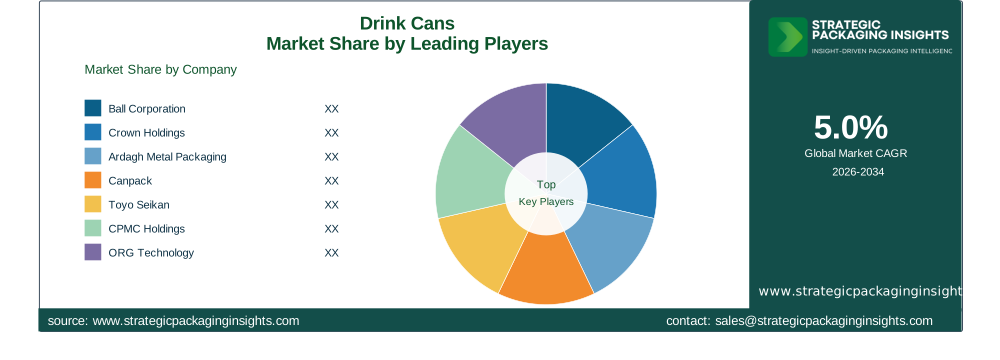
Crown Holdings is another major player in the drink cans market, with a strong presence in both developed and emerging markets. The company has invested heavily in expanding its production capabilities and has a diverse range of can designs to cater to different customer needs. Ardagh Metal Packaging, on the other hand, is known for its focus on innovation and has introduced several unique can designs, such as resealable cans and cans with unique shapes and sizes, to differentiate itself from competitors.
Other notable companies in the drink cans market include Canpack, Toyo Seikan, and CPMC Holdings. Canpack is known for its strong focus on sustainability and has implemented several initiatives to reduce its environmental impact. Toyo Seikan, a leading Japanese can manufacturer, has a strong presence in the Asia Pacific region and is known for its high-quality can designs. CPMC Holdings, a major player in the Chinese market, has a diverse product portfolio and is focused on expanding its presence in international markets.
In addition to these major players, the drink cans market also includes several smaller companies, such as ORG Technology, Envases Group, Daiwa Can, and Trivium Packaging. These companies are focused on niche markets and have carved out a strong presence in specific regions or product segments. Overall, the competitive landscape of the drink cans market is characterized by a mix of large multinational corporations and smaller regional players, each vying for market share through innovation, sustainability, and customer-centric strategies.
Key Highlights
- The drink cans market is projected to grow from $62.63 billion in 2025 to $97.22 billion by 2034, at a CAGR of 5.0%.
- Increasing consumer preference for sustainable and recyclable packaging solutions is driving the demand for drink cans.
- The rise of the craft beverage industry and ready-to-drink beverages is a significant growth driver for the market.
- Volatility in raw material prices, particularly aluminum, poses a challenge for can manufacturers.
- Key players in the market include Ball Corporation, Crown Holdings, and Ardagh Metal Packaging.
- Innovation in can designs, such as resealable cans and unique shapes, is creating new opportunities for market growth.
- The Asia Pacific region is expected to witness significant growth due to increasing urbanization and changing consumer lifestyles.
- Regulatory restrictions on certain materials and environmental concerns are potential challenges for the market.
- Companies are focusing on sustainability and eco-friendly initiatives to gain a competitive edge.
Top Countries Insights
In the drink cans market, the United States stands out as a leading country, with a market size of approximately $15 billion and a CAGR of 4%. The growth in the U.S. is driven by the high consumption of canned beverages, particularly carbonated drinks and craft beers. The country's strong focus on sustainability and recycling initiatives further supports the demand for drink cans. However, the market faces challenges from alternative packaging solutions, such as plastic bottles, which are also popular among consumers.
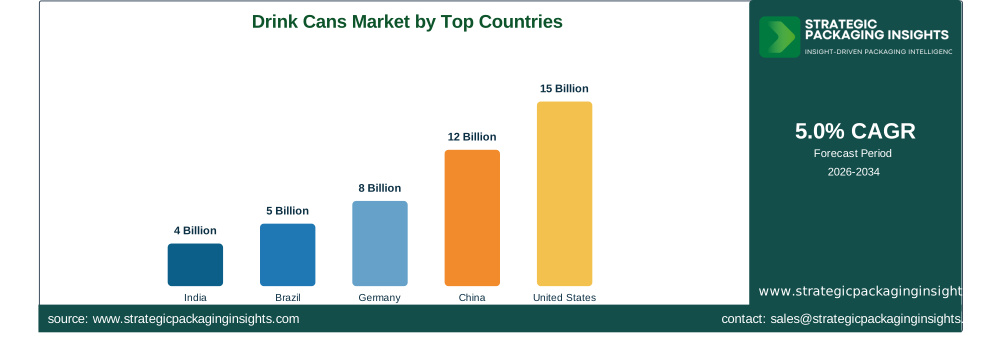
China is another key player in the drink cans market, with a market size of around $12 billion and a CAGR of 6%. The rapid urbanization and changing consumer lifestyles in China are driving the demand for convenient and portable beverage packaging solutions. Additionally, the growing popularity of ready-to-drink beverages, such as canned teas and coffees, is contributing to the market's growth. However, the market faces challenges from regulatory restrictions on certain materials and the environmental impact of metal mining and processing.
Germany, with a market size of approximately $8 billion and a CAGR of 3%, is a significant market for drink cans in Europe. The country's strong beer culture and the popularity of canned beverages, such as energy drinks and carbonated soft drinks, are driving the demand for drink cans. Germany's focus on sustainability and recycling initiatives also supports the market's growth. However, the market faces competition from glass bottles, which are also popular among consumers.
Brazil, with a market size of around $5 billion and a CAGR of 5%, is a growing market for drink cans in Latin America. The country's increasing urbanization and changing consumer preferences are driving the demand for convenient and portable beverage packaging solutions. Additionally, the growing popularity of canned beers and soft drinks is contributing to the market's growth. However, the market faces challenges from economic instability and fluctuations in raw material prices.
India, with a market size of approximately $4 billion and a CAGR of 7%, is an emerging market for drink cans in the Asia Pacific region. The country's increasing urbanization and changing consumer lifestyles are driving the demand for convenient and portable beverage packaging solutions. Additionally, the growing popularity of ready-to-drink beverages, such as canned juices and teas, is contributing to the market's growth. However, the market faces challenges from regulatory restrictions on certain materials and the environmental impact of metal mining and processing.
Drink Cans Market Segments Insights

Material Type Analysis
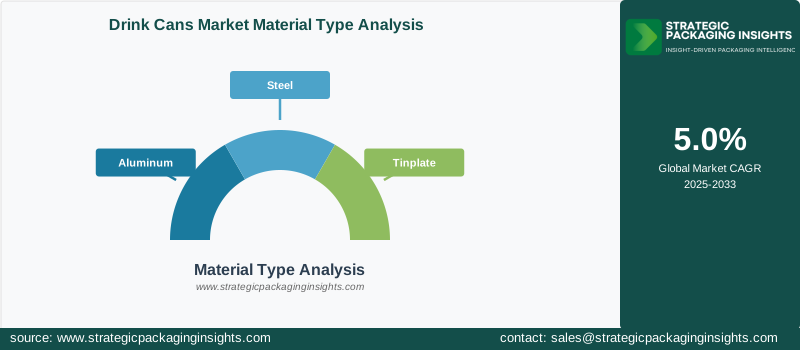
The material type segment of the drink cans market is primarily dominated by aluminum, which is favored for its lightweight, durability, and recyclability. Aluminum cans are widely used across various beverage categories, including carbonated drinks, beers, and energy drinks, due to their ability to preserve the taste and quality of the beverage. The demand for aluminum cans is further driven by the increasing focus on sustainability, as they are highly recyclable and have a lower environmental impact compared to other materials. Steel and tinplate are also used in the production of drink cans, although to a lesser extent. These materials are typically used for specific applications where additional strength and durability are required.
In recent years, there has been a growing trend towards the use of eco-friendly materials in can production. Companies are investing in research and development to create new materials that offer the same benefits as traditional materials but with a reduced environmental impact. This trend is expected to continue, with aluminum remaining the dominant material type due to its favorable properties and recyclability. However, the development of new materials could present opportunities for innovation and differentiation in the market.
Can Type Analysis
The can type segment of the drink cans market includes standard cans, slim cans, and sleek cans. Standard cans are the most commonly used type and are favored for their versatility and cost-effectiveness. They are widely used across various beverage categories, including carbonated drinks, beers, and energy drinks. Slim cans, on the other hand, are gaining popularity due to their sleek design and portability. They are particularly favored for energy drinks and ready-to-drink beverages, where a modern and stylish appearance is desired. Sleek cans are also gaining traction, particularly in the craft beverage industry, where unique and eye-catching packaging is important for brand differentiation.
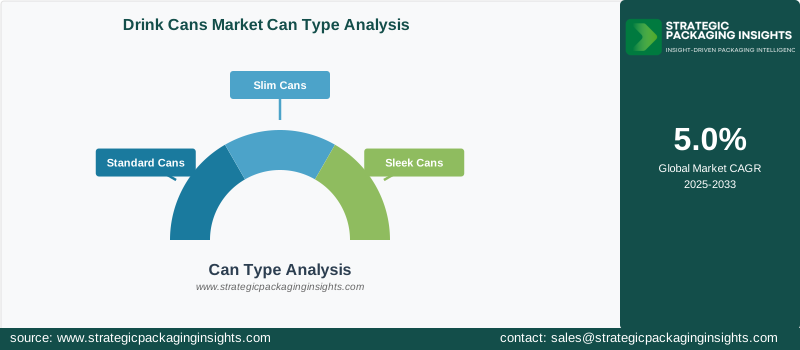
The demand for different can types is influenced by consumer preferences and trends in the beverage industry. As consumers increasingly seek out unique and innovative packaging solutions, companies are investing in the development of new can designs to meet these demands. This trend is expected to continue, with slim and sleek cans gaining popularity alongside standard cans. The development of new can designs and features, such as resealable cans and cans with unique shapes, is also expected to drive growth in this segment.
Application Analysis
The application segment of the drink cans market is dominated by carbonated drinks, which account for a significant portion of the market. The demand for canned carbonated drinks is driven by their convenience, portability, and ability to preserve the taste and quality of the beverage. Beer is another major application for drink cans, with many breweries opting for cans due to their cost-effectiveness and ability to preserve the quality of the beer. Energy drinks and water are also significant applications for drink cans, with the growing popularity of these beverages driving demand for canned packaging solutions.
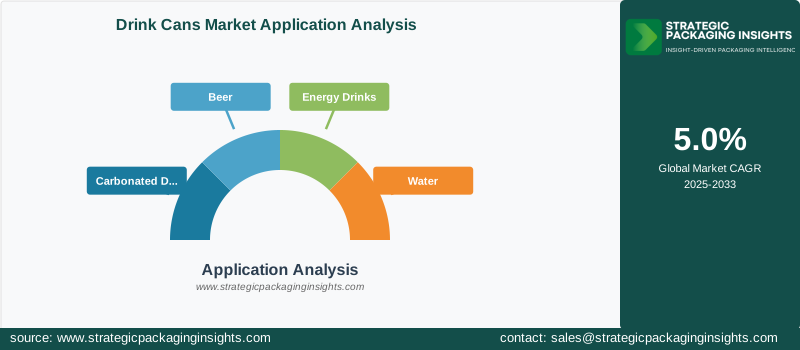
The application segment is influenced by trends in the beverage industry, with the rise of ready-to-drink beverages and craft beverages driving demand for drink cans. As consumers increasingly seek out convenient and portable beverage options, the demand for canned packaging solutions is expected to grow. Additionally, the development of new beverage categories and flavors is expected to create new opportunities for growth in this segment.
End Use Analysis
The end use segment of the drink cans market includes beverage brands, breweries, and contract fillers. Beverage brands are the largest end users of drink cans, with many companies opting for cans due to their cost-effectiveness, portability, and ability to preserve the quality of the beverage. Breweries are another major end user, with many opting for cans due to their ability to preserve the quality of the beer and their cost-effectiveness. Contract fillers, which provide filling and packaging services for beverage companies, are also significant end users of drink cans.
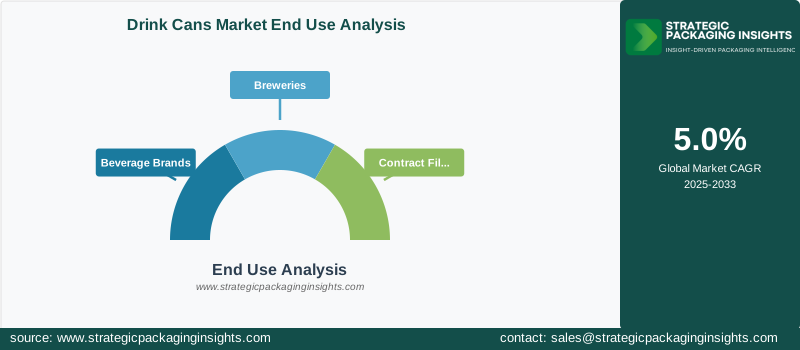
The demand for drink cans in the end use segment is influenced by trends in the beverage industry, with the rise of craft beverages and ready-to-drink options driving demand for canned packaging solutions. As beverage companies increasingly seek out innovative and sustainable packaging solutions, the demand for drink cans is expected to grow. Additionally, the development of new beverage categories and flavors is expected to create new opportunities for growth in this segment.
Drink Cans Market Segments
The Drink Cans market has been segmented on the basis ofMaterial Type
- Aluminum
- Steel
- Tinplate
Can Type
- Standard Cans
- Slim Cans
- Sleek Cans
Application
- Carbonated Drinks
- Beer
- Energy Drinks
- Water
End Use
- Beverage Brands
- Breweries
- Contract Fillers
Region
- Asia Pacific
- North America
- Latin America
- Europe
- Middle East & Africa




