


Direct-to-shape Inkjet Printer Market Outlook
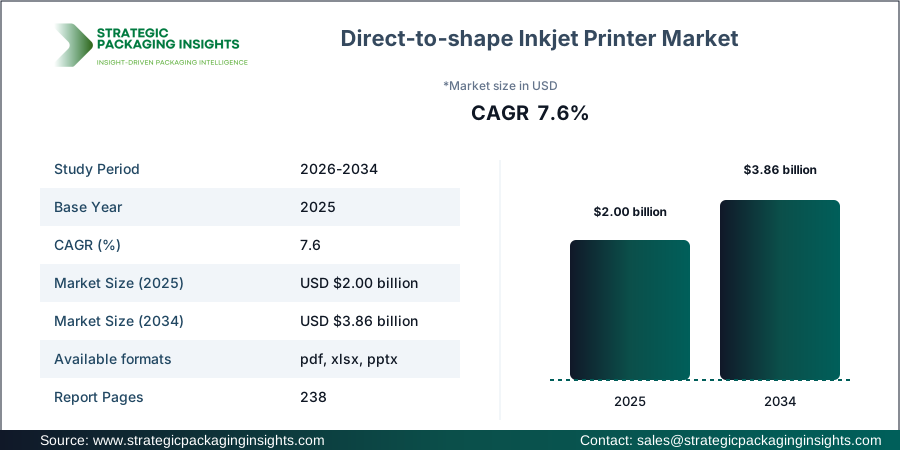
The Direct-to-shape Inkjet Printer market was valued at $2.00 billion in 2025 and is projected to reach $3.86 billion by 2034, growing at a CAGR of 7.6% during the forecast period 2026-2034. This market is experiencing significant growth due to the increasing demand for customized packaging solutions across various industries. The ability of direct-to-shape inkjet printers to print directly onto three-dimensional objects without the need for labels is a key driver of this market. This technology is particularly appealing to industries such as food and beverage, cosmetics, and healthcare, where packaging plays a crucial role in brand differentiation and consumer engagement. The market is also benefiting from advancements in inkjet technology, which have improved print quality and speed, making these printers more attractive to manufacturers looking to enhance their production capabilities.
Despite the promising growth prospects, the Direct-to-shape Inkjet Printer market faces several challenges. High initial investment costs and the complexity of integrating these printers into existing production lines can be significant barriers for some companies. Additionally, the market is subject to stringent regulatory requirements, particularly in the food and beverage and healthcare sectors, where packaging materials and processes must comply with safety standards. However, the potential for cost savings in terms of reduced material usage and inventory management, along with the ability to offer personalized products, presents significant growth opportunities for companies willing to invest in this technology. As consumer demand for sustainable and eco-friendly packaging solutions continues to rise, the market is expected to see increased adoption of direct-to-shape inkjet printers, which can reduce waste and improve the environmental footprint of packaging operations.
Report Scope
| Attributes | Details |
| Report Title | Direct-to-shape Inkjet Printer Market Size, Future Growth and Forecast 2034 |
| Printer Type | Single-Pass Printers, Multi-Pass Printers, UV Inkjet Printers |
| Application | Bottles, Cans, Tubes, Containers |
| End Use | Food & Beverage, Cosmetics, Industrial, Healthcare |
| Region | Asia Pacific, North America, Latin America, Europe, Middle East & Africa |
| Base Year | 2025 |
| Historic Period | 2018-2024 |
| Forecast Period | 2026-2034 |
| Number of Pages | 238 |
| Customization Available | Yes* |
Opportunities & Threats
The Direct-to-shape Inkjet Printer market presents numerous opportunities for growth, particularly in the realm of personalized and customized packaging. As consumer preferences shift towards unique and individualized products, brands are increasingly looking to differentiate themselves through packaging. Direct-to-shape inkjet printers offer the flexibility to print directly onto a variety of shapes and materials, allowing for greater creativity and innovation in packaging design. This capability is particularly valuable in the cosmetics and personal care industries, where packaging aesthetics play a crucial role in consumer purchasing decisions. Additionally, the ability to produce short runs of customized packaging without the need for costly and time-consuming label production processes is a significant advantage for companies looking to respond quickly to market trends and consumer demands.
Another significant opportunity lies in the growing demand for sustainable packaging solutions. Direct-to-shape inkjet printers can help reduce waste by eliminating the need for labels and excess packaging materials. This aligns with the increasing consumer demand for environmentally friendly products and packaging. Companies that invest in this technology can position themselves as leaders in sustainability, potentially gaining a competitive edge in the market. Furthermore, advancements in inkjet technology, such as the development of eco-friendly inks and improved print quality, are expected to drive further adoption of direct-to-shape inkjet printers across various industries.
However, the market also faces several threats that could hinder its growth. One of the primary challenges is the high cost of direct-to-shape inkjet printers, which can be a significant barrier to entry for small and medium-sized enterprises. Additionally, the complexity of integrating these printers into existing production lines can pose operational challenges for companies. There is also the risk of technological obsolescence, as rapid advancements in printing technology could render current models outdated. Companies must continuously invest in research and development to stay competitive and ensure their products meet evolving industry standards and consumer expectations.
Drivers & Challenges
The Direct-to-shape Inkjet Printer market is driven by several key factors, including the increasing demand for customized and personalized packaging solutions. As consumers seek unique and individualized products, brands are turning to direct-to-shape inkjet printers to differentiate themselves in the market. This technology allows for high-quality, full-color printing directly onto a variety of shapes and materials, enabling brands to create eye-catching and innovative packaging designs. The ability to produce short runs of customized packaging without the need for costly and time-consuming label production processes is a significant advantage for companies looking to respond quickly to market trends and consumer demands.
Another major driver of the market is the growing emphasis on sustainability and eco-friendly packaging solutions. Direct-to-shape inkjet printers can help reduce waste by eliminating the need for labels and excess packaging materials. This aligns with the increasing consumer demand for environmentally friendly products and packaging. Companies that invest in this technology can position themselves as leaders in sustainability, potentially gaining a competitive edge in the market. Furthermore, advancements in inkjet technology, such as the development of eco-friendly inks and improved print quality, are expected to drive further adoption of direct-to-shape inkjet printers across various industries.
Despite these drivers, the market faces several challenges that could hinder its growth. One of the primary challenges is the high cost of direct-to-shape inkjet printers, which can be a significant barrier to entry for small and medium-sized enterprises. Additionally, the complexity of integrating these printers into existing production lines can pose operational challenges for companies. There is also the risk of technological obsolescence, as rapid advancements in printing technology could render current models outdated. Companies must continuously invest in research and development to stay competitive and ensure their products meet evolving industry standards and consumer expectations.
Market Share Analysis
The competitive landscape of the Direct-to-shape Inkjet Printer market is characterized by the presence of several key players who are driving innovation and growth in the industry. Companies such as Domino Printing, Videojet, and Markem-Imaje are leading the market with their advanced printing technologies and strong focus on research and development. These companies have established themselves as leaders in the market by offering a wide range of products that cater to various industry needs, from food and beverage to cosmetics and healthcare. Their ability to provide high-quality, reliable, and efficient printing solutions has helped them maintain a strong market position.
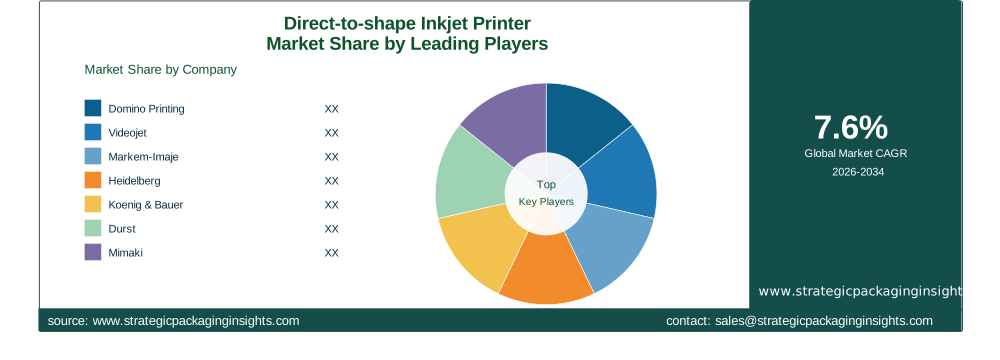
Heidelberg and Koenig & Bauer are also prominent players in the market, known for their expertise in printing technology and commitment to innovation. These companies have a strong presence in the market, offering a diverse portfolio of direct-to-shape inkjet printers that cater to different applications and industries. Their focus on sustainability and eco-friendly printing solutions has further strengthened their market position, as more companies seek to reduce their environmental footprint and meet consumer demand for sustainable packaging.
Durst, Mimaki, and Roland DG are other key players in the market, known for their cutting-edge technology and innovative product offerings. These companies have been at the forefront of the market, continuously investing in research and development to enhance their product capabilities and meet the evolving needs of their customers. Their strong focus on customer satisfaction and ability to provide customized solutions have helped them build a loyal customer base and maintain a competitive edge in the market.
Canon and Fujifilm are also significant players in the market, leveraging their extensive experience in the printing industry to offer high-quality direct-to-shape inkjet printers. These companies have a strong global presence and are known for their commitment to innovation and quality. Their ability to provide reliable and efficient printing solutions has helped them maintain a strong market position and attract a diverse range of customers across various industries.
Key Highlights
- The Direct-to-shape Inkjet Printer market is projected to grow at a CAGR of 7.6% from 2026 to 2034.
- Advancements in inkjet technology are driving the adoption of direct-to-shape printers across various industries.
- High initial investment costs and integration challenges are significant barriers to market entry.
- The market is witnessing increased demand for sustainable and eco-friendly packaging solutions.
- Key players in the market include Domino Printing, Videojet, and Markem-Imaje.
- Customization and personalization of packaging are major trends driving market growth.
- The food and beverage industry is a major end-user of direct-to-shape inkjet printers.
- Regulatory requirements in the food and healthcare sectors pose challenges for market growth.
- Companies are investing in research and development to stay competitive and meet evolving consumer demands.
Top Countries Insights
In the Direct-to-shape Inkjet Printer market, the United States holds a significant share, with a market size of approximately $1.2 billion and a CAGR of 6%. The country's strong presence in the food and beverage industry, coupled with the demand for innovative packaging solutions, drives market growth. Additionally, the focus on sustainability and eco-friendly packaging aligns with consumer preferences, further boosting the adoption of direct-to-shape inkjet printers.
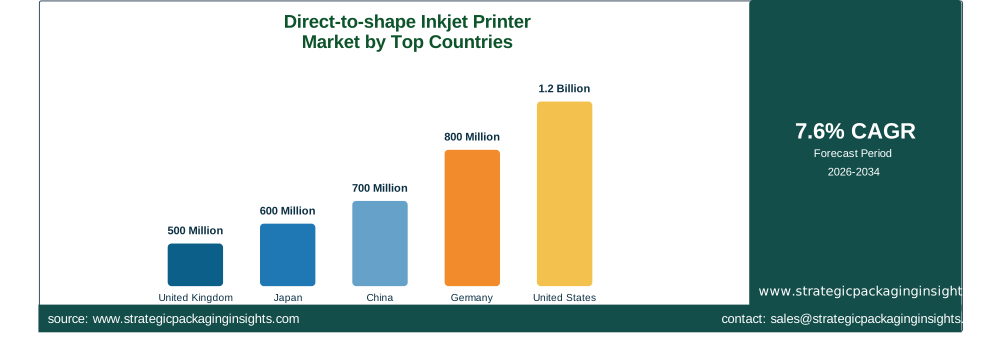
Germany is another key player in the market, with a market size of around $800 million and a CAGR of 5%. The country's strong manufacturing base and emphasis on technological innovation contribute to the growth of the market. German companies are known for their commitment to quality and sustainability, making them leaders in the adoption of direct-to-shape inkjet printers.
China is experiencing rapid growth in the Direct-to-shape Inkjet Printer market, with a market size of approximately $700 million and a CAGR of 8%. The country's expanding consumer base and increasing demand for personalized and customized packaging solutions drive market growth. Additionally, the government's focus on promoting sustainable manufacturing practices supports the adoption of eco-friendly printing technologies.
Japan holds a significant share in the market, with a market size of around $600 million and a CAGR of 4%. The country's strong presence in the electronics and cosmetics industries, coupled with the demand for high-quality packaging solutions, drives market growth. Japanese companies are known for their focus on innovation and quality, making them leaders in the adoption of direct-to-shape inkjet printers.
The United Kingdom is also a key player in the market, with a market size of approximately $500 million and a CAGR of 3%. The country's strong presence in the food and beverage industry, coupled with the demand for innovative and sustainable packaging solutions, drives market growth. Additionally, the focus on reducing waste and improving the environmental footprint of packaging operations supports the adoption of direct-to-shape inkjet printers.
Direct-to-shape Inkjet Printer Market Segments Insights

Printer Type Analysis
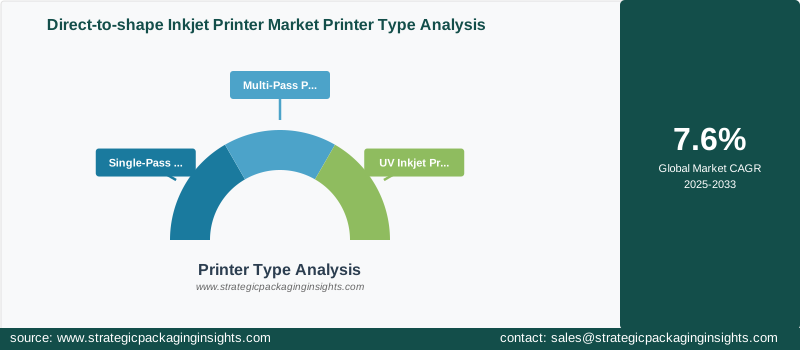
The Direct-to-shape Inkjet Printer market is segmented by printer type into Single-Pass Printers, Multi-Pass Printers, and UV Inkjet Printers. Single-pass printers are gaining popularity due to their high-speed printing capabilities and ability to produce high-quality prints in a single pass. This makes them ideal for high-volume production environments where efficiency and speed are critical. Multi-pass printers, on the other hand, offer greater flexibility and precision, making them suitable for applications that require intricate designs and detailed graphics. UV inkjet printers are known for their versatility and ability to print on a wide range of materials, including plastics, glass, and metals. This makes them a popular choice for industries such as cosmetics and personal care, where packaging aesthetics are crucial.
Advancements in inkjet technology have significantly improved the performance and capabilities of these printers, driving their adoption across various industries. The development of eco-friendly inks and improved print quality has further enhanced the appeal of direct-to-shape inkjet printers, particularly in industries that prioritize sustainability and environmental responsibility. As companies continue to seek innovative and efficient packaging solutions, the demand for advanced printer types is expected to grow, driving further innovation and development in the market.
Application Analysis
The application segment of the Direct-to-shape Inkjet Printer market includes Bottles, Cans, Tubes, and Containers. Bottles represent a significant portion of the market, driven by the demand for customized and personalized packaging solutions in the beverage and personal care industries. The ability to print directly onto bottles without the need for labels offers significant cost savings and reduces waste, making it an attractive option for companies looking to improve their environmental footprint. Cans are another important application, particularly in the food and beverage industry, where direct-to-shape inkjet printers offer the flexibility to create eye-catching designs and graphics that enhance brand visibility and consumer engagement.
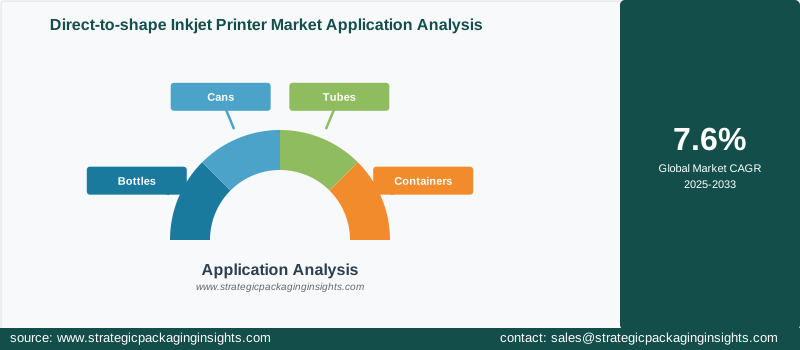
Tubes and containers are also key applications in the market, particularly in the cosmetics and healthcare industries, where packaging aesthetics and functionality are crucial. The ability to print directly onto tubes and containers allows for greater creativity and innovation in packaging design, enabling companies to differentiate themselves in a competitive market. As consumer demand for unique and personalized products continues to grow, the application segment of the Direct-to-shape Inkjet Printer market is expected to see significant growth, driven by the need for innovative and efficient packaging solutions.
End Use Analysis
The end-use segment of the Direct-to-shape Inkjet Printer market includes Food & Beverage, Cosmetics, Industrial, and Healthcare. The food and beverage industry is a major end-user of direct-to-shape inkjet printers, driven by the demand for innovative and sustainable packaging solutions. The ability to print directly onto packaging materials without the need for labels offers significant cost savings and reduces waste, making it an attractive option for companies looking to improve their environmental footprint. The cosmetics industry is another key end-user, where packaging aesthetics and functionality are crucial. Direct-to-shape inkjet printers offer the flexibility to create eye-catching designs and graphics that enhance brand visibility and consumer engagement.
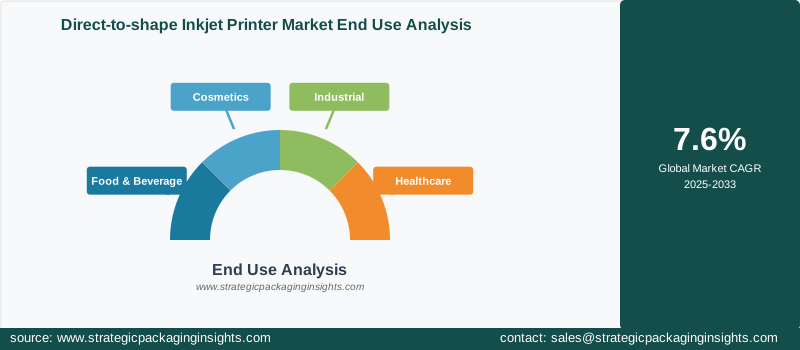
The industrial and healthcare sectors are also significant end-users of direct-to-shape inkjet printers, driven by the need for efficient and reliable printing solutions. In the industrial sector, direct-to-shape inkjet printers are used for a variety of applications, including product labeling and packaging. In the healthcare sector, the ability to print directly onto packaging materials without the need for labels offers significant cost savings and reduces waste, making it an attractive option for companies looking to improve their environmental footprint. As consumer demand for unique and personalized products continues to grow, the end-use segment of the Direct-to-shape Inkjet Printer market is expected to see significant growth, driven by the need for innovative and efficient packaging solutions.
Direct-to-shape Inkjet Printer Market Segments
The Direct-to-shape Inkjet Printer market has been segmented on the basis ofPrinter Type
- Single-Pass Printers
- Multi-Pass Printers
- UV Inkjet Printers
Application
- Bottles
- Cans
- Tubes
- Containers
End Use
- Food & Beverage
- Cosmetics
- Industrial
- Healthcare
Region
- Asia Pacific
- North America
- Latin America
- Europe
- Middle East & Africa




