


Eco-Friendly Inks Market Outlook
The Eco-Friendly Inks market was valued at $4.35 billion in 2025 and is projected to reach $9.61 billion by 2034, growing at a CAGR of 9.2% during the forecast period 2026-2034. This market is witnessing significant growth due to increasing environmental awareness and stringent regulations against the use of volatile organic compounds (VOCs) in traditional inks. The demand for sustainable printing solutions is driving the adoption of eco-friendly inks across various industries, including packaging, publishing, and textiles. The market is also benefiting from technological advancements that enhance the performance and application range of these inks, making them more competitive with conventional options.
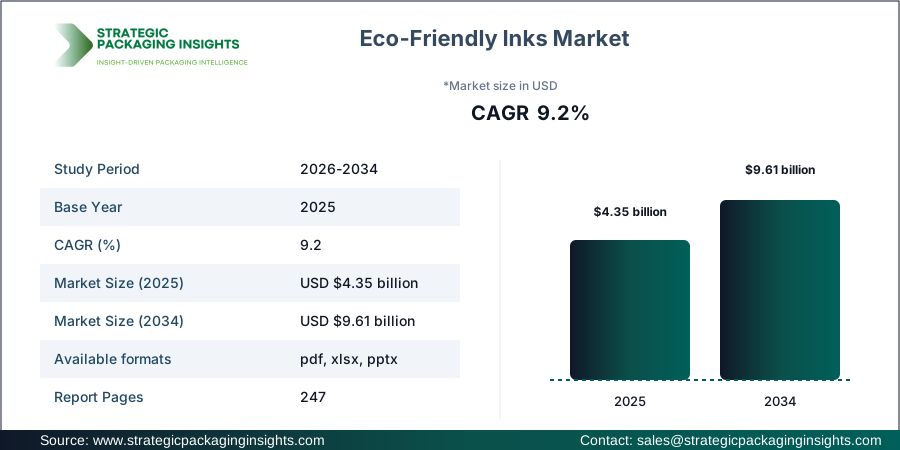
Despite the promising growth trajectory, the Eco-Friendly Inks market faces challenges such as higher production costs and limited availability of raw materials. Regulatory frameworks, while promoting eco-friendly practices, also impose compliance costs that can be burdensome for smaller manufacturers. However, the potential for growth remains substantial, driven by increasing consumer demand for sustainable products and the ongoing development of cost-effective production techniques. The market is poised to expand further as innovations continue to improve the quality and versatility of eco-friendly inks, making them suitable for a broader range of applications.
Report Scope
| Attributes | Details |
| Report Title | Eco-Friendly Inks Market Size, Future Growth and Forecast 2034 |
| By Ink Type | Water-Based Inks, Soy-Based Inks, UV-Curable Inks |
| By Application | Flexible Packaging, Labels, Cartons |
| By Substrate | Paper, Films, Corrugated Board |
| By End Use | Food, Beverage, Personal Care, Retail |
| Region | Asia Pacific, North America, Latin America, Europe, Middle East & Africa |
| Base Year | 2025 |
| Historic Period | 2018-2024 |
| Forecast Period | 2026-2034 |
| Number of Pages | 247 |
| Customization Available | Yes* |
Opportunities & Threats
The Eco-Friendly Inks market presents numerous opportunities, particularly in the packaging industry, which is increasingly prioritizing sustainability. As consumers become more environmentally conscious, brands are seeking eco-friendly packaging solutions to enhance their market appeal. This shift is driving demand for eco-friendly inks, especially in flexible packaging and labeling applications. Additionally, advancements in ink formulations are enabling better print quality and durability, further encouraging adoption. The growing e-commerce sector also offers significant opportunities, as online retailers seek sustainable packaging solutions to reduce their environmental footprint.
Another opportunity lies in the development of new ink technologies, such as UV-curable and water-based inks, which offer improved performance and environmental benefits. These innovations are expanding the application range of eco-friendly inks, making them suitable for high-quality printing on various substrates. Furthermore, government initiatives promoting sustainable practices and offering incentives for eco-friendly products are expected to boost market growth. Collaborations between ink manufacturers and packaging companies to develop customized solutions can also drive market expansion.
However, the market faces threats from the high cost of eco-friendly inks compared to traditional inks, which can deter price-sensitive customers. The limited availability of raw materials, such as soy and other natural ingredients, can also pose supply chain challenges. Additionally, the market is highly competitive, with numerous players vying for market share, which can lead to price wars and reduced profit margins. To mitigate these threats, companies need to focus on innovation, cost reduction, and strategic partnerships to enhance their competitive position.
Drivers & Challenges
One of the primary drivers of the Eco-Friendly Inks market is the increasing regulatory pressure to reduce environmental impact. Governments worldwide are implementing stringent regulations to limit the use of harmful chemicals in printing inks, which is driving the shift towards eco-friendly alternatives. This regulatory landscape is encouraging manufacturers to invest in research and development to create inks that meet environmental standards without compromising on quality. Additionally, the growing awareness among consumers about the environmental impact of their purchasing decisions is driving demand for sustainable products, including eco-friendly inks.
Technological advancements are another significant driver of market growth. Innovations in ink formulations are enhancing the performance and application range of eco-friendly inks, making them more competitive with traditional options. For instance, the development of UV-curable inks offers benefits such as faster drying times and improved print quality, which are appealing to industries such as packaging and publishing. The increasing adoption of digital printing technologies is also driving demand for eco-friendly inks, as these technologies require inks that are compatible with a wide range of substrates and offer high-quality results.
Despite these drivers, the market faces challenges such as the high cost of production and limited availability of raw materials. Eco-friendly inks often require specialized ingredients, which can be more expensive and harder to source than those used in conventional inks. This can lead to higher production costs, which are often passed on to consumers in the form of higher prices. Additionally, the market is highly competitive, with numerous players vying for market share, which can lead to price wars and reduced profit margins. To overcome these challenges, companies need to focus on innovation, cost reduction, and strategic partnerships to enhance their competitive position.
Market Share Analysis
The Eco-Friendly Inks market is characterized by a competitive landscape with several key players dominating the market. Sun Chemical, Siegwerk, Toyo Ink, Flint Group, and INX International are among the leading companies, each holding a significant share of the market. These companies are investing heavily in research and development to create innovative ink formulations that meet the growing demand for sustainable printing solutions. They are also expanding their product portfolios to include a wider range of eco-friendly inks, catering to various industries and applications.
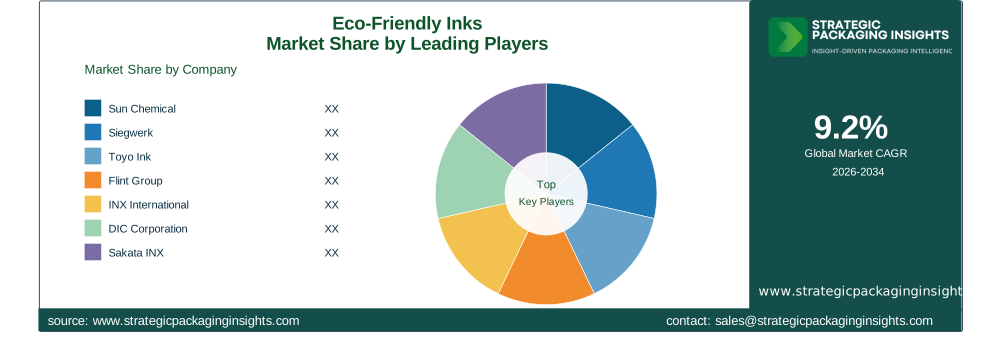
DIC Corporation and Sakata INX are also prominent players in the market, known for their advanced ink technologies and strong distribution networks. These companies are focusing on strategic partnerships and collaborations to enhance their market presence and expand their customer base. Hubergroup and Nazdar Ink Technologies are other notable players, offering a diverse range of eco-friendly inks for different applications. These companies are leveraging their expertise in ink formulation and production to develop high-quality, sustainable products that meet the needs of their customers.
Wikoff Color is another key player in the market, known for its innovative ink solutions and commitment to sustainability. The company is focusing on expanding its product offerings and strengthening its distribution network to capture a larger share of the market. Overall, the competitive landscape of the Eco-Friendly Inks market is characterized by intense competition, with companies striving to differentiate themselves through innovation, quality, and customer service. As the market continues to grow, companies are likely to focus on strategic partnerships, mergers, and acquisitions to enhance their competitive position and expand their market share.
Key Highlights
- The Eco-Friendly Inks market is projected to grow at a CAGR of 9.2% from 2026 to 2034.
- Water-based inks are gaining popularity due to their low environmental impact and versatility.
- Flexible packaging is the largest application segment, driven by the demand for sustainable packaging solutions.
- Asia Pacific is the fastest-growing region, with significant growth opportunities in China and India.
- Technological advancements in ink formulations are enhancing performance and expanding application range.
- Government regulations promoting sustainability are driving demand for eco-friendly inks.
- High production costs and limited raw material availability are key challenges for the market.
- Strategic partnerships and collaborations are crucial for market expansion and competitive advantage.
- Digital printing technologies are driving demand for eco-friendly inks compatible with various substrates.
- Consumer awareness and demand for sustainable products are key drivers of market growth.
Top Countries Insights
In the Eco-Friendly Inks market, the United States is a leading player, with a market size of approximately $1.2 billion and a CAGR of 8%. The country's strong regulatory framework promoting environmental sustainability and the presence of major ink manufacturers drive market growth. The demand for eco-friendly inks is particularly high in the packaging and publishing industries, where sustainability is a key concern.
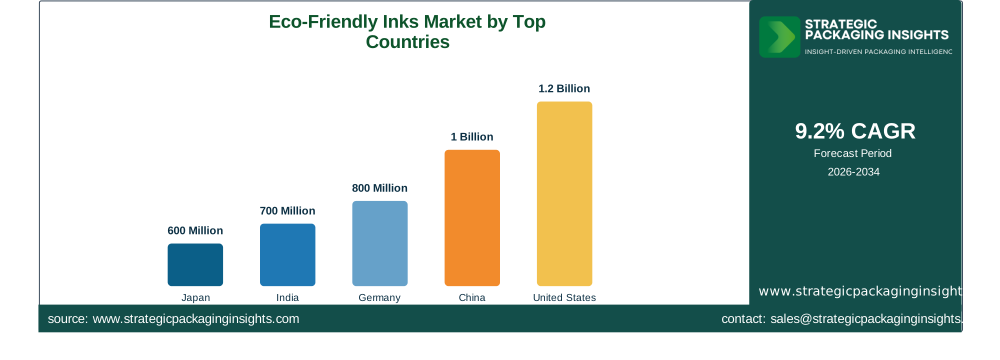
China is another significant market, with a market size of around $1 billion and a CAGR of 12%. The country's rapid industrialization and growing awareness of environmental issues are driving demand for sustainable printing solutions. Government initiatives promoting green technologies and the presence of a large manufacturing base further support market growth.
Germany, with a market size of $800 million and a CAGR of 9%, is a key player in the European market. The country's strong focus on sustainability and innovation in printing technologies drives demand for eco-friendly inks. The packaging industry, in particular, is a major consumer of these inks, as companies seek to reduce their environmental impact.
India, with a market size of $700 million and a CAGR of 14%, is one of the fastest-growing markets for eco-friendly inks. The country's expanding packaging industry and increasing consumer awareness of environmental issues are driving demand. Government policies promoting sustainable practices and the growth of the e-commerce sector further support market expansion.
Japan, with a market size of $600 million and a CAGR of 7%, is a mature market with a strong focus on innovation and quality. The country's advanced printing technologies and commitment to sustainability drive demand for eco-friendly inks. The packaging and publishing industries are key consumers, as companies seek to enhance their environmental credentials.
Eco-Friendly Inks Market Segments Insights

Ink Type Analysis
The Eco-Friendly Inks market is segmented by ink type into water-based inks, soy-based inks, and UV-curable inks. Water-based inks are gaining traction due to their low environmental impact and versatility across various applications. These inks are particularly popular in the packaging industry, where sustainability is a key concern. The demand for water-based inks is driven by their ability to provide high-quality prints while minimizing VOC emissions, making them an attractive option for environmentally conscious companies.
Soy-based inks are another important segment, known for their renewable content and biodegradability. These inks are widely used in the publishing industry, where they offer vibrant colors and excellent print quality. The growing demand for sustainable printing solutions is driving the adoption of soy-based inks, as they offer a more environmentally friendly alternative to petroleum-based inks. UV-curable inks are also gaining popularity, particularly in the packaging and labeling industries, due to their fast curing times and durability.
Application Analysis
The application segment of the Eco-Friendly Inks market includes flexible packaging, labels, and cartons. Flexible packaging is the largest application segment, driven by the demand for sustainable packaging solutions. The growing e-commerce sector and increasing consumer awareness of environmental issues are driving demand for eco-friendly inks in this segment. Labels are another important application, where eco-friendly inks are used to enhance the sustainability of packaging solutions.
Cartons are also a significant application segment, particularly in the food and beverage industries. The demand for eco-friendly inks in this segment is driven by the need for sustainable packaging solutions that meet regulatory requirements and consumer expectations. The growing focus on reducing the environmental impact of packaging is driving demand for eco-friendly inks in all application segments, as companies seek to enhance their sustainability credentials.
Substrate Analysis
The Eco-Friendly Inks market is segmented by substrate into paper, films, and corrugated board. Paper is the largest substrate segment, driven by the demand for sustainable printing solutions in the publishing and packaging industries. The growing focus on reducing the environmental impact of printing is driving demand for eco-friendly inks that are compatible with paper substrates.
Films are another important substrate segment, particularly in the packaging industry. The demand for eco-friendly inks in this segment is driven by the need for sustainable packaging solutions that offer high-quality prints and durability. Corrugated board is also a significant substrate segment, particularly in the packaging industry, where eco-friendly inks are used to enhance the sustainability of packaging solutions.
End Use Analysis
The end-use segment of the Eco-Friendly Inks market includes food, beverage, personal care, and retail. The food industry is the largest end-use segment, driven by the demand for sustainable packaging solutions that meet regulatory requirements and consumer expectations. The growing focus on reducing the environmental impact of packaging is driving demand for eco-friendly inks in this segment.
The beverage industry is another important end-use segment, where eco-friendly inks are used to enhance the sustainability of packaging solutions. The personal care industry is also a significant end-use segment, driven by the demand for sustainable packaging solutions that meet consumer expectations. The retail industry is another important end-use segment, where eco-friendly inks are used to enhance the sustainability of packaging solutions.
Eco-Friendly Inks Market Segments
The Eco-Friendly Inks market has been segmented on the basis ofBy Ink Type
- Water-Based Inks
- Soy-Based Inks
- UV-Curable Inks
By Application
- Flexible Packaging
- Labels
- Cartons
By Substrate
- Paper
- Films
- Corrugated Board
By End Use
- Food
- Beverage
- Personal Care
- Retail
Region
- Asia Pacific
- North America
- Latin America
- Europe
- Middle East & Africa




