


Cup Holder Market Outlook
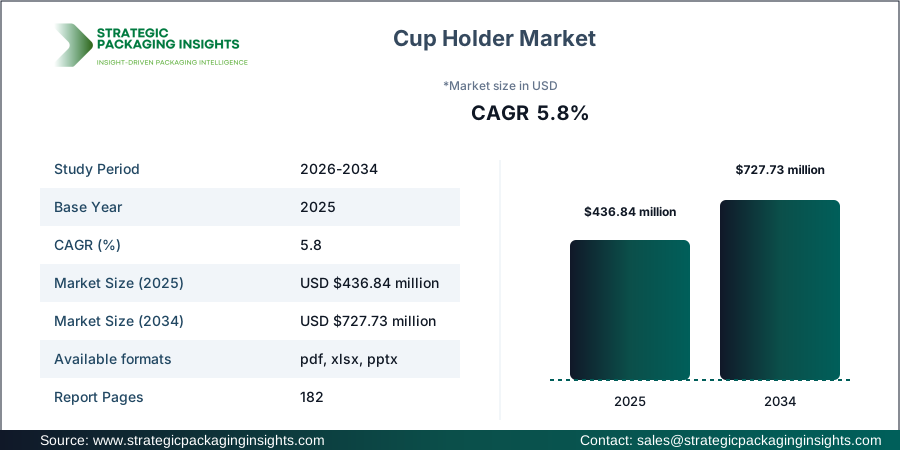
The Cup Holder market was valued at $436.84 million in 2025 and is projected to reach $727.73 million by 2034, growing at a CAGR of 5.8% during the forecast period 2026-2034. This market is witnessing significant growth due to the increasing demand for convenient and sustainable packaging solutions in the food and beverage industry. The rise in takeaway culture, especially in urban areas, has fueled the demand for cup holders that are both functional and environmentally friendly. The market is also driven by innovations in materials and design, which aim to enhance the user experience while minimizing environmental impact. As consumers become more environmentally conscious, the demand for biodegradable and reusable cup holders is expected to rise, further propelling market growth.
However, the market faces challenges such as fluctuating raw material prices and stringent environmental regulations that could impact production costs and profitability. Despite these challenges, the market holds significant growth potential, particularly in emerging economies where the foodservice industry is expanding rapidly. The increasing adoption of eco-friendly packaging solutions by major foodservice chains is also expected to create new opportunities for market players. Additionally, advancements in manufacturing technologies and the development of innovative cup holder designs are likely to drive market growth in the coming years.
Report Scope
| Attributes | Details |
| Report Title | Cup Holder Market Size, Future Growth and Forecast 2034 |
| By Product Type | Molded Pulp Cup Holders, Paperboard Cup Holders, Plastic Cup Holders, Reusable Cup Holders |
| By Capacity | 2-Cup, 4-Cup, Multi-Cup |
| By Application | Takeaway Beverages, Foodservice Delivery, Retail Beverage Packaging |
| By End Use | QSRs, Cafés, Restaurants, Convenience Stores |
| Region | Asia Pacific, North America, Latin America, Europe, Middle East & Africa |
| Base Year | 2025 |
| Historic Period | 2018-2024 |
| Forecast Period | 2026-2034 |
| Number of Pages | 182 |
| Customization Available | Yes* |
Opportunities & Threats
The Cup Holder market presents numerous opportunities, particularly in the realm of sustainable packaging solutions. As environmental concerns continue to rise, there is a growing demand for eco-friendly cup holders made from biodegradable materials. Companies that invest in the development of such products are likely to gain a competitive edge in the market. Furthermore, the increasing trend of on-the-go consumption and the expansion of the foodservice industry in emerging markets offer significant growth opportunities. The rise of quick-service restaurants (QSRs) and cafés, especially in Asia Pacific and Latin America, is expected to drive the demand for innovative and convenient cup holder solutions.
Another opportunity lies in the customization of cup holders to cater to specific consumer preferences and branding needs. With the growing emphasis on brand differentiation, companies are increasingly focusing on offering personalized cup holder solutions that enhance brand visibility and customer engagement. This trend is particularly prominent in the retail beverage packaging segment, where companies are leveraging innovative designs and materials to create unique and eye-catching packaging solutions. Additionally, the integration of smart technologies, such as QR codes and NFC tags, into cup holders presents new avenues for enhancing customer interaction and data collection.
Despite the promising opportunities, the Cup Holder market faces certain threats that could hinder its growth. One of the primary challenges is the volatility in raw material prices, which can significantly impact production costs and profit margins. The reliance on materials such as paperboard and plastics, which are subject to price fluctuations, poses a risk to market stability. Moreover, stringent environmental regulations and policies aimed at reducing plastic waste could impose additional compliance costs on manufacturers. These factors, coupled with the intense competition among market players, could pose significant challenges to market growth.
Drivers & Challenges
The Cup Holder market is primarily driven by the increasing demand for convenient and sustainable packaging solutions in the food and beverage industry. The rise in takeaway culture, particularly in urban areas, has led to a surge in demand for cup holders that are both functional and environmentally friendly. Consumers are increasingly seeking packaging solutions that offer convenience without compromising on sustainability. This trend is further supported by the growing awareness of environmental issues and the shift towards eco-friendly products. As a result, manufacturers are focusing on developing biodegradable and reusable cup holders to meet consumer demand and comply with environmental regulations.
Another key driver of the Cup Holder market is the expansion of the foodservice industry, particularly in emerging economies. The rapid growth of quick-service restaurants (QSRs), cafés, and convenience stores in regions such as Asia Pacific and Latin America is fueling the demand for innovative and convenient cup holder solutions. The increasing adoption of on-the-go consumption habits and the rising popularity of takeaway beverages are further contributing to market growth. Additionally, advancements in manufacturing technologies and the development of innovative cup holder designs are expected to drive market growth by enhancing product functionality and consumer appeal.
Despite the positive growth drivers, the Cup Holder market faces several challenges that could impact its growth trajectory. One of the primary challenges is the volatility in raw material prices, which can significantly affect production costs and profit margins. The reliance on materials such as paperboard and plastics, which are subject to price fluctuations, poses a risk to market stability. Moreover, stringent environmental regulations and policies aimed at reducing plastic waste could impose additional compliance costs on manufacturers. These factors, coupled with the intense competition among market players, could pose significant challenges to market growth. Companies need to continuously innovate and adapt to changing market dynamics to maintain their competitive edge.
Market Share Analysis
The Cup Holder market is characterized by a competitive landscape with several key players vying for market share. Companies such as Huhtamaki, Graphic Packaging, Pactiv Evergreen, Sabert, and Genpak are among the leading players in the market. These companies have established a strong presence through their extensive product portfolios, innovative designs, and strategic partnerships. Huhtamaki, for instance, is known for its focus on sustainable packaging solutions and has been actively investing in the development of biodegradable cup holders. Similarly, Graphic Packaging has been leveraging its expertise in paperboard packaging to offer eco-friendly and customizable cup holder solutions.
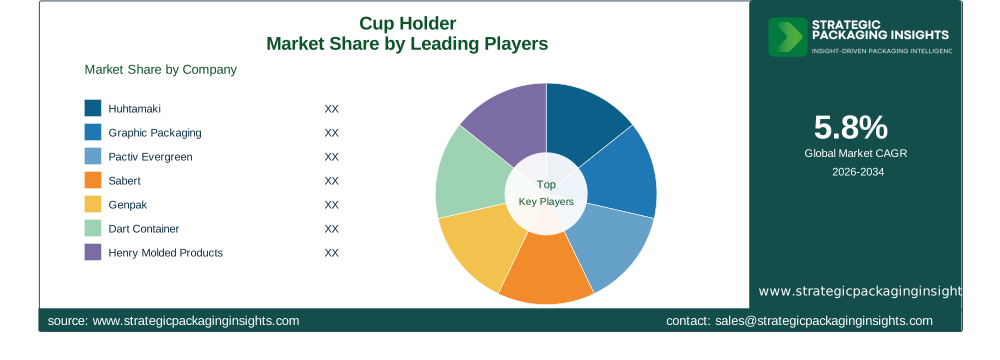
Pactiv Evergreen and Sabert are also prominent players in the market, known for their innovative product offerings and strong distribution networks. Pactiv Evergreen has been focusing on expanding its product range to cater to the growing demand for sustainable packaging solutions, while Sabert has been investing in advanced manufacturing technologies to enhance product quality and efficiency. Genpak, on the other hand, has been emphasizing the development of reusable cup holders to cater to the increasing demand for eco-friendly products. These companies, along with others such as Dart Container, Henry Molded Products, Eco-Products, Detpak, and BioPak, are actively competing to capture a larger share of the market.
The competitive landscape of the Cup Holder market is further intensified by the presence of numerous regional and local players. These companies often focus on catering to specific market segments and regions, offering customized solutions to meet local consumer preferences. The intense competition among market players is driving innovation and product differentiation, with companies continuously striving to enhance their product offerings and expand their market reach. As the market continues to evolve, companies that can effectively leverage their strengths and adapt to changing market dynamics are likely to emerge as leaders in the industry.
Key Highlights
- The Cup Holder market is projected to grow from $436.84 million in 2025 to $727.73 million by 2034, at a CAGR of 5.8%.
- Increasing demand for eco-friendly and biodegradable cup holders is driving market growth.
- The expansion of the foodservice industry, particularly in emerging economies, is fueling demand for innovative cup holder solutions.
- Customization and personalization of cup holders are becoming key trends in the market.
- Volatility in raw material prices poses a challenge to market stability.
- Stringent environmental regulations are impacting production costs and compliance requirements.
- Key players in the market include Huhtamaki, Graphic Packaging, Pactiv Evergreen, Sabert, and Genpak.
- Advancements in manufacturing technologies are enhancing product functionality and consumer appeal.
- The integration of smart technologies into cup holders presents new opportunities for customer interaction.
Top Countries Insights
In the Cup Holder market, the United States stands out as a key player, with a market size of approximately $150 million and a CAGR of 4%. The country's robust foodservice industry, coupled with a strong emphasis on sustainability, drives the demand for eco-friendly cup holders. The presence of major market players and a well-established distribution network further bolster market growth. However, the market faces challenges such as stringent environmental regulations and fluctuating raw material prices, which could impact production costs and profitability.
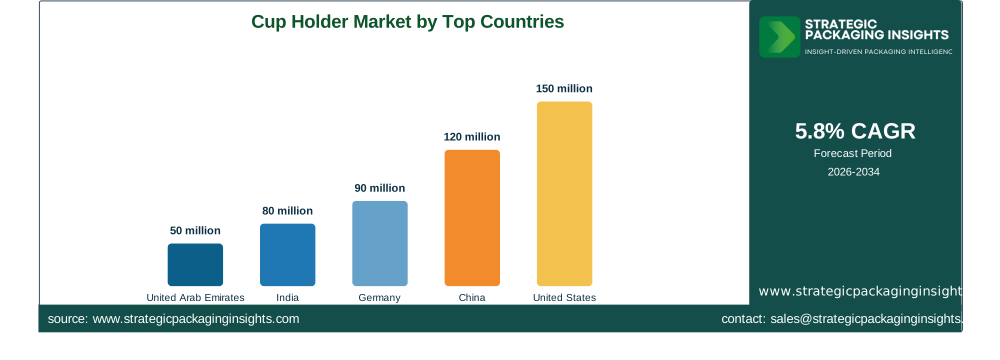
China is another significant market for cup holders, with a market size of around $120 million and a CAGR of 6%. The rapid expansion of the foodservice industry, driven by urbanization and changing consumer lifestyles, is a major growth driver. The increasing adoption of takeaway culture and the rising popularity of quick-service restaurants (QSRs) are fueling demand for innovative cup holder solutions. However, the market faces challenges such as intense competition and the need for compliance with environmental regulations.
In Europe, Germany is a leading market for cup holders, with a market size of approximately $90 million and a CAGR of 5%. The country's strong focus on sustainability and environmental protection drives the demand for biodegradable and reusable cup holders. The presence of major market players and a well-established foodservice industry further support market growth. However, the market faces challenges such as stringent environmental regulations and the need for continuous innovation to meet changing consumer preferences.
India is an emerging market for cup holders, with a market size of around $80 million and a CAGR of 7%. The rapid growth of the foodservice industry, driven by urbanization and changing consumer lifestyles, is a major growth driver. The increasing adoption of takeaway culture and the rising popularity of quick-service restaurants (QSRs) are fueling demand for innovative cup holder solutions. However, the market faces challenges such as intense competition and the need for compliance with environmental regulations.
In the Middle East, the United Arab Emirates is a key market for cup holders, with a market size of approximately $50 million and a CAGR of 5%. The country's thriving foodservice industry, coupled with a strong emphasis on sustainability, drives the demand for eco-friendly cup holders. The presence of major market players and a well-established distribution network further bolster market growth. However, the market faces challenges such as stringent environmental regulations and fluctuating raw material prices, which could impact production costs and profitability.
Cup Holder Market Segments Insights

Product Type Analysis
The Cup Holder market is segmented by product type into Molded Pulp Cup Holders, Paperboard Cup Holders, Plastic Cup Holders, and Reusable Cup Holders. Molded pulp cup holders are gaining popularity due to their eco-friendly nature and biodegradability. These holders are made from recycled paper and are increasingly being adopted by environmentally conscious consumers and businesses. The demand for molded pulp cup holders is expected to rise as more companies shift towards sustainable packaging solutions. Paperboard cup holders, on the other hand, offer a balance between cost-effectiveness and environmental sustainability. They are lightweight, easy to manufacture, and can be customized to meet specific branding needs.
Plastic cup holders, while still prevalent in the market, are facing challenges due to increasing environmental concerns and regulatory pressures to reduce plastic waste. However, advancements in biodegradable plastics and recycling technologies are providing new opportunities for growth in this segment. Reusable cup holders are also gaining traction, particularly among consumers who prioritize sustainability and cost savings. These holders are designed for multiple uses and are often made from durable materials such as silicone or stainless steel. The growing trend of reusable products is expected to drive demand for reusable cup holders in the coming years.
Capacity Analysis
The Cup Holder market is segmented by capacity into 2-Cup, 4-Cup, and Multi-Cup holders. The 2-Cup holders are widely used in quick-service restaurants (QSRs) and cafés, where they offer a convenient solution for carrying multiple beverages. These holders are particularly popular in urban areas, where on-the-go consumption is prevalent. The demand for 2-Cup holders is expected to remain strong, driven by the increasing popularity of takeaway beverages and the expansion of the foodservice industry.
The 4-Cup holders are commonly used in foodservice delivery and retail beverage packaging, where they provide a practical solution for transporting multiple drinks. These holders are often used by delivery services and catering companies, where they help ensure the safe and efficient transport of beverages. The demand for 4-Cup holders is expected to grow as the foodservice delivery industry continues to expand. Multi-Cup holders, which can accommodate more than four cups, are typically used in large-scale events and catering services. These holders offer a convenient solution for transporting large quantities of beverages and are expected to see increased demand as the events and catering industry grows.
Application Analysis
The Cup Holder market is segmented by application into Takeaway Beverages, Foodservice Delivery, and Retail Beverage Packaging. The takeaway beverages segment is the largest application segment, driven by the increasing popularity of on-the-go consumption and the expansion of the foodservice industry. The demand for convenient and sustainable cup holder solutions is particularly strong in urban areas, where takeaway culture is prevalent. The foodservice delivery segment is also experiencing significant growth, driven by the rise of online food delivery services and the increasing demand for convenient packaging solutions.
The retail beverage packaging segment is characterized by a growing emphasis on customization and branding. Companies are increasingly focusing on offering personalized cup holder solutions that enhance brand visibility and customer engagement. This trend is particularly prominent in the retail beverage packaging segment, where companies are leveraging innovative designs and materials to create unique and eye-catching packaging solutions. The integration of smart technologies, such as QR codes and NFC tags, into cup holders presents new opportunities for enhancing customer interaction and data collection.
End Use Analysis
The Cup Holder market is segmented by end use into Quick-Service Restaurants (QSRs), Cafés, Restaurants, and Convenience Stores. The QSRs segment is the largest end-use segment, driven by the increasing popularity of fast food and takeaway culture. The demand for convenient and sustainable cup holder solutions is particularly strong in this segment, where speed and efficiency are key considerations. Cafés and restaurants are also significant end-use segments, where the demand for customized and branded cup holders is growing.
Convenience stores are experiencing significant growth in the Cup Holder market, driven by the increasing demand for on-the-go consumption and the expansion of the foodservice industry. The demand for convenient and sustainable cup holder solutions is particularly strong in this segment, where consumers are looking for quick and easy solutions for carrying beverages. The growing trend of on-the-go consumption and the expansion of the foodservice industry are expected to drive demand for cup holders in convenience stores in the coming years.
Cup Holder Market Segments
The Cup Holder market has been segmented on the basis ofBy Product Type
- Molded Pulp Cup Holders
- Paperboard Cup Holders
- Plastic Cup Holders
- Reusable Cup Holders
By Capacity
- 2-Cup
- 4-Cup
- Multi-Cup
By Application
- Takeaway Beverages
- Foodservice Delivery
- Retail Beverage Packaging
By End Use
- QSRs
- Cafés
- Restaurants
- Convenience Stores
Region
- Asia Pacific
- North America
- Latin America
- Europe
- Middle East & Africa




