


Counterfeit Protection Packaging Market Outlook
The counterfeit protection packaging market was valued at $89 billion in 2024 and is projected to reach $145 billion by 2033, growing at a CAGR of 5.5% during the forecast period 2025-2033. This market is driven by the increasing need for secure packaging solutions across various industries, including pharmaceuticals, food and beverages, and electronics. The rise in counterfeit activities globally has necessitated the adoption of advanced packaging technologies that ensure product authenticity and integrity. The demand for counterfeit protection packaging is further bolstered by stringent regulations and standards imposed by governments and international bodies to curb the proliferation of counterfeit goods. Additionally, the growing awareness among consumers regarding the adverse effects of counterfeit products on health and safety is propelling the market growth.
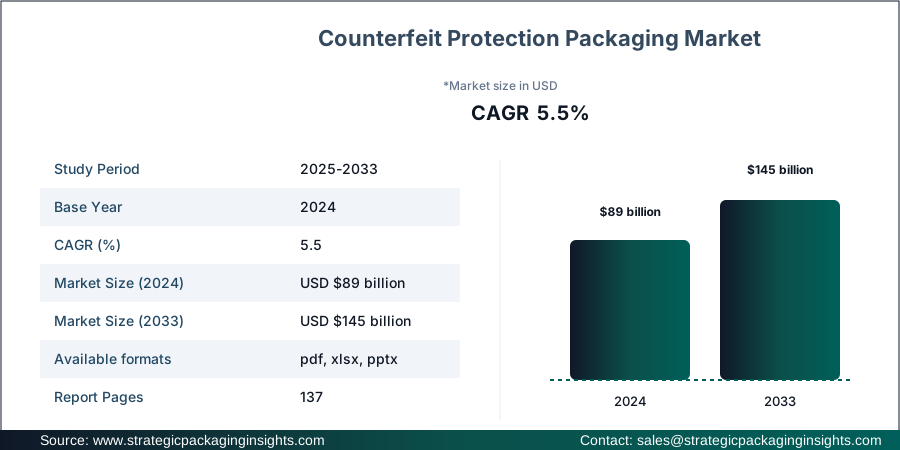
However, the market faces certain restraints, such as the high cost associated with implementing advanced counterfeit protection technologies, which can be a barrier for small and medium-sized enterprises. Despite these challenges, the market holds significant growth potential due to the continuous advancements in technology and the increasing adoption of smart packaging solutions. The integration of technologies like RFID, barcodes, and holograms into packaging solutions is expected to enhance the security features of products, thereby driving market growth. Moreover, the expansion of e-commerce and the globalization of supply chains are anticipated to create lucrative opportunities for market players to develop innovative counterfeit protection packaging solutions.
Report Scope
| Attributes | Details |
| Report Title | Counterfeit Protection Packaging Market Size, Future Growth and Forecast 2033 |
| Technology | RFID, Barcode, Holograms, Security Labels, Others |
| Application | Pharmaceuticals, Food & Beverages, Electronics, Automotive, Others |
| Material | Paper, Plastic, Metal, Others |
| Region | Asia Pacific, North America, Latin America, Europe, Middle East & Africa |
| Base Year | 2024 |
| Historic Period | 2017-2023 |
| Forecast Period | 2025-2033 |
| Number of Pages | 137 |
| Customization Available | Yes* |
Opportunities & Threats
The counterfeit protection packaging market presents numerous opportunities, primarily driven by the rapid advancements in technology. The integration of Internet of Things (IoT) and blockchain technology into packaging solutions is expected to revolutionize the market. These technologies offer enhanced traceability and transparency, allowing manufacturers and consumers to verify the authenticity of products throughout the supply chain. Additionally, the increasing demand for sustainable and eco-friendly packaging solutions is creating opportunities for market players to develop innovative products that not only provide counterfeit protection but also align with environmental regulations and consumer preferences. The growing awareness among consumers about the importance of product authenticity and safety is further driving the demand for counterfeit protection packaging solutions.
Another significant opportunity lies in the expansion of the pharmaceutical and healthcare sectors. With the increasing prevalence of counterfeit drugs, there is a heightened need for secure packaging solutions that ensure the safety and efficacy of pharmaceutical products. The adoption of counterfeit protection packaging in the healthcare industry is expected to witness substantial growth, driven by stringent regulations and the rising demand for safe and reliable healthcare products. Furthermore, the food and beverage industry is also a key area of opportunity, as consumers become more conscious of food safety and quality. The implementation of counterfeit protection packaging in this sector can help prevent food fraud and ensure the integrity of food products.
Despite the promising opportunities, the counterfeit protection packaging market faces certain threats. One of the primary challenges is the high cost associated with implementing advanced packaging technologies. Small and medium-sized enterprises may find it difficult to invest in these solutions due to budget constraints. Additionally, the lack of awareness and understanding of counterfeit protection technologies among some manufacturers and consumers can hinder market growth. The complexity of integrating these technologies into existing packaging systems and supply chains can also pose a challenge for market players. Moreover, the constantly evolving nature of counterfeit activities requires continuous innovation and adaptation, which can be resource-intensive for companies operating in this market.
Market Share Analysis
The counterfeit protection packaging market is characterized by a highly competitive landscape, with numerous players vying for market share. The market is dominated by a few key players who hold a significant share due to their extensive product portfolios, technological expertise, and strong distribution networks. These companies are continuously investing in research and development to innovate and enhance their product offerings, thereby maintaining their competitive edge. The market is also witnessing the entry of new players, driven by the increasing demand for counterfeit protection solutions across various industries.
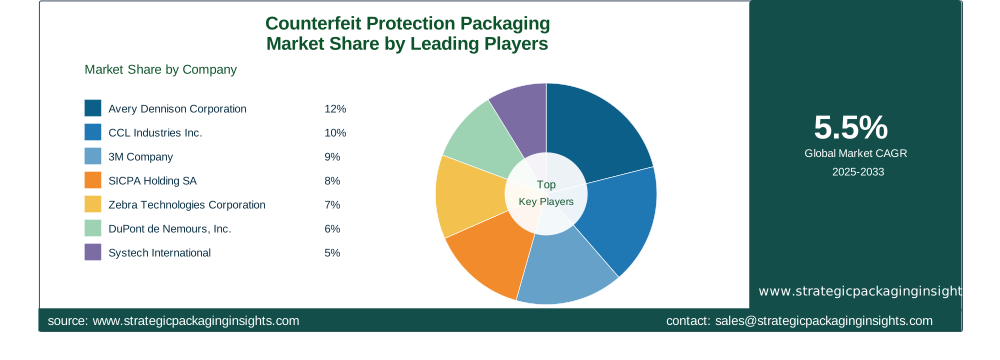
Among the major companies in the counterfeit protection packaging market, Avery Dennison Corporation holds a prominent position with its comprehensive range of security labeling and RFID solutions. The company's focus on innovation and sustainability has enabled it to cater to the evolving needs of its customers. Similarly, CCL Industries Inc. is a key player known for its advanced labeling solutions that offer enhanced security features. The company's global presence and strong customer base have contributed to its significant market share.
Another notable player is 3M Company, which offers a wide range of security and authentication solutions for various industries. The company's commitment to research and development has resulted in the introduction of innovative products that address the challenges of counterfeit protection. Additionally, SICPA Holding SA is a leading provider of security inks and solutions, known for its expertise in anti-counterfeiting technologies. The company's strong focus on innovation and collaboration with governments and organizations worldwide has strengthened its position in the market.
Other key players in the market include Zebra Technologies Corporation, DuPont de Nemours, Inc., and Systech International. Zebra Technologies is renowned for its barcode and RFID solutions that enhance product traceability and security. DuPont offers a range of advanced materials and technologies that provide counterfeit protection for various applications. Systech International is a leader in providing serialization and traceability solutions, enabling manufacturers to protect their products from counterfeiting and diversion.
Key Highlights
- The counterfeit protection packaging market is projected to grow at a CAGR of 5.5% from 2025 to 2033.
- Technological advancements such as IoT and blockchain are driving innovation in the market.
- The pharmaceutical and healthcare sectors are key areas of growth due to the increasing prevalence of counterfeit drugs.
- High implementation costs pose a challenge for small and medium-sized enterprises.
- Stringent regulations and standards are driving the adoption of counterfeit protection packaging solutions.
- The food and beverage industry is witnessing increased demand for secure packaging solutions.
- Key players are focusing on research and development to enhance their product offerings.
Top Countries Insights
In the counterfeit protection packaging market, the United States holds a significant share, with a market size of $25 billion and a CAGR of 6%. The country's strong regulatory framework and the presence of major pharmaceutical and consumer goods companies drive the demand for advanced packaging solutions. The increasing awareness among consumers about product authenticity and safety further fuels market growth.
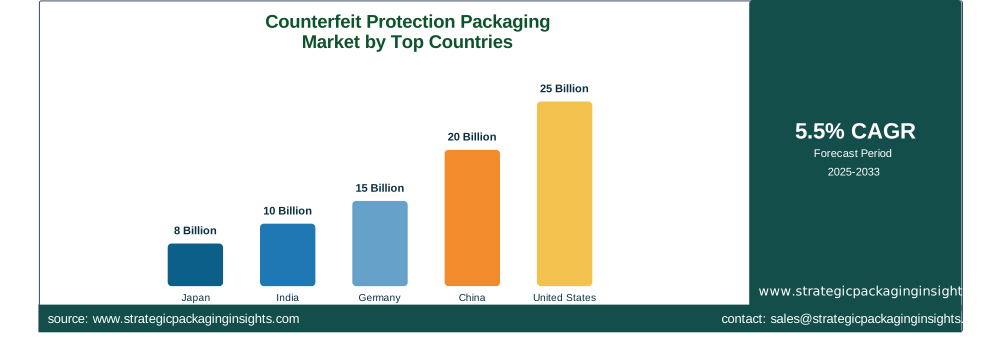
China is another key market, with a market size of $20 billion and a CAGR of 7%. The country's booming e-commerce sector and the rising incidence of counterfeit goods necessitate the adoption of secure packaging solutions. Government initiatives to combat counterfeiting and enhance product safety are also contributing to market growth.
Germany, with a market size of $15 billion and a CAGR of 5%, is a leading market in Europe. The country's strong manufacturing sector and the emphasis on quality and safety drive the demand for counterfeit protection packaging. The presence of major automotive and pharmaceutical companies further boosts market growth.
India, with a market size of $10 billion and a CAGR of 8%, is witnessing rapid growth in the counterfeit protection packaging market. The country's expanding pharmaceutical and food and beverage industries are key drivers of market growth. Government regulations and initiatives to combat counterfeiting are also contributing to the market's expansion.
Japan, with a market size of $8 billion and a CAGR of 4%, is a significant market in the Asia Pacific region. The country's focus on innovation and technology, along with the presence of major electronics and automotive companies, drives the demand for advanced packaging solutions. The increasing consumer awareness about product authenticity and safety further supports market growth.
Evolving Market Dynamics (2018-2024) and Strategic Foresight (2025-2033)
| Metrics | 2018-2024 | 2025-2033 |
|---|---|---|
| CAGR | 4.5% | 5.5% |
| Market Size Evolution | $70 billion to $89 billion | $89 billion to $145 billion |
| Segment Distribution Shifts | Increased demand in pharmaceuticals and electronics | Growth in food & beverages and healthcare |
| Regional Contribution Changes | North America and Europe dominated | Asia Pacific gaining significant share |
| Technological Impact Factors | Introduction of RFID and barcodes | Integration of IoT and blockchain |
| Client Demand Transformations | Focus on product safety and authenticity | Emphasis on sustainability and eco-friendly solutions |
Counterfeit Protection Packaging Market Segments Insights

Technology Analysis
The technology segment in the counterfeit protection packaging market is witnessing significant growth, driven by the increasing adoption of advanced technologies such as RFID, barcodes, holograms, and security labels. RFID technology is gaining traction due to its ability to provide real-time tracking and authentication of products throughout the supply chain. The integration of RFID tags into packaging solutions enhances product traceability and security, making it a preferred choice for manufacturers. Barcodes, on the other hand, offer a cost-effective solution for product identification and verification, making them widely used across various industries. Holograms and security labels provide an additional layer of protection by offering visual authentication features that are difficult to replicate, thereby deterring counterfeiters.
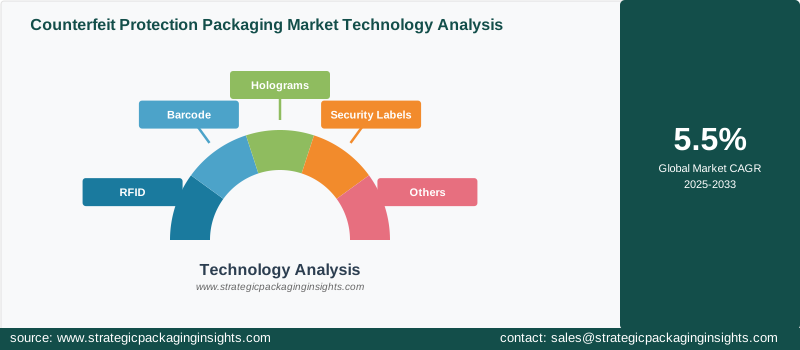
The demand for these technologies is driven by the increasing need for secure packaging solutions in industries such as pharmaceuticals, food and beverages, and electronics. The pharmaceutical industry, in particular, is a major adopter of these technologies due to the stringent regulations and the need to ensure the safety and efficacy of drugs. The food and beverage industry is also witnessing increased adoption of counterfeit protection technologies to prevent food fraud and ensure product integrity. The electronics industry, with its high-value products, is another key area where these technologies are being implemented to protect against counterfeiting and ensure product authenticity.
Application Analysis
The application segment of the counterfeit protection packaging market is diverse, encompassing various industries such as pharmaceuticals, food and beverages, electronics, automotive, and others. The pharmaceutical industry is a major contributor to the market, driven by the increasing prevalence of counterfeit drugs and the need for secure packaging solutions to ensure patient safety. The implementation of serialization and track-and-trace technologies in pharmaceutical packaging is becoming a standard practice to comply with regulatory requirements and combat counterfeiting.
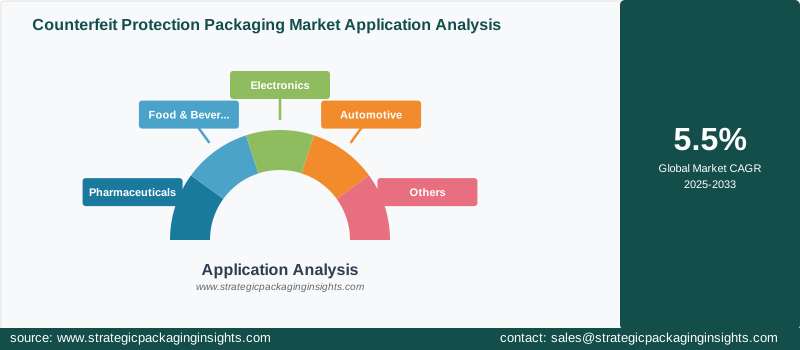
The food and beverage industry is another significant application area, as consumers become more conscious of food safety and quality. The adoption of counterfeit protection packaging in this sector helps prevent food fraud and ensures the integrity of food products. The electronics industry, with its high-value products, is also a key area of application, as manufacturers seek to protect their products from counterfeiting and ensure product authenticity. The automotive industry is witnessing increased adoption of counterfeit protection packaging to safeguard against counterfeit parts and ensure the safety and reliability of vehicles.
Material Analysis
The material segment in the counterfeit protection packaging market includes paper, plastic, metal, and others. Paper-based packaging solutions are widely used due to their cost-effectiveness and ease of integration with various security features such as holograms and security labels. The demand for paper-based packaging is driven by the increasing focus on sustainability and eco-friendly solutions, as paper is a recyclable and biodegradable material.
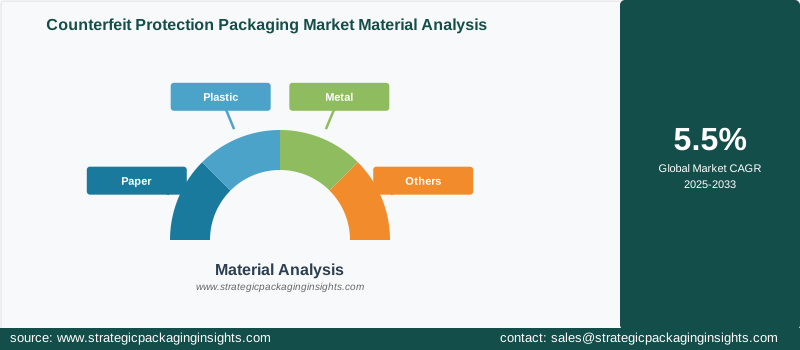
Plastic packaging solutions are also prevalent in the market, offering durability and versatility in incorporating advanced security features such as RFID tags and barcodes. The demand for plastic packaging is driven by its widespread use in industries such as pharmaceuticals, food and beverages, and electronics. Metal packaging solutions, although less common, offer high levels of security and are used in applications where durability and tamper-evidence are critical. The demand for metal packaging is driven by its use in high-value products and industries such as electronics and automotive.
Region Analysis
The counterfeit protection packaging market is witnessing significant growth across various regions, with Asia Pacific emerging as a key market. The region's growth is driven by the booming e-commerce sector, the rising incidence of counterfeit goods, and government initiatives to combat counterfeiting. China and India are major contributors to the market, with their expanding pharmaceutical and food and beverage industries driving demand for secure packaging solutions.
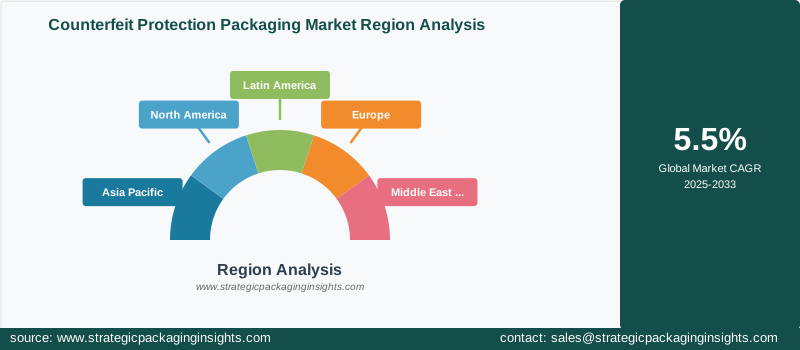
North America and Europe are also significant markets, driven by the presence of major pharmaceutical and consumer goods companies and stringent regulatory frameworks. The United States and Germany are key contributors to the market, with their strong manufacturing sectors and emphasis on quality and safety. The Middle East and Africa, although smaller in market size, are witnessing growth due to increasing awareness about product authenticity and safety, and the expansion of the pharmaceutical and food and beverage industries.
Counterfeit Protection Packaging Market Segments
The Counterfeit Protection Packaging market has been segmented on the basis ofTechnology
- RFID
- Barcode
- Holograms
- Security Labels
- Others
Application
- Pharmaceuticals
- Food & Beverages
- Electronics
- Automotive
- Others
Material
- Paper
- Plastic
- Metal
- Others
Region
- Asia Pacific
- North America
- Latin America
- Europe
- Middle East & Africa




