


Anti-Counterfeit Flexible Packaging Market Outlook
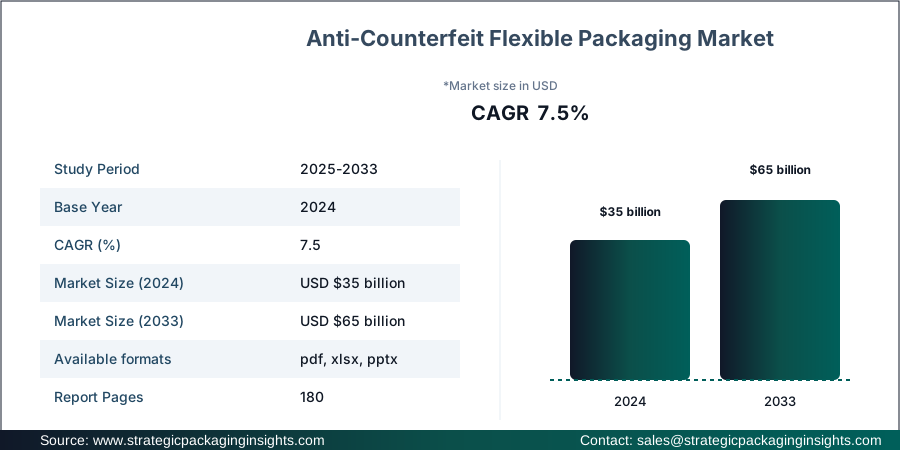
The Anti-Counterfeit Flexible Packaging market was valued at $35 billion in 2024 and is projected to reach $65 billion by 2033, growing at a CAGR of 7.5% during the forecast period 2025-2033. This market is driven by the increasing need for secure packaging solutions to combat the rising incidences of counterfeiting across various industries. The demand for anti-counterfeit packaging is particularly strong in the pharmaceutical and food & beverage sectors, where product integrity and consumer safety are paramount. Technological advancements in packaging materials and the integration of smart technologies like RFID and QR codes are further propelling market growth. Additionally, stringent regulations and standards imposed by governments worldwide to ensure product authenticity are bolstering the adoption of anti-counterfeit flexible packaging solutions.
Despite the promising growth prospects, the market faces several challenges. High implementation costs and the complexity of integrating advanced anti-counterfeit technologies into existing packaging lines can be significant barriers for small and medium-sized enterprises. Moreover, the lack of awareness and understanding of the benefits of anti-counterfeit packaging among end-users in developing regions can hinder market expansion. However, the increasing focus on sustainability and the development of eco-friendly packaging solutions present lucrative opportunities for market players. As consumers become more environmentally conscious, the demand for sustainable anti-counterfeit packaging is expected to rise, driving innovation and growth in the market.
Report Scope
| Attributes | Details |
| Report Title | Anti-Counterfeit Flexible Packaging Market Size, Future Growth and Forecast 2033 |
| Technology | RFID, Barcode, Holograms, Taggants, Others |
| Application | Food & Beverages, Pharmaceuticals, Personal Care & Cosmetics, Electronics, Others |
| Material | Plastic, Paper, Metal, Others |
| Region | Asia Pacific, North America, Latin America, Europe, Middle East & Africa |
| Base Year | 2024 |
| Historic Period | 2017-2023 |
| Forecast Period | 2025-2033 |
| Number of Pages | 180 |
| Customization Available | Yes* |
Opportunities & Threats
The Anti-Counterfeit Flexible Packaging market presents numerous opportunities for growth, primarily driven by the increasing demand for secure packaging solutions across various industries. The pharmaceutical sector, in particular, is a significant contributor to market expansion, as the need for tamper-evident and secure packaging solutions is critical to ensure patient safety and compliance with stringent regulatory standards. Additionally, the food and beverage industry is witnessing a surge in demand for anti-counterfeit packaging, driven by the need to protect brand reputation and ensure product authenticity. The integration of advanced technologies such as RFID, QR codes, and holograms into packaging solutions is further enhancing the market's growth potential, offering innovative ways to combat counterfeiting and improve supply chain transparency.
Another significant opportunity lies in the growing consumer awareness and demand for sustainable packaging solutions. As environmental concerns continue to rise, consumers are increasingly seeking eco-friendly packaging options that not only protect products but also minimize environmental impact. This trend is driving the development of sustainable anti-counterfeit packaging solutions, which are expected to gain traction in the coming years. Furthermore, the increasing adoption of e-commerce and online retailing is creating new avenues for market growth, as the need for secure and tamper-evident packaging solutions becomes more critical in the digital marketplace.
However, the market is not without its challenges. One of the primary restrainers is the high cost associated with implementing advanced anti-counterfeit technologies. Small and medium-sized enterprises, in particular, may find it challenging to invest in these solutions due to budget constraints. Additionally, the complexity of integrating these technologies into existing packaging lines can pose significant operational challenges. The lack of awareness and understanding of the benefits of anti-counterfeit packaging among end-users in developing regions can also hinder market growth. To overcome these challenges, market players need to focus on educating consumers and businesses about the importance of anti-counterfeit packaging and the long-term benefits it offers in terms of brand protection and consumer safety.
Market Share Analysis
The Anti-Counterfeit Flexible Packaging market is characterized by a highly competitive landscape, with numerous players vying for market share. The market is dominated by a mix of established players and emerging companies, each offering a range of innovative solutions to combat counterfeiting. The competitive dynamics are shaped by factors such as technological advancements, product innovation, strategic partnerships, and mergers and acquisitions. Companies are increasingly focusing on expanding their product portfolios and enhancing their technological capabilities to gain a competitive edge in the market. The integration of smart technologies such as RFID, QR codes, and holograms into packaging solutions is a key differentiator for market players, enabling them to offer advanced anti-counterfeit solutions that meet the evolving needs of consumers and businesses.
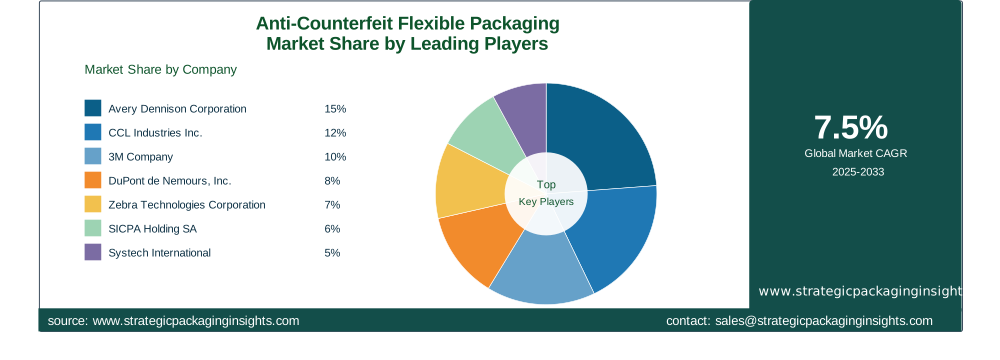
Among the major players in the market, Avery Dennison Corporation holds a significant share, leveraging its expertise in labeling and packaging solutions to offer a range of anti-counterfeit products. The company's focus on innovation and sustainability has enabled it to maintain a strong position in the market. Similarly, CCL Industries Inc. is a prominent player, known for its comprehensive range of labeling and packaging solutions that incorporate advanced anti-counterfeit technologies. The company's strategic acquisitions and partnerships have further strengthened its market presence, allowing it to cater to a diverse range of industries.
Another key player, 3M Company, is renowned for its innovative approach to anti-counterfeit packaging solutions. The company's extensive research and development efforts have resulted in the development of cutting-edge technologies that enhance product security and authenticity. 3M's global presence and strong distribution network have enabled it to capture a significant share of the market. Additionally, companies like DuPont de Nemours, Inc. and Zebra Technologies Corporation are making significant strides in the market, offering a range of advanced anti-counterfeit solutions that cater to the specific needs of various industries.
Other notable players in the market include SICPA Holding SA, a leader in security inks and solutions, and Systech International, known for its innovative serialization and traceability solutions. These companies are continuously investing in research and development to enhance their product offerings and expand their market reach. The competitive landscape is further enriched by the presence of regional players who are leveraging their local expertise and market knowledge to offer tailored solutions to meet the unique needs of their customers. Overall, the Anti-Counterfeit Flexible Packaging market is poised for significant growth, driven by the increasing demand for secure and sustainable packaging solutions across various industries.
Key Highlights
- The Anti-Counterfeit Flexible Packaging market is projected to grow at a CAGR of 7.5% from 2025 to 2033.
- Technological advancements in RFID, QR codes, and holograms are driving market growth.
- The pharmaceutical and food & beverage sectors are major contributors to market demand.
- Increasing consumer awareness of product authenticity is boosting market expansion.
- Sustainable packaging solutions are gaining traction in the market.
- High implementation costs pose a challenge for small and medium-sized enterprises.
- Strategic partnerships and mergers are shaping the competitive landscape.
- Emerging markets offer significant growth opportunities for market players.
- Regulatory standards are driving the adoption of anti-counterfeit packaging solutions.
Top Countries Insights
In the Anti-Counterfeit Flexible Packaging market, the United States stands out as a key player, with a market size of $10 billion and a CAGR of 6%. The country's robust regulatory framework and strong focus on consumer safety drive the demand for advanced anti-counterfeit packaging solutions. The presence of major pharmaceutical and food & beverage companies further fuels market growth, as these industries prioritize product integrity and brand protection.
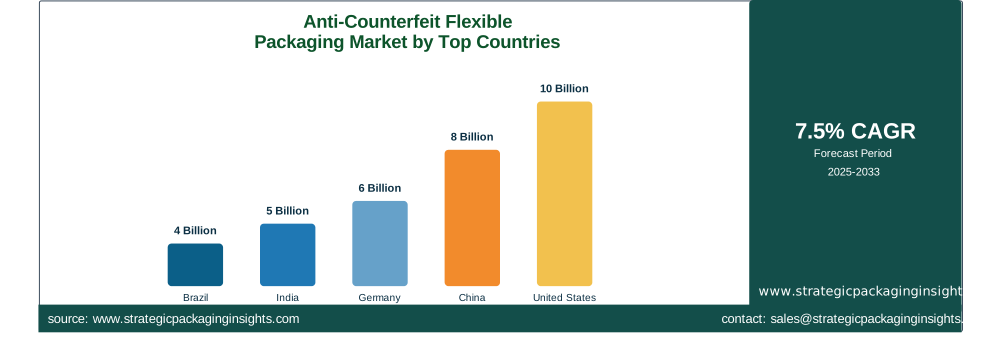
China is another significant market, with a market size of $8 billion and a CAGR of 9%. The country's booming e-commerce sector and increasing incidences of counterfeiting are key growth drivers. The Chinese government's stringent regulations and initiatives to combat counterfeiting are also contributing to the market's expansion. Additionally, the growing consumer awareness of product authenticity is driving the demand for anti-counterfeit packaging solutions in the country.
Germany, with a market size of $6 billion and a CAGR of 7%, is a leading market in Europe. The country's strong manufacturing base and focus on innovation drive the demand for advanced packaging solutions. The presence of major automotive and electronics companies further boosts market growth, as these industries require secure packaging solutions to protect their products from counterfeiting.
India, with a market size of $5 billion and a CAGR of 10%, is an emerging market with significant growth potential. The country's rapidly growing pharmaceutical and food & beverage industries are key drivers of market demand. The Indian government's initiatives to promote product safety and combat counterfeiting are also contributing to market growth. Additionally, the increasing adoption of e-commerce is driving the demand for secure packaging solutions in the country.
Brazil, with a market size of $4 billion and a CAGR of 8%, is a key market in Latin America. The country's growing consumer base and increasing incidences of counterfeiting are driving the demand for anti-counterfeit packaging solutions. The Brazilian government's efforts to enhance product safety and combat counterfeiting are also contributing to market growth. Additionally, the presence of major food & beverage companies in the country is fueling the demand for secure packaging solutions.
Evolving Market Dynamics (2018-2024) and Strategic Foresight (2025-2033)
| Metrics | 2018-2024 | 2025-2033 |
|---|---|---|
| CAGR | 5.5% | 7.5% |
| Market Size Evolution | $25 billion to $35 billion | $35 billion to $65 billion |
| Segment Distribution Shifts | Pharmaceuticals and Food & Beverages leading | Increased focus on Personal Care & Cosmetics |
| Regional Contribution Changes | North America and Europe dominant | Asia Pacific gaining significant traction |
| Technological Impact Factors | Introduction of RFID and QR codes | Advancements in smart packaging technologies |
| Client Demand Transformations | Focus on product authenticity | Increased demand for sustainable solutions |
Anti-Counterfeit Flexible Packaging Market Segments Insights

Technology Analysis
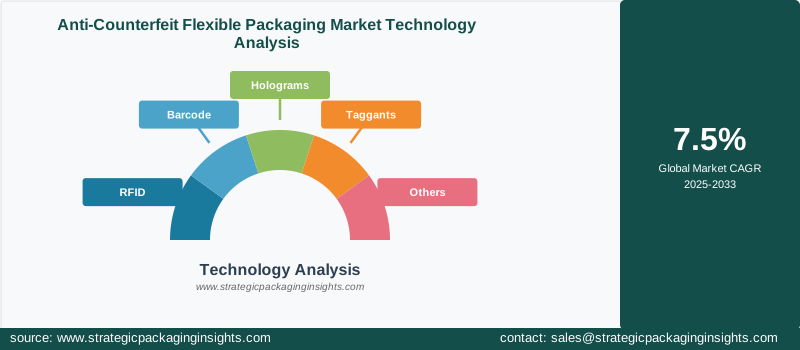
The technology segment of the Anti-Counterfeit Flexible Packaging market is pivotal in driving innovation and growth. RFID technology, in particular, is gaining traction due to its ability to provide real-time tracking and authentication of products. This technology is widely adopted in the pharmaceutical and food & beverage industries, where product integrity and safety are critical. Barcode technology, although traditional, remains a popular choice due to its cost-effectiveness and ease of implementation. Holograms and taggants are also gaining popularity, offering visually appealing and secure solutions that are difficult to replicate. The integration of these technologies into packaging solutions is enhancing supply chain transparency and improving consumer trust.
As the market evolves, the demand for advanced technologies that offer enhanced security features is expected to rise. Companies are increasingly investing in research and development to develop innovative solutions that cater to the specific needs of various industries. The focus is on developing technologies that are not only secure but also sustainable, aligning with the growing consumer demand for eco-friendly packaging solutions. The adoption of smart packaging technologies, such as NFC and IoT-enabled solutions, is also on the rise, offering new opportunities for market growth. These technologies enable real-time monitoring and tracking of products, enhancing supply chain efficiency and reducing the risk of counterfeiting.
Application Analysis
The application segment of the Anti-Counterfeit Flexible Packaging market is diverse, with various industries driving demand for secure packaging solutions. The pharmaceutical industry is a major contributor, as the need for tamper-evident and secure packaging solutions is critical to ensure patient safety and compliance with regulatory standards. The food & beverage industry is also witnessing significant demand, driven by the need to protect brand reputation and ensure product authenticity. The increasing incidences of food fraud and contamination are further fueling the demand for anti-counterfeit packaging solutions in this sector.
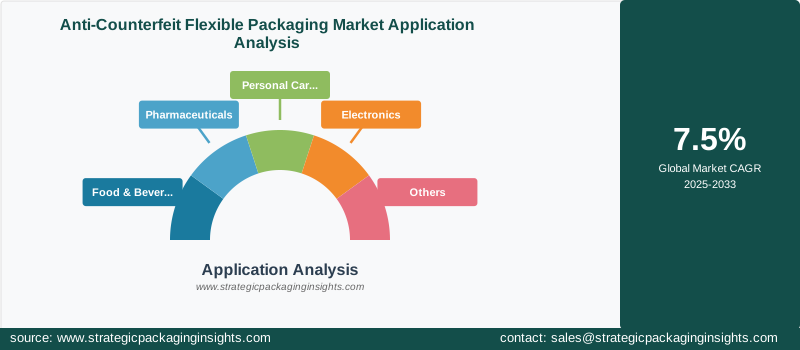
In addition to pharmaceuticals and food & beverages, the personal care & cosmetics industry is emerging as a significant market for anti-counterfeit packaging solutions. The growing consumer demand for authentic and high-quality products is driving the need for secure packaging solutions in this industry. The electronics industry is also a key market, as the need to protect high-value products from counterfeiting is critical. As the market evolves, the demand for anti-counterfeit packaging solutions in these industries is expected to rise, driven by the increasing focus on product integrity and consumer safety.
Material Analysis
The material segment of the Anti-Counterfeit Flexible Packaging market is characterized by a wide range of options, each offering unique benefits and applications. Plastic remains the most widely used material, offering durability, flexibility, and cost-effectiveness. However, the growing environmental concerns and the increasing demand for sustainable packaging solutions are driving the adoption of alternative materials such as paper and metal. Paper-based packaging solutions are gaining popularity due to their eco-friendly nature and recyclability, making them an attractive option for environmentally conscious consumers.
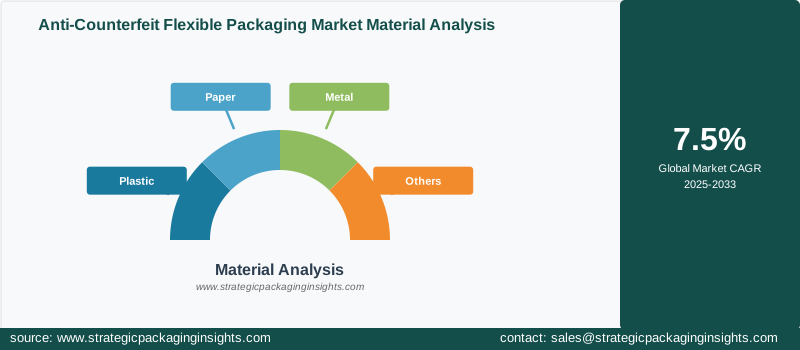
Metal packaging solutions, although less common, offer enhanced security features and are often used for high-value products. The use of advanced materials such as biodegradable plastics and compostable films is also on the rise, driven by the increasing focus on sustainability. As the market evolves, the demand for innovative materials that offer enhanced security features and align with sustainability goals is expected to rise. Companies are increasingly investing in research and development to develop new materials that cater to the specific needs of various industries, offering new opportunities for market growth.
Region Analysis
The regional analysis of the Anti-Counterfeit Flexible Packaging market reveals significant growth opportunities across various regions. North America and Europe have traditionally been the dominant markets, driven by the presence of major pharmaceutical and food & beverage companies and stringent regulatory standards. However, the Asia Pacific region is emerging as a key market, driven by the rapid growth of the e-commerce sector and the increasing incidences of counterfeiting. The region's growing consumer base and the increasing focus on product safety are also contributing to market growth.
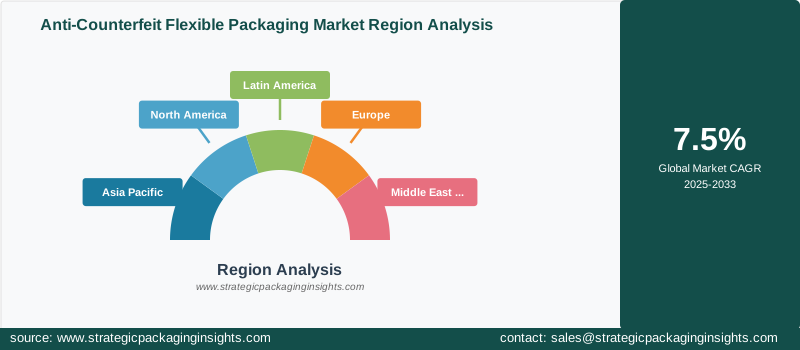
Latin America and the Middle East & Africa are also witnessing significant growth, driven by the increasing demand for secure packaging solutions in the food & beverage and pharmaceutical industries. The presence of major food & beverage companies in these regions is further fueling market growth. As the market evolves, the demand for anti-counterfeit packaging solutions in these regions is expected to rise, driven by the increasing focus on product integrity and consumer safety. Companies are increasingly focusing on expanding their presence in these regions, offering tailored solutions to meet the unique needs of their customers.
Anti-Counterfeit Flexible Packaging Market Segments
The Anti-Counterfeit Flexible Packaging market has been segmented on the basis ofTechnology
- RFID
- Barcode
- Holograms
- Taggants
- Others
Application
- Food & Beverages
- Pharmaceuticals
- Personal Care & Cosmetics
- Electronics
- Others
Material
- Plastic
- Paper
- Metal
- Others
Region
- Asia Pacific
- North America
- Latin America
- Europe
- Middle East & Africa




