


Cosmetic Dropper Market Outlook
The Cosmetic Dropper market was valued at $1.71 billion in 2025 and is projected to reach $3.04 billion by 2034, growing at a CAGR of 6.6% during the forecast period 2026-2034. This growth is driven by the increasing demand for precision in cosmetic applications, where droppers provide an efficient solution for dispensing small quantities of liquid products. The market is also benefiting from the rising popularity of skincare and essential oils, which often require precise application methods. Additionally, the trend towards sustainable and eco-friendly packaging solutions is pushing manufacturers to innovate in terms of materials and design, further propelling market growth.
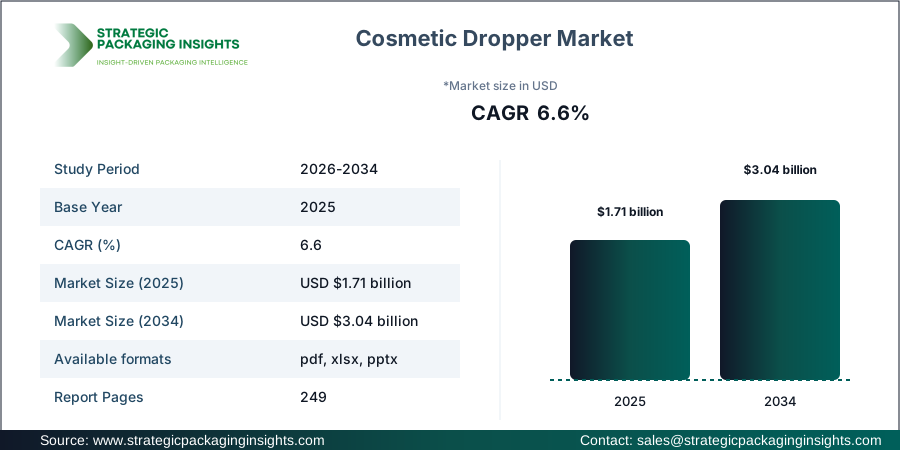
However, the market faces challenges such as the high cost of raw materials and the complexity of manufacturing processes, which can limit the scalability of production. Regulatory constraints regarding the use of certain materials in cosmetic packaging also pose a challenge, as companies must navigate a complex landscape of compliance requirements. Despite these hurdles, the market holds significant growth potential, particularly in emerging economies where the beauty and personal care industry is expanding rapidly. The increasing focus on premium and luxury packaging solutions is also expected to create new opportunities for market players.
Report Scope
| Attributes | Details |
| Report Title | Cosmetic Dropper Market Size, Future Growth and Forecast 2034 |
| By Product Type | Glass Droppers, Plastic Droppers, Push-Button Droppers |
| By Application | Serums, Essential Oils, Skincare, Pharma |
| By Material Type | Glass, PP, Rubber, Aluminum |
| By End Use | Cosmetics Brands, Pharma, Contract Fillers, Retailers |
| Region | Asia Pacific, North America, Latin America, Europe, Middle East & Africa |
| Base Year | 2025 |
| Historic Period | 2018-2024 |
| Forecast Period | 2026-2034 |
| Number of Pages | 249 |
| Customization Available | Yes* |
Opportunities & Threats
The Cosmetic Dropper market presents numerous opportunities, particularly in the realm of sustainable packaging. As consumers become more environmentally conscious, there is a growing demand for eco-friendly packaging solutions. This trend is driving innovation in the use of biodegradable and recyclable materials, offering companies the chance to differentiate themselves in a competitive market. Additionally, the rise of e-commerce and direct-to-consumer brands is creating new distribution channels for cosmetic droppers, allowing companies to reach a broader audience and increase their market share.
Another significant opportunity lies in the customization of cosmetic droppers. With consumers seeking personalized beauty solutions, there is a growing demand for customizable packaging that reflects individual preferences and brand identity. This trend is encouraging manufacturers to offer a wider range of design options, including different colors, shapes, and sizes, to cater to diverse consumer needs. Furthermore, advancements in technology are enabling the development of smart droppers that can provide additional functionalities, such as dosage control and product tracking, enhancing the overall consumer experience.
Despite these opportunities, the market is not without its threats. One of the primary restrainers is the volatility in raw material prices, which can significantly impact production costs and profit margins. Additionally, the market is highly competitive, with numerous players vying for market share. This intense competition can lead to price wars and reduced profitability for companies. Moreover, the stringent regulatory environment governing cosmetic packaging poses a challenge, as companies must ensure compliance with various safety and quality standards, which can be both time-consuming and costly.
Drivers & Challenges
The Cosmetic Dropper market is driven by several key factors, including the increasing demand for precision in cosmetic applications. Droppers provide an efficient solution for dispensing small quantities of liquid products, making them ideal for use in serums, essential oils, and other skincare products. The growing popularity of these products is fueling demand for cosmetic droppers, as consumers seek convenient and accurate application methods. Additionally, the trend towards sustainable and eco-friendly packaging solutions is driving innovation in the market, as manufacturers explore new materials and designs to meet consumer preferences.
Another significant driver is the rise of e-commerce and direct-to-consumer brands, which are creating new distribution channels for cosmetic droppers. As more consumers shop online for beauty and personal care products, companies have the opportunity to reach a broader audience and increase their market share. Furthermore, the increasing focus on premium and luxury packaging solutions is driving demand for high-quality droppers that enhance the overall consumer experience. This trend is encouraging manufacturers to invest in research and development to create innovative and aesthetically pleasing packaging solutions.
However, the market also faces several challenges, including the high cost of raw materials and the complexity of manufacturing processes. These factors can limit the scalability of production and impact profit margins for companies. Additionally, the market is highly competitive, with numerous players vying for market share. This intense competition can lead to price wars and reduced profitability for companies. Moreover, the stringent regulatory environment governing cosmetic packaging poses a challenge, as companies must ensure compliance with various safety and quality standards, which can be both time-consuming and costly.
Market Share Analysis
The competitive landscape of the Cosmetic Dropper market is characterized by the presence of several key players, each striving to capture a significant share of the market. AptarGroup, a leading provider of dispensing solutions, holds a substantial market share due to its extensive product portfolio and strong focus on innovation. Virospack, known for its high-quality droppers, is another major player, leveraging its expertise in design and manufacturing to maintain a competitive edge. Quadpack, with its emphasis on sustainable packaging solutions, is also a prominent player in the market, catering to the growing demand for eco-friendly products.
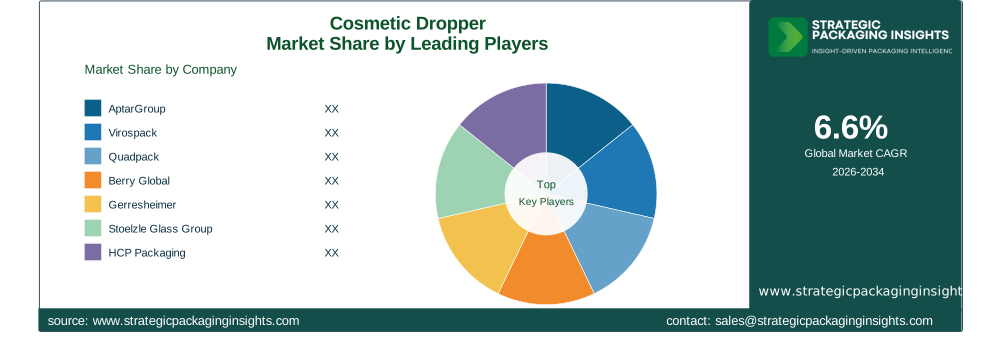
Berry Global, a global leader in packaging solutions, has a significant presence in the Cosmetic Dropper market, offering a wide range of products to meet diverse consumer needs. Gerresheimer, a specialist in glass and plastic packaging, is another key player, known for its high-quality droppers and commitment to sustainability. Stoelzle Glass Group, with its focus on premium glass packaging, is also a major player, catering to the luxury segment of the market. HCP Packaging, a leading provider of cosmetic packaging solutions, is known for its innovative designs and strong customer relationships.
Comar, a provider of custom packaging solutions, is another significant player in the market, offering a wide range of droppers to meet the needs of various end-users. TricorBraun, a leading distributor of packaging solutions, is known for its extensive product portfolio and strong focus on customer service. Lumson, a specialist in cosmetic packaging, is also a key player, known for its high-quality droppers and commitment to innovation. These companies, along with several others, are driving competition in the market, each striving to capture a larger share of the growing Cosmetic Dropper market.
Key Highlights
- The Cosmetic Dropper market is projected to grow at a CAGR of 6.6% from 2026 to 2034.
- Increasing demand for precision in cosmetic applications is driving market growth.
- Sustainable and eco-friendly packaging solutions are gaining popularity.
- The rise of e-commerce is creating new distribution channels for cosmetic droppers.
- Customization and personalization of packaging are key trends in the market.
- Volatility in raw material prices poses a challenge to market growth.
- Stringent regulatory environment governing cosmetic packaging is a significant challenge.
Top Countries Insights
In the Cosmetic Dropper market, the United States holds a significant share, with a market size of approximately $500 million and a CAGR of 5%. The growth in this region is driven by the high demand for premium and luxury cosmetic products, as well as the increasing focus on sustainable packaging solutions. The presence of major cosmetic brands and a well-established e-commerce infrastructure further contribute to the market's growth in the United States.
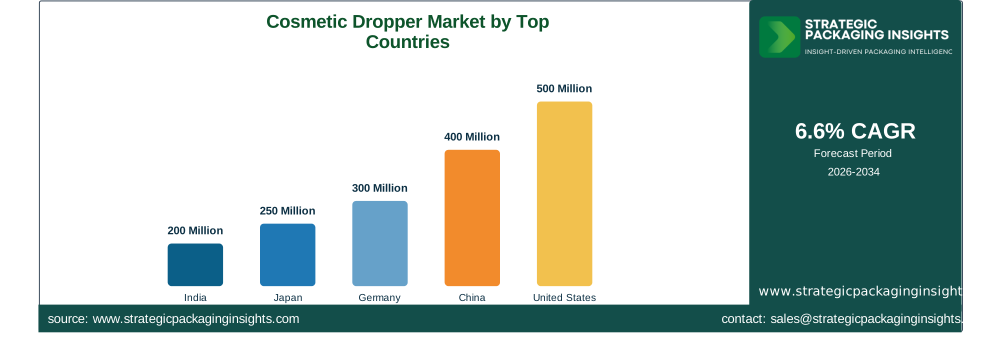
China is another key market for cosmetic droppers, with a market size of around $400 million and a CAGR of 8%. The rapid expansion of the beauty and personal care industry in China, coupled with the growing popularity of e-commerce platforms, is driving demand for cosmetic droppers. Additionally, the increasing focus on skincare and wellness products is contributing to market growth in this region.
Germany, with a market size of approximately $300 million and a CAGR of 6%, is a significant player in the European market. The country's strong emphasis on quality and innovation in cosmetic packaging is driving demand for high-quality droppers. Furthermore, the growing trend towards natural and organic beauty products is boosting the market for eco-friendly packaging solutions in Germany.
In Japan, the Cosmetic Dropper market is valued at around $250 million, with a CAGR of 4%. The country's aging population and increasing focus on skincare and anti-aging products are driving demand for cosmetic droppers. Additionally, the rise of premium and luxury beauty brands in Japan is contributing to market growth.
India, with a market size of approximately $200 million and a CAGR of 7%, is an emerging market for cosmetic droppers. The rapid growth of the beauty and personal care industry in India, along with the increasing popularity of e-commerce platforms, is driving demand for cosmetic droppers. The country's young population and growing middle class are also contributing to market growth.
Cosmetic Dropper Market Segments Insights

Product Type Analysis
The Cosmetic Dropper market is segmented by product type into glass droppers, plastic droppers, and push-button droppers. Glass droppers are favored for their premium look and feel, making them a popular choice for high-end cosmetic brands. They offer excellent chemical resistance and are ideal for products that require precise dosing, such as serums and essential oils. The demand for glass droppers is driven by the increasing focus on luxury packaging and the growing trend towards sustainable materials.
Plastic droppers, on the other hand, are valued for their durability and cost-effectiveness. They are widely used in mass-market products and are preferred by brands looking for affordable packaging solutions. The versatility of plastic droppers, in terms of design and customization options, makes them a popular choice for a wide range of applications. However, the environmental impact of plastic packaging is a concern, prompting manufacturers to explore eco-friendly alternatives.
Push-button droppers are gaining popularity due to their ease of use and precision. They offer a convenient solution for dispensing small quantities of liquid products and are particularly popular in the skincare and pharmaceutical sectors. The demand for push-button droppers is driven by the increasing focus on user-friendly packaging solutions and the growing trend towards personalized beauty products.
Application Analysis
The Cosmetic Dropper market is segmented by application into serums, essential oils, skincare, and pharma. Serums are a major application area for cosmetic droppers, as they require precise dosing and application. The growing popularity of serums, driven by the increasing focus on skincare and anti-aging products, is fueling demand for cosmetic droppers in this segment. Essential oils, known for their therapeutic benefits, also require precise application, making droppers an ideal packaging solution.
In the skincare segment, droppers are used for a wide range of products, including moisturizers, toners, and facial oils. The demand for skincare products is driven by the increasing focus on personal grooming and wellness, as well as the growing trend towards natural and organic beauty products. The use of droppers in skincare packaging is favored for their precision and convenience, enhancing the overall consumer experience.
The pharmaceutical sector is another significant application area for cosmetic droppers. Droppers are used for a variety of pharmaceutical products, including eye drops, ear drops, and liquid medications. The demand for droppers in this segment is driven by the need for accurate dosing and the growing trend towards self-medication. The increasing focus on patient safety and compliance is also contributing to the demand for high-quality droppers in the pharmaceutical sector.
Material Type Analysis
The Cosmetic Dropper market is segmented by material type into glass, PP (polypropylene), rubber, and aluminum. Glass is a popular material choice for droppers due to its premium look and excellent chemical resistance. It is favored by high-end cosmetic brands and is often used for products that require precise dosing, such as serums and essential oils. The demand for glass droppers is driven by the increasing focus on luxury packaging and the growing trend towards sustainable materials.
PP (polypropylene) is valued for its durability and cost-effectiveness, making it a popular choice for mass-market products. It offers excellent chemical resistance and is suitable for a wide range of applications. The versatility of PP, in terms of design and customization options, makes it a popular choice for cosmetic droppers. However, the environmental impact of plastic packaging is a concern, prompting manufacturers to explore eco-friendly alternatives.
Rubber is commonly used for the bulb of droppers, providing flexibility and ease of use. It is favored for its durability and ability to create an airtight seal, ensuring the integrity of the product. Aluminum is another material used in cosmetic droppers, valued for its lightweight and corrosion-resistant properties. It is often used in combination with other materials to enhance the overall functionality and aesthetic appeal of the dropper.
End Use Analysis
The Cosmetic Dropper market is segmented by end use into cosmetics brands, pharma, contract fillers, and retailers. Cosmetics brands are the primary end-users of cosmetic droppers, using them for a wide range of products, including serums, essential oils, and skincare products. The demand for cosmetic droppers in this segment is driven by the increasing focus on premium and luxury packaging solutions, as well as the growing trend towards personalized beauty products.
The pharmaceutical sector is another significant end-user of cosmetic droppers, using them for a variety of products, including eye drops, ear drops, and liquid medications. The demand for droppers in this segment is driven by the need for accurate dosing and the growing trend towards self-medication. The increasing focus on patient safety and compliance is also contributing to the demand for high-quality droppers in the pharmaceutical sector.
Contract fillers and retailers are also important end-users of cosmetic droppers, using them for a wide range of products. Contract fillers provide packaging solutions for various brands, offering flexibility and cost-effectiveness. Retailers, on the other hand, use cosmetic droppers for their private label products, catering to the growing demand for affordable and high-quality beauty solutions. The demand for cosmetic droppers in these segments is driven by the increasing focus on customization and personalization of packaging solutions.
Cosmetic Dropper Market Segments
The Cosmetic Dropper market has been segmented on the basis ofBy Product Type
- Glass Droppers
- Plastic Droppers
- Push-Button Droppers
By Application
- Serums
- Essential Oils
- Skincare
- Pharma
By Material Type
- Glass
- PP
- Rubber
- Aluminum
By End Use
- Cosmetics Brands
- Pharma
- Contract Fillers
- Retailers
Region
- Asia Pacific
- North America
- Latin America
- Europe
- Middle East & Africa




