


Conductive Foam Market Outlook
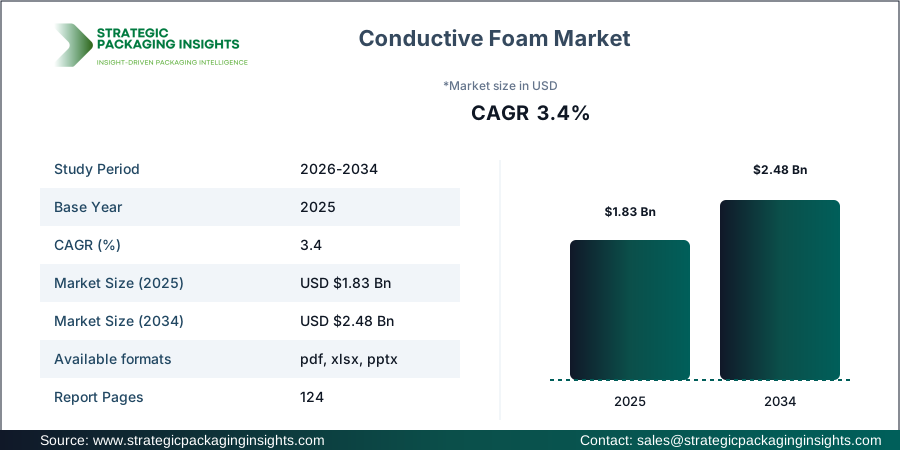
The Conductive Foam market size was valued at USD 1.83 billion in 2025 and is anticipated to reach USD 2.48 billion by 2034, growing at a CAGR of 3.4% during the forecast period according to Strategic Packaging Insights. The market is witnessing significant growth due to the increasing demand for electronic devices and the need for effective electromagnetic interference (EMI) shielding solutions. Companies like Sealed Air and Rogers Corporation are at the forefront, driving innovation and expanding their product portfolios to cater to diverse industry needs. The rise in consumer electronics and advancements in automotive technologies are further propelling the demand for conductive foam, making it a crucial component in modern electronic packaging solutions.
One of the most impactful drivers of the Conductive Foam market is the growing emphasis on electronic safety and protection. With the proliferation of electronic devices, there is an increasing need for effective electrostatic discharge (ESD) protection, which conductive foam provides efficiently. According to industry reports, the electronics sector is rapidly expanding, with governments worldwide investing heavily in semiconductor manufacturing and electronic infrastructure. This trend is expected to bolster the demand for conductive foam, as it plays a vital role in safeguarding sensitive electronic components from static discharge and electromagnetic interference. Companies like Pregis and UFP Technologies are leveraging this trend by developing advanced conductive foam solutions that meet stringent industry standards and regulatory requirements.
Report Scope
| Attributes | Details |
| Report Title | Conductive Foam Market Size, Future Growth and Forecast 2034 |
| By Material Type | Conductive PE Foam, Conductive PU Foam, EVA Foam, Cross-Linked Foam |
| By Product Type | Sheets, Inserts, Rolls, Custom Molded Foam |
| By Application | ESD Protection, Electronics Packaging, EMI Shielding, Component Storage |
| By End Use | Electronics, Semiconductors, Automotive, Aerospace |
| Region | Asia Pacific, North America, Latin America, Europe, Middle East & Africa |
| Base Year | 2025 |
| Historic Period | 2018-2024 |
| Forecast Period | 2026-2034 |
| Number of Pages | 124 |
| Customization Available | Yes* |
Sustainability & Circular Economy Analysis
Sustainability initiatives and circular economy practices are increasingly influencing the packaging market, including the conductive foam sector. The shift towards eco-friendly materials and recyclable packaging solutions is driving innovation in conductive foam manufacturing. Companies are investing in research and development to create conductive foams that are not only effective in EMI shielding and ESD protection but also environmentally sustainable. The use of recyclable materials and the development of lightweight packaging solutions are becoming standard practices, aligning with global sustainability goals and consumer preferences for greener products.
These sustainability trends are significantly impacting packaging design and manufacturing processes. Manufacturers are adopting waste reduction strategies and implementing extended producer responsibility (EPR) programs to minimize their carbon footprint. This shift is influencing investment decisions, as companies prioritize eco-friendly innovations to enhance their market competitiveness. Regulatory compliance is also a key factor, with governments enforcing stricter packaging regulations to promote sustainability. As a result, companies like Nefab and Desco Industries are focusing on developing conductive foam solutions that meet these regulatory standards while offering superior performance.
In the long term, sustainability trends are expected to shape the competitive landscape of the conductive foam market. Companies that embrace eco-friendly practices and invest in sustainable packaging solutions are likely to gain a competitive edge. The integration of ESG initiatives into business strategies is becoming increasingly important, as consumers and investors demand greater transparency and accountability. This shift towards sustainability is not only beneficial for the environment but also enhances brand reputation and customer loyalty, driving long-term market growth and profitability.
Packaging Value Chain & Supply Chain Analysis
The packaging value chain and supply chain ecosystem for conductive foam are complex and multifaceted, involving various stakeholders from raw material sourcing to end-user delivery. Raw material availability is a critical factor influencing the production capabilities of conductive foam manufacturers. Companies like FoamPartner and Zotefoams are focusing on securing reliable sources of conductive materials to ensure consistent product quality and supply chain resilience. Strategic partnerships with suppliers and logistics providers are essential to streamline operations and enhance supply chain efficiency.
Packaging converters and manufacturers play a pivotal role in transforming raw materials into finished conductive foam products. The use of advanced packaging machinery and innovative production techniques is crucial to meet the growing demand for high-performance conductive foam solutions. Companies are investing in state-of-the-art facilities and technologies to enhance their production capabilities and maintain a competitive edge. Efficient inventory management and procurement strategies are also vital to optimize production processes and reduce lead times.
Logistics and distribution channels are integral components of the conductive foam supply chain, ensuring timely delivery of products to end-users. Companies are adopting localization strategies to minimize transportation costs and enhance supply chain resilience. Global sourcing is also a key consideration, as manufacturers seek to expand their market reach and cater to diverse customer needs. The integration of recycling networks into the supply chain is becoming increasingly important, as companies strive to promote sustainability and reduce environmental impact. Overall, the efficiency and effectiveness of the packaging value chain and supply chain ecosystem are critical determinants of market performance and business competitiveness.
Opportunities & Threats
The conductive foam market presents numerous opportunities for growth and innovation. One of the key opportunities lies in the expanding electronics and semiconductor industries, which are driving the demand for advanced EMI shielding and ESD protection solutions. As electronic devices become more sophisticated and compact, the need for effective conductive foam solutions is increasing. Companies that invest in research and development to create innovative products that meet the evolving needs of these industries are likely to gain a competitive advantage. Additionally, the growing trend towards miniaturization in electronics presents opportunities for the development of custom molded foam solutions that offer superior protection and performance.
Another significant opportunity in the conductive foam market is the increasing focus on sustainability and eco-friendly packaging solutions. As consumers and businesses become more environmentally conscious, there is a growing demand for conductive foam products that are recyclable and made from sustainable materials. Companies that prioritize sustainability in their product development and manufacturing processes are well-positioned to capitalize on this trend. The integration of circular economy practices into business strategies can also enhance brand reputation and customer loyalty, driving long-term market growth and profitability.
Despite the numerous opportunities, the conductive foam market also faces certain threats and challenges. One of the primary challenges is the volatility in raw material prices, which can impact production costs and profit margins. Companies need to implement effective procurement strategies and establish strong relationships with suppliers to mitigate this risk. Additionally, the market is subject to stringent regulatory requirements, particularly in terms of environmental compliance and product safety. Companies must ensure that their products meet these regulatory standards to avoid potential legal and financial repercussions. The competitive landscape is also intensifying, with new entrants and technological advancements posing a threat to established players.
Drivers & Challenges
The conductive foam market is driven by several key factors, including the increasing demand for electronic devices and the need for effective EMI shielding and ESD protection solutions. The rapid growth of the electronics and semiconductor industries is a major driver, as these sectors require high-performance conductive foam products to protect sensitive components from electromagnetic interference and static discharge. Companies like Sealed Air and Rogers Corporation are leveraging this demand by developing innovative conductive foam solutions that meet the stringent requirements of these industries. The rise in consumer electronics, automotive technologies, and aerospace applications is further fueling market growth.
Another significant driver of the conductive foam market is the growing emphasis on sustainability and eco-friendly packaging solutions. As consumers and businesses become more environmentally conscious, there is an increasing demand for conductive foam products that are recyclable and made from sustainable materials. Companies that prioritize sustainability in their product development and manufacturing processes are well-positioned to capitalize on this trend. The integration of circular economy practices into business strategies can also enhance brand reputation and customer loyalty, driving long-term market growth and profitability.
Despite the positive drivers, the conductive foam market faces several challenges that could impact its growth potential. One of the primary challenges is the volatility in raw material prices, which can affect production costs and profit margins. Companies need to implement effective procurement strategies and establish strong relationships with suppliers to mitigate this risk. Additionally, the market is subject to stringent regulatory requirements, particularly in terms of environmental compliance and product safety. Companies must ensure that their products meet these regulatory standards to avoid potential legal and financial repercussions. The competitive landscape is also intensifying, with new entrants and technological advancements posing a threat to established players.
Market Share Analysis
The competitive landscape of the conductive foam market is characterized by the presence of several key players, each striving to enhance their market share through innovation and strategic partnerships. Companies like Sealed Air and Rogers Corporation are leading the market with their extensive product portfolios and strong global presence. These companies are focusing on expanding their production capabilities and investing in research and development to create advanced conductive foam solutions that meet the evolving needs of various industries. The emphasis on sustainability and eco-friendly packaging solutions is also driving competition, as companies seek to differentiate themselves through environmentally responsible practices.
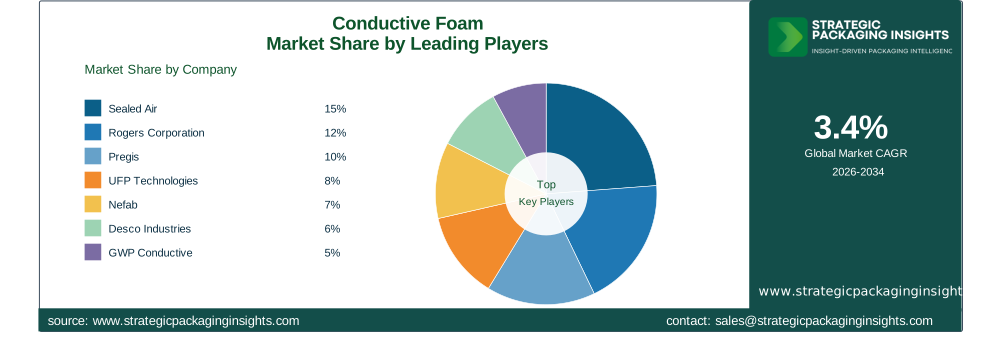
Sealed Air is a prominent player in the conductive foam market, known for its innovative packaging solutions and commitment to sustainability. The company offers a wide range of conductive foam products designed to provide effective EMI shielding and ESD protection. With a strong focus on research and development, Sealed Air is continuously enhancing its product offerings to meet the changing demands of the electronics and semiconductor industries. The company's global presence and strategic partnerships with key stakeholders further strengthen its market position.
Rogers Corporation is another leading company in the conductive foam market, renowned for its high-performance materials and advanced manufacturing capabilities. The company specializes in developing conductive foam solutions that offer superior protection and performance in electronic applications. Rogers Corporation's commitment to sustainability and innovation has earned it a strong reputation in the market. The company's extensive distribution network and collaborations with industry leaders enable it to effectively serve a diverse customer base across various regions.
Pregis is a key player in the conductive foam market, offering a comprehensive range of packaging solutions designed to protect sensitive electronic components. The company's focus on sustainability and eco-friendly practices is evident in its product development and manufacturing processes. Pregis is dedicated to providing innovative conductive foam solutions that meet the highest industry standards for performance and environmental compliance. The company's strategic partnerships and global reach further enhance its competitive advantage in the market.
Key Highlights
- Market Size: The conductive foam market was valued at USD 1.83 billion in 2025 and is projected to reach USD 2.48 billion by 2034.
- Growth Rate: The market is expected to grow at a CAGR of 3.4% during the forecast period.
- Leading Companies: Key players include Sealed Air, Rogers Corporation, and Pregis, among others.
- Material Type: Conductive PE Foam and Conductive PU Foam are prominent segments driving market growth.
- Application: ESD Protection and EMI Shielding are major applications fueling demand.
- End Use: Electronics and Semiconductors are the primary end-use industries for conductive foam.
- Regional Insights: Asia Pacific is expected to witness significant growth, driven by the expanding electronics industry.
Conductive Foam Market Segments Insights

Material Type Analysis
The material type segment of the conductive foam market is categorized into Conductive PE Foam, Conductive PU Foam, EVA Foam, and Cross-Linked Foam. Conductive PE Foam is gaining traction due to its lightweight properties and excellent cushioning capabilities, making it ideal for electronic packaging applications. The demand for Conductive PU Foam is also rising, driven by its superior conductivity and flexibility, which are essential for effective EMI shielding and ESD protection. Companies are focusing on developing innovative foam materials that offer enhanced performance and sustainability, aligning with the growing emphasis on eco-friendly packaging solutions.
EVA Foam and Cross-Linked Foam are also significant contributors to the material type segment, offering unique properties that cater to specific industry needs. EVA Foam is known for its durability and resistance to environmental factors, making it suitable for automotive and aerospace applications. Cross-Linked Foam, on the other hand, provides excellent thermal insulation and mechanical strength, making it a preferred choice for high-performance applications. The continuous advancements in foam material technology are expected to drive the growth of this segment, as companies strive to meet the evolving demands of various end-use industries.
Product Type Analysis
The product type segment of the conductive foam market includes Sheets, Inserts, Rolls, and Custom Molded Foam. Sheets are widely used in electronic packaging and component storage applications, offering effective protection against static discharge and electromagnetic interference. The demand for Inserts is also increasing, driven by their versatility and ability to provide customized protection for sensitive electronic components. Companies are investing in advanced manufacturing technologies to produce high-quality foam inserts that meet the stringent requirements of the electronics and semiconductor industries.
Rolls and Custom Molded Foam are gaining popularity due to their flexibility and adaptability to various packaging needs. Rolls are particularly favored for their ease of use and cost-effectiveness, making them suitable for large-scale packaging applications. Custom Molded Foam, on the other hand, offers tailored solutions for specific product requirements, providing superior protection and performance. The growing trend towards miniaturization in electronics is driving the demand for custom molded foam solutions, as companies seek to enhance the protection and functionality of their products.
Application Analysis
The application segment of the conductive foam market is divided into ESD Protection, Electronics Packaging, EMI Shielding, and Component Storage. ESD Protection is a critical application, as it safeguards sensitive electronic components from static discharge, which can cause significant damage. The increasing demand for electronic devices and the need for reliable ESD protection solutions are driving the growth of this segment. Companies are developing advanced conductive foam products that offer superior ESD protection, ensuring the safety and longevity of electronic components.
Electronics Packaging and EMI Shielding are also major applications fueling the demand for conductive foam. The rise in consumer electronics and advancements in automotive technologies are contributing to the growth of these segments. Conductive foam provides effective EMI shielding, preventing electromagnetic interference that can disrupt the performance of electronic devices. Component Storage is another important application, as it ensures the safe and secure storage of electronic components, protecting them from environmental factors and mechanical damage.
End Use Analysis
The end-use segment of the conductive foam market includes Electronics, Semiconductors, Automotive, and Aerospace. The Electronics and Semiconductors industries are the primary end-users of conductive foam, driven by the increasing demand for electronic devices and the need for effective EMI shielding and ESD protection solutions. Companies are focusing on developing conductive foam products that meet the stringent requirements of these industries, ensuring the safety and performance of electronic components.
The Automotive and Aerospace industries are also significant contributors to the end-use segment, as they require high-performance conductive foam solutions for various applications. The growing trend towards electric vehicles and advancements in aerospace technologies are driving the demand for conductive foam in these industries. Companies are investing in research and development to create innovative foam solutions that offer superior protection and performance, catering to the evolving needs of the automotive and aerospace sectors.
Conductive Foam Market Segments
The Conductive Foam market has been segmented on the basis ofBy Material Type
- Conductive PE Foam
- Conductive PU Foam
- EVA Foam
- Cross-Linked Foam
By Product Type
- Sheets
- Inserts
- Rolls
- Custom Molded Foam
By Application
- ESD Protection
- Electronics Packaging
- EMI Shielding
- Component Storage
By End Use
- Electronics
- Semiconductors
- Automotive
- Aerospace
Region
- Asia Pacific
- North America
- Latin America
- Europe
- Middle East & Africa




