


Cold Storage Tape Market Outlook
The Cold Storage Tape market size was valued at USD 921.48 million in 2025 and is anticipated to reach USD 1.53 billion by 2034, growing at a CAGR of 5.8% during the forecast period according to Strategic Packaging Insights. The market is witnessing significant growth due to the increasing demand for efficient packaging solutions in the food and beverage industry, particularly for frozen food packaging. Companies like 3M and Tesa are leading the charge by offering innovative tape solutions that ensure product integrity and safety during storage and transportation. The rise in e-commerce and the need for reliable cold chain logistics further bolster the demand for cold storage tapes, making them indispensable in maintaining the quality of perishable goods.
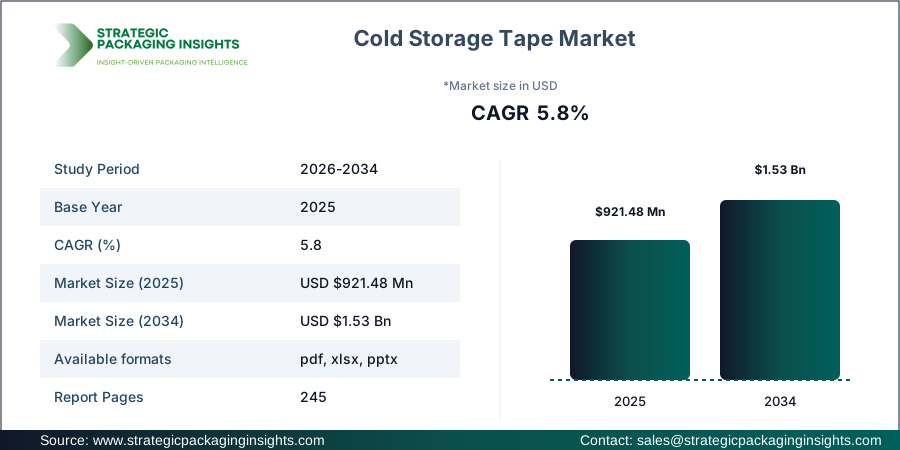
One of the most impactful drivers of the Cold Storage Tape market is the stringent regulations imposed by governments worldwide to ensure food safety and quality. According to recent reports, regulatory bodies are emphasizing the importance of maintaining the cold chain to prevent food spoilage and contamination. This has led to an increased adoption of cold storage tapes that offer superior adhesion and durability in low-temperature environments. Companies like Nitto Denko and Intertape Polymer Group are investing heavily in research and development to create tapes that meet these regulatory standards while also being environmentally friendly. The focus on sustainability and reducing carbon footprints is also driving innovation in this market, with brands like Avery Dennison leading the way in developing eco-friendly adhesive solutions.
Report Scope
| Attributes | Details |
| Report Title | Cold Storage Tape Market Size, Future Growth and Forecast 2034 |
| Material Type | Polypropylene, Polyester, Vinyl, Paper |
| Adhesive Type | Acrylic, Rubber-Based, Freezer-Grade Adhesive |
| Application | Frozen Food Packaging, Cold Chain Labels, Carton Sealing |
| End Use | Food & Beverage, Healthcare, Logistics, Retail |
| Region | Asia Pacific, North America, Latin America, Europe, Middle East & Africa |
| Base Year | 2025 |
| Historic Period | 2018-2024 |
| Forecast Period | 2026-2034 |
| Number of Pages | 245 |
| Customization Available | Yes* |
Sustainability & Circular Economy Analysis
Sustainability initiatives and circular economy practices are increasingly shaping the Cold Storage Tape market. Companies are focusing on developing recyclable materials and reusable packaging solutions to minimize environmental impact. The use of lightweight packaging and eco-friendly material innovation is becoming a priority, as consumers and regulatory bodies demand more sustainable options. For instance, brands like Scapa and Berry Global are investing in research to create tapes that not only perform well in cold storage conditions but also contribute to waste reduction strategies.
Extended Producer Responsibility (EPR) is another significant trend influencing the market. Companies are being held accountable for the entire lifecycle of their products, prompting them to adopt more sustainable manufacturing and packaging practices. This shift is driving investment decisions and supply chain strategies, as businesses aim to comply with packaging regulations and reduce their carbon footprint. The emphasis on ESG initiatives is also encouraging companies to innovate in packaging design and manufacturing processes, ensuring long-term market competitiveness.
Consumer preferences for sustainability are also impacting the Cold Storage Tape market. There is a growing demand for products that align with eco-friendly values, prompting companies to prioritize sustainable packaging solutions. This trend is influencing regulatory compliance and investment in new technologies that enhance the recyclability and reusability of packaging materials. As a result, the market is witnessing a shift towards more sustainable practices, with companies like Saint-Gobain and Brady Corporation leading the charge in developing innovative solutions that meet consumer and regulatory expectations.
Packaging Value Chain & Supply Chain Analysis
The packaging value chain for cold storage tapes involves several key components, including raw material sourcing, packaging converters, and manufacturers. Efficient raw material sourcing is crucial for maintaining the quality and performance of cold storage tapes. Companies like 3M and Tesa are focusing on securing reliable sources of high-quality materials to ensure consistent product performance. Packaging converters play a vital role in transforming these materials into finished products, while manufacturers are responsible for producing tapes that meet specific industry requirements.
Logistics and distribution channels are critical components of the supply chain ecosystem for cold storage tapes. Efficient transportation and inventory management are essential for ensuring timely delivery and maintaining product integrity. Companies are investing in strategic partnerships and localization strategies to enhance supply chain resilience and reduce dependency on global sourcing. This approach not only improves supply chain efficiency but also enhances overall market performance and business competitiveness.
Recycling networks and procurement strategies are also integral to the packaging value chain. Companies are adopting sustainable procurement practices to minimize environmental impact and comply with regulatory requirements. Recycling networks are being established to facilitate the collection and processing of used tapes, contributing to waste reduction and promoting circular economy practices. These efforts are driving innovation and investment in the Cold Storage Tape market, with companies like Intertape Polymer Group and Shurtape leading the way in developing sustainable solutions that meet industry demands.
Opportunities & Threats
The Cold Storage Tape market presents numerous opportunities for growth, driven by the increasing demand for efficient packaging solutions in the food and beverage industry. The rise in e-commerce and the need for reliable cold chain logistics are creating new avenues for market expansion. Companies like Avery Dennison and Berry Global are capitalizing on these opportunities by developing innovative tape solutions that ensure product integrity and safety during storage and transportation. The focus on sustainability and reducing carbon footprints is also driving innovation in this market, with brands investing in eco-friendly adhesive solutions.
Another significant opportunity lies in the healthcare sector, where the demand for cold storage tapes is rising due to the need for secure packaging of temperature-sensitive medical products. Companies are developing specialized tapes that offer superior adhesion and durability in low-temperature environments, ensuring the safety and efficacy of medical supplies. The emphasis on regulatory compliance and maintaining the cold chain is further driving the adoption of cold storage tapes in this sector, presenting lucrative opportunities for market players.
However, the market also faces certain threats, primarily due to the volatility in raw material prices and the stringent regulations imposed by governments worldwide. Companies need to navigate these challenges by adopting sustainable procurement practices and investing in research and development to create innovative solutions that meet regulatory standards. The focus on reducing carbon footprints and complying with packaging regulations is essential for maintaining market competitiveness and ensuring long-term growth.
Drivers & Challenges
One of the primary drivers of the Cold Storage Tape market is the increasing demand for efficient packaging solutions in the food and beverage industry. The rise in e-commerce and the need for reliable cold chain logistics are further bolstering the demand for cold storage tapes, making them indispensable in maintaining the quality of perishable goods. Companies like 3M and Tesa are leading the charge by offering innovative tape solutions that ensure product integrity and safety during storage and transportation. The focus on sustainability and reducing carbon footprints is also driving innovation in this market, with brands investing in eco-friendly adhesive solutions.
Another significant driver is the emphasis on regulatory compliance and maintaining the cold chain to prevent food spoilage and contamination. Regulatory bodies are imposing stringent standards to ensure food safety and quality, leading to an increased adoption of cold storage tapes that offer superior adhesion and durability in low-temperature environments. Companies like Nitto Denko and Intertape Polymer Group are investing heavily in research and development to create tapes that meet these regulatory standards while also being environmentally friendly. The focus on sustainability and reducing carbon footprints is also driving innovation in this market, with brands like Avery Dennison leading the way in developing eco-friendly adhesive solutions.
Despite these drivers, the market faces several challenges, primarily due to the volatility in raw material prices and the stringent regulations imposed by governments worldwide. Companies need to navigate these challenges by adopting sustainable procurement practices and investing in research and development to create innovative solutions that meet regulatory standards. The focus on reducing carbon footprints and complying with packaging regulations is essential for maintaining market competitiveness and ensuring long-term growth. Additionally, the need for continuous innovation and adaptation to changing consumer preferences poses a challenge for market players, requiring them to stay ahead of industry trends and invest in new technologies.
Market Share Analysis
The Cold Storage Tape market is characterized by intense competition, with several key players vying for market share. Companies like 3M, Tesa, and Nitto Denko are leading the market with their innovative product offerings and strong brand presence. These companies are investing heavily in research and development to create advanced tape solutions that meet the evolving needs of the industry. Their focus on sustainability and eco-friendly adhesive solutions is also contributing to their market dominance, as consumers and regulatory bodies demand more sustainable options.

Intertape Polymer Group and Shurtape are also significant players in the market, known for their high-quality products and strong distribution networks. These companies are focusing on expanding their product portfolios and enhancing their manufacturing capabilities to meet the growing demand for cold storage tapes. Their emphasis on strategic partnerships and localization strategies is helping them maintain a competitive edge in the market, ensuring timely delivery and maintaining product integrity.
Avery Dennison and Scapa are also key players in the Cold Storage Tape market, known for their innovative solutions and commitment to sustainability. These companies are investing in research and development to create tapes that not only perform well in cold storage conditions but also contribute to waste reduction strategies. Their focus on ESG initiatives and compliance with packaging regulations is driving their market growth, as they continue to develop eco-friendly adhesive solutions that meet consumer and regulatory expectations.
Berry Global and Saint-Gobain are also prominent players in the market, known for their strong global presence and extensive product offerings. These companies are focusing on expanding their operations and enhancing their manufacturing capabilities to meet the growing demand for cold storage tapes. Their emphasis on sustainability and reducing carbon footprints is also contributing to their market success, as they continue to develop innovative solutions that align with consumer and regulatory expectations.
Key Highlights
- Market Size: The Cold Storage Tape market was valued at USD 921.48 million in 2025 and is projected to reach USD 1.53 billion by 2034.
- Growth Rate: The market is expected to grow at a CAGR of 5.8% during the forecast period.
- Leading Companies: Key players include 3M, Tesa, Nitto Denko, and Intertape Polymer Group.
- Material Type: Polypropylene and Polyester are the most commonly used materials in cold storage tapes.
- Adhesive Type: Acrylic and Rubber-Based adhesives are widely used in the market.
- Application: Frozen Food Packaging and Cold Chain Labels are major applications driving market growth.
- Region: Asia Pacific is expected to witness significant growth due to increasing demand for cold storage solutions.
Cold Storage Tape Market Segments Insights

Material Type Analysis
The Cold Storage Tape market is segmented by material type into Polypropylene, Polyester, Vinyl, and Paper. Polypropylene and Polyester are the most commonly used materials due to their superior durability and resistance to low temperatures. These materials are preferred for their ability to maintain adhesion and integrity in cold storage conditions, making them ideal for packaging frozen foods and other temperature-sensitive products. Companies like 3M and Tesa are leading the market with their innovative tape solutions that utilize these materials to ensure product safety and quality during storage and transportation.

Vinyl and Paper are also gaining traction in the market, driven by the increasing demand for eco-friendly packaging solutions. Vinyl tapes offer excellent adhesion and flexibility, making them suitable for a wide range of applications, including carton sealing and cold chain labels. Paper tapes, on the other hand, are preferred for their recyclability and sustainability, aligning with the growing consumer preference for environmentally friendly products. Companies like Avery Dennison and Scapa are investing in research and development to create innovative tape solutions that utilize these materials, contributing to the market's growth and competitiveness.
Adhesive Type Analysis
The Cold Storage Tape market is segmented by adhesive type into Acrylic, Rubber-Based, and Freezer-Grade Adhesives. Acrylic adhesives are widely used in the market due to their excellent adhesion properties and resistance to low temperatures. These adhesives are preferred for their ability to maintain adhesion and integrity in cold storage conditions, making them ideal for packaging frozen foods and other temperature-sensitive products. Companies like Nitto Denko and Intertape Polymer Group are leading the market with their innovative tape solutions that utilize acrylic adhesives to ensure product safety and quality during storage and transportation.

Rubber-Based and Freezer-Grade Adhesives are also gaining traction in the market, driven by the increasing demand for specialized adhesive solutions that offer superior performance in extreme conditions. Rubber-Based adhesives are preferred for their flexibility and durability, making them suitable for a wide range of applications, including carton sealing and cold chain labels. Freezer-Grade adhesives, on the other hand, are designed to withstand extremely low temperatures, ensuring reliable adhesion and performance in cold storage environments. Companies like Shurtape and Berry Global are investing in research and development to create innovative tape solutions that utilize these adhesives, contributing to the market's growth and competitiveness.
Application Analysis
The Cold Storage Tape market is segmented by application into Frozen Food Packaging, Cold Chain Labels, and Carton Sealing. Frozen Food Packaging is the largest application segment, driven by the increasing demand for efficient packaging solutions in the food and beverage industry. Cold storage tapes are essential for maintaining the quality and safety of frozen foods during storage and transportation, making them indispensable in this sector. Companies like 3M and Tesa are leading the market with their innovative tape solutions that ensure product integrity and safety in cold storage conditions.

Cold Chain Labels and Carton Sealing are also significant application segments, driven by the rise in e-commerce and the need for reliable cold chain logistics. Cold storage tapes are used to secure and label packages, ensuring accurate tracking and identification during transportation. Companies like Avery Dennison and Scapa are investing in research and development to create innovative tape solutions that meet the evolving needs of these applications, contributing to the market's growth and competitiveness.
End Use Analysis
The Cold Storage Tape market is segmented by end use into Food & Beverage, Healthcare, Logistics, and Retail. The Food & Beverage sector is the largest end-use segment, driven by the increasing demand for efficient packaging solutions in the industry. Cold storage tapes are essential for maintaining the quality and safety of perishable goods during storage and transportation, making them indispensable in this sector. Companies like 3M and Tesa are leading the market with their innovative tape solutions that ensure product integrity and safety in cold storage conditions.
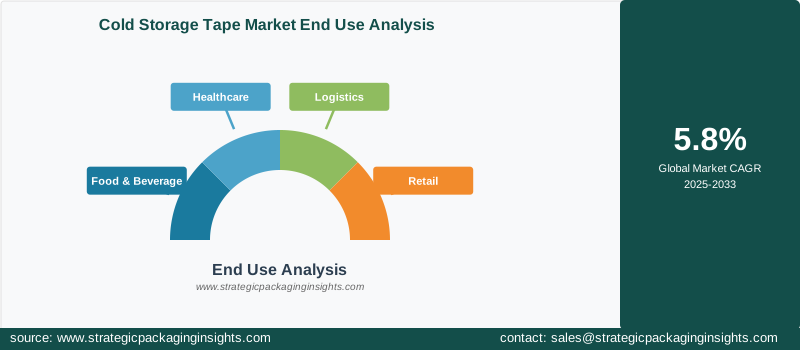
The Healthcare sector is also a significant end-use segment, driven by the need for secure packaging of temperature-sensitive medical products. Cold storage tapes are used to ensure the safety and efficacy of medical supplies during storage and transportation, making them essential in this sector. Companies like Nitto Denko and Intertape Polymer Group are investing in research and development to create innovative tape solutions that meet the evolving needs of the healthcare industry, contributing to the market's growth and competitiveness.
Cold Storage Tape Market Segments
The Cold Storage Tape market has been segmented on the basis ofMaterial Type
- Polypropylene
- Polyester
- Vinyl
- Paper
Adhesive Type
- Acrylic
- Rubber-Based
- Freezer-Grade Adhesive
Application
- Frozen Food Packaging
- Cold Chain Labels
- Carton Sealing
End Use
- Food & Beverage
- Healthcare
- Logistics
- Retail
Region
- Asia Pacific
- North America
- Latin America
- Europe
- Middle East & Africa




