


Biodegradable Disposable Tableware Market Outlook
The Biodegradable Disposable Tableware market was valued at $12.67 billion in 2025 and is projected to reach $20.23 billion by 2034, growing at a CAGR of 5.3% during the forecast period 2026-2034. This market is witnessing significant growth due to increasing environmental concerns and the rising demand for sustainable alternatives to traditional plastic tableware. The shift towards eco-friendly products is driven by both consumer preferences and stringent government regulations aimed at reducing plastic waste. The market is further bolstered by innovations in biodegradable materials, which enhance the functionality and appeal of disposable tableware products.
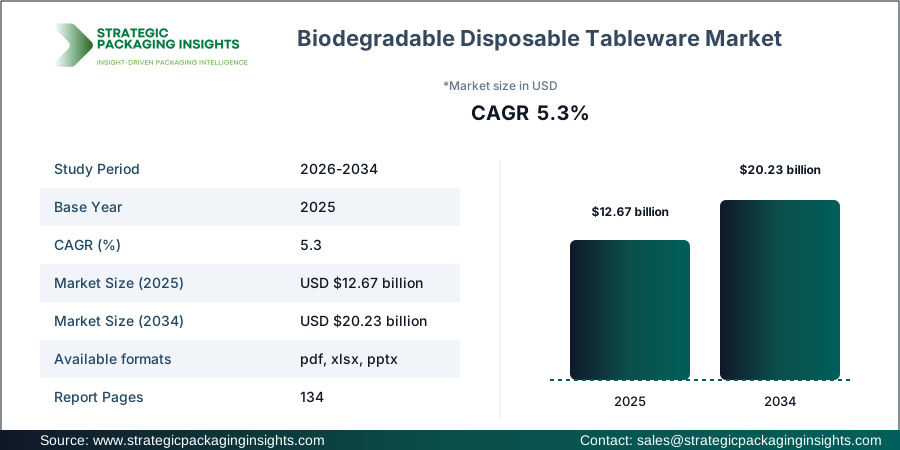
Despite the promising growth trajectory, the market faces challenges such as higher production costs compared to conventional plastic products and limited consumer awareness in certain regions. However, the potential for growth remains substantial, particularly as more countries implement policies to curb plastic usage and promote sustainable practices. The market's expansion is also supported by advancements in manufacturing technologies that reduce costs and improve the quality of biodegradable products. As a result, the Biodegradable Disposable Tableware market is poised for robust growth, driven by a combination of regulatory support, technological innovation, and changing consumer attitudes towards sustainability.
Report Scope
| Attributes | Details |
| Report Title | Biodegradable Disposable Tableware Market Size, Future Growth and Forecast 2034 |
| By Product Type | Plates, Bowls, Trays, Cutlery, Cups |
| By Material Type | Bagasse, Bamboo, PLA, Molded Fiber |
| By Application | QSR, Catering, Household, Events |
| By Distribution Channel | Retail, Foodservice Distributors, Online |
| Region | Asia Pacific, North America, Latin America, Europe, Middle East & Africa |
| Base Year | 2025 |
| Historic Period | 2018-2024 |
| Forecast Period | 2026-2034 |
| Number of Pages | 134 |
| Customization Available | Yes* |
Opportunities & Threats
The Biodegradable Disposable Tableware market presents numerous opportunities, particularly in regions with stringent environmental regulations. Governments worldwide are increasingly implementing bans on single-use plastics, creating a favorable environment for biodegradable alternatives. This regulatory push is complemented by growing consumer awareness and demand for sustainable products, providing a significant opportunity for market players to expand their offerings and capture a larger market share. Additionally, advancements in material science are enabling the development of more durable and cost-effective biodegradable products, further enhancing their appeal to both consumers and businesses.
Another opportunity lies in the expanding foodservice industry, which is a major consumer of disposable tableware. As more restaurants, cafes, and catering services seek to align with sustainable practices, the demand for biodegradable tableware is expected to rise. This trend is particularly pronounced in urban areas, where consumers are more environmentally conscious and willing to pay a premium for eco-friendly products. Furthermore, the rise of online retail channels offers an additional avenue for market growth, allowing companies to reach a broader audience and increase their market penetration.
However, the market also faces threats, primarily from the higher costs associated with biodegradable products compared to traditional plastics. This cost disparity can be a barrier to adoption, particularly in price-sensitive markets. Additionally, the lack of standardized regulations and certifications for biodegradable products can lead to consumer skepticism and hinder market growth. Companies must navigate these challenges by investing in cost-reduction strategies and ensuring transparency in their product offerings to build consumer trust and drive adoption.
Drivers & Challenges
The primary drivers of the Biodegradable Disposable Tableware market include increasing environmental awareness and regulatory support for sustainable products. As consumers become more conscious of the environmental impact of their purchasing decisions, there is a growing demand for eco-friendly alternatives to traditional plastic tableware. This shift in consumer preferences is further supported by government initiatives aimed at reducing plastic waste and promoting sustainable practices. These factors are driving the adoption of biodegradable tableware across various sectors, including foodservice, hospitality, and retail.
Technological advancements in biodegradable materials are also a significant driver of market growth. Innovations in material science have led to the development of more durable and cost-effective biodegradable products, enhancing their appeal to both consumers and businesses. These advancements are enabling manufacturers to produce high-quality biodegradable tableware that meets the functional requirements of traditional plastic products while offering environmental benefits. As a result, the market is witnessing increased investment in research and development, further driving innovation and growth.
Despite these drivers, the market faces several challenges, including the higher production costs associated with biodegradable products. These costs can be a barrier to adoption, particularly in price-sensitive markets where consumers may be unwilling to pay a premium for eco-friendly products. Additionally, the lack of standardized regulations and certifications for biodegradable products can lead to consumer skepticism and hinder market growth. Companies must address these challenges by investing in cost-reduction strategies and ensuring transparency in their product offerings to build consumer trust and drive adoption.
Market Share Analysis
The Biodegradable Disposable Tableware market is characterized by a competitive landscape with several key players vying for market share. Companies such as Huhtamaki, Genpak, Eco-Products, BioPak, and Pactiv Evergreen are prominent players in this market, each holding a significant share. These companies are leveraging their extensive distribution networks and strong brand recognition to maintain their competitive edge. Additionally, they are investing in research and development to innovate and expand their product offerings, catering to the growing demand for sustainable tableware solutions.
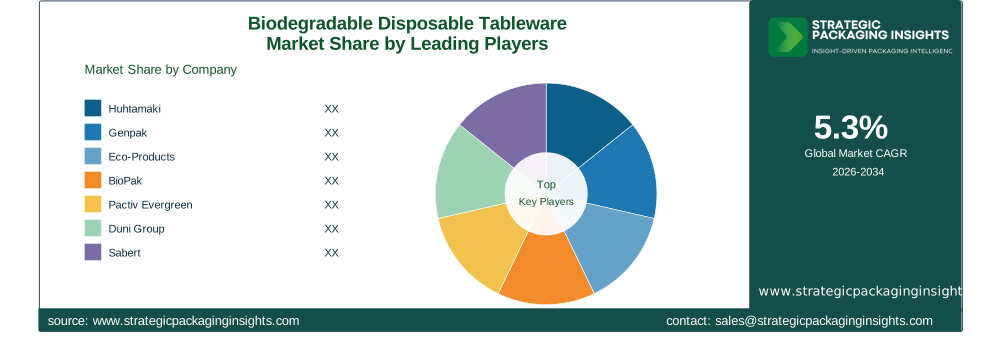
Huhtamaki, a leading player in the market, is known for its comprehensive range of biodegradable tableware products. The company has a strong presence in both developed and emerging markets, supported by its extensive distribution network and commitment to sustainability. Genpak, another major player, focuses on providing high-quality, eco-friendly tableware solutions to the foodservice industry. The company's emphasis on innovation and customer satisfaction has helped it maintain a strong market position.
Eco-Products, a subsidiary of Novolex, is a key player in the biodegradable tableware market, known for its commitment to sustainability and innovation. The company offers a wide range of compostable and recyclable products, catering to the growing demand for eco-friendly solutions. BioPak, an Australian company, is also a significant player, with a strong focus on providing sustainable packaging solutions to the foodservice industry. The company's emphasis on environmental responsibility and product innovation has helped it capture a significant share of the market.
Pactiv Evergreen, a leading manufacturer of foodservice and food packaging products, is another major player in the biodegradable tableware market. The company's extensive product portfolio and strong distribution network have enabled it to maintain a competitive edge in the market. Duni Group, Sabert, Dart Container, CKF Inc., and Vegware are also notable players, each contributing to the market's growth through their innovative product offerings and commitment to sustainability.
Key Highlights
- The Biodegradable Disposable Tableware market is projected to grow at a CAGR of 5.3% from 2026 to 2034.
- Increasing environmental awareness and regulatory support are driving market growth.
- Technological advancements in biodegradable materials are enhancing product quality and reducing costs.
- The foodservice industry is a major consumer of biodegradable tableware, driving demand.
- Online retail channels offer significant growth opportunities for market players.
- Higher production costs compared to traditional plastics remain a challenge.
- Lack of standardized regulations and certifications can hinder market growth.
- Key players include Huhtamaki, Genpak, Eco-Products, BioPak, and Pactiv Evergreen.
- Innovations in material science are enabling the development of more durable biodegradable products.
- Consumer demand for sustainable products is a significant driver of market growth.
Top Countries Insights
In the Biodegradable Disposable Tableware market, the United States stands out as a leading country, with a market size of approximately $3.5 billion and a CAGR of 6%. The growth in the U.S. is driven by stringent environmental regulations and a strong consumer preference for sustainable products. The presence of major market players and a well-established distribution network further support market growth in this region. However, challenges such as higher production costs and consumer skepticism about product efficacy remain.
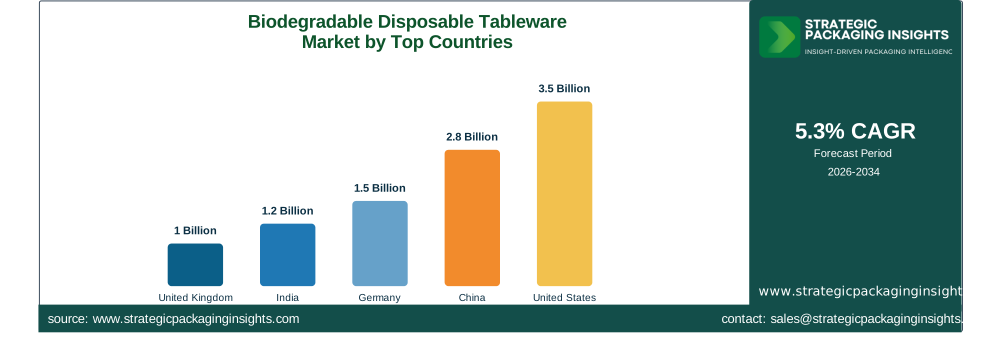
China is another significant market, with a market size of around $2.8 billion and a CAGR of 7%. The rapid industrialization and urbanization in China have led to increased environmental concerns, driving the demand for biodegradable tableware. Government initiatives to reduce plastic waste and promote sustainable practices are key growth drivers in this region. However, the market faces challenges such as limited consumer awareness and the availability of cheaper plastic alternatives.
Germany, with a market size of $1.5 billion and a CAGR of 5%, is a prominent player in the European market. The country's strong environmental policies and consumer awareness are driving the demand for biodegradable tableware. The presence of key market players and a focus on innovation and sustainability further support market growth. However, the market faces challenges such as higher production costs and competition from other eco-friendly packaging solutions.
India, with a market size of $1.2 billion and a CAGR of 8%, is an emerging market for biodegradable disposable tableware. The growing middle class and increasing environmental awareness are driving demand in this region. Government initiatives to reduce plastic waste and promote sustainable practices are also contributing to market growth. However, challenges such as limited infrastructure for waste management and consumer skepticism about product efficacy remain.
The United Kingdom, with a market size of $1 billion and a CAGR of 4%, is another key market in Europe. The country's strong environmental policies and consumer demand for sustainable products are driving market growth. The presence of major market players and a focus on innovation and sustainability further support market growth. However, the market faces challenges such as higher production costs and competition from other eco-friendly packaging solutions.
Biodegradable Disposable Tableware Market Segments Insights

Product Type Analysis
The Biodegradable Disposable Tableware market is segmented by product type into plates, bowls, trays, cutlery, and cups. Plates and bowls are among the most popular segments, driven by their widespread use in both household and foodservice applications. The demand for biodegradable plates and bowls is fueled by increasing consumer awareness of environmental issues and the growing preference for sustainable products. Trays and cutlery are also gaining traction, particularly in the catering and events sectors, where there is a strong emphasis on reducing plastic waste. Cups, on the other hand, are witnessing significant demand from the beverage industry, which is increasingly adopting eco-friendly practices.
Within the product type segment, innovation plays a crucial role in driving growth. Manufacturers are focusing on developing products that not only meet functional requirements but also offer aesthetic appeal. This includes the use of natural colors and textures that enhance the overall dining experience. Additionally, the development of multi-functional products, such as plates with compartments or cutlery with integrated features, is gaining popularity. These innovations are helping companies differentiate their offerings and capture a larger share of the market.
Material Type Analysis
The market is also segmented by material type, including bagasse, bamboo, PLA, and molded fiber. Bagasse, a byproduct of sugarcane processing, is one of the most widely used materials due to its cost-effectiveness and biodegradability. Bamboo is another popular material, known for its strength and sustainability. PLA (polylactic acid) is gaining traction due to its versatility and ability to be molded into various shapes and sizes. Molded fiber, made from recycled paper and cardboard, is also seeing increased demand, particularly in the foodservice industry.
Each material type offers unique advantages, and the choice of material often depends on the specific application and consumer preferences. For instance, bagasse and molded fiber are preferred for their cost-effectiveness and biodegradability, while bamboo is favored for its strength and aesthetic appeal. PLA, on the other hand, is popular for its versatility and ability to be used in a wide range of applications. As consumer awareness of environmental issues continues to grow, the demand for biodegradable materials is expected to increase, driving further innovation and growth in this segment.
Application Analysis
The Biodegradable Disposable Tableware market is segmented by application into QSR (quick service restaurants), catering, household, and events. The QSR segment is a major driver of market growth, as these establishments are increasingly adopting sustainable practices to meet consumer demand for eco-friendly products. Catering services are also a significant market, with a strong emphasis on reducing plastic waste and promoting sustainability. The household segment is witnessing growth as consumers become more environmentally conscious and seek sustainable alternatives to traditional plastic tableware.
Events, such as weddings and corporate functions, are another key application area, where there is a growing demand for biodegradable tableware. These events often generate significant amounts of waste, and the use of biodegradable products helps reduce the environmental impact. As the trend towards sustainability continues to gain momentum, the demand for biodegradable tableware in these application areas is expected to increase, driving further growth in the market.
Distribution Channel Analysis
The market is also segmented by distribution channel, including retail, foodservice distributors, and online. Retail channels, such as supermarkets and specialty stores, are a major distribution channel for biodegradable tableware, offering consumers a wide range of products to choose from. Foodservice distributors play a crucial role in supplying biodegradable tableware to restaurants, cafes, and catering services, helping them meet the growing demand for sustainable products.
Online channels are gaining popularity as consumers increasingly turn to e-commerce platforms for their purchasing needs. The convenience and accessibility of online shopping make it an attractive option for consumers, and companies are leveraging this trend to expand their reach and increase market penetration. As the demand for biodegradable tableware continues to grow, the role of distribution channels in driving market growth is expected to become increasingly important.
Biodegradable Disposable Tableware Market Segments
The Biodegradable Disposable Tableware market has been segmented on the basis ofBy Product Type
- Plates
- Bowls
- Trays
- Cutlery
- Cups
By Material Type
- Bagasse
- Bamboo
- PLA
- Molded Fiber
By Application
- QSR
- Catering
- Household
- Events
By Distribution Channel
- Retail
- Foodservice Distributors
- Online
Region
- Asia Pacific
- North America
- Latin America
- Europe
- Middle East & Africa




