


Barcode Printers Market Outlook
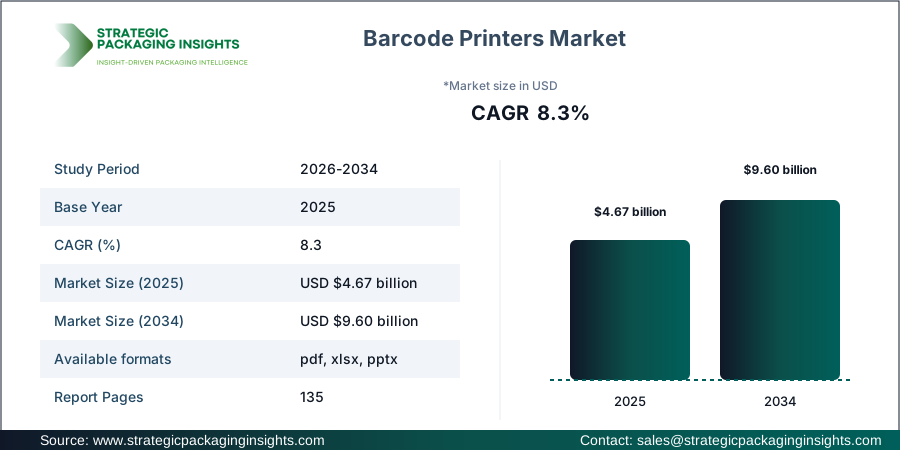
The Barcode Printers market was valued at $4.67 billion in 2025 and is projected to reach $9.60 billion by 2034, growing at a CAGR of 8.3% during the forecast period 2026-2034. This market is experiencing robust growth driven by the increasing demand for efficient inventory management and tracking systems across various industries. The adoption of barcode technology in retail, logistics, and healthcare sectors is significantly contributing to the market expansion. The rise in e-commerce activities and the need for accurate and quick data capture solutions are further propelling the demand for barcode printers. Additionally, technological advancements in printing technologies, such as thermal transfer and direct thermal, are enhancing the efficiency and reliability of barcode printers, thereby boosting their adoption.
Despite the promising growth prospects, the barcode printers market faces certain challenges that could hinder its expansion. The high initial cost of advanced barcode printers and the need for regular maintenance can be a deterrent for small and medium-sized enterprises. Moreover, the availability of alternative technologies, such as RFID, which offer enhanced data storage capabilities, poses a threat to the widespread adoption of barcode printers. However, the market holds significant potential for growth, especially with the increasing focus on automation and digitalization in various industries. The integration of barcode printers with IoT and cloud-based solutions is expected to create new opportunities for market players, enabling them to offer innovative and customized solutions to their customers.
Report Scope
| Attributes | Details |
| Report Title | Barcode Printers Market Size, Future Growth and Forecast 2034 |
| By Printer Type | Desktop Printers, Industrial Printers, Mobile Printers |
| By Technology | Thermal Transfer, Direct Thermal, Inkjet Barcode |
| By Application | Labels, Shipping, Inventory, Healthcare Tracking |
| By End Use | Retail, Logistics, Manufacturing, Healthcare |
| Region | Asia Pacific, North America, Latin America, Europe, Middle East & Africa |
| Base Year | 2025 |
| Historic Period | 2018-2024 |
| Forecast Period | 2026-2034 |
| Number of Pages | 135 |
| Customization Available | Yes* |
Opportunities & Threats
The barcode printers market presents numerous opportunities for growth, primarily driven by the increasing demand for efficient supply chain management solutions. As businesses strive to enhance their operational efficiency and reduce costs, the adoption of barcode printers for inventory management and tracking is expected to rise. The growing e-commerce industry is another significant opportunity, as it necessitates the use of barcode printers for labeling and shipping purposes. Furthermore, the healthcare sector is increasingly adopting barcode technology for patient identification and medication tracking, which is expected to drive the demand for barcode printers in this segment.
Another opportunity lies in the technological advancements in barcode printing technologies. The development of high-resolution and color barcode printers is enabling businesses to enhance their branding and product differentiation. Additionally, the integration of barcode printers with IoT and cloud-based solutions is creating new avenues for market players to offer innovative and customized solutions. This integration allows businesses to streamline their operations and improve data accuracy, thereby enhancing their overall efficiency.
However, the barcode printers market also faces certain threats that could impact its growth. The high initial cost of advanced barcode printers and the need for regular maintenance can be a deterrent for small and medium-sized enterprises. Moreover, the availability of alternative technologies, such as RFID, which offer enhanced data storage capabilities, poses a threat to the widespread adoption of barcode printers. Additionally, the rapid pace of technological advancements in the industry necessitates continuous investment in research and development, which can be a challenge for smaller market players.
Drivers & Challenges
The barcode printers market is primarily driven by the increasing demand for efficient inventory management and tracking systems across various industries. The adoption of barcode technology in retail, logistics, and healthcare sectors is significantly contributing to the market expansion. The rise in e-commerce activities and the need for accurate and quick data capture solutions are further propelling the demand for barcode printers. Additionally, technological advancements in printing technologies, such as thermal transfer and direct thermal, are enhancing the efficiency and reliability of barcode printers, thereby boosting their adoption.
Another key driver of the barcode printers market is the growing focus on automation and digitalization in various industries. Businesses are increasingly adopting barcode printers to streamline their operations and improve data accuracy, thereby enhancing their overall efficiency. The integration of barcode printers with IoT and cloud-based solutions is also creating new opportunities for market players to offer innovative and customized solutions. This integration allows businesses to enhance their operational efficiency and reduce costs, further driving the demand for barcode printers.
Despite the promising growth prospects, the barcode printers market faces certain challenges that could hinder its expansion. The high initial cost of advanced barcode printers and the need for regular maintenance can be a deterrent for small and medium-sized enterprises. Moreover, the availability of alternative technologies, such as RFID, which offer enhanced data storage capabilities, poses a threat to the widespread adoption of barcode printers. Additionally, the rapid pace of technological advancements in the industry necessitates continuous investment in research and development, which can be a challenge for smaller market players.
Market Share Analysis
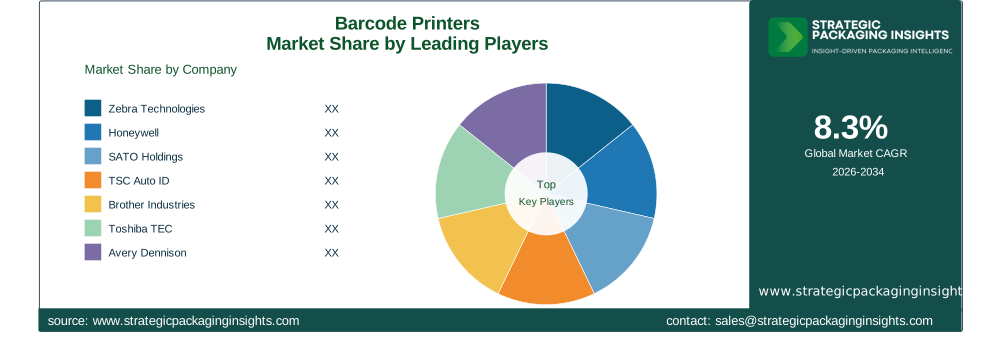
The barcode printers market is characterized by intense competition, with several key players vying for market share. The competitive landscape is dominated by established companies such as Zebra Technologies, Honeywell, and SATO Holdings, which hold significant market shares due to their extensive product portfolios and strong distribution networks. These companies are continuously investing in research and development to introduce innovative products and maintain their competitive edge. Additionally, they are focusing on strategic partnerships and collaborations to expand their market presence and enhance their product offerings.
Zebra Technologies is a leading player in the barcode printers market, known for its wide range of high-quality products and solutions. The company holds a significant market share due to its strong brand reputation and extensive distribution network. Zebra Technologies is continuously investing in research and development to introduce innovative products and maintain its competitive edge. The company is also focusing on strategic partnerships and collaborations to expand its market presence and enhance its product offerings.
Honeywell is another major player in the barcode printers market, offering a comprehensive range of products and solutions for various industries. The company holds a significant market share due to its strong brand reputation and extensive distribution network. Honeywell is continuously investing in research and development to introduce innovative products and maintain its competitive edge. The company is also focusing on strategic partnerships and collaborations to expand its market presence and enhance its product offerings.
SATO Holdings is a prominent player in the barcode printers market, known for its high-quality products and solutions. The company holds a significant market share due to its strong brand reputation and extensive distribution network. SATO Holdings is continuously investing in research and development to introduce innovative products and maintain its competitive edge. The company is also focusing on strategic partnerships and collaborations to expand its market presence and enhance its product offerings.
Key Highlights
- The barcode printers market is projected to grow at a CAGR of 8.3% from 2026 to 2034.
- The market is expected to reach $9.60 billion by 2034, up from $4.67 billion in 2025.
- Key drivers include the increasing demand for efficient inventory management and tracking systems.
- Technological advancements in printing technologies are enhancing the efficiency and reliability of barcode printers.
- The integration of barcode printers with IoT and cloud-based solutions is creating new opportunities for market players.
- The high initial cost of advanced barcode printers is a challenge for small and medium-sized enterprises.
- Alternative technologies, such as RFID, pose a threat to the widespread adoption of barcode printers.
- The market is characterized by intense competition, with several key players vying for market share.
- Zebra Technologies, Honeywell, and SATO Holdings are some of the leading players in the market.
- The growing e-commerce industry is a significant opportunity for the barcode printers market.
Top Countries Insights
In the barcode printers market, the United States holds a significant share due to its advanced retail and logistics sectors. The market size in the U.S. is substantial, driven by the high adoption of barcode technology for inventory management and tracking. The country's focus on automation and digitalization is further propelling the demand for barcode printers. The U.S. market is expected to grow at a CAGR of 7%, supported by technological advancements and the integration of barcode printers with IoT solutions.
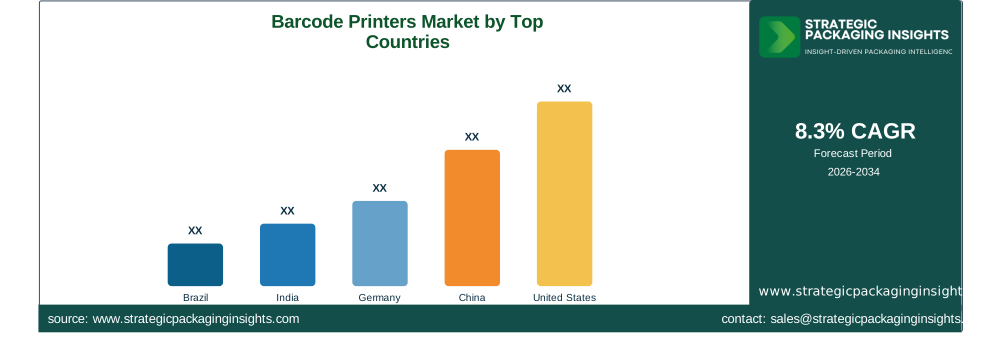
China is another key market for barcode printers, with a rapidly growing e-commerce industry driving demand. The market size in China is expanding as businesses increasingly adopt barcode technology for labeling and shipping purposes. The country's focus on enhancing supply chain efficiency and reducing costs is further boosting the demand for barcode printers. The Chinese market is expected to grow at a CAGR of 10%, supported by government initiatives to promote digitalization and automation in various industries.
Germany is a significant market for barcode printers in Europe, driven by its strong manufacturing and logistics sectors. The market size in Germany is substantial, with businesses increasingly adopting barcode technology for inventory management and tracking. The country's focus on enhancing operational efficiency and reducing costs is further propelling the demand for barcode printers. The German market is expected to grow at a CAGR of 6%, supported by technological advancements and the integration of barcode printers with IoT solutions.
India is an emerging market for barcode printers, with a growing retail and logistics sector driving demand. The market size in India is expanding as businesses increasingly adopt barcode technology for inventory management and tracking. The country's focus on enhancing supply chain efficiency and reducing costs is further boosting the demand for barcode printers. The Indian market is expected to grow at a CAGR of 12%, supported by government initiatives to promote digitalization and automation in various industries.
Brazil is a key market for barcode printers in Latin America, driven by its expanding retail and logistics sectors. The market size in Brazil is substantial, with businesses increasingly adopting barcode technology for labeling and shipping purposes. The country's focus on enhancing operational efficiency and reducing costs is further propelling the demand for barcode printers. The Brazilian market is expected to grow at a CAGR of 8%, supported by technological advancements and the integration of barcode printers with IoT solutions.
Barcode Printers Market Segments Insights

Printer Type Analysis
The barcode printers market is segmented by printer type into desktop printers, industrial printers, and mobile printers. Desktop printers are widely used in retail and small business environments due to their compact size and ease of use. They are ideal for printing labels and receipts, making them a popular choice for point-of-sale applications. Industrial printers, on the other hand, are designed for high-volume printing in manufacturing and logistics environments. They offer robust performance and durability, making them suitable for demanding applications. Mobile printers are gaining popularity due to their portability and convenience, allowing users to print labels and receipts on the go. The increasing demand for mobile printers in field service and delivery applications is driving their adoption.
Desktop printers hold a significant share of the barcode printers market due to their widespread use in retail and small business environments. The growing demand for efficient inventory management and tracking solutions is driving the adoption of desktop printers. Industrial printers are also experiencing strong demand, particularly in manufacturing and logistics sectors, where high-volume printing is required. The increasing focus on automation and digitalization in these industries is further boosting the demand for industrial printers. Mobile printers are expected to witness significant growth, driven by the increasing need for on-the-go printing solutions in field service and delivery applications.
Technology Analysis
The barcode printers market is segmented by technology into thermal transfer, direct thermal, and inkjet barcode printers. Thermal transfer printers are widely used due to their ability to produce durable and high-quality prints. They are ideal for printing labels and tags that require long-lasting durability, making them a popular choice in manufacturing and logistics environments. Direct thermal printers, on the other hand, are known for their simplicity and cost-effectiveness. They are commonly used for printing receipts and shipping labels, where durability is not a primary concern. Inkjet barcode printers offer high-resolution printing and are suitable for applications that require color and detailed graphics.
Thermal transfer printers hold a significant share of the barcode printers market due to their durability and high-quality printing capabilities. The growing demand for durable labels and tags in manufacturing and logistics sectors is driving the adoption of thermal transfer printers. Direct thermal printers are also experiencing strong demand, particularly in retail and logistics environments, where cost-effectiveness and simplicity are key considerations. Inkjet barcode printers are expected to witness significant growth, driven by the increasing demand for high-resolution and color printing solutions in various industries.
Application Analysis
The barcode printers market is segmented by application into labels, shipping, inventory, and healthcare tracking. Labels are the most common application for barcode printers, used across various industries for product identification and tracking. The growing demand for efficient inventory management and tracking solutions is driving the adoption of barcode printers for label printing. Shipping applications are also a significant segment, with barcode printers used for printing shipping labels and receipts. The increasing e-commerce activities and the need for accurate and quick data capture solutions are propelling the demand for barcode printers in shipping applications.
Inventory applications are experiencing strong demand, particularly in retail and logistics environments, where efficient inventory management is crucial. The growing focus on automation and digitalization in these industries is further boosting the demand for barcode printers for inventory applications. Healthcare tracking is an emerging application for barcode printers, with increasing adoption in hospitals and healthcare facilities for patient identification and medication tracking. The growing focus on improving patient safety and reducing medication errors is driving the demand for barcode printers in healthcare tracking applications.
End Use Analysis
The barcode printers market is segmented by end use into retail, logistics, manufacturing, and healthcare. Retail is a significant end-use segment, with barcode printers widely used for point-of-sale applications and inventory management. The growing demand for efficient inventory management and tracking solutions is driving the adoption of barcode printers in the retail sector. Logistics is another major end-use segment, with barcode printers used for printing shipping labels and receipts. The increasing e-commerce activities and the need for accurate and quick data capture solutions are propelling the demand for barcode printers in logistics applications.
Manufacturing is experiencing strong demand for barcode printers, particularly for high-volume printing applications. The growing focus on automation and digitalization in manufacturing environments is further boosting the demand for barcode printers. Healthcare is an emerging end-use segment for barcode printers, with increasing adoption in hospitals and healthcare facilities for patient identification and medication tracking. The growing focus on improving patient safety and reducing medication errors is driving the demand for barcode printers in healthcare applications.
Barcode Printers Market Segments
The Barcode Printers market has been segmented on the basis ofBy Printer Type
- Desktop Printers
- Industrial Printers
- Mobile Printers
By Technology
- Thermal Transfer
- Direct Thermal
- Inkjet Barcode
By Application
- Labels
- Shipping
- Inventory
- Healthcare Tracking
By End Use
- Retail
- Logistics
- Manufacturing
- Healthcare
Region
- Asia Pacific
- North America
- Latin America
- Europe
- Middle East & Africa




