


APET Film Market Outlook
The APET Film market was valued at $7.18 billion in 2025 and is projected to reach $13.94 billion by 2034, growing at a CAGR of 7.6% during the forecast period 2026-2034. This growth is driven by increasing demand for sustainable and recyclable packaging solutions, particularly in the food and pharmaceutical sectors. The versatility of APET films, which offer excellent clarity, barrier properties, and thermoformability, makes them a preferred choice for manufacturers looking to enhance product visibility and shelf life. The market is also benefiting from technological advancements in film production, which are improving the efficiency and cost-effectiveness of APET film manufacturing processes.
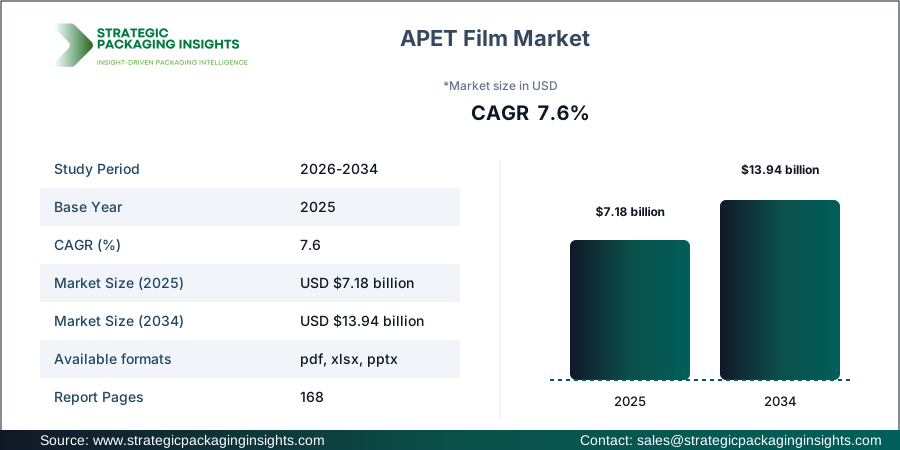
Despite the promising growth trajectory, the APET Film market faces challenges such as fluctuating raw material prices and stringent environmental regulations. These factors can impact production costs and profitability for manufacturers. However, the market's potential remains strong, driven by the increasing adoption of APET films in emerging markets and the development of innovative applications. Companies are investing in research and development to create films with enhanced properties, such as improved barrier performance and reduced environmental impact, which are expected to open new growth avenues in the coming years.
Report Scope
| Attributes | Details |
| Report Title | APET Film Market Size, Future Growth and Forecast 2034 |
| By Product Type | Clear APET Film, Rigid APET Film, Thermoformable APET Film |
| By Application | Food Trays, Blister Packaging, Clamshells, Lidding |
| By Thickness | Thin, Medium, Heavy |
| By End Use | Food Packaging, Pharma, Retail, Converters |
| Region | Asia Pacific, North America, Latin America, Europe, Middle East & Africa |
| Base Year | 2025 |
| Historic Period | 2018-2024 |
| Forecast Period | 2026-2034 |
| Number of Pages | 168 |
| Customization Available | Yes* |
Opportunities & Threats
The APET Film market presents significant opportunities, particularly in the realm of sustainable packaging solutions. As consumers and regulatory bodies increasingly prioritize environmental sustainability, there is a growing demand for recyclable and eco-friendly packaging materials. APET films, known for their recyclability and reduced carbon footprint, are well-positioned to capitalize on this trend. Additionally, the expanding e-commerce sector is driving the need for durable and protective packaging, further boosting the demand for APET films. Companies that can innovate and offer enhanced product features, such as improved barrier properties and lightweight designs, are likely to gain a competitive edge in the market.
Another opportunity lies in the growing demand for high-quality packaging in the food and pharmaceutical industries. APET films offer excellent clarity and barrier properties, making them ideal for packaging applications that require product visibility and protection. The increasing focus on food safety and hygiene is also driving the adoption of APET films, as they provide a reliable barrier against contaminants and extend the shelf life of perishable goods. As the global population continues to grow and urbanize, the demand for packaged food and pharmaceuticals is expected to rise, creating further opportunities for APET film manufacturers.
However, the market is not without its threats. One of the primary challenges is the volatility of raw material prices, which can impact production costs and profit margins for manufacturers. Additionally, stringent environmental regulations regarding plastic waste and recycling can pose compliance challenges for companies operating in this space. To mitigate these threats, companies need to invest in sustainable production practices and develop innovative recycling solutions to meet regulatory requirements and consumer expectations.
Drivers & Challenges
The APET Film market is driven by several key factors, including the increasing demand for sustainable packaging solutions and the growth of the food and pharmaceutical industries. As consumers become more environmentally conscious, there is a growing preference for packaging materials that are recyclable and have a lower environmental impact. APET films, known for their recyclability and excellent barrier properties, are well-suited to meet this demand. Additionally, the expanding e-commerce sector is driving the need for durable and protective packaging, further boosting the demand for APET films. The versatility of APET films, which can be used in a wide range of applications, from food trays to blister packaging, is also contributing to market growth.
Technological advancements in film production are another significant driver of the APET Film market. Innovations in manufacturing processes are improving the efficiency and cost-effectiveness of APET film production, enabling manufacturers to offer high-quality products at competitive prices. The development of films with enhanced properties, such as improved barrier performance and reduced environmental impact, is also opening new growth avenues for the market. As companies continue to invest in research and development, the APET Film market is expected to benefit from the introduction of innovative products that meet the evolving needs of consumers and industries.
Despite these drivers, the APET Film market faces several challenges. One of the primary challenges is the volatility of raw material prices, which can impact production costs and profit margins for manufacturers. Additionally, stringent environmental regulations regarding plastic waste and recycling can pose compliance challenges for companies operating in this space. To overcome these challenges, companies need to invest in sustainable production practices and develop innovative recycling solutions to meet regulatory requirements and consumer expectations. The ability to adapt to changing market conditions and consumer preferences will be crucial for companies looking to succeed in the APET Film market.
Market Share Analysis
The APET Film market is characterized by a competitive landscape with several key players vying for market share. Companies such as Klöckner Pentaplast, Toray Industries, Mitsubishi Chemical, Jindal Films, Ester Industries, Retal, Polyplex, UFlex, TekniPlex, and Octal are prominent players in this market. These companies are focusing on expanding their product portfolios and enhancing their production capabilities to meet the growing demand for APET films. Strategic partnerships, mergers, and acquisitions are also common strategies employed by these companies to strengthen their market position and expand their geographical reach.
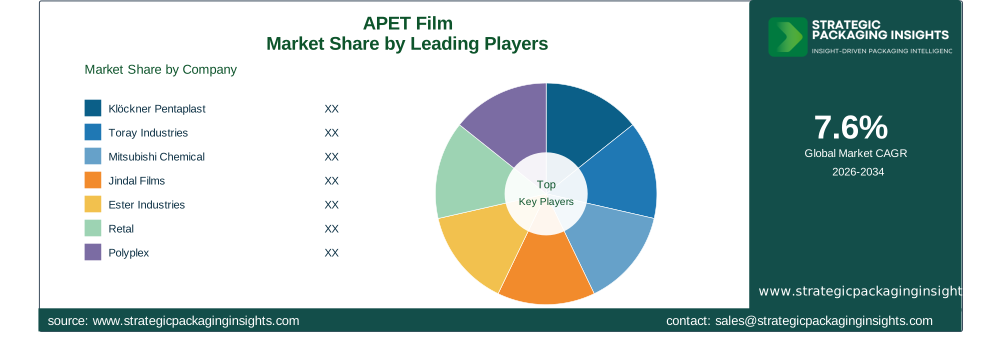
Klöckner Pentaplast is a leading player in the APET Film market, known for its innovative packaging solutions and commitment to sustainability. The company offers a wide range of APET films for various applications, including food packaging and pharmaceuticals. Toray Industries, another major player, is recognized for its advanced film technologies and strong focus on research and development. The company's APET films are widely used in the electronics and automotive industries, as well as in packaging applications.
Mitsubishi Chemical is a key player in the APET Film market, offering high-performance films with excellent clarity and barrier properties. The company is committed to sustainability and has implemented various initiatives to reduce its environmental impact. Jindal Films, known for its innovative packaging solutions, offers a diverse range of APET films for food and pharmaceutical applications. The company's focus on product innovation and customer satisfaction has helped it maintain a strong market position.
Ester Industries, Retal, and Polyplex are also significant players in the APET Film market, each offering a unique range of products and solutions. These companies are investing in research and development to create films with enhanced properties, such as improved barrier performance and reduced environmental impact. UFlex, TekniPlex, and Octal are other notable players in the market, known for their high-quality APET films and commitment to sustainability. These companies are focusing on expanding their production capabilities and enhancing their product offerings to meet the evolving needs of consumers and industries.
Key Highlights
- The APET Film market is projected to grow at a CAGR of 7.6% from 2026 to 2034.
- Increasing demand for sustainable and recyclable packaging solutions is driving market growth.
- Technological advancements in film production are improving efficiency and cost-effectiveness.
- The food and pharmaceutical industries are key end-users of APET films.
- Volatility in raw material prices poses a challenge for manufacturers.
- Stringent environmental regulations require companies to invest in sustainable practices.
- Key players are focusing on product innovation and strategic partnerships to strengthen their market position.
- The expanding e-commerce sector is boosting demand for durable and protective packaging.
- APET films offer excellent clarity and barrier properties, making them ideal for various applications.
- Emerging markets present significant growth opportunities for APET film manufacturers.
Top Countries Insights
In the APET Film market, the United States stands out as a key player, with a market size of approximately $2.5 billion and a CAGR of 6%. The country's robust food and pharmaceutical industries drive demand for high-quality packaging solutions. Additionally, the growing emphasis on sustainability and recyclability in packaging materials aligns with the properties of APET films, further boosting their adoption. However, regulatory challenges related to plastic waste management remain a concern for manufacturers operating in the U.S.
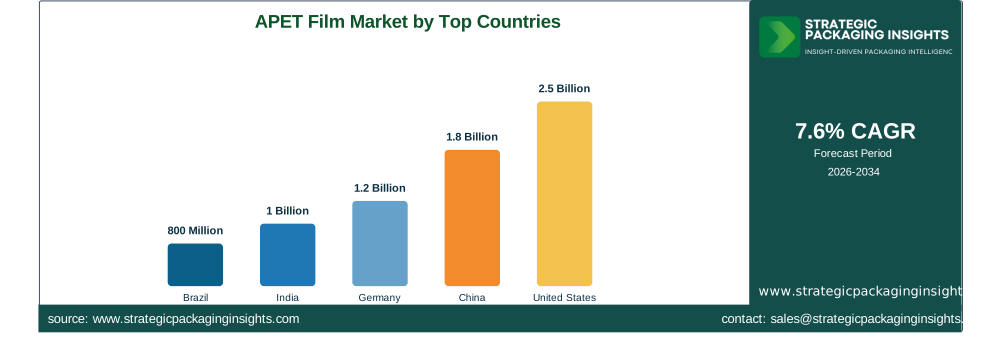
China is another significant market for APET films, with a market size of around $1.8 billion and a CAGR of 9%. The country's rapid industrialization and urbanization have led to increased demand for packaged goods, driving the need for efficient and sustainable packaging solutions. Government initiatives promoting environmental sustainability and the development of advanced manufacturing technologies are key growth drivers in the Chinese market. However, competition from local manufacturers and fluctuating raw material prices pose challenges for international players.
Germany, with a market size of approximately $1.2 billion and a CAGR of 5%, is a leading market for APET films in Europe. The country's strong focus on sustainability and innovation in packaging materials supports the growth of the APET Film market. The automotive and electronics industries also contribute to the demand for high-performance films. However, stringent environmental regulations and high production costs are challenges that manufacturers must navigate in the German market.
India, with a market size of about $1 billion and a CAGR of 8%, presents significant growth opportunities for APET film manufacturers. The country's expanding middle class and increasing consumer awareness of sustainable packaging solutions drive demand for APET films. Government initiatives promoting the use of eco-friendly materials and the growth of the e-commerce sector further support market growth. However, infrastructure challenges and regulatory hurdles can impact market expansion in India.
Brazil, with a market size of approximately $800 million and a CAGR of 7%, is a key market for APET films in Latin America. The country's growing food and beverage industry drives demand for high-quality packaging solutions. Additionally, the increasing focus on sustainability and recyclability in packaging materials aligns with the properties of APET films, supporting their adoption. However, economic instability and regulatory challenges related to plastic waste management remain concerns for manufacturers operating in Brazil.
APET Film Market Segments Insights

Product Type Analysis
The APET Film market is segmented by product type into clear APET film, rigid APET film, and thermoformable APET film. Clear APET films are highly favored for their excellent transparency and gloss, making them ideal for applications where product visibility is crucial, such as food packaging and retail displays. The demand for clear APET films is driven by the growing consumer preference for visually appealing packaging that enhances product presentation. Rigid APET films, known for their strength and durability, are widely used in applications requiring robust packaging solutions, such as clamshells and blister packaging. The thermoformable APET films segment is gaining traction due to its versatility and ease of processing, making it suitable for a wide range of applications, including food trays and lidding.
Technological advancements in film production are enhancing the properties of APET films, such as improved barrier performance and reduced environmental impact. Manufacturers are focusing on developing innovative products that meet the evolving needs of consumers and industries. The increasing demand for sustainable and recyclable packaging solutions is also driving the growth of the APET Film market. Companies are investing in research and development to create films with enhanced properties, such as improved clarity and barrier performance, to gain a competitive edge in the market. The ability to offer high-quality products at competitive prices is crucial for manufacturers looking to succeed in the APET Film market.
Application Analysis
The APET Film market is segmented by application into food trays, blister packaging, clamshells, and lidding. The food trays segment is a major contributor to market growth, driven by the increasing demand for convenient and hygienic packaging solutions in the food industry. APET films offer excellent barrier properties and clarity, making them ideal for food packaging applications that require product visibility and protection. The blister packaging segment is also experiencing significant growth, supported by the pharmaceutical industry's need for secure and tamper-evident packaging solutions. Clamshells and lidding applications are benefiting from the growing demand for durable and protective packaging in the retail and e-commerce sectors.
Innovation in packaging design and materials is a key trend in the APET Film market. Companies are focusing on developing products that offer enhanced functionality and sustainability, such as films with improved barrier performance and reduced environmental impact. The increasing focus on food safety and hygiene is also driving the adoption of APET films, as they provide a reliable barrier against contaminants and extend the shelf life of perishable goods. As the global population continues to grow and urbanize, the demand for packaged food and pharmaceuticals is expected to rise, creating further opportunities for APET film manufacturers.
Thickness Analysis
The APET Film market is segmented by thickness into thin, medium, and heavy films. Thin APET films are widely used in applications where flexibility and cost-effectiveness are important, such as food packaging and retail displays. The demand for thin films is driven by the growing consumer preference for lightweight and sustainable packaging solutions. Medium-thickness films offer a balance between strength and flexibility, making them suitable for a wide range of applications, including clamshells and blister packaging. Heavy APET films, known for their durability and impact resistance, are used in applications requiring robust packaging solutions, such as industrial and automotive packaging.
Technological advancements in film production are enabling manufacturers to produce films with varying thicknesses and enhanced properties. Companies are focusing on developing innovative products that meet the evolving needs of consumers and industries. The increasing demand for sustainable and recyclable packaging solutions is also driving the growth of the APET Film market. Manufacturers are investing in research and development to create films with improved barrier performance and reduced environmental impact. The ability to offer high-quality products at competitive prices is crucial for manufacturers looking to succeed in the APET Film market.
End Use Analysis
The APET Film market is segmented by end use into food packaging, pharma, retail, and converters. The food packaging segment is a major contributor to market growth, driven by the increasing demand for convenient and hygienic packaging solutions in the food industry. APET films offer excellent barrier properties and clarity, making them ideal for food packaging applications that require product visibility and protection. The pharma segment is also experiencing significant growth, supported by the pharmaceutical industry's need for secure and tamper-evident packaging solutions. The retail and converters segments are benefiting from the growing demand for durable and protective packaging in the e-commerce sector.
Innovation in packaging design and materials is a key trend in the APET Film market. Companies are focusing on developing products that offer enhanced functionality and sustainability, such as films with improved barrier performance and reduced environmental impact. The increasing focus on food safety and hygiene is also driving the adoption of APET films, as they provide a reliable barrier against contaminants and extend the shelf life of perishable goods. As the global population continues to grow and urbanize, the demand for packaged food and pharmaceuticals is expected to rise, creating further opportunities for APET film manufacturers.
APET Film Market Segments
The APET Film market has been segmented on the basis ofBy Product Type
- Clear APET Film
- Rigid APET Film
- Thermoformable APET Film
By Application
- Food Trays
- Blister Packaging
- Clamshells
- Lidding
By Thickness
- Thin
- Medium
- Heavy
By End Use
- Food Packaging
- Pharma
- Retail
- Converters
Region
- Asia Pacific
- North America
- Latin America
- Europe
- Middle East & Africa




