


Antimicrobial Polymer Films Market Outlook
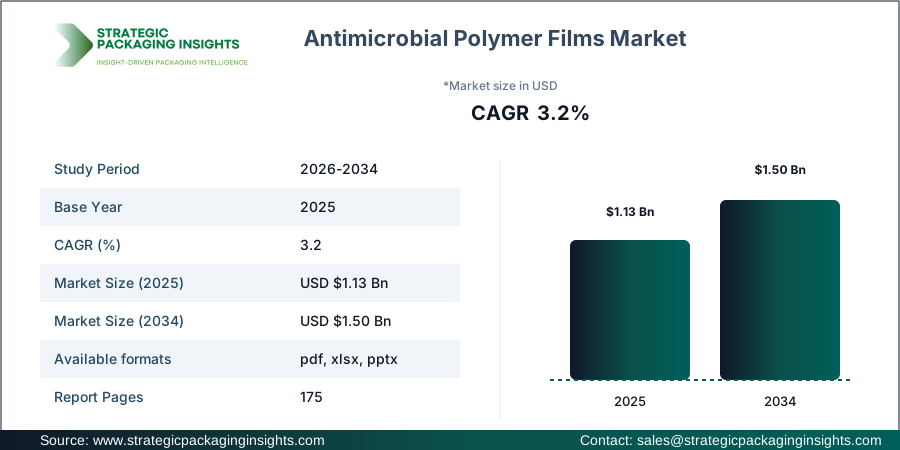
The Antimicrobial Polymer Films market size was valued at USD 1.13 billion in 2025 and is anticipated to reach USD 1.50 billion by 2034, growing at a CAGR of 3.2% during the forecast period according to Strategic Packaging Insights. The market is witnessing significant growth due to the increasing demand for antimicrobial solutions in various sectors such as healthcare, food packaging, and hygiene products. Companies like Amcor and Berry Global are at the forefront, driving innovation and expanding their product portfolios to meet the rising consumer demand for safer and more hygienic packaging solutions. The growing awareness about health and hygiene, especially post-pandemic, has further fueled the demand for antimicrobial polymer films, making it a lucrative market for investors and manufacturers alike.
One of the most impactful drivers of the Antimicrobial Polymer Films market is the stringent regulations and guidelines imposed by health authorities and governments worldwide. These regulations aim to ensure the safety and efficacy of packaging materials, particularly in the food and healthcare sectors. For instance, the U.S. Food and Drug Administration (FDA) and the European Food Safety Authority (EFSA) have set high standards for antimicrobial packaging, which has led to increased R&D investments by companies like Mondi and BASF to develop compliant and innovative solutions. This regulatory push, coupled with the growing consumer preference for sustainable and safe packaging, is expected to drive the market's growth trajectory over the forecast period.
Report Scope
| Attributes | Details |
| Report Title | Antimicrobial Polymer Films Market Size, Future Growth and Forecast 2034 |
| By Material Type | PE, PP, PET, PVC |
| By Additive Type | Silver-Based, Copper-Based, Organic Antimicrobial, Bio-Based |
| By Application | Food Packaging, Medical Packaging, Surface Protection, Hygiene Products |
| By End Use | Healthcare, Food & Beverage, FMCG, Industrial |
| Region | Asia Pacific, North America, Latin America, Europe, Middle East & Africa |
| Base Year | 2025 |
| Historic Period | 2018-2024 |
| Forecast Period | 2026-2034 |
| Number of Pages | 175 |
| Customization Available | Yes* |
Sustainability & Circular Economy Analysis
Sustainability initiatives and circular economy practices are increasingly shaping the Antimicrobial Polymer Films market. Companies are focusing on developing recyclable and reusable packaging solutions to reduce environmental impact. The use of eco-friendly materials and lightweight packaging is becoming a norm, driven by consumer demand for sustainable products. For instance, brands like UFlex and Toray Industries are investing in R&D to create biodegradable antimicrobial films, aligning with global sustainability goals. These efforts not only help in reducing the carbon footprint but also enhance brand reputation and consumer trust.
The integration of waste reduction strategies and extended producer responsibility (EPR) is influencing packaging design and manufacturing processes. Companies are adopting closed-loop systems to minimize waste and promote recycling. This shift towards a circular economy is encouraging manufacturers to innovate and invest in sustainable technologies. As a result, the market is witnessing a surge in demand for bio-based antimicrobial films, which offer a sustainable alternative to traditional materials. This trend is expected to drive long-term market competitiveness and attract investments from environmentally conscious stakeholders.
Regulatory compliance and ESG initiatives are playing a crucial role in shaping the market dynamics. Governments worldwide are implementing stringent regulations to promote sustainable packaging solutions. This has led to increased collaboration between manufacturers, brand owners, and policymakers to develop eco-friendly packaging standards. The focus on reducing carbon emissions and enhancing supply chain sustainability is driving companies to adopt green practices, thereby influencing investment decisions and supply chain strategies. As a result, the Antimicrobial Polymer Films market is poised for significant growth, driven by the increasing emphasis on sustainability and circular economy practices.
Packaging Value Chain & Supply Chain Analysis
The packaging value chain for antimicrobial polymer films is complex, involving multiple stakeholders from raw material suppliers to end-users. Raw material sourcing is a critical component, with companies like BASF and Avient focusing on securing high-quality inputs to ensure product efficacy. Packaging converters and manufacturers play a pivotal role in transforming these materials into functional films, with advanced machinery and technology enhancing production capabilities. Strategic partnerships and collaborations are essential for optimizing the supply chain, ensuring timely delivery, and maintaining competitive pricing.
Supply chain efficiency is paramount in the Antimicrobial Polymer Films market, with logistics and distribution channels playing a crucial role in market performance. Companies are investing in robust inventory management systems to streamline operations and reduce lead times. The availability of raw materials and transportation infrastructure significantly impacts production schedules and market competitiveness. As a result, manufacturers are adopting localization strategies to mitigate risks associated with global sourcing and enhance supply chain resilience.
Recycling networks and procurement strategies are integral to the packaging value chain, with a growing emphasis on sustainability and waste reduction. Companies are implementing closed-loop systems to promote recycling and reduce environmental impact. This shift towards sustainable practices is influencing procurement decisions, with a preference for eco-friendly materials and suppliers. The focus on enhancing supply chain sustainability is driving innovation and investment in green technologies, positioning the Antimicrobial Polymer Films market for long-term growth and competitiveness.
Opportunities & Threats
The Antimicrobial Polymer Films market presents numerous opportunities for growth and innovation. The increasing demand for hygienic and safe packaging solutions in the healthcare and food sectors is a significant driver. Companies like Microban and BioCote are leveraging advanced technologies to develop innovative antimicrobial films that cater to this demand. The growing awareness about health and hygiene, coupled with the rising consumer preference for sustainable packaging, offers a lucrative opportunity for manufacturers to expand their product portfolios and capture a larger market share. Additionally, the adoption of bio-based antimicrobial films is gaining traction, driven by the global shift towards sustainability and eco-friendly solutions.
The expansion of e-commerce and online retail presents another opportunity for the Antimicrobial Polymer Films market. With the increasing demand for safe and hygienic packaging for online deliveries, companies are focusing on developing antimicrobial films that offer enhanced protection and durability. This trend is expected to drive market growth, as more consumers opt for online shopping and home deliveries. Furthermore, the growing emphasis on reducing food waste and extending shelf life is creating opportunities for innovation in food packaging applications, with antimicrobial films playing a crucial role in preserving product freshness and quality.
Despite the growth opportunities, the Antimicrobial Polymer Films market faces certain threats and challenges. The high cost of raw materials and production processes can impact profitability and market competitiveness. Additionally, the stringent regulatory landscape poses a challenge for manufacturers, requiring significant investments in R&D to develop compliant and innovative solutions. The market also faces competition from alternative packaging materials, which may offer cost advantages or superior performance. To mitigate these threats, companies need to focus on cost optimization, strategic partnerships, and continuous innovation to maintain their competitive edge in the market.
Drivers & Challenges
The Antimicrobial Polymer Films market is driven by several key factors, including the increasing demand for hygienic and safe packaging solutions. The healthcare and food sectors are major contributors to this demand, with companies like Amcor and Berry Global leading the charge in developing innovative antimicrobial films. The growing awareness about health and hygiene, especially in the wake of the COVID-19 pandemic, has further accelerated the adoption of antimicrobial packaging solutions. Additionally, the rising consumer preference for sustainable and eco-friendly packaging is driving manufacturers to invest in bio-based and recyclable antimicrobial films, offering a competitive advantage in the market.
Technological advancements and innovation are also significant drivers of the Antimicrobial Polymer Films market. Companies are leveraging cutting-edge technologies to enhance the efficacy and performance of antimicrobial films. For instance, the development of silver-based and copper-based antimicrobial additives has revolutionized the market, offering superior protection against a wide range of pathogens. These innovations are not only enhancing product performance but also expanding the application scope of antimicrobial films across various industries, including healthcare, food packaging, and surface protection.
However, the market faces several challenges that could hinder its growth potential. The high cost of raw materials and production processes is a significant barrier, impacting profitability and market competitiveness. Additionally, the stringent regulatory landscape requires manufacturers to invest heavily in R&D to develop compliant and innovative solutions. The market also faces competition from alternative packaging materials, which may offer cost advantages or superior performance. To overcome these challenges, companies need to focus on cost optimization, strategic partnerships, and continuous innovation to maintain their competitive edge in the market.
Market Share Analysis
The competitive landscape of the Antimicrobial Polymer Films market is characterized by the presence of several key players, each striving to capture a significant share of the market. Companies like Amcor, Berry Global, and Mondi are leading the market with their extensive product portfolios and strong distribution networks. These companies are investing heavily in R&D to develop innovative antimicrobial films that cater to the evolving consumer demands for hygienic and sustainable packaging solutions. Their strategic partnerships and collaborations with other industry players further enhance their market position and competitiveness.
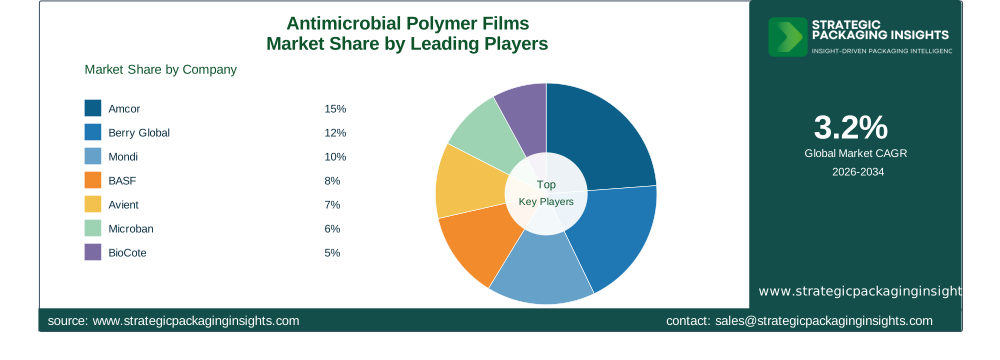
Amcor is a prominent player in the Antimicrobial Polymer Films market, known for its innovative packaging solutions and commitment to sustainability. The company offers a wide range of antimicrobial films that cater to various applications, including food packaging and healthcare. Berry Global is another key player, leveraging its extensive manufacturing capabilities and global presence to deliver high-quality antimicrobial films. The company's focus on sustainability and innovation has helped it maintain a competitive edge in the market.
Mondi is a leading provider of antimicrobial polymer films, known for its commitment to sustainability and innovation. The company offers a diverse range of products that cater to the healthcare and food packaging sectors. BASF, a global leader in chemical manufacturing, is also a significant player in the market, offering advanced antimicrobial solutions that enhance product performance and safety. Avient and Microban are other notable players, known for their innovative antimicrobial technologies and strong market presence.
BioCote is a key player in the antimicrobial polymer films market, offering a range of antimicrobial additives that enhance the efficacy of packaging solutions. UFlex, a leading flexible packaging company, is known for its innovative antimicrobial films that cater to the food and healthcare sectors. Dunmore and Toray Industries are also significant players, leveraging their extensive manufacturing capabilities and global presence to deliver high-quality antimicrobial films. These companies are investing in R&D and strategic partnerships to enhance their market position and competitiveness.
Key Highlights
- Market Size: The Antimicrobial Polymer Films market was valued at USD 1.13 billion in 2025 and is projected to reach USD 1.50 billion by 2034.
- Growth Rate: The market is expected to grow at a CAGR of 3.2% during the forecast period.
- Leading Companies: Key players include Amcor, Berry Global, Mondi, BASF, and Avient.
- Material Type: PE, PP, PET, and PVC are the primary materials used in antimicrobial films.
- Application Segments: Food packaging and medical packaging are the major application areas.
- Regional Insights: Asia Pacific is expected to witness significant growth, driven by increasing demand for hygienic packaging solutions.
- Sustainability Focus: The market is witnessing a shift towards bio-based and recyclable antimicrobial films.
Antimicrobial Polymer Films Market Segments Insights

By Material Type Analysis
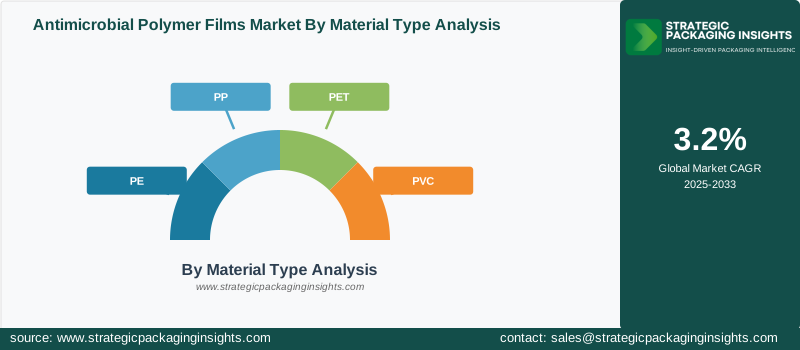
The Antimicrobial Polymer Films market is segmented by material type into PE, PP, PET, and PVC. Each material offers unique properties that cater to different application needs. PE and PP are widely used due to their excellent barrier properties and cost-effectiveness, making them ideal for food packaging applications. PET is favored for its strength and clarity, often used in medical packaging where visibility and durability are crucial. PVC, known for its flexibility and chemical resistance, is commonly used in industrial applications. Companies like Amcor and Berry Global are focusing on developing innovative solutions using these materials to enhance product performance and meet consumer demands for hygienic and sustainable packaging.
The demand for antimicrobial films made from these materials is driven by the increasing need for safe and hygienic packaging solutions across various industries. The healthcare sector, in particular, is witnessing a surge in demand for antimicrobial films to prevent contamination and ensure product safety. Additionally, the growing awareness about sustainability is driving manufacturers to explore bio-based alternatives and recyclable materials, offering a competitive edge in the market. The focus on material innovation and sustainability is expected to drive the growth of the Antimicrobial Polymer Films market over the forecast period.
By Additive Type Analysis
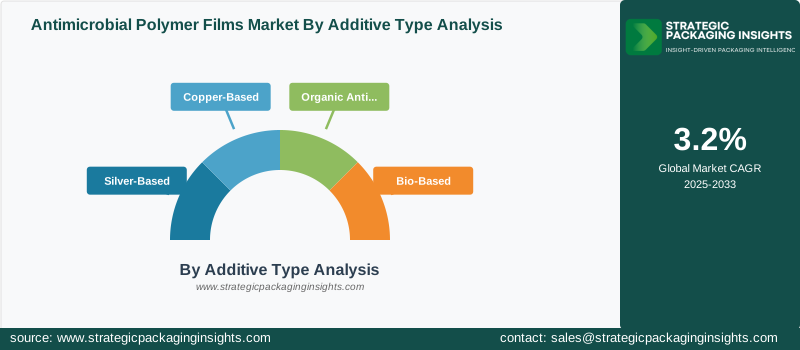
The Antimicrobial Polymer Films market is segmented by additive type into silver-based, copper-based, organic antimicrobial, and bio-based additives. Silver-based additives are widely used due to their proven efficacy against a broad spectrum of microorganisms, making them a popular choice for healthcare and food packaging applications. Copper-based additives are gaining traction for their antimicrobial properties and cost-effectiveness, offering an alternative to silver-based solutions. Organic antimicrobial additives, derived from natural sources, are increasingly being used in response to the growing demand for eco-friendly and sustainable packaging solutions.
Bio-based additives are emerging as a key trend in the market, driven by the global shift towards sustainability and the circular economy. These additives offer a sustainable alternative to traditional antimicrobial solutions, aligning with consumer preferences for environmentally friendly products. Companies like BASF and Avient are investing in R&D to develop innovative bio-based antimicrobial solutions that cater to the evolving market demands. The focus on additive innovation and sustainability is expected to drive the growth of the Antimicrobial Polymer Films market, offering new opportunities for manufacturers and investors.
By Application Analysis
The Antimicrobial Polymer Films market is segmented by application into food packaging, medical packaging, surface protection, and hygiene products. Food packaging is a major application area, driven by the increasing demand for safe and hygienic packaging solutions to prevent contamination and extend shelf life. Medical packaging is another significant segment, with antimicrobial films playing a crucial role in ensuring product safety and preventing infections. The growing emphasis on hygiene and cleanliness, especially in the wake of the COVID-19 pandemic, is driving the demand for antimicrobial films in surface protection and hygiene products.
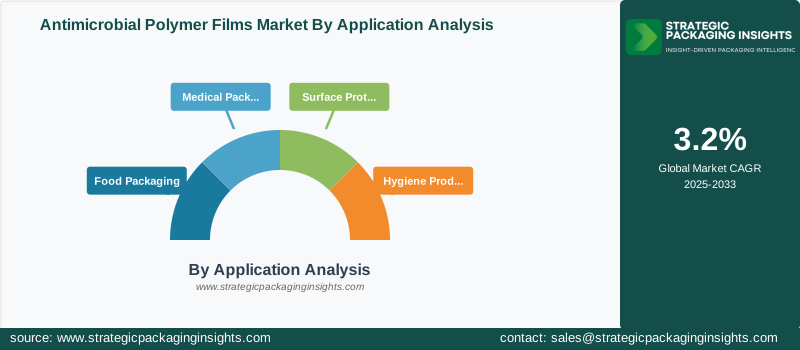
The demand for antimicrobial films in these applications is driven by the increasing awareness about health and hygiene, coupled with the rising consumer preference for sustainable packaging solutions. Companies like Mondi and UFlex are focusing on developing innovative antimicrobial films that cater to these application needs, offering enhanced protection and durability. The focus on application innovation and sustainability is expected to drive the growth of the Antimicrobial Polymer Films market, offering new opportunities for manufacturers and investors.
By End Use Analysis
The Antimicrobial Polymer Films market is segmented by end use into healthcare, food & beverage, FMCG, and industrial sectors. The healthcare sector is a major end-user, driven by the increasing demand for antimicrobial films to prevent contamination and ensure product safety. The food & beverage sector is another significant end-user, with antimicrobial films playing a crucial role in preserving product freshness and extending shelf life. The FMCG sector is witnessing a surge in demand for antimicrobial films, driven by the growing emphasis on hygiene and cleanliness.
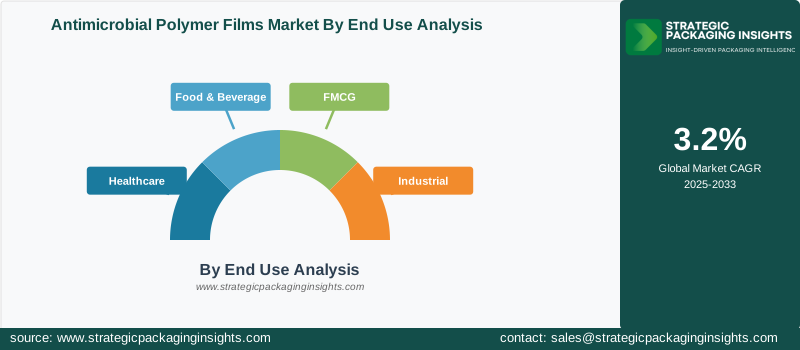
The demand for antimicrobial films in these end-use sectors is driven by the increasing awareness about health and hygiene, coupled with the rising consumer preference for sustainable packaging solutions. Companies like Amcor and Berry Global are focusing on developing innovative antimicrobial films that cater to these end-use needs, offering enhanced protection and durability. The focus on end-use innovation and sustainability is expected to drive the growth of the Antimicrobial Polymer Films market, offering new opportunities for manufacturers and investors.
Antimicrobial Polymer Films Market Segments
The Antimicrobial Polymer Films market has been segmented on the basis ofBy Material Type
- PE
- PP
- PET
- PVC
By Additive Type
- Silver-Based
- Copper-Based
- Organic Antimicrobial
- Bio-Based
By Application
- Food Packaging
- Medical Packaging
- Surface Protection
- Hygiene Products
By End Use
- Healthcare
- Food & Beverage
- FMCG
- Industrial
Region
- Asia Pacific
- North America
- Latin America
- Europe
- Middle East & Africa




