


Anti-slip Floor Tape Market Outlook
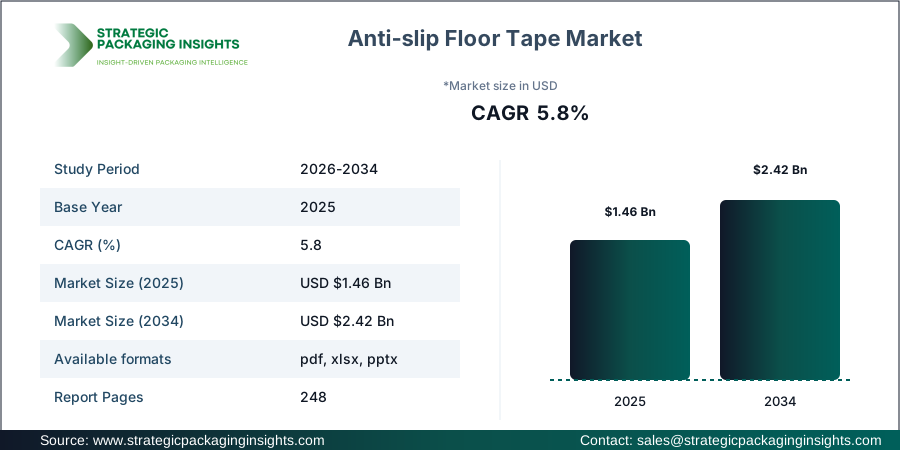
The Anti-slip Floor Tape market size was valued at USD 1.46 billion in 2025 and is anticipated to reach USD 2.42 billion by 2034, growing at a CAGR of 5.8% during the forecast period according to Strategic Packaging Insights. The market is witnessing robust growth driven by increasing safety regulations across industrial and commercial sectors. Companies like 3M and Heskins are leading the charge by innovating products that cater to diverse applications such as stairs, ramps, and industrial floors. The demand for anti-slip solutions is further propelled by the rising awareness of workplace safety and the need to prevent slip-related accidents, which are significant concerns in high-traffic areas.
One of the most impactful drivers of the Anti-slip Floor Tape market is the stringent safety regulations imposed by governments worldwide. These regulations mandate the use of safety measures in workplaces, which has significantly increased the adoption of anti-slip tapes. For instance, the Occupational Safety and Health Administration (OSHA) in the United States has set forth guidelines that require employers to ensure safe walking-working surfaces, thereby boosting the demand for anti-slip solutions. Companies like Tesa and Nitto Denko are capitalizing on these regulatory frameworks by offering compliant and innovative products that meet the evolving needs of various industries.
Report Scope
| Attributes | Details |
| Report Title | Anti-slip Floor Tape Market Size, Future Growth and Forecast 2034 |
| By Material Type | PVC, PET, Aluminum Oxide, Rubber |
| By Product Type | Standard Anti-Slip Tape, Reflective Tape, Hazard Marking Tape |
| By Application | Stairs, Ramps, Industrial Floors, Vehicles |
| By End Use | Industrial, Commercial, Construction, Transportation |
| Region | Asia Pacific, North America, Latin America, Europe, Middle East & Africa |
| Base Year | 2025 |
| Historic Period | 2018-2024 |
| Forecast Period | 2026-2034 |
| Number of Pages | 248 |
| Customization Available | Yes* |
Sustainability & Circular Economy Analysis
Sustainability initiatives are increasingly shaping the Anti-slip Floor Tape market, with a strong emphasis on eco-friendly materials and waste reduction strategies. Companies are investing in recyclable materials and lightweight packaging to minimize environmental impact. For instance, the use of PVC and PET in anti-slip tapes is being optimized to enhance recyclability, aligning with global sustainability goals. This shift towards sustainable practices is not only reducing the carbon footprint but also appealing to environmentally conscious consumers who prioritize eco-friendly products.
The circular economy is influencing packaging design and manufacturing processes in the Anti-slip Floor Tape market. Companies are adopting extended producer responsibility (EPR) strategies to ensure that their products are part of a closed-loop system. This involves designing tapes that are not only durable but also easy to recycle, thereby reducing waste and promoting resource efficiency. Such practices are becoming integral to maintaining long-term market competitiveness and meeting regulatory compliance, as governments worldwide are tightening packaging regulations to curb environmental degradation.
Consumer preferences are increasingly leaning towards sustainable products, prompting companies to innovate in eco-friendly material solutions. This trend is driving investment decisions and supply chain strategies, as manufacturers seek to balance cost-effectiveness with sustainability. The integration of ESG initiatives is becoming a key differentiator in the market, with companies like Brady Corporation and Avery Dennison leading the way in implementing comprehensive sustainability frameworks. These efforts are crucial for enhancing brand reputation and securing a competitive edge in a market that is progressively prioritizing environmental responsibility.
Packaging Value Chain & Supply Chain Analysis
The packaging value chain in the Anti-slip Floor Tape market is a complex ecosystem involving raw material sourcing, manufacturing, and distribution. Raw materials such as PVC, PET, and aluminum oxide are sourced globally, with manufacturers like 3M and Shurtape playing pivotal roles in converting these materials into high-quality anti-slip tapes. The efficiency of this value chain is critical, as it directly impacts production capabilities and market performance. Strategic partnerships with suppliers and logistics providers are essential for ensuring a steady supply of raw materials and optimizing inventory management.
Supply chain resilience is a key focus area for companies in the Anti-slip Floor Tape market. The COVID-19 pandemic highlighted the vulnerabilities in global supply chains, prompting companies to adopt localization strategies and diversify their sourcing channels. This shift is aimed at mitigating risks associated with raw material shortages and transportation disruptions. Companies like Intertape Polymer Group and Jessup Manufacturing are investing in advanced packaging machinery and logistics solutions to enhance supply chain efficiency and meet the growing demand for anti-slip tapes across various regions.
Distribution channels play a crucial role in the market, with brand owners and retailers relying on efficient logistics networks to reach end-users. The integration of recycling networks into the supply chain is becoming increasingly important, as companies strive to close the loop and promote sustainability. This involves collaborating with recycling partners to ensure that used tapes are collected and processed for reuse, thereby reducing waste and supporting circular economy goals. Such initiatives are vital for maintaining business competitiveness and meeting the evolving expectations of environmentally conscious consumers.
Opportunities & Threats
The Anti-slip Floor Tape market presents significant opportunities for growth, driven by the increasing demand for safety solutions across various industries. The construction and transportation sectors, in particular, are witnessing a surge in demand for anti-slip tapes due to the need for enhanced safety measures. Companies can capitalize on this trend by developing innovative products that cater to specific applications, such as reflective tapes for vehicles and hazard marking tapes for construction sites. Additionally, the growing emphasis on workplace safety regulations offers a lucrative opportunity for market expansion, as businesses seek to comply with stringent safety standards.
Technological advancements in material science and manufacturing processes are opening new avenues for product innovation in the Anti-slip Floor Tape market. Companies are investing in research and development to create tapes with superior adhesive properties and durability, which can withstand harsh environmental conditions. The integration of smart technologies, such as sensors and IoT, into anti-slip tapes is also emerging as a potential growth area, offering enhanced safety features and real-time monitoring capabilities. These innovations are expected to drive market growth and provide a competitive edge to companies that can effectively leverage these technologies.
Despite the promising growth prospects, the Anti-slip Floor Tape market faces several challenges that could hinder its expansion. One of the primary restrainers is the fluctuating prices of raw materials, which can impact production costs and profit margins. Additionally, the market is highly competitive, with numerous players vying for market share, leading to price wars and reduced profitability. Companies must navigate these challenges by adopting cost-effective manufacturing processes and exploring alternative materials to mitigate the impact of raw material price volatility. Furthermore, the need to comply with varying regulatory standards across different regions can pose a significant challenge for market players, requiring them to invest in compliance and certification processes.
Drivers & Challenges
The Anti-slip Floor Tape market is primarily driven by the increasing focus on workplace safety and the implementation of stringent safety regulations. Governments worldwide are enforcing regulations that mandate the use of safety measures in workplaces, leading to a surge in demand for anti-slip tapes. This trend is particularly prominent in industrial and commercial sectors, where slip-related accidents are a major concern. Companies like 3M and Heskins are leveraging these regulatory frameworks to offer innovative products that meet the evolving needs of various industries, thereby driving market growth.
Another key driver of the market is the growing awareness of the importance of safety in high-traffic areas. As businesses prioritize the well-being of their employees and customers, the demand for anti-slip solutions is on the rise. This is further supported by the increasing adoption of safety standards and certifications, which are becoming essential for businesses to maintain their reputation and competitiveness. Companies are investing in research and development to create advanced anti-slip tapes that offer superior performance and durability, catering to the diverse needs of different applications.
However, the market faces several challenges that could impede its growth. One of the primary challenges is the intense competition among market players, which can lead to price wars and reduced profit margins. Additionally, the fluctuating prices of raw materials pose a significant challenge, as they can impact production costs and profitability. Companies must navigate these challenges by adopting cost-effective manufacturing processes and exploring alternative materials to mitigate the impact of raw material price volatility. Furthermore, the need to comply with varying regulatory standards across different regions can pose a significant challenge for market players, requiring them to invest in compliance and certification processes.
Market Share Analysis
The Anti-slip Floor Tape market is characterized by a competitive landscape with several key players vying for market share. Companies like 3M, Heskins, and Tesa are leading the market with their innovative product offerings and strong brand presence. These companies have established themselves as leaders in the market by consistently delivering high-quality products that meet the evolving needs of various industries. Their extensive distribution networks and strategic partnerships with suppliers and retailers have enabled them to maintain a competitive edge in the market.
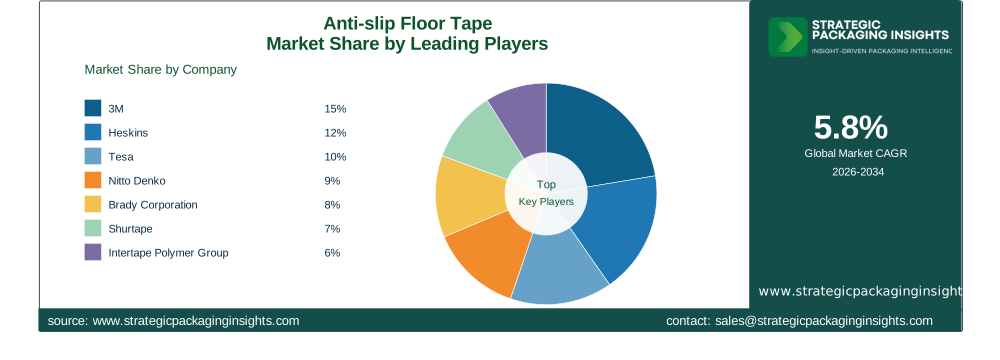
3M is a prominent player in the Anti-slip Floor Tape market, known for its extensive range of safety solutions and innovative product offerings. The company's strong focus on research and development has enabled it to create advanced anti-slip tapes that cater to diverse applications. Heskins, another key player, is renowned for its high-quality anti-slip tapes that are widely used in industrial and commercial sectors. The company's commitment to sustainability and eco-friendly practices has further strengthened its position in the market.
Tesa is a leading manufacturer of adhesive tapes, including anti-slip tapes, with a strong presence in the global market. The company's extensive product portfolio and focus on innovation have enabled it to capture a significant share of the market. Nitto Denko, a Japanese company, is also a major player in the market, known for its high-performance adhesive solutions and strong focus on sustainability. Brady Corporation, Shurtape, and Intertape Polymer Group are other notable players in the market, each with their unique product offerings and market strategies.
Jessup Manufacturing and Advance Tapes are also key players in the Anti-slip Floor Tape market, known for their high-quality products and strong customer base. These companies have established themselves as leaders in the market by consistently delivering innovative solutions that meet the evolving needs of various industries. Avery Dennison, a global leader in adhesive technologies, is also a prominent player in the market, known for its extensive product portfolio and strong focus on sustainability. The competitive landscape of the market is characterized by a strong emphasis on innovation, sustainability, and strategic partnerships, which are crucial for maintaining a competitive edge in the market.
Key Highlights
- Market Size: The Anti-slip Floor Tape market was valued at USD 1.46 billion in 2025 and is projected to reach USD 2.42 billion by 2034.
- Growth Rate: The market is expected to grow at a CAGR of 5.8% during the forecast period.
- Leading Companies: Key players include 3M, Heskins, Tesa, Nitto Denko, and Brady Corporation.
- Material Type: PVC and PET are the most commonly used materials in anti-slip tapes.
- Product Innovation: Companies are focusing on developing advanced tapes with superior adhesive properties.
- Regional Growth: Asia Pacific is expected to witness significant growth due to increasing industrialization.
- Sustainability Focus: Companies are investing in eco-friendly materials and waste reduction strategies.
Anti-slip Floor Tape Market Segments Insights

By Material Type Analysis
The Anti-slip Floor Tape market is segmented by material type, with PVC, PET, aluminum oxide, and rubber being the primary materials used in the production of these tapes. PVC is the most commonly used material due to its durability and cost-effectiveness, making it a popular choice for various applications. PET is also gaining traction in the market, as it offers superior strength and resistance to environmental factors. Companies like 3M and Tesa are leveraging these materials to create high-quality anti-slip tapes that cater to the diverse needs of different industries.

Aluminum oxide is another key material used in the production of anti-slip tapes, known for its excellent abrasive properties and durability. This material is particularly popular in industrial applications, where high-performance tapes are required to withstand harsh conditions. Rubber is also used in the production of anti-slip tapes, offering flexibility and resilience, making it suitable for applications in vehicles and transportation. The choice of material is crucial for manufacturers, as it directly impacts the performance and durability of the tapes, influencing customer demand and market competitiveness.
By Product Type Analysis
The Anti-slip Floor Tape market is segmented by product type, with standard anti-slip tape, reflective tape, and hazard marking tape being the primary categories. Standard anti-slip tape is the most widely used product type, offering a cost-effective solution for preventing slips and falls in various settings. Reflective tape is gaining popularity in the market, as it provides enhanced visibility and safety in low-light conditions, making it ideal for use in vehicles and transportation.
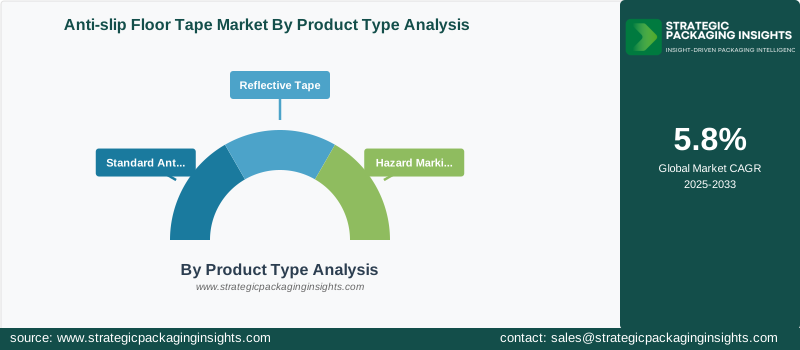
Hazard marking tape is another important product type in the market, used to indicate potential hazards and ensure safety in industrial and commercial environments. Companies like Heskins and Brady Corporation are focusing on developing innovative products that cater to the specific needs of different applications, such as reflective tapes for vehicles and hazard marking tapes for construction sites. The choice of product type is crucial for manufacturers, as it directly impacts customer demand and market competitiveness, influencing their ability to capture a significant share of the market.
By Application Analysis
The Anti-slip Floor Tape market is segmented by application, with stairs, ramps, industrial floors, and vehicles being the primary areas of use. Stairs and ramps are the most common applications for anti-slip tapes, as they are high-traffic areas where slips and falls are a major concern. Industrial floors are another important application area, where anti-slip tapes are used to ensure safety and prevent accidents in manufacturing and production facilities.
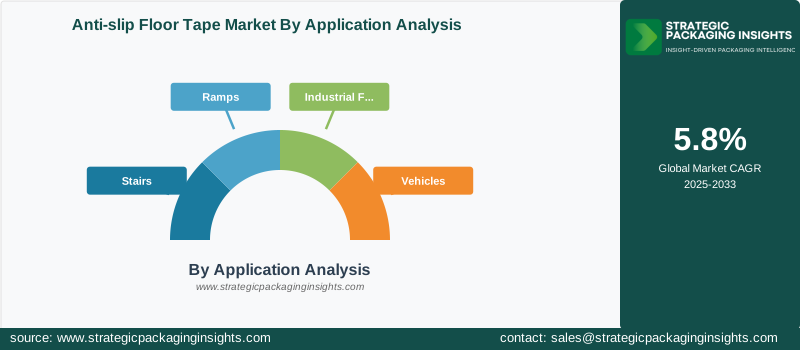
Vehicles are also a key application area for anti-slip tapes, as they provide enhanced safety and visibility in transportation settings. Companies like 3M and Avery Dennison are focusing on developing innovative products that cater to the specific needs of different applications, such as reflective tapes for vehicles and hazard marking tapes for construction sites. The choice of application is crucial for manufacturers, as it directly impacts customer demand and market competitiveness, influencing their ability to capture a significant share of the market.
By End Use Analysis
The Anti-slip Floor Tape market is segmented by end use, with industrial, commercial, construction, and transportation being the primary sectors. The industrial sector is the largest end-use segment, driven by the need for enhanced safety measures in manufacturing and production facilities. The commercial sector is also a significant end-use segment, where anti-slip tapes are used to ensure safety in high-traffic areas such as retail stores and office buildings.
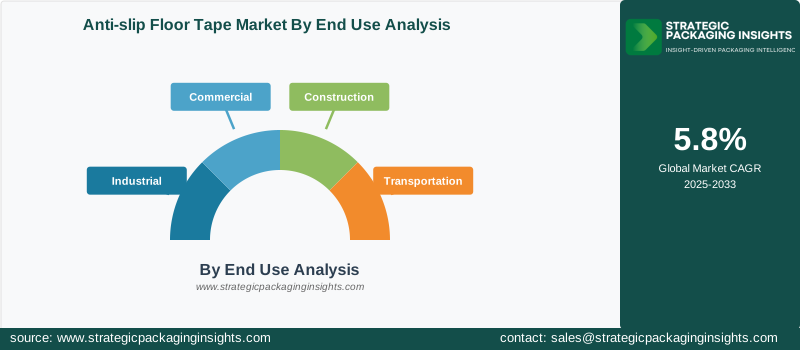
The construction sector is another important end-use segment, where anti-slip tapes are used to indicate potential hazards and ensure safety on construction sites. The transportation sector is also a key end-use segment, where anti-slip tapes are used to provide enhanced safety and visibility in vehicles and transportation settings. Companies like 3M and Heskins are focusing on developing innovative products that cater to the specific needs of different end-use sectors, influencing their ability to capture a significant share of the market.
Anti-slip Floor Tape Market Segments
The Anti-slip Floor Tape market has been segmented on the basis ofBy Material Type
- PVC
- PET
- Aluminum Oxide
- Rubber
By Product Type
- Standard Anti-Slip Tape
- Reflective Tape
- Hazard Marking Tape
By Application
- Stairs
- Ramps
- Industrial Floors
- Vehicles
By End Use
- Industrial
- Commercial
- Construction
- Transportation
Region
- Asia Pacific
- North America
- Latin America
- Europe
- Middle East & Africa




