


Anti-Microbial Edible Packaging Market Outlook
The Anti-Microbial Edible Packaging market was valued at $3.51 billion in 2025 and is projected to reach $10.81 billion by 2034, growing at a CAGR of 13.3% during the forecast period 2026-2034. This market is witnessing significant growth due to increasing consumer demand for sustainable and eco-friendly packaging solutions. The rising awareness about food safety and the need to reduce plastic waste are key drivers propelling the market forward. Additionally, advancements in material science and technology have enabled the development of innovative edible packaging solutions that not only extend the shelf life of products but also enhance their safety by incorporating antimicrobial properties.
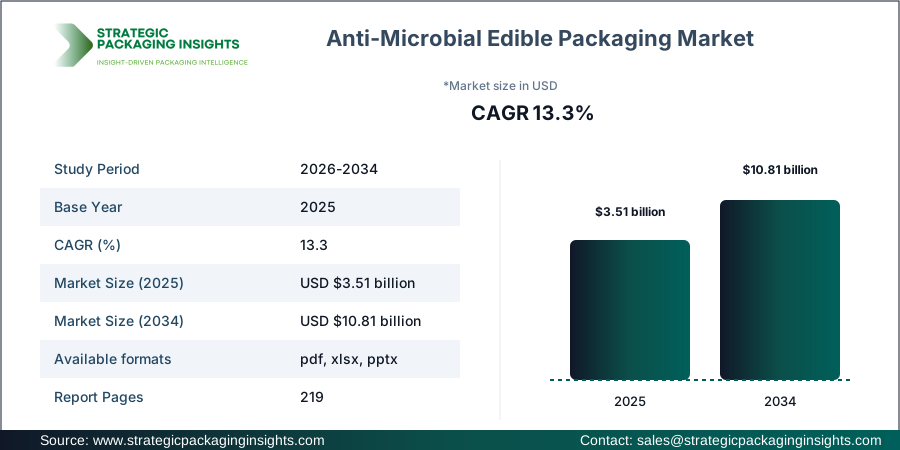
Despite the promising growth prospects, the Anti-Microbial Edible Packaging market faces certain challenges. Regulatory hurdles and the high cost of production are significant restraints that could impede market growth. The stringent regulations regarding food contact materials and the need for extensive testing to ensure safety and efficacy can delay product launches and increase costs. However, the growing consumer preference for natural and organic products presents a substantial growth opportunity for market players. Companies are increasingly investing in research and development to create cost-effective and scalable solutions that comply with regulatory standards while meeting consumer expectations.
Report Scope
| Attributes | Details |
| Report Title | Anti-Microbial Edible Packaging Market Size, Future Growth and Forecast 2034 |
| By Product Type | Edible Films, Edible Coatings, Active Wraps |
| By Material Type | Polysaccharides, Proteins, Lipids, Bioactive Compounds |
| By Application | Fresh Produce, Meat, Dairy, Bakery |
| By End Use | Food Processors, Retailers, Packaging Innovators |
| Region | Asia Pacific, North America, Latin America, Europe, Middle East & Africa |
| Base Year | 2025 |
| Historic Period | 2018-2024 |
| Forecast Period | 2026-2034 |
| Number of Pages | 219 |
| Customization Available | Yes* |
Opportunities & Threats
The Anti-Microbial Edible Packaging market presents numerous opportunities for growth, primarily driven by the increasing demand for sustainable packaging solutions. As consumers become more environmentally conscious, there is a growing preference for packaging that reduces waste and minimizes environmental impact. This trend is particularly evident in the food and beverage industry, where companies are seeking innovative ways to package their products without compromising on quality or safety. The development of biodegradable and compostable packaging materials that incorporate antimicrobial properties offers a significant opportunity for market expansion. Additionally, the rising awareness about food safety and hygiene is driving demand for packaging solutions that can extend the shelf life of products while preventing contamination.
Another opportunity lies in the growing trend of clean label products. Consumers are increasingly seeking transparency in the products they purchase, including the packaging materials used. This has led to a surge in demand for packaging solutions that are not only safe and effective but also align with the clean label movement. Companies that can offer innovative edible packaging solutions that meet these criteria are well-positioned to capitalize on this trend. Furthermore, the increasing adoption of e-commerce and online grocery shopping is creating new opportunities for the Anti-Microbial Edible Packaging market. As more consumers turn to online platforms for their grocery needs, there is a growing need for packaging solutions that can ensure the safe and secure delivery of perishable goods.
However, the market also faces certain threats that could hinder its growth. One of the primary challenges is the high cost of production associated with edible packaging materials. The development and manufacturing of these materials require significant investment in research and development, which can drive up costs. Additionally, the lack of consumer awareness and understanding of edible packaging solutions can pose a challenge to market growth. Educating consumers about the benefits and safety of these products is crucial to driving adoption. Moreover, the market is subject to stringent regulatory requirements, which can pose a barrier to entry for new players and limit the expansion of existing companies.
Drivers & Challenges
The Anti-Microbial Edible Packaging market is primarily driven by the increasing demand for sustainable and eco-friendly packaging solutions. As consumers become more environmentally conscious, there is a growing preference for packaging that reduces waste and minimizes environmental impact. This trend is particularly evident in the food and beverage industry, where companies are seeking innovative ways to package their products without compromising on quality or safety. The development of biodegradable and compostable packaging materials that incorporate antimicrobial properties offers a significant opportunity for market expansion. Additionally, the rising awareness about food safety and hygiene is driving demand for packaging solutions that can extend the shelf life of products while preventing contamination.
Another key driver of the market is the growing trend of clean label products. Consumers are increasingly seeking transparency in the products they purchase, including the packaging materials used. This has led to a surge in demand for packaging solutions that are not only safe and effective but also align with the clean label movement. Companies that can offer innovative edible packaging solutions that meet these criteria are well-positioned to capitalize on this trend. Furthermore, the increasing adoption of e-commerce and online grocery shopping is creating new opportunities for the Anti-Microbial Edible Packaging market. As more consumers turn to online platforms for their grocery needs, there is a growing need for packaging solutions that can ensure the safe and secure delivery of perishable goods.
Despite the promising growth prospects, the Anti-Microbial Edible Packaging market faces certain challenges. Regulatory hurdles and the high cost of production are significant restraints that could impede market growth. The stringent regulations regarding food contact materials and the need for extensive testing to ensure safety and efficacy can delay product launches and increase costs. Additionally, the lack of consumer awareness and understanding of edible packaging solutions can pose a challenge to market growth. Educating consumers about the benefits and safety of these products is crucial to driving adoption. Moreover, the market is subject to stringent regulatory requirements, which can pose a barrier to entry for new players and limit the expansion of existing companies.
Market Share Analysis
The Anti-Microbial Edible Packaging market is characterized by a competitive landscape with several key players vying for market share. Companies such as Apeel Sciences, Mori, Lactips, Notpla, Tipa, BASF, NatureWorks, Ingredion, Cargill, and Kerry Group are at the forefront of innovation in this space. These companies are investing heavily in research and development to create advanced packaging solutions that meet the evolving needs of consumers and comply with regulatory standards. The market is also witnessing strategic collaborations and partnerships as companies seek to expand their product portfolios and enhance their market presence.
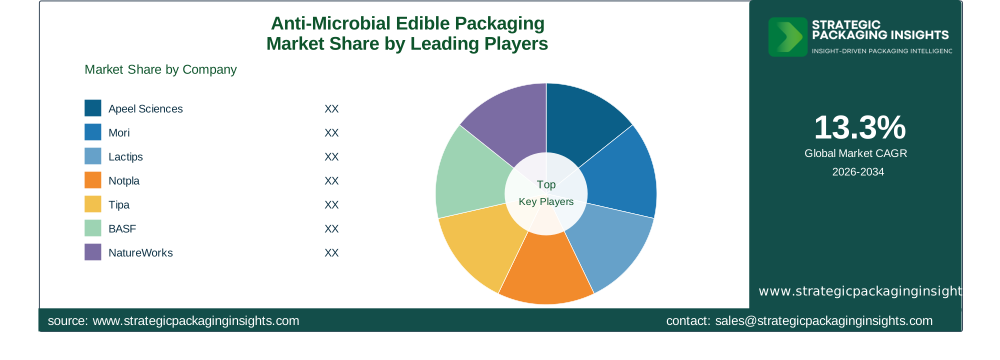
Apeel Sciences is a leading player in the market, known for its innovative edible coatings that extend the shelf life of fresh produce. The company's proprietary technology uses plant-derived materials to create a protective barrier that reduces spoilage and waste. Mori, another key player, specializes in silk-based edible coatings that enhance the freshness and safety of food products. Lactips is known for its water-soluble and biodegradable packaging solutions made from milk protein, which offer a sustainable alternative to traditional plastic packaging.
Notpla is a pioneer in the development of seaweed-based packaging solutions that are both edible and biodegradable. The company's innovative products have gained significant attention for their potential to reduce plastic waste in the food and beverage industry. Tipa, on the other hand, focuses on compostable packaging solutions that mimic the properties of conventional plastic while being environmentally friendly. BASF, a global leader in chemical production, is also making strides in the edible packaging market with its range of bio-based and biodegradable materials.
NatureWorks, Ingredion, Cargill, and Kerry Group are other major players in the market, each bringing their unique expertise and capabilities to the table. NatureWorks is known for its Ingeo biopolymer, which is used in a variety of sustainable packaging applications. Ingredion and Cargill are leveraging their extensive experience in food ingredients to develop innovative edible packaging solutions that enhance food safety and quality. Kerry Group, a leader in taste and nutrition, is also exploring opportunities in the edible packaging space to complement its existing product offerings.
Key Highlights
- The Anti-Microbial Edible Packaging market is projected to grow at a CAGR of 13.3% from 2026 to 2034.
- Increasing consumer demand for sustainable and eco-friendly packaging solutions is a key driver of market growth.
- Regulatory hurdles and high production costs are significant challenges facing the market.
- Companies are investing in research and development to create innovative and cost-effective packaging solutions.
- The market is witnessing strategic collaborations and partnerships to enhance product portfolios and market presence.
- Edible coatings and films are the most popular product types in the market.
- Polysaccharides and proteins are the most commonly used materials in edible packaging solutions.
- The food and beverage industry is the largest end-user of anti-microbial edible packaging solutions.
- North America and Europe are the leading regions in terms of market share and innovation.
- The increasing adoption of e-commerce and online grocery shopping is creating new opportunities for the market.
Top Countries Insights
In the Anti-Microbial Edible Packaging market, the United States stands out as a leader, with a market size of approximately $1.2 billion and a CAGR of 12%. The country's strong focus on sustainability and innovation in packaging solutions drives this growth. Government initiatives promoting eco-friendly practices and consumer demand for sustainable products further bolster the market. However, regulatory challenges and high production costs remain hurdles for market players.
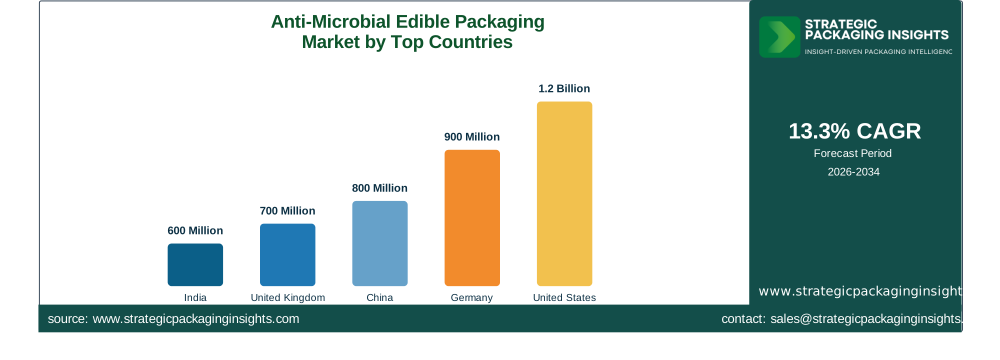
Germany is another key player in the market, with a market size of around $900 million and a CAGR of 10%. The country's robust food and beverage industry, coupled with a strong emphasis on sustainability, fuels demand for edible packaging solutions. Innovations in material science and technology also contribute to market growth. However, stringent regulations and the need for extensive testing pose challenges for companies operating in this space.
China, with a market size of approximately $800 million and a CAGR of 15%, is experiencing rapid growth in the Anti-Microbial Edible Packaging market. The country's large population and increasing consumer awareness about food safety and sustainability drive demand for innovative packaging solutions. Government policies promoting environmental protection and waste reduction further support market growth. However, the lack of consumer awareness and understanding of edible packaging solutions remains a challenge.
In the United Kingdom, the market size is estimated at $700 million, with a CAGR of 9%. The country's strong focus on reducing plastic waste and promoting sustainable practices drives demand for edible packaging solutions. The growing trend of clean label products and consumer preference for natural and organic products also contribute to market growth. However, regulatory hurdles and high production costs pose challenges for market players.
India, with a market size of approximately $600 million and a CAGR of 13%, is emerging as a significant player in the Anti-Microbial Edible Packaging market. The country's large population and increasing consumer awareness about food safety and sustainability drive demand for innovative packaging solutions. Government initiatives promoting eco-friendly practices and the growing trend of online grocery shopping further support market growth. However, the lack of consumer awareness and understanding of edible packaging solutions remains a challenge.
Anti-Microbial Edible Packaging Market Segments Insights

Product Type Analysis
The Anti-Microbial Edible Packaging market is segmented by product type into edible films, edible coatings, and active wraps. Edible films are gaining popularity due to their ability to provide a protective barrier that extends the shelf life of food products. These films are typically made from natural materials such as polysaccharides and proteins, which offer excellent barrier properties against moisture and oxygen. The demand for edible films is driven by the increasing consumer preference for sustainable and eco-friendly packaging solutions. Additionally, advancements in material science and technology have enabled the development of innovative edible films that incorporate antimicrobial properties, further enhancing their appeal.
Edible coatings are another popular product type in the market, known for their ability to enhance the freshness and safety of food products. These coatings are typically applied directly to the surface of food items, creating a protective barrier that prevents spoilage and contamination. The demand for edible coatings is driven by the growing awareness about food safety and hygiene, as well as the increasing consumer preference for natural and organic products. Companies are investing in research and development to create innovative edible coatings that meet the evolving needs of consumers and comply with regulatory standards.
Active wraps are a relatively new product type in the Anti-Microbial Edible Packaging market, offering a unique solution for extending the shelf life of perishable goods. These wraps are typically made from biodegradable materials that incorporate antimicrobial agents, providing an additional layer of protection against spoilage and contamination. The demand for active wraps is driven by the increasing adoption of e-commerce and online grocery shopping, as more consumers turn to online platforms for their grocery needs. Companies are exploring new materials and technologies to create cost-effective and scalable active wraps that meet the growing demand for sustainable packaging solutions.
Material Type Analysis
The Anti-Microbial Edible Packaging market is segmented by material type into polysaccharides, proteins, lipids, and bioactive compounds. Polysaccharides are the most commonly used materials in edible packaging solutions, known for their excellent barrier properties and biodegradability. These materials are typically derived from natural sources such as plants and algae, making them an attractive option for companies seeking sustainable packaging solutions. The demand for polysaccharides is driven by the increasing consumer preference for eco-friendly packaging materials and the growing awareness about food safety and hygiene.
Proteins are another popular material type in the market, known for their ability to form strong and flexible films that provide excellent barrier properties against moisture and oxygen. These materials are typically derived from animal or plant sources, offering a sustainable alternative to traditional plastic packaging. The demand for proteins is driven by the growing trend of clean label products and the increasing consumer preference for natural and organic products. Companies are investing in research and development to create innovative protein-based packaging solutions that meet the evolving needs of consumers and comply with regulatory standards.
Lipids and bioactive compounds are also gaining traction in the Anti-Microbial Edible Packaging market, offering unique properties that enhance the safety and efficacy of packaging solutions. Lipids are known for their ability to form hydrophobic barriers that prevent moisture loss and spoilage, while bioactive compounds offer antimicrobial properties that extend the shelf life of food products. The demand for these materials is driven by the increasing adoption of e-commerce and online grocery shopping, as more consumers turn to online platforms for their grocery needs. Companies are exploring new materials and technologies to create cost-effective and scalable packaging solutions that meet the growing demand for sustainable packaging solutions.
Application Analysis
The Anti-Microbial Edible Packaging market is segmented by application into fresh produce, meat, dairy, and bakery. Fresh produce is the largest application segment in the market, driven by the increasing consumer demand for fresh and healthy food products. Edible packaging solutions offer a unique advantage in this segment by extending the shelf life of fresh produce and reducing spoilage and waste. The demand for edible packaging solutions in the fresh produce segment is driven by the growing awareness about food safety and hygiene, as well as the increasing consumer preference for natural and organic products.
Meat is another significant application segment in the market, known for its high perishability and susceptibility to spoilage and contamination. Edible packaging solutions offer a unique advantage in this segment by providing a protective barrier that prevents spoilage and extends the shelf life of meat products. The demand for edible packaging solutions in the meat segment is driven by the increasing consumer preference for sustainable and eco-friendly packaging solutions, as well as the growing awareness about food safety and hygiene.
Dairy and bakery are also significant application segments in the Anti-Microbial Edible Packaging market, offering unique opportunities for growth and innovation. Edible packaging solutions offer a unique advantage in these segments by enhancing the freshness and safety of food products, as well as reducing spoilage and waste. The demand for edible packaging solutions in the dairy and bakery segments is driven by the growing trend of clean label products and the increasing consumer preference for natural and organic products. Companies are investing in research and development to create innovative edible packaging solutions that meet the evolving needs of consumers and comply with regulatory standards.
End Use Analysis
The Anti-Microbial Edible Packaging market is segmented by end use into food processors, retailers, and packaging innovators. Food processors are the largest end-user segment in the market, driven by the increasing demand for sustainable and eco-friendly packaging solutions. Edible packaging solutions offer a unique advantage in this segment by extending the shelf life of food products and reducing spoilage and waste. The demand for edible packaging solutions in the food processor segment is driven by the growing awareness about food safety and hygiene, as well as the increasing consumer preference for natural and organic products.
Retailers are another significant end-user segment in the market, known for their role in the distribution and sale of food products. Edible packaging solutions offer a unique advantage in this segment by enhancing the freshness and safety of food products, as well as reducing spoilage and waste. The demand for edible packaging solutions in the retailer segment is driven by the increasing consumer preference for sustainable and eco-friendly packaging solutions, as well as the growing trend of clean label products.
Packaging innovators are also a significant end-user segment in the Anti-Microbial Edible Packaging market, offering unique opportunities for growth and innovation. Edible packaging solutions offer a unique advantage in this segment by providing a sustainable alternative to traditional plastic packaging, as well as enhancing the safety and efficacy of packaging solutions. The demand for edible packaging solutions in the packaging innovator segment is driven by the increasing adoption of e-commerce and online grocery shopping, as more consumers turn to online platforms for their grocery needs. Companies are exploring new materials and technologies to create cost-effective and scalable packaging solutions that meet the growing demand for sustainable packaging solutions.
Anti-Microbial Edible Packaging Market Segments
The Anti-Microbial Edible Packaging market has been segmented on the basis ofBy Product Type
- Edible Films
- Edible Coatings
- Active Wraps
By Material Type
- Polysaccharides
- Proteins
- Lipids
- Bioactive Compounds
By Application
- Fresh Produce
- Meat
- Dairy
- Bakery
By End Use
- Food Processors
- Retailers
- Packaging Innovators
Region
- Asia Pacific
- North America
- Latin America
- Europe
- Middle East & Africa




