


Aerogel Film Market Outlook
The Aerogel Film market was valued at $1.21 billion in 2025 and is projected to reach $2.90 billion by 2034, growing at a CAGR of 10.2% during the forecast period 2026-2034. Aerogel films, known for their exceptional thermal insulation properties and lightweight nature, are gaining traction across various industries. The demand is primarily driven by the increasing need for energy-efficient solutions in construction and automotive sectors. Additionally, the electronics industry is witnessing a surge in the adoption of aerogel films due to their superior thermal management capabilities, which are crucial for the performance and longevity of electronic devices.
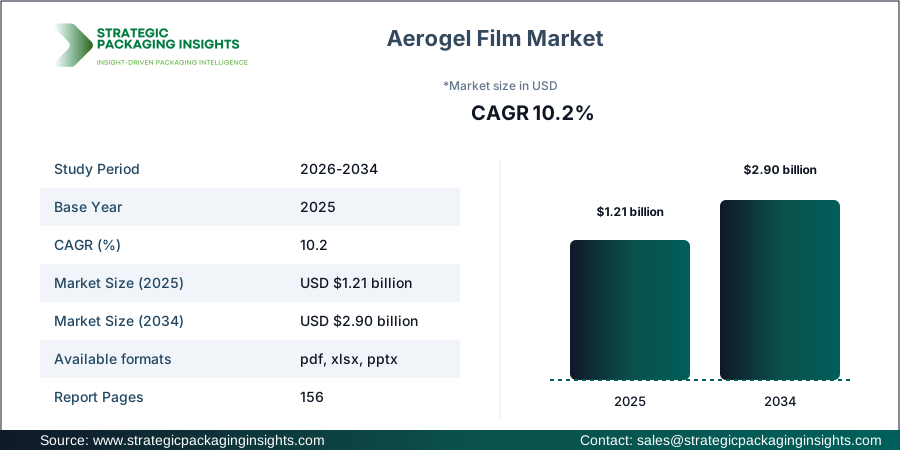
Despite the promising growth trajectory, the Aerogel Film market faces certain challenges. The high production costs associated with aerogel films remain a significant barrier to widespread adoption. Moreover, the market is subject to stringent regulatory standards, particularly in regions like Europe and North America, which could potentially hinder growth. However, advancements in production technologies and the development of cost-effective manufacturing processes are expected to mitigate these challenges, paving the way for substantial growth opportunities in the coming years.
Report Scope
| Attributes | Details |
| Report Title | Aerogel Film Market Size, Future Growth and Forecast 2034 |
| By Product Type | Silica Aerogel Films, Polymer Aerogel Films, Composite Films |
| By Application | Thermal Insulation, Electronics, Cold Chain, Aerospace |
| By End Use | Energy, Electronics, Packaging, Automotive |
| Region | Asia Pacific, North America, Latin America, Europe, Middle East & Africa |
| Base Year | 2025 |
| Historic Period | 2018-2024 |
| Forecast Period | 2026-2034 |
| Number of Pages | 156 |
| Customization Available | Yes* |
Opportunities & Threats
The Aerogel Film market presents numerous opportunities, particularly in the realm of sustainable and energy-efficient solutions. As global awareness regarding environmental conservation and energy efficiency continues to rise, industries are increasingly seeking materials that offer superior insulation properties while minimizing environmental impact. Aerogel films, with their excellent thermal insulation capabilities and lightweight nature, are well-positioned to meet these demands. Furthermore, the growing trend of green building initiatives and the increasing adoption of electric vehicles are expected to drive the demand for aerogel films, as they contribute to energy savings and enhanced performance.
Another significant opportunity lies in the electronics industry, where the demand for advanced thermal management solutions is on the rise. As electronic devices become more compact and powerful, efficient heat dissipation becomes critical to ensure optimal performance and longevity. Aerogel films, with their exceptional thermal conductivity and flexibility, are increasingly being utilized in electronic applications, such as smartphones, laptops, and other consumer electronics. This trend is expected to continue, providing a substantial growth avenue for the Aerogel Film market.
However, the market is not without its threats. The high cost of production remains a significant challenge, as it limits the affordability and widespread adoption of aerogel films. Additionally, the market is subject to stringent regulatory standards, particularly in regions like Europe and North America, which could potentially hinder growth. Companies operating in this space must navigate these regulatory landscapes carefully to ensure compliance and avoid potential setbacks. Furthermore, the presence of alternative insulation materials, such as fiberglass and mineral wool, poses a competitive threat to the Aerogel Film market.
Drivers & Challenges
The Aerogel Film market is primarily driven by the increasing demand for energy-efficient solutions across various industries. As global energy consumption continues to rise, there is a growing emphasis on reducing energy wastage and enhancing efficiency. Aerogel films, with their superior thermal insulation properties, are increasingly being adopted in applications such as building insulation, automotive components, and industrial equipment. This trend is further supported by government initiatives and regulations aimed at promoting energy efficiency and reducing carbon emissions, which are expected to drive the demand for aerogel films in the coming years.
Another key driver of the Aerogel Film market is the rapid growth of the electronics industry. With the proliferation of electronic devices and the increasing demand for compact and high-performance gadgets, efficient thermal management has become a critical requirement. Aerogel films, known for their excellent thermal conductivity and lightweight nature, are being increasingly utilized in electronic applications to enhance performance and prevent overheating. This trend is expected to continue, providing a significant boost to the Aerogel Film market.
Despite the promising growth prospects, the Aerogel Film market faces several challenges. The high cost of production remains a significant barrier to widespread adoption, as it limits the affordability of aerogel films. Additionally, the market is subject to stringent regulatory standards, particularly in regions like Europe and North America, which could potentially hinder growth. Companies operating in this space must navigate these regulatory landscapes carefully to ensure compliance and avoid potential setbacks. Furthermore, the presence of alternative insulation materials, such as fiberglass and mineral wool, poses a competitive threat to the Aerogel Film market.
Market Share Analysis
The Aerogel Film market is characterized by a competitive landscape with several key players vying for market share. Companies such as Aspen Aerogels, Cabot Corporation, and Armacell are among the leading players in the market, known for their innovative product offerings and strong market presence. These companies have established themselves as leaders in the aerogel film industry through continuous research and development efforts, strategic partnerships, and a focus on expanding their product portfolios.
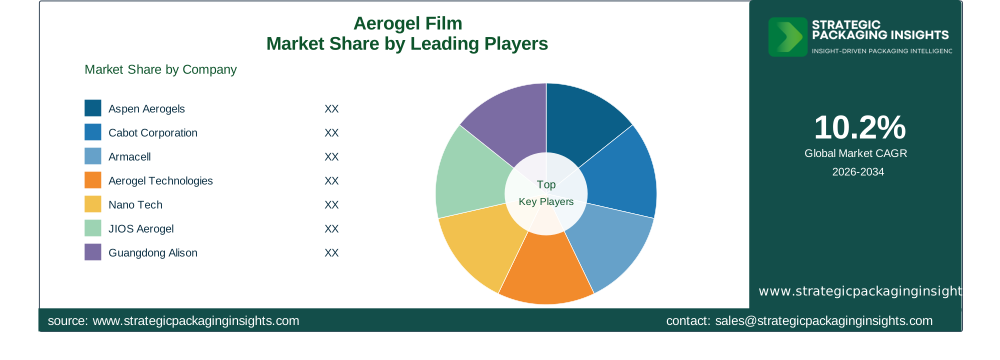
Aspen Aerogels is a prominent player in the Aerogel Film market, known for its advanced aerogel technology and a wide range of product offerings. The company has a strong focus on innovation and sustainability, which has helped it maintain a competitive edge in the market. Similarly, Cabot Corporation is another key player, recognized for its high-performance aerogel products and a strong global presence. The company's commitment to research and development has enabled it to introduce cutting-edge solutions that cater to the evolving needs of various industries.
Armacell, a leading manufacturer of flexible foam products, has also made significant strides in the Aerogel Film market. The company's focus on developing sustainable and energy-efficient solutions has positioned it as a key player in the industry. Aerogel Technologies, another notable player, is known for its innovative approach to aerogel production and a diverse product portfolio that caters to a wide range of applications. These companies, along with others like Nano Tech, JIOS Aerogel, and Guangdong Alison, are driving the growth of the Aerogel Film market through continuous innovation and strategic initiatives.
Other significant players in the market include BASF, Blueshift Materials, and Svenska Aerogel, each contributing to the competitive landscape with their unique product offerings and market strategies. BASF, a global leader in the chemical industry, has leveraged its extensive research capabilities to develop high-performance aerogel films that cater to various industrial applications. Blueshift Materials, known for its advanced polymer aerogel technology, has carved a niche for itself in the market by offering lightweight and flexible solutions. Svenska Aerogel, with its focus on sustainable and environmentally friendly products, has also made a mark in the Aerogel Film market.
Key Highlights
- The Aerogel Film market is projected to grow from $1.21 billion in 2025 to $2.90 billion by 2034, at a CAGR of 10.2%.
- Silica aerogel films dominate the market due to their superior thermal insulation properties.
- The electronics industry is a major driver of demand for aerogel films, particularly for thermal management applications.
- North America and Europe are key regions for market growth, driven by stringent energy efficiency regulations.
- Advancements in production technologies are expected to reduce costs and enhance the affordability of aerogel films.
- Key players in the market include Aspen Aerogels, Cabot Corporation, and Armacell, among others.
- The market faces challenges from high production costs and regulatory compliance requirements.
- Increasing adoption of aerogel films in the automotive sector for lightweight and energy-efficient components.
- Growing demand for sustainable and environmentally friendly insulation solutions is driving market growth.
Top Countries Insights
In the Aerogel Film market, the United States stands out as a leading country, with a market size of approximately $450 million and a CAGR of 11%. The country's growth is driven by the increasing demand for energy-efficient solutions in the construction and automotive sectors. Government initiatives promoting energy conservation and the adoption of green building practices further bolster the market. Additionally, the presence of key players and ongoing research and development activities contribute to the market's expansion.
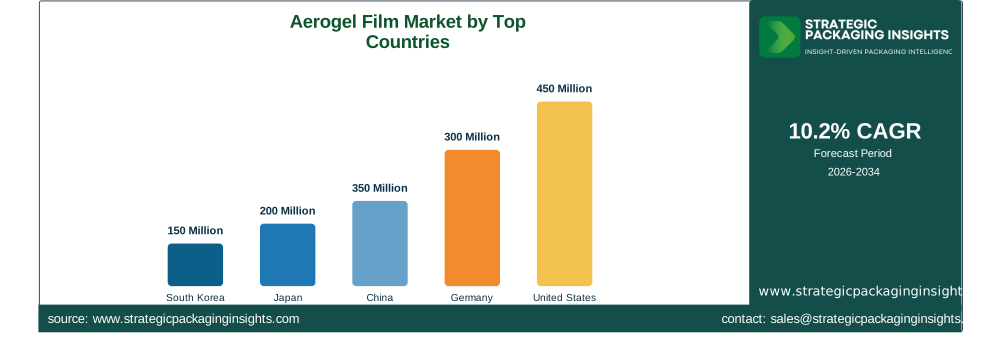
Germany is another significant player in the Aerogel Film market, with a market size of around $300 million and a CAGR of 9%. The country's strong focus on sustainability and energy efficiency, coupled with stringent regulatory standards, drives the demand for aerogel films. The automotive industry, in particular, is a major contributor to market growth, as manufacturers seek lightweight and efficient insulation materials to enhance vehicle performance and reduce emissions.
China, with a market size of approximately $350 million and a CAGR of 13%, is a rapidly growing market for aerogel films. The country's booming construction industry and increasing investments in infrastructure projects are key drivers of demand. Additionally, the electronics industry in China is witnessing significant growth, further fueling the demand for advanced thermal management solutions like aerogel films.
In Japan, the Aerogel Film market is valued at around $200 million, with a CAGR of 8%. The country's focus on technological innovation and energy efficiency drives the adoption of aerogel films in various applications, including electronics and automotive. Government initiatives promoting sustainable practices and energy conservation further support market growth.
South Korea, with a market size of approximately $150 million and a CAGR of 10%, is also a notable player in the Aerogel Film market. The country's strong electronics industry and emphasis on energy-efficient solutions contribute to the demand for aerogel films. Additionally, South Korea's commitment to reducing carbon emissions and promoting sustainable practices aligns with the growing adoption of aerogel films in various sectors.
Aerogel Film Market Segments Insights

Product Type Analysis
The Aerogel Film market is segmented by product type into Silica Aerogel Films, Polymer Aerogel Films, and Composite Films. Silica aerogel films dominate the market due to their superior thermal insulation properties and lightweight nature. These films are widely used in applications requiring high thermal resistance, such as building insulation and industrial equipment. The demand for silica aerogel films is further driven by their non-combustible nature, making them ideal for use in fire-prone environments. Polymer aerogel films, on the other hand, are gaining traction due to their flexibility and ease of processing, which make them suitable for applications in the electronics and automotive industries. Composite films, which combine the properties of different materials, offer enhanced performance characteristics and are increasingly being adopted in specialized applications.
The growing demand for energy-efficient solutions across various industries is a key driver for the product type segment. As industries seek to reduce energy consumption and enhance efficiency, the adoption of aerogel films is expected to rise. Additionally, advancements in production technologies are enabling the development of cost-effective and high-performance aerogel films, further boosting market growth. However, the high cost of production remains a challenge, particularly for silica aerogel films, which limits their widespread adoption. Companies are focusing on developing innovative manufacturing processes to overcome this challenge and expand their market presence.
Application Analysis
The Aerogel Film market is segmented by application into Thermal Insulation, Electronics, Cold Chain, and Aerospace. Thermal insulation is the largest application segment, driven by the increasing demand for energy-efficient solutions in the construction and industrial sectors. Aerogel films, with their superior thermal insulation properties, are widely used in building insulation, industrial equipment, and pipelines to reduce energy consumption and enhance efficiency. The electronics industry is another significant application segment, where aerogel films are used for thermal management in electronic devices, such as smartphones, laptops, and other consumer electronics. The growing demand for compact and high-performance electronic devices is driving the adoption of aerogel films in this segment.
The cold chain and aerospace industries are also witnessing increasing adoption of aerogel films. In the cold chain industry, aerogel films are used to maintain temperature stability and prevent heat transfer in refrigerated transportation and storage. The aerospace industry, on the other hand, utilizes aerogel films for their lightweight and high-performance insulation properties, which are crucial for enhancing fuel efficiency and reducing emissions. The growing emphasis on sustainability and energy efficiency across these industries is expected to drive the demand for aerogel films in the coming years.
End Use Analysis
The Aerogel Film market is segmented by end use into Energy, Electronics, Packaging, and Automotive. The energy sector is a major end-use segment, driven by the increasing demand for energy-efficient solutions and the need to reduce carbon emissions. Aerogel films are used in various energy applications, such as building insulation, industrial equipment, and pipelines, to enhance energy efficiency and reduce energy consumption. The electronics industry is another significant end-use segment, where aerogel films are used for thermal management in electronic devices, such as smartphones, laptops, and other consumer electronics.
The packaging industry is witnessing increasing adoption of aerogel films due to their lightweight and high-performance insulation properties. Aerogel films are used in packaging applications to maintain temperature stability and prevent heat transfer, particularly in the cold chain industry. The automotive industry is also a key end-use segment, where aerogel films are used for lightweight and energy-efficient components, such as insulation for electric vehicles and thermal management systems. The growing emphasis on sustainability and energy efficiency across these industries is expected to drive the demand for aerogel films in the coming years.
Aerogel Film Market Segments
The Aerogel Film market has been segmented on the basis ofBy Product Type
- Silica Aerogel Films
- Polymer Aerogel Films
- Composite Films
By Application
- Thermal Insulation
- Electronics
- Cold Chain
- Aerospace
By End Use
- Energy
- Electronics
- Packaging
- Automotive
Region
- Asia Pacific
- North America
- Latin America
- Europe
- Middle East & Africa




