


Mineral Wool Market Outlook
The Mineral Wool market size was valued at USD 21.48 billion in 2025 and is anticipated to reach USD 33.61 billion by 2034, growing at a CAGR of 5.1% during the forecast period according to Strategic Packaging Insights. Mineral wool, known for its superior insulation properties, is increasingly being adopted across various industries, including construction and industrial applications. Companies like Rockwool and Knauf Insulation are leading the charge in innovation, focusing on enhancing the thermal and acoustic insulation capabilities of mineral wool products. The demand for energy-efficient building materials is a significant driver, as governments worldwide push for sustainable construction practices. This trend is further bolstered by the increasing awareness of energy conservation and the need for fire-resistant materials in construction.
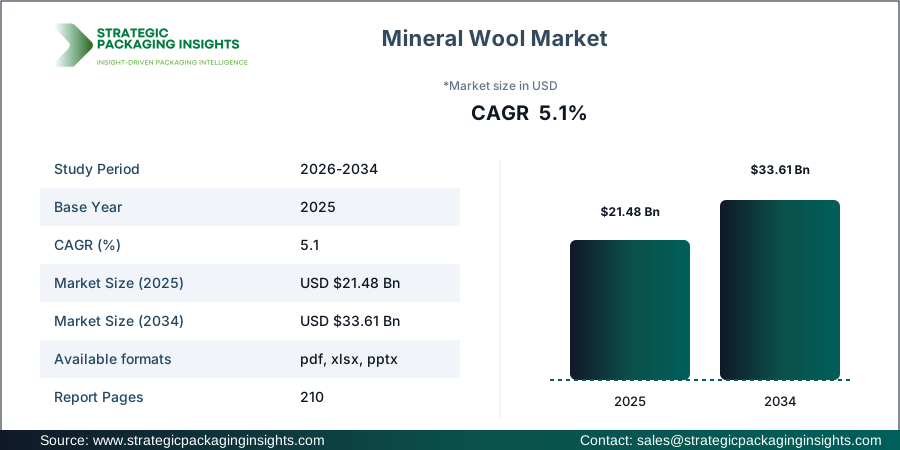
One of the most impactful drivers of the mineral wool market is the stringent building codes and regulations aimed at improving energy efficiency and fire safety. For instance, the European Union's Energy Performance of Buildings Directive mandates that all new buildings must be nearly zero-energy by 2021, which has significantly increased the demand for high-performance insulation materials like mineral wool. Additionally, the growing trend of urbanization and industrialization in emerging economies is creating a robust demand for mineral wool products. Companies such as Saint-Gobain and Owens Corning are capitalizing on these opportunities by expanding their production capacities and investing in R&D to develop innovative products that meet the evolving needs of the market.
Report Scope
| Attributes | Details |
| Report Title | Mineral Wool Market Size, Future Growth and Forecast 2034 |
| Product Type | Glass Wool, Stone Wool, Slag Wool |
| Application | Building Insulation, Industrial Insulation, Fire Protection, Acoustic Insulation |
| End Use | Construction, Industrial, Energy, HVAC |
| Form | Blankets, Boards, Rolls, Loose Fill |
| Region | Asia Pacific, North America, Latin America, Europe, Middle East & Africa |
| Base Year | 2025 |
| Historic Period | 2018-2024 |
| Forecast Period | 2026-2034 |
| Number of Pages | 210 |
| Customization Available | Yes* |
Sustainability & Circular Economy Analysis
Sustainability initiatives and circular economy practices are increasingly shaping the mineral wool market. The focus on recyclable materials and eco-friendly innovations is driving manufacturers to develop products that not only meet insulation needs but also align with environmental goals. Companies like Knauf Insulation are leading the way by incorporating recycled glass and other sustainable materials into their production processes. This shift towards sustainability is not only reducing the carbon footprint of mineral wool products but also enhancing their appeal to environmentally conscious consumers and businesses.
The adoption of lightweight packaging and waste reduction strategies is further influencing the mineral wool market. By optimizing packaging designs and reducing material usage, manufacturers are able to lower transportation costs and improve supply chain efficiency. This is particularly important as companies strive to meet stringent ESG (Environmental, Social, and Governance) criteria and comply with extended producer responsibility (EPR) regulations. These trends are prompting significant investments in sustainable manufacturing technologies and processes, ensuring long-term competitiveness in the market.
Consumer preferences for sustainable products are also driving changes in packaging design and manufacturing. As awareness of environmental issues grows, there is an increasing demand for products that are not only effective but also environmentally friendly. This has led to a surge in innovation, with companies exploring new materials and technologies to create more sustainable mineral wool products. The integration of these sustainability trends into the mineral wool market is essential for maintaining regulatory compliance and meeting the expectations of both consumers and policymakers.
Packaging Value Chain & Supply Chain Analysis
The mineral wool market's value chain is complex, involving multiple stages from raw material sourcing to final product distribution. Raw materials such as basalt and slag are sourced globally, with manufacturers like Rockwool and Saint-Gobain investing in efficient procurement strategies to ensure a steady supply. Packaging converters and manufacturers play a crucial role in transforming these raw materials into high-quality mineral wool products. The use of advanced packaging machinery and technologies is essential for maintaining production efficiency and meeting the growing demand for insulation materials.
Logistics and distribution channels are critical components of the mineral wool supply chain. Efficient transportation and inventory management are vital for ensuring timely delivery of products to end-users. Companies like Owens Corning and Johns Manville are leveraging strategic partnerships with logistics providers to enhance their distribution networks and improve supply chain resilience. This focus on supply chain efficiency is crucial for maintaining competitiveness in the market, particularly as demand for mineral wool products continues to rise.
Recycling networks and global sourcing strategies are also integral to the mineral wool market's supply chain. By incorporating recycled materials into their production processes, manufacturers can reduce costs and minimize environmental impact. This approach not only aligns with sustainability goals but also enhances the marketability of mineral wool products. As the market continues to evolve, companies are increasingly focusing on localization and strategic partnerships to optimize their supply chains and meet the diverse needs of their customers.
Opportunities & Threats
The mineral wool market presents numerous opportunities for growth, driven by the increasing demand for energy-efficient and sustainable building materials. The construction industry's shift towards green building practices is creating a robust demand for mineral wool products, particularly in regions with stringent energy efficiency regulations. Companies like Kingspan and Paroc are well-positioned to capitalize on these opportunities by expanding their product portfolios and investing in innovative technologies. Additionally, the growing trend of urbanization and industrialization in emerging economies offers significant growth potential for mineral wool manufacturers.
Another opportunity lies in the development of advanced mineral wool products with enhanced thermal and acoustic insulation properties. As consumers and businesses become more aware of the benefits of energy-efficient materials, there is a growing demand for high-performance insulation solutions. This trend is prompting manufacturers to invest in R&D and explore new materials and technologies to meet the evolving needs of the market. The integration of digital technologies and smart manufacturing processes is also opening up new avenues for innovation and growth in the mineral wool market.
Despite the numerous opportunities, the mineral wool market faces several threats, including the volatility of raw material prices and the availability of alternative insulation materials. Fluctuations in the prices of raw materials such as basalt and slag can impact production costs and profit margins. Additionally, the increasing popularity of alternative insulation materials, such as foam and cellulose, poses a threat to the growth of the mineral wool market. To mitigate these challenges, companies must focus on optimizing their supply chains, enhancing production efficiency, and developing innovative products that offer superior performance and value.
Drivers & Challenges
The mineral wool market is driven by several key factors, including the growing demand for energy-efficient building materials and the increasing focus on sustainability. The construction industry's shift towards green building practices is a major driver, as governments worldwide implement stringent energy efficiency regulations. Companies like Rockwool and Knauf Insulation are capitalizing on this trend by developing innovative mineral wool products that meet the evolving needs of the market. Additionally, the rising awareness of the benefits of thermal and acoustic insulation is driving demand for mineral wool products in both residential and commercial applications.
Another significant driver of the mineral wool market is the increasing demand for fire-resistant materials. As building codes and regulations become more stringent, there is a growing need for insulation materials that offer superior fire protection. Mineral wool, with its excellent fire-resistant properties, is well-suited to meet this demand. Companies like Saint-Gobain and Owens Corning are investing in R&D to develop advanced mineral wool products that offer enhanced fire protection and meet the highest safety standards. This focus on innovation and product development is essential for maintaining competitiveness in the market.
Despite the positive drivers, the mineral wool market faces several challenges, including the volatility of raw material prices and the availability of alternative insulation materials. Fluctuations in the prices of raw materials such as basalt and slag can impact production costs and profit margins. Additionally, the increasing popularity of alternative insulation materials, such as foam and cellulose, poses a threat to the growth of the mineral wool market. To overcome these challenges, companies must focus on optimizing their supply chains, enhancing production efficiency, and developing innovative products that offer superior performance and value.
Market Share Analysis
The mineral wool market is characterized by a competitive landscape with several key players vying for market share. Companies like Rockwool, Knauf Insulation, and Saint-Gobain are leading the market, leveraging their extensive product portfolios and strong brand recognition to maintain their competitive edge. These companies are investing heavily in R&D to develop innovative products that meet the evolving needs of the market. Additionally, they are expanding their production capacities and distribution networks to capitalize on the growing demand for mineral wool products.
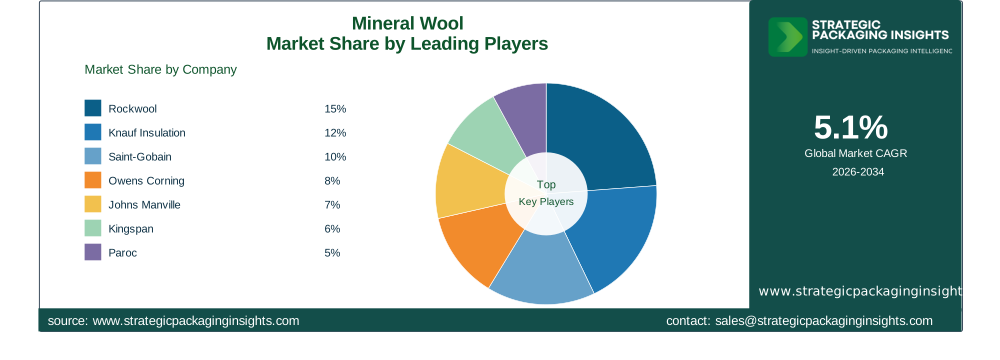
Rockwool, a leading player in the mineral wool market, is known for its high-quality insulation products and strong focus on sustainability. The company has a significant presence in Europe and North America, with a robust distribution network that ensures timely delivery of products to customers. Knauf Insulation, another major player, is renowned for its innovative insulation solutions and commitment to sustainability. The company has a strong presence in Europe and is expanding its operations in emerging markets to capitalize on the growing demand for energy-efficient building materials.
Saint-Gobain, a global leader in the construction materials industry, is a key player in the mineral wool market. The company offers a wide range of insulation products and is known for its focus on innovation and sustainability. Owens Corning, another major player, is renowned for its high-performance insulation solutions and strong focus on R&D. The company has a significant presence in North America and is expanding its operations in Europe and Asia to meet the growing demand for mineral wool products.
Other notable players in the mineral wool market include Johns Manville, Kingspan, Paroc, URSA, Izocam, and TechnoNICOL. These companies are investing in R&D and expanding their production capacities to meet the growing demand for mineral wool products. They are also focusing on enhancing their distribution networks and strategic partnerships to improve supply chain efficiency and maintain their competitive edge in the market.
Key Highlights
- Market Size: The mineral wool market was valued at USD 21.48 billion in 2025 and is projected to reach USD 33.61 billion by 2034.
- Growth Rate: The market is expected to grow at a CAGR of 5.1% during the forecast period.
- Leading Companies: Key players include Rockwool, Knauf Insulation, and Saint-Gobain.
- Product Segments: Major segments include Glass Wool, Stone Wool, and Slag Wool.
- Application Areas: Building Insulation and Industrial Insulation are the primary applications.
- Regional Insights: Asia Pacific is expected to witness significant growth.
- Sustainability Focus: Increasing emphasis on eco-friendly and recyclable materials.
Mineral Wool Market Segments Insights
Product Type Analysis
The mineral wool market is segmented by product type into Glass Wool, Stone Wool, and Slag Wool. Glass Wool is widely used due to its excellent thermal and acoustic insulation properties, making it a popular choice for residential and commercial applications. Companies like Rockwool and Knauf Insulation are leading the market with their innovative glass wool products that offer superior performance and sustainability. Stone Wool, known for its high density and fire-resistant properties, is gaining traction in industrial and fire protection applications. The demand for slag wool is also increasing, driven by its cost-effectiveness and versatility in various insulation applications.
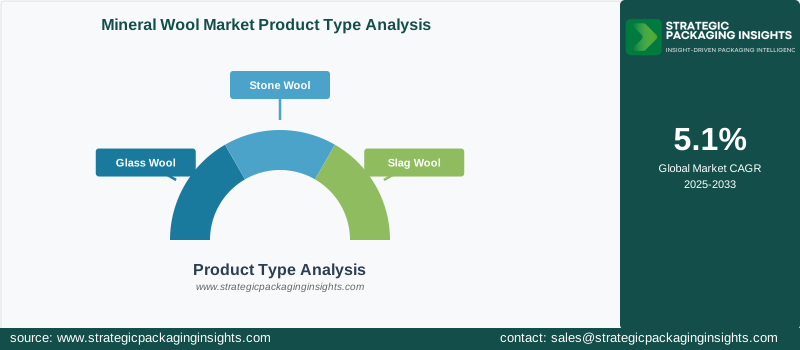
Stone Wool is particularly favored in regions with stringent fire safety regulations, such as Europe and North America. The growing awareness of the benefits of fire-resistant materials is driving demand for stone wool products, prompting manufacturers to invest in R&D and expand their product portfolios. Slag Wool, on the other hand, is gaining popularity in emerging markets due to its affordability and ease of installation. The increasing focus on energy efficiency and sustainability is further boosting the demand for these mineral wool products, as consumers and businesses seek eco-friendly insulation solutions.
Application Analysis
The mineral wool market is segmented by application into Building Insulation, Industrial Insulation, Fire Protection, and Acoustic Insulation. Building Insulation is the largest application segment, driven by the increasing demand for energy-efficient and sustainable building materials. The construction industry's shift towards green building practices is creating a robust demand for mineral wool products, particularly in regions with stringent energy efficiency regulations. Companies like Saint-Gobain and Owens Corning are capitalizing on these opportunities by expanding their product portfolios and investing in innovative technologies.
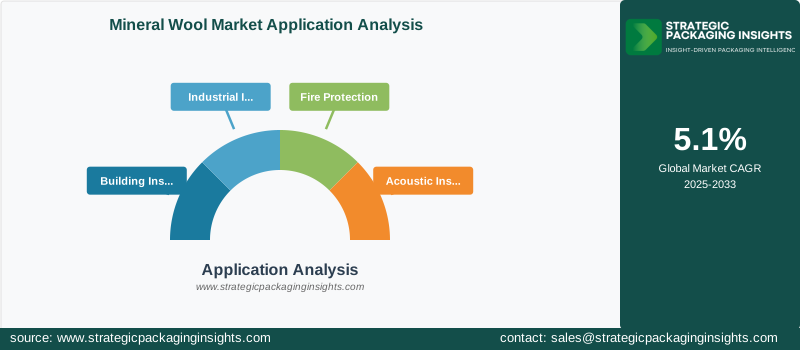
Industrial Insulation is another significant application segment, driven by the need for thermal and acoustic insulation in industrial facilities. The growing trend of urbanization and industrialization in emerging economies is creating a robust demand for mineral wool products in this segment. Fire Protection and Acoustic Insulation are also important application areas, with increasing demand for fire-resistant and soundproofing materials in residential and commercial buildings. The integration of digital technologies and smart manufacturing processes is opening up new avenues for innovation and growth in these application segments.
End Use Analysis
The mineral wool market is segmented by end use into Construction, Industrial, Energy, and HVAC. The Construction segment is the largest end-use segment, driven by the increasing demand for energy-efficient and sustainable building materials. The construction industry's shift towards green building practices is creating a robust demand for mineral wool products, particularly in regions with stringent energy efficiency regulations. Companies like Kingspan and Paroc are well-positioned to capitalize on these opportunities by expanding their product portfolios and investing in innovative technologies.
The Industrial segment is another significant end-use segment, driven by the need for thermal and acoustic insulation in industrial facilities. The growing trend of urbanization and industrialization in emerging economies is creating a robust demand for mineral wool products in this segment. The Energy and HVAC segments are also important end-use areas, with increasing demand for energy-efficient and sustainable insulation solutions. The integration of digital technologies and smart manufacturing processes is opening up new avenues for innovation and growth in these end-use segments.
Form Analysis
The mineral wool market is segmented by form into Blankets, Boards, Rolls, and Loose Fill. Blankets are widely used due to their ease of installation and versatility in various insulation applications. Companies like Rockwool and Knauf Insulation are leading the market with their innovative blanket products that offer superior performance and sustainability. Boards, known for their high density and fire-resistant properties, are gaining traction in industrial and fire protection applications. The demand for rolls and loose fill is also increasing, driven by their cost-effectiveness and versatility in various insulation applications.
Boards are particularly favored in regions with stringent fire safety regulations, such as Europe and North America. The growing awareness of the benefits of fire-resistant materials is driving demand for board products, prompting manufacturers to invest in R&D and expand their product portfolios. Rolls and loose fill, on the other hand, are gaining popularity in emerging markets due to their affordability and ease of installation. The increasing focus on energy efficiency and sustainability is further boosting the demand for these mineral wool products, as consumers and businesses seek eco-friendly insulation solutions.
Mineral Wool Market Segments
The Mineral Wool market has been segmented on the basis ofProduct Type
- Glass Wool
- Stone Wool
- Slag Wool
Application
- Building Insulation
- Industrial Insulation
- Fire Protection
- Acoustic Insulation
End Use
- Construction
- Industrial
- Energy
- HVAC
Form
- Blankets
- Boards
- Rolls
- Loose Fill
Region
- Asia Pacific
- North America
- Latin America
- Europe
- Middle East & Africa




