


3D-Printed Stickers & Labels Market Outlook
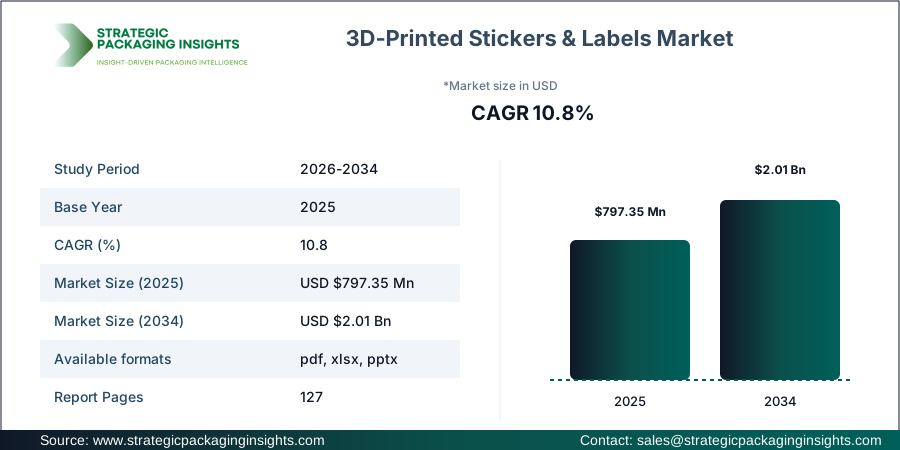
The 3D-Printed Stickers & Labels market size was valued at USD 797.35 million in 2025 and is anticipated to reach USD 2.01 billion by 2034, growing at a CAGR of 10.8% during the forecast period according to Strategic Packaging Insights. This market is witnessing significant growth due to the increasing demand for customized and visually appealing packaging solutions. Companies like Avery Dennison and CCL Industries are at the forefront, leveraging advanced printing technologies to cater to diverse industry needs. The rise in e-commerce and the need for effective branding solutions are further propelling market expansion, as businesses seek innovative ways to differentiate their products in a crowded marketplace.
One of the most impactful drivers of the 3D-Printed Stickers & Labels market is the growing emphasis on sustainability and eco-friendly packaging solutions. According to recent government initiatives, there is a strong push towards reducing plastic waste and promoting recyclable materials. This trend is encouraging companies like 3M and UPM Raflatac to innovate in the development of biodegradable and recyclable label materials. The shift towards sustainable practices is not only a regulatory requirement but also a consumer-driven demand, as more individuals prioritize environmentally responsible products. This focus on sustainability is expected to significantly influence the market dynamics, driving growth and innovation in the coming years.
Report Scope
| Attributes | Details |
| Report Title | 3D-Printed Stickers & Labels Market Size, Future Growth and Forecast 2034 |
| By Product Type | Raised Labels, Textured Stickers, Custom 3D Labels, Braille Labels |
| By Printing Technology | UV Printing, Digital Printing, Resin Printing |
| By Application | Branding, Cosmetics, Industrial Labeling, Promotional Products |
| By End Use | Retail, Beauty, Industrial, Advertising |
| Region | Asia Pacific, North America, Latin America, Europe, Middle East & Africa |
| Base Year | 2025 |
| Historic Period | 2018-2024 |
| Forecast Period | 2026-2034 |
| Number of Pages | 127 |
| Customization Available | Yes* |
Sustainability & Circular Economy Analysis
Sustainability initiatives are reshaping the 3D-Printed Stickers & Labels market, with a strong emphasis on eco-friendly materials and waste reduction strategies. Companies are increasingly adopting recyclable materials and reusable packaging solutions to align with consumer preferences for sustainable products. This shift is driven by the growing awareness of environmental issues and the need to reduce carbon footprints. As a result, packaging design and manufacturing processes are evolving to incorporate lightweight and biodegradable materials, which not only meet regulatory requirements but also enhance brand image and consumer loyalty.
The circular economy model is gaining traction in the packaging industry, encouraging companies to rethink their supply chain strategies. By focusing on extended producer responsibility (EPR) and innovative waste management practices, businesses are able to minimize their environmental impact while maximizing resource efficiency. This approach is influencing investment decisions, as companies prioritize sustainable practices that offer long-term competitive advantages. The integration of ESG initiatives into corporate strategies is becoming a key differentiator, attracting investors and consumers who value sustainability.
Regulatory compliance is a critical factor in the adoption of sustainable packaging solutions. Governments worldwide are implementing stricter regulations to reduce packaging waste and promote recycling. This regulatory landscape is driving companies to innovate and invest in eco-friendly technologies, ensuring compliance while maintaining market competitiveness. As a result, the 3D-Printed Stickers & Labels market is poised for significant growth, driven by the increasing demand for sustainable packaging solutions that meet both consumer expectations and regulatory standards.
Packaging Value Chain & Supply Chain Analysis
The packaging value chain for 3D-Printed Stickers & Labels is complex, involving multiple stakeholders from raw material suppliers to end consumers. Raw material sourcing is a critical component, as the availability and cost of materials like inks and substrates directly impact production capabilities and pricing strategies. Packaging converters and manufacturers play a pivotal role in transforming these materials into finished products, utilizing advanced machinery and technologies to meet diverse customer requirements. Companies like Avery Dennison and CCL Industries are investing in state-of-the-art equipment to enhance production efficiency and product quality.
Logistics and distribution channels are essential for ensuring timely delivery and market reach. Efficient transportation and inventory management systems are crucial for maintaining supply chain resilience and minimizing disruptions. Strategic partnerships with logistics providers and retailers enable companies to optimize their distribution networks, ensuring that products reach consumers quickly and efficiently. This focus on supply chain efficiency is vital for maintaining competitiveness in a rapidly evolving market landscape.
Recycling networks and waste management strategies are becoming increasingly important in the packaging value chain. As sustainability becomes a top priority, companies are investing in recycling infrastructure and collaborating with stakeholders to promote circular economy practices. This approach not only reduces environmental impact but also enhances brand reputation and consumer trust. By adopting sustainable procurement strategies and localizing supply chains, businesses can mitigate risks associated with global sourcing and ensure long-term market success.
Opportunities & Threats
The 3D-Printed Stickers & Labels market presents numerous opportunities for growth and innovation. The increasing demand for personalized and visually appealing packaging solutions is driving companies to invest in advanced printing technologies and design capabilities. This trend is particularly evident in the retail and advertising sectors, where businesses seek to differentiate their products and enhance brand recognition. Companies like Vistaprint and Sticker Mule are capitalizing on this opportunity by offering customizable label solutions that cater to diverse consumer preferences and industry needs.
Another significant opportunity lies in the expansion of e-commerce and online retail channels. As more consumers shop online, the need for effective branding and packaging solutions is becoming increasingly important. The rise of digital printing technologies is enabling companies to produce high-quality, cost-effective labels that enhance product presentation and consumer engagement. This shift towards digitalization is expected to drive market growth, as businesses leverage innovative printing solutions to meet the evolving demands of the digital marketplace.
Despite the promising growth prospects, the 3D-Printed Stickers & Labels market faces several challenges. One of the primary restrainers is the high cost of advanced printing technologies and materials, which can limit adoption among small and medium-sized enterprises. Additionally, the market is subject to stringent regulatory requirements related to environmental sustainability and product safety. Companies must navigate these complex regulations while maintaining cost-effectiveness and product quality. This balancing act can be challenging, particularly for businesses with limited resources and expertise in regulatory compliance.
Drivers & Challenges
The 3D-Printed Stickers & Labels market is driven by several key factors, including the growing demand for innovative and customizable packaging solutions. As consumers increasingly seek unique and personalized products, companies are investing in advanced printing technologies to meet these demands. The rise of digital printing and UV printing technologies is enabling businesses to produce high-quality, visually appealing labels that enhance brand recognition and consumer engagement. This trend is particularly evident in the cosmetics and promotional products sectors, where packaging plays a crucial role in influencing purchasing decisions.
Another significant driver is the increasing focus on sustainability and eco-friendly packaging solutions. As environmental concerns continue to rise, consumers and regulators are demanding more sustainable packaging options. Companies are responding by developing biodegradable and recyclable label materials, which not only meet regulatory requirements but also enhance brand image and consumer loyalty. This shift towards sustainability is expected to drive market growth, as businesses prioritize eco-friendly practices that offer long-term competitive advantages.
Despite these drivers, the market faces several challenges that could hinder growth. One of the primary challenges is the high cost of advanced printing technologies and materials, which can limit adoption among small and medium-sized enterprises. Additionally, the market is subject to stringent regulatory requirements related to environmental sustainability and product safety. Companies must navigate these complex regulations while maintaining cost-effectiveness and product quality. This balancing act can be challenging, particularly for businesses with limited resources and expertise in regulatory compliance.
Market Share Analysis
The competitive landscape of the 3D-Printed Stickers & Labels market is characterized by the presence of several key players, each striving to gain a larger market share through innovation and strategic partnerships. Companies like Avery Dennison and CCL Industries are leading the market, leveraging their extensive experience and advanced technologies to offer a wide range of label solutions. These companies are focusing on expanding their product portfolios and enhancing their production capabilities to meet the growing demand for customized and sustainable packaging solutions.
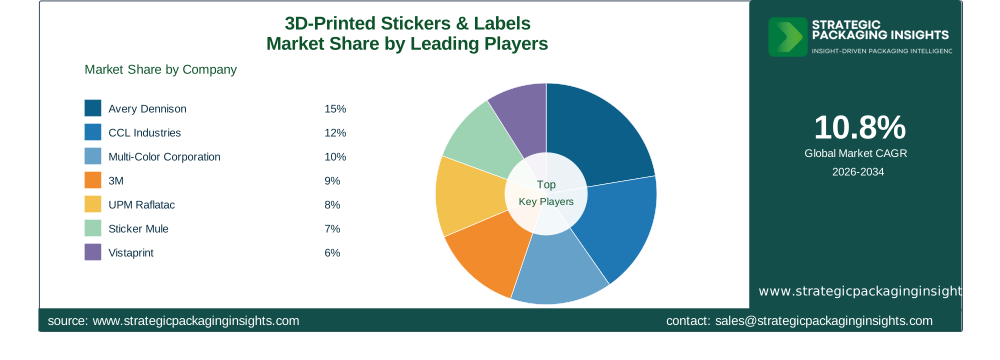
Multi-Color Corporation and 3M are also significant players in the market, known for their innovative approaches to label design and production. These companies are investing in research and development to create new materials and printing technologies that enhance product performance and sustainability. By collaborating with industry partners and customers, they are able to develop tailored solutions that address specific market needs and preferences.
UPM Raflatac and Sticker Mule are gaining traction in the market by offering unique and customizable label solutions that cater to diverse consumer preferences. These companies are focusing on digital printing technologies and sustainable materials to differentiate their products and enhance brand recognition. Their commitment to innovation and sustainability is helping them capture a larger share of the market and build strong relationships with customers and partners.
Other notable players in the market include Vistaprint, Resource Label Group, Brady Corporation, and SATO. These companies are leveraging their expertise in label production and distribution to offer high-quality, cost-effective solutions that meet the evolving demands of the market. By focusing on customer-centric approaches and strategic partnerships, they are able to maintain competitiveness and drive growth in a rapidly changing market landscape.
Key Highlights
- Market Size: Valued at USD 797.35 million in 2025, projected to reach USD 2.01 billion by 2034.
- Growth Rate: Expected CAGR of 10.8% during the forecast period.
- Product Innovation: Advanced printing technologies driving demand for customized labels.
- Sustainability Focus: Increasing emphasis on eco-friendly and recyclable materials.
- Key Players: Avery Dennison, CCL Industries, Multi-Color Corporation, 3M, UPM Raflatac.
- Regional Growth: Significant expansion in Asia Pacific and North America.
- Application Diversity: Wide range of applications including branding, cosmetics, and industrial labeling.
3D-Printed Stickers & Labels Market Segments Insights

Product Type Analysis
The 3D-Printed Stickers & Labels market is segmented by product type into Raised Labels, Textured Stickers, Custom 3D Labels, and Braille Labels. Raised Labels are gaining popularity due to their tactile appeal and ability to enhance brand recognition. These labels are particularly favored in the cosmetics and retail sectors, where visual and sensory appeal is crucial. Textured Stickers offer a unique look and feel, making them ideal for promotional products and advertising campaigns. Custom 3D Labels are in high demand for their ability to provide personalized and eye-catching designs, catering to the growing trend of product differentiation.
Braille Labels are becoming increasingly important in the market, driven by regulatory requirements and the need for inclusive packaging solutions. These labels are essential for ensuring accessibility and compliance with legal standards, particularly in the pharmaceutical and consumer goods industries. The demand for Braille Labels is expected to grow as companies prioritize inclusivity and accessibility in their packaging strategies. Overall, the product type segment is characterized by a diverse range of options that cater to various industry needs and consumer preferences.
Printing Technology Analysis
The printing technology segment of the 3D-Printed Stickers & Labels market includes UV Printing, Digital Printing, and Resin Printing. UV Printing is widely used for its ability to produce high-quality, durable labels with vibrant colors and intricate designs. This technology is favored in industries such as cosmetics and branding, where visual appeal is paramount. Digital Printing is gaining traction due to its cost-effectiveness and flexibility, allowing for quick turnaround times and customization. This technology is ideal for small to medium-sized print runs, making it popular among businesses seeking personalized label solutions.
Resin Printing is known for its precision and ability to create detailed, high-resolution labels. This technology is particularly useful in industrial labeling applications, where durability and accuracy are essential. The growing demand for innovative and visually appealing packaging solutions is driving the adoption of advanced printing technologies, as companies seek to enhance product presentation and consumer engagement. Overall, the printing technology segment is characterized by rapid advancements and a focus on meeting diverse industry needs.
Application Analysis
The application segment of the 3D-Printed Stickers & Labels market includes Branding, Cosmetics, Industrial Labeling, and Promotional Products. Branding is a key application area, as companies seek to differentiate their products and enhance brand recognition through innovative label designs. The cosmetics industry is also a significant driver of market growth, with a strong emphasis on visually appealing and high-quality packaging solutions. Industrial Labeling is essential for ensuring product safety and compliance, particularly in sectors such as manufacturing and logistics.
Promotional Products represent a growing application area, as businesses leverage 3D-Printed Stickers & Labels to create eye-catching and memorable marketing materials. The demand for customized and visually appealing labels is driving innovation and growth in this segment, as companies seek to enhance consumer engagement and brand loyalty. Overall, the application segment is characterized by a diverse range of opportunities and a focus on meeting the evolving needs of various industries.
End Use Analysis
The end-use segment of the 3D-Printed Stickers & Labels market includes Retail, Beauty, Industrial, and Advertising. The retail sector is a major driver of market growth, as businesses seek to enhance product presentation and consumer engagement through innovative label designs. The beauty industry is also a significant contributor, with a strong emphasis on visually appealing and high-quality packaging solutions. Industrial applications are essential for ensuring product safety and compliance, particularly in sectors such as manufacturing and logistics.
Advertising represents a growing end-use area, as companies leverage 3D-Printed Stickers & Labels to create eye-catching and memorable marketing materials. The demand for customized and visually appealing labels is driving innovation and growth in this segment, as businesses seek to enhance consumer engagement and brand loyalty. Overall, the end-use segment is characterized by a diverse range of opportunities and a focus on meeting the evolving needs of various industries.
3D-Printed Stickers & Labels Market Segments
The 3D-Printed Stickers & Labels market has been segmented on the basis ofBy Product Type
- Raised Labels
- Textured Stickers
- Custom 3D Labels
- Braille Labels
By Printing Technology
- UV Printing
- Digital Printing
- Resin Printing
By Application
- Branding
- Cosmetics
- Industrial Labeling
- Promotional Products
By End Use
- Retail
- Beauty
- Industrial
- Advertising
Region
- Asia Pacific
- North America
- Latin America
- Europe
- Middle East & Africa




