


Braille Labels Market Outlook
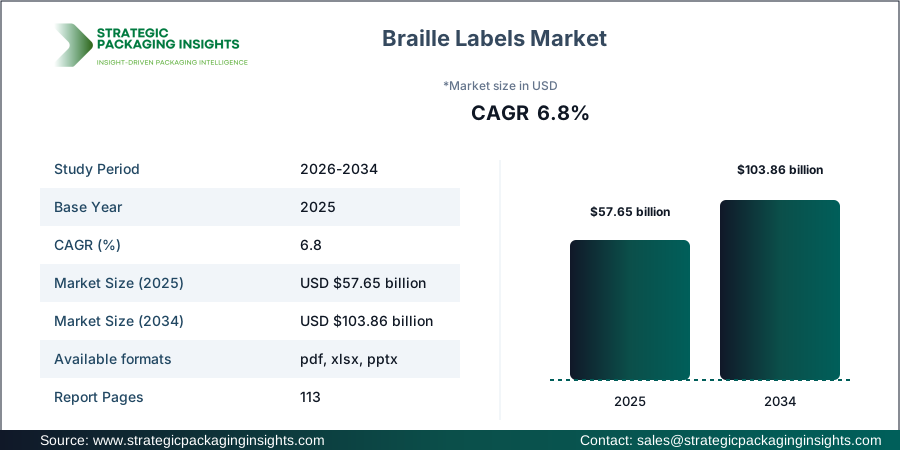
The Braille Labels market was valued at $57.65 billion in 2025 and is projected to reach $103.86 billion by 2034, growing at a CAGR of 6.8% during the forecast period 2026-2034. This market is witnessing significant growth due to the increasing demand for accessible packaging solutions across various industries. The rise in awareness about the importance of inclusivity for visually impaired individuals is driving the adoption of braille labels in pharmaceuticals, healthcare products, and consumer goods. Additionally, regulatory mandates in several countries requiring braille on packaging are further propelling market growth. The market is also benefiting from technological advancements in label manufacturing, which are enhancing the quality and durability of braille labels.
Despite the promising growth prospects, the Braille Labels market faces certain challenges. The high cost of production and the complexity involved in manufacturing braille labels can act as a restraint. Moreover, the lack of standardized regulations across different regions can create hurdles for market players. However, the growing emphasis on corporate social responsibility and the increasing adoption of sustainable materials in label production present significant growth opportunities. Companies are investing in research and development to innovate cost-effective and eco-friendly braille labeling solutions, which is expected to drive market expansion in the coming years.
Report Scope
| Attributes | Details |
| Report Title | Braille Labels Market Size, Future Growth and Forecast 2034 |
| Label Type | Embossed Braille Labels, Tactile Labels, Pharmaceutical Braille Labels |
| Material Type | Paper, Film, Synthetic Substrates |
| Application | Pharmaceuticals, Healthcare Products, Consumer Goods, Regulatory Labeling |
| End Use | Pharma Companies, Label Converters, Hospitals, FMCG Brands |
| Region | Asia Pacific, North America, Latin America, Europe, Middle East & Africa |
| Base Year | 2025 |
| Historic Period | 2018-2024 |
| Forecast Period | 2026-2034 |
| Number of Pages | 113 |
| Customization Available | Yes* |
Opportunities & Threats
The Braille Labels market presents numerous opportunities, particularly in the realm of technological advancements. Innovations in printing technologies, such as digital printing and 3D printing, are enabling the production of high-quality braille labels at a lower cost. These technologies allow for greater customization and flexibility, catering to the specific needs of different industries. Additionally, the increasing focus on sustainability is driving the demand for eco-friendly braille labels made from recyclable materials. This trend is opening up new avenues for market players to develop innovative products that align with the growing environmental consciousness among consumers and businesses alike.
Another significant opportunity lies in the expanding pharmaceutical and healthcare sectors. With the global population aging and the prevalence of chronic diseases on the rise, there is a growing need for accessible packaging solutions in these industries. Braille labels play a crucial role in ensuring that visually impaired individuals can safely and independently manage their medications. As a result, pharmaceutical companies are increasingly incorporating braille labels into their packaging, creating a substantial demand for these products. Furthermore, regulatory requirements mandating the use of braille on pharmaceutical packaging in several countries are further boosting market growth.
However, the market also faces certain threats that could hinder its growth. One of the primary challenges is the high cost associated with the production of braille labels. The specialized equipment and materials required for manufacturing these labels can be expensive, leading to higher production costs. Additionally, the lack of standardized regulations across different regions can create complexities for market players, as they must navigate varying requirements and compliance standards. This can result in increased operational costs and potential delays in product launches, posing a threat to market growth.
Drivers & Challenges
The Braille Labels market is driven by several key factors, including the increasing demand for accessible packaging solutions and the growing awareness about the importance of inclusivity for visually impaired individuals. As more companies recognize the need to cater to this demographic, the adoption of braille labels is on the rise. Regulatory mandates in several countries requiring braille on packaging are also playing a significant role in driving market growth. These regulations are aimed at ensuring that visually impaired individuals have equal access to information and can safely use products without assistance. Additionally, technological advancements in label manufacturing are enhancing the quality and durability of braille labels, further boosting their adoption across various industries.
Another major driver of the Braille Labels market is the increasing emphasis on corporate social responsibility. Companies are becoming more conscious of their social and environmental impact and are taking steps to promote inclusivity and sustainability. This has led to a growing demand for braille labels made from eco-friendly materials, as businesses seek to align their packaging solutions with their sustainability goals. Furthermore, the rise in e-commerce and online retailing is creating new opportunities for braille labels, as companies look to enhance the accessibility of their products for visually impaired consumers.
Despite these drivers, the market faces several challenges that could impede its growth. One of the primary challenges is the high cost of production associated with braille labels. The specialized equipment and materials required for manufacturing these labels can be expensive, leading to higher production costs. Additionally, the lack of standardized regulations across different regions can create complexities for market players, as they must navigate varying requirements and compliance standards. This can result in increased operational costs and potential delays in product launches, posing a threat to market growth. Moreover, the limited awareness about the benefits of braille labels among some businesses can also hinder market expansion.
Market Share Analysis
The competitive landscape of the Braille Labels market is characterized by the presence of several key players who are actively engaged in product innovation and strategic partnerships to strengthen their market position. CCL Industries, a leading player in the market, holds a significant share due to its extensive product portfolio and strong distribution network. The company is known for its high-quality braille labels that cater to various industries, including pharmaceuticals and consumer goods. Avery Dennison, another major player, is renowned for its innovative labeling solutions and commitment to sustainability. The company's focus on research and development has enabled it to introduce eco-friendly braille labels that are gaining traction in the market.
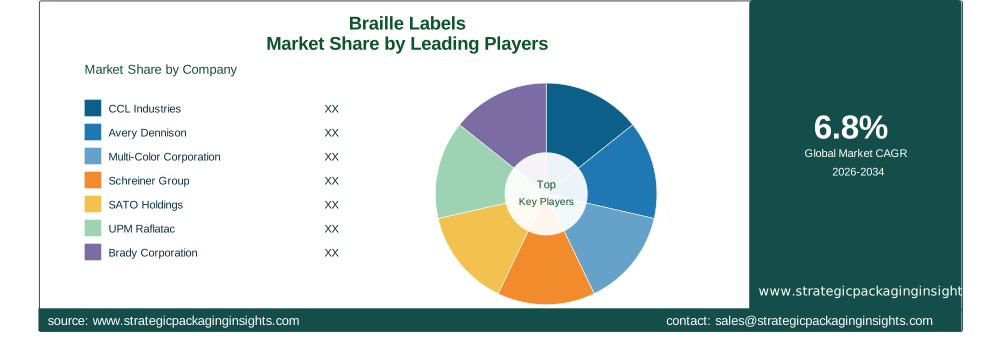
Multi-Color Corporation is also a prominent player in the Braille Labels market, offering a wide range of labeling solutions that meet the diverse needs of its customers. The company's strategic acquisitions and collaborations have helped it expand its market presence and enhance its product offerings. Schreiner Group, known for its expertise in functional labels, is making significant strides in the braille labels segment. The company's focus on technological advancements and quality assurance has positioned it as a trusted partner for businesses seeking reliable braille labeling solutions.
SATO Holdings, a global leader in auto-ID solutions, is leveraging its expertise in label printing to capture a substantial share of the Braille Labels market. The company's innovative approach to label design and production has enabled it to cater to the growing demand for accessible packaging solutions. UPM Raflatac, a leading supplier of label materials, is also making a mark in the market with its sustainable braille labels. The company's commitment to environmental responsibility and product innovation is driving its growth in the braille labels segment.
Other notable players in the market include Brady Corporation, Lintec, Herma, and Weber Packaging Solutions. These companies are focusing on expanding their product portfolios and enhancing their production capabilities to meet the increasing demand for braille labels. By investing in research and development, they are introducing new and improved labeling solutions that cater to the specific needs of different industries. The competitive landscape of the Braille Labels market is expected to remain dynamic, with companies continuously striving to innovate and differentiate their offerings to gain a competitive edge.
Key Highlights
- The Braille Labels market is projected to grow at a CAGR of 6.8% from 2026 to 2034.
- Technological advancements in label manufacturing are enhancing the quality and durability of braille labels.
- Regulatory mandates in several countries are driving the adoption of braille labels in pharmaceuticals and consumer goods.
- The increasing emphasis on corporate social responsibility is boosting the demand for eco-friendly braille labels.
- The rise in e-commerce is creating new opportunities for braille labels in online retailing.
- High production costs and lack of standardized regulations are key challenges for market players.
- Key players in the market include CCL Industries, Avery Dennison, and Multi-Color Corporation.
- Innovations in printing technologies are enabling the production of high-quality braille labels at a lower cost.
- The expanding pharmaceutical and healthcare sectors are driving the demand for braille labels.
- Companies are investing in research and development to innovate cost-effective and sustainable braille labeling solutions.
Top Countries Insights
In the Braille Labels market, the United States stands out as a key player, with a market size of approximately $15 billion and a CAGR of 5%. The country's strong regulatory framework mandating the use of braille on pharmaceutical packaging is a significant growth driver. Additionally, the presence of major market players and the increasing focus on inclusivity and accessibility in packaging are contributing to market expansion. However, the high cost of production and the need for specialized equipment pose challenges for manufacturers.
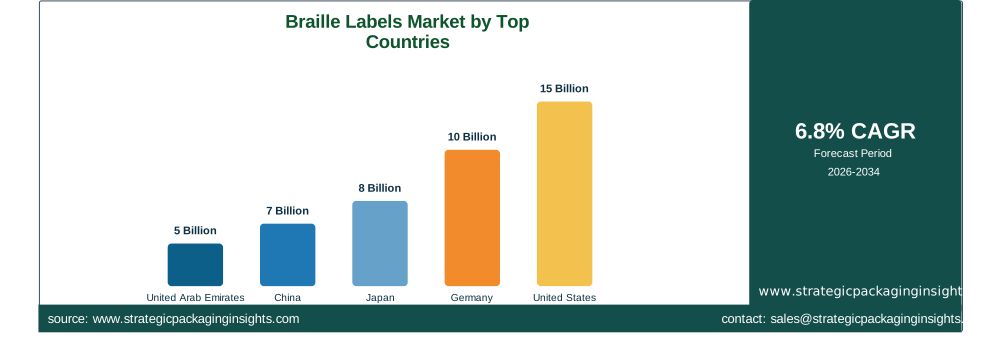
Germany is another prominent market for braille labels, with a market size of around $10 billion and a CAGR of 6%. The country's robust healthcare sector and stringent regulations regarding accessible packaging are driving the demand for braille labels. Furthermore, the growing emphasis on sustainability and the use of eco-friendly materials in label production are creating new opportunities for market players. However, the lack of standardized regulations across the European Union can create complexities for manufacturers operating in the region.
In the Asia Pacific region, Japan is a leading market for braille labels, with a market size of approximately $8 billion and a CAGR of 7%. The country's aging population and the increasing prevalence of chronic diseases are driving the demand for accessible packaging solutions in the healthcare sector. Additionally, the government's initiatives to promote inclusivity and accessibility are further boosting market growth. However, the high cost of production and the need for specialized equipment remain significant challenges for manufacturers.
China is also emerging as a key market for braille labels, with a market size of around $7 billion and a CAGR of 8%. The country's rapidly growing pharmaceutical and consumer goods industries are driving the demand for braille labels. Additionally, the government's focus on improving accessibility for visually impaired individuals is creating new opportunities for market players. However, the lack of standardized regulations and the high cost of production pose challenges for manufacturers operating in the region.
In the Middle East & Africa, the United Arab Emirates is a notable market for braille labels, with a market size of approximately $5 billion and a CAGR of 6%. The country's strong regulatory framework and the increasing focus on inclusivity and accessibility in packaging are driving market growth. Additionally, the presence of major market players and the growing emphasis on sustainability are creating new opportunities for manufacturers. However, the high cost of production and the need for specialized equipment remain significant challenges for market players.
Braille Labels Market Segments Insights

Label Type Analysis
The Braille Labels market is segmented by label type into embossed braille labels, tactile labels, and pharmaceutical braille labels. Embossed braille labels are widely used due to their durability and ease of production. These labels are particularly popular in the pharmaceutical and healthcare sectors, where they play a crucial role in ensuring that visually impaired individuals can safely and independently manage their medications. Tactile labels, on the other hand, are gaining traction in the consumer goods industry, where they are used to enhance the accessibility of products for visually impaired consumers. Pharmaceutical braille labels are specifically designed to meet the stringent regulatory requirements in the pharmaceutical industry, ensuring that all necessary information is accessible to visually impaired individuals.
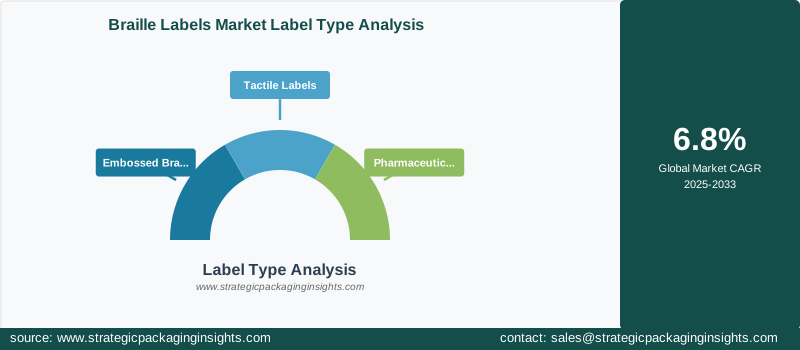
The demand for embossed braille labels is driven by their cost-effectiveness and versatility. These labels can be easily integrated into existing packaging designs, making them a popular choice for manufacturers. Tactile labels, while more expensive to produce, offer a unique sensory experience that enhances the accessibility of products for visually impaired consumers. Pharmaceutical braille labels are subject to strict regulatory requirements, which can create challenges for manufacturers. However, the growing emphasis on inclusivity and accessibility in the pharmaceutical industry is driving the demand for these labels, creating new opportunities for market players.
Material Type Analysis
The Braille Labels market is segmented by material type into paper, film, and synthetic substrates. Paper is the most commonly used material for braille labels due to its cost-effectiveness and ease of production. However, film and synthetic substrates are gaining popularity due to their durability and resistance to environmental factors. These materials are particularly popular in the pharmaceutical and healthcare sectors, where they are used to ensure that braille labels remain legible and intact throughout the product's lifecycle.
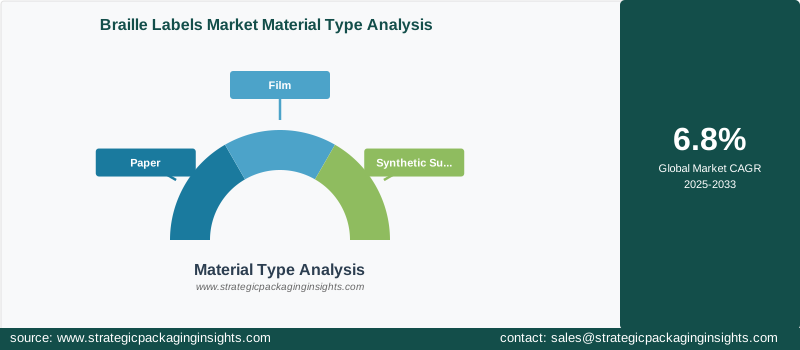
The demand for paper braille labels is driven by their affordability and versatility. These labels can be easily integrated into existing packaging designs, making them a popular choice for manufacturers. Film and synthetic substrates, while more expensive to produce, offer superior durability and resistance to environmental factors, making them ideal for use in the pharmaceutical and healthcare sectors. The growing emphasis on sustainability is also driving the demand for eco-friendly materials in braille label production, creating new opportunities for market players.
Application Analysis
The Braille Labels market is segmented by application into pharmaceuticals, healthcare products, consumer goods, and regulatory labeling. The pharmaceutical industry is the largest application segment, driven by the stringent regulatory requirements mandating the use of braille on packaging. Healthcare products are another significant application segment, where braille labels play a crucial role in ensuring that visually impaired individuals can safely and independently manage their medications.
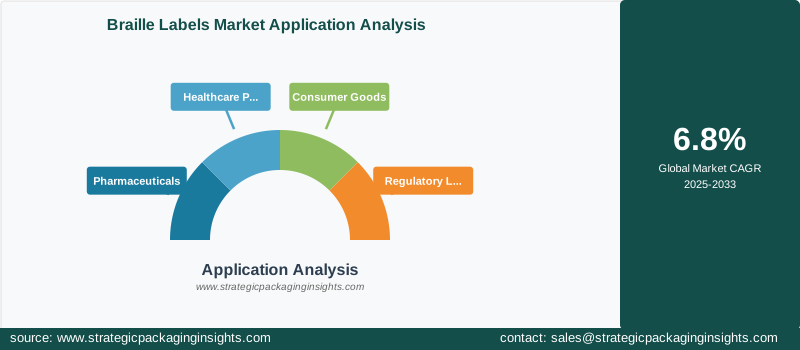
The demand for braille labels in the pharmaceutical industry is driven by the need to comply with regulatory requirements and ensure that all necessary information is accessible to visually impaired individuals. Healthcare products, while subject to less stringent regulations, are increasingly incorporating braille labels to enhance accessibility for visually impaired consumers. The consumer goods industry is also adopting braille labels to improve the accessibility of products for visually impaired consumers, creating new opportunities for market players.
End Use Analysis
The Braille Labels market is segmented by end use into pharma companies, label converters, hospitals, and FMCG brands. Pharma companies are the largest end-use segment, driven by the stringent regulatory requirements mandating the use of braille on packaging. Label converters are another significant end-use segment, where braille labels are used to enhance the accessibility of products for visually impaired consumers.
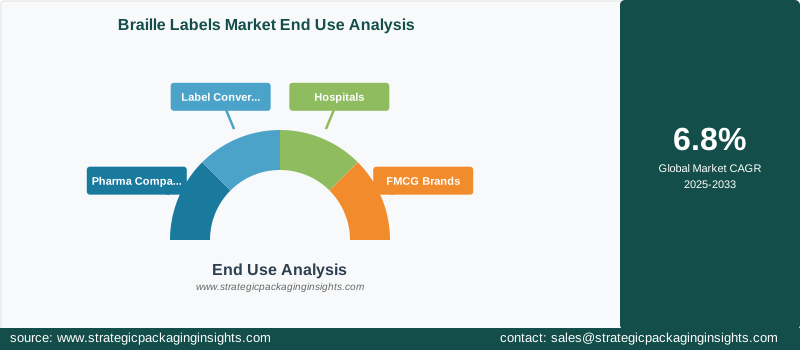
The demand for braille labels in the pharma industry is driven by the need to comply with regulatory requirements and ensure that all necessary information is accessible to visually impaired individuals. Label converters, while subject to less stringent regulations, are increasingly incorporating braille labels to enhance accessibility for visually impaired consumers. Hospitals and FMCG brands are also adopting braille labels to improve the accessibility of products for visually impaired consumers, creating new opportunities for market players.
Braille Labels Market Segments
The Braille Labels market has been segmented on the basis ofLabel Type
- Embossed Braille Labels
- Tactile Labels
- Pharmaceutical Braille Labels
Material Type
- Paper
- Film
- Synthetic Substrates
Application
- Pharmaceuticals
- Healthcare Products
- Consumer Goods
- Regulatory Labeling
End Use
- Pharma Companies
- Label Converters
- Hospitals
- FMCG Brands
Region
- Asia Pacific
- North America
- Latin America
- Europe
- Middle East & Africa




