
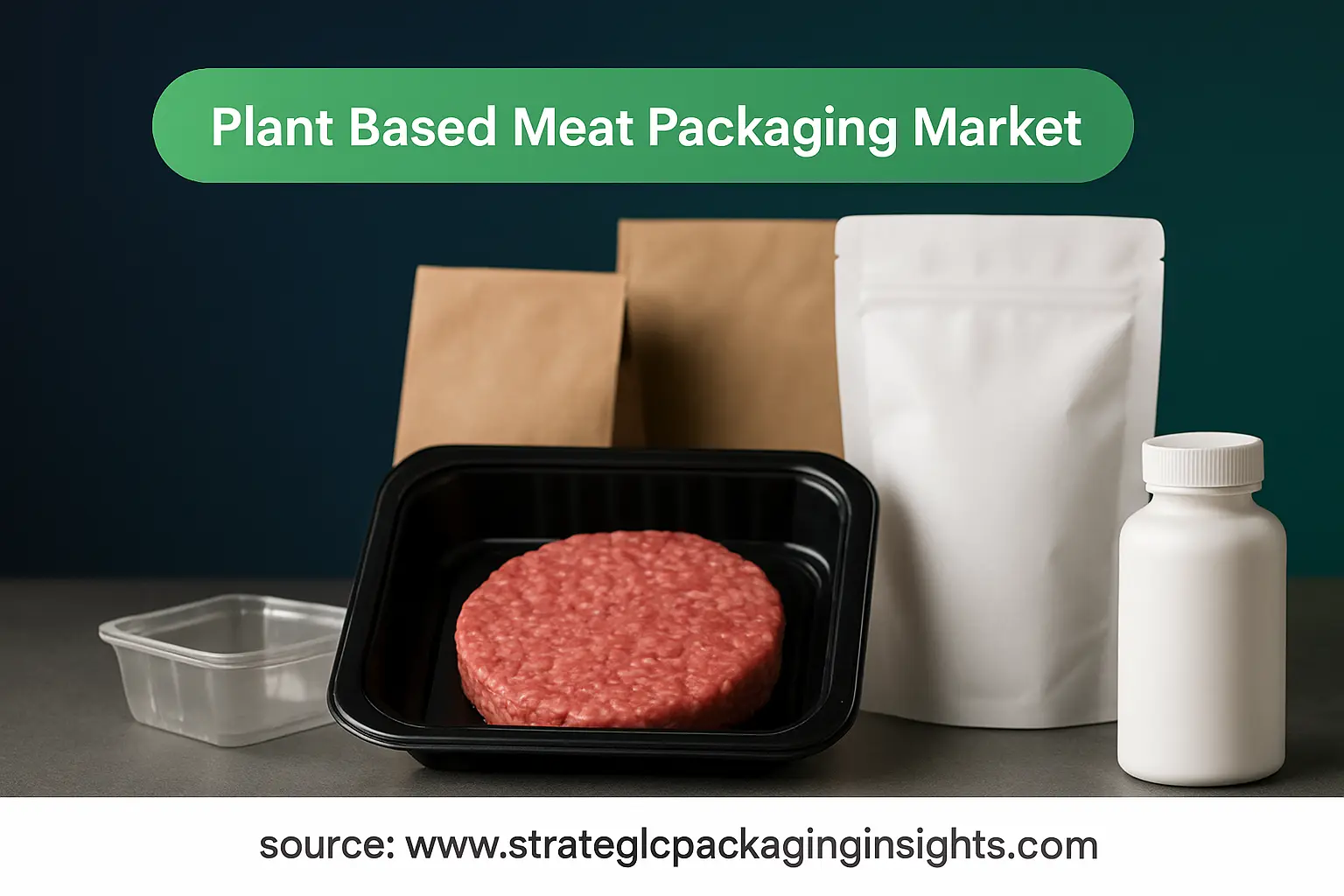
Explore the dynamic growth of the Plant Based Meat Packaging Market from 2018 to 2034, with insights into market size, CAGR, segment landscape, and strategic opportunities.
Strategic Market Overview
The Plant Based Meat Packaging Market is witnessing a transformative phase, driven by the increasing consumer shift towards sustainable and plant-based diets. This market is not only pivotal in supporting the burgeoning plant-based meat industry but also plays a crucial role in addressing environmental concerns associated with traditional meat packaging. As consumer preferences evolve, the demand for innovative, eco-friendly packaging solutions is expected to rise, positioning this market for significant growth.
https://www.strategicpackaginginsights.com/report/plant-based-meat-packaging-market
From 2018 to 2034: Evolution of the Market
Between 2018 and 2024, the Plant Based Meat Packaging Market experienced steady growth, fueled by the rising popularity of plant-based diets and increased awareness of environmental sustainability. The base year of 2025 marked a pivotal point, with the market valued at $2.54 billion. Looking ahead to the forecast period of 2026 to 2034, the market is projected to expand significantly, reaching an estimated $6.35 billion by 2034. This growth trajectory underscores the market's resilience and adaptability in meeting the evolving demands of consumers and industry stakeholders.
Interpreting Market Size & CAGR
In 2025, the Plant Based Meat Packaging Market was valued at $2.54 billion. By 2034, it is expected to reach $6.35 billion, reflecting a robust compound annual growth rate (CAGR) of 10.7%. This impressive growth rate highlights the market's potential to capitalize on the increasing consumer demand for sustainable packaging solutions. The projected market size indicates a substantial opportunity for stakeholders to innovate and expand their offerings to meet the diverse needs of the plant-based meat industry.
Segment Landscape
| By Packaging Type | By Material Type | By Application | By End Use | Region |
|---|---|---|---|---|
| Trays | PET | Burger Patties | Plant-Based Food Brands | Asia Pacific |
| Pouches | PP | Sausages | Retailers | North America |
| Films | Paperboard | Nuggets | Foodservice | Latin America |
| Cartons | Compostable Films | Ready Meals | Europe |
The segment landscape of the Plant Based Meat Packaging Market is diverse, with various packaging types, materials, applications, and end uses. Trays, pouches, films, and cartons are the primary packaging types, each offering unique benefits in terms of sustainability and functionality. Material types such as PET, PP, paperboard, and compostable films cater to different environmental and performance requirements. Applications range from burger patties to ready meals, reflecting the versatility of plant-based meat products. End users include plant-based food brands, retailers, and foodservice providers, each with distinct packaging needs. Geographically, the market spans Asia Pacific, North America, Latin America, Europe, and the Middle East & Africa, highlighting its global reach.
Value Chain & Stakeholder Impact
The value chain of the Plant Based Meat Packaging Market involves multiple stakeholders, including raw material suppliers, packaging manufacturers, plant-based meat producers, and retailers. Each stakeholder plays a critical role in ensuring the delivery of high-quality, sustainable packaging solutions. Raw material suppliers are increasingly focusing on eco-friendly materials, while packaging manufacturers are innovating to enhance the functionality and sustainability of their products. Plant-based meat producers and retailers are key drivers of demand, seeking packaging solutions that align with their sustainability goals and consumer expectations.
Opportunities vs Constraints
The Plant Based Meat Packaging Market presents numerous opportunities, including the growing consumer demand for sustainable packaging, advancements in packaging technology, and the expansion of the plant-based meat industry. However, the market also faces constraints such as regulatory challenges, high production costs, and the need for continuous innovation to meet evolving consumer preferences. Balancing these opportunities and constraints will be crucial for stakeholders aiming to capitalize on the market's growth potential.
SWOT Analysis
| Strengths | Weaknesses | Opportunities | Threats |
|---|---|---|---|
| Strong consumer demand for sustainability | High production costs | Technological advancements in packaging | Regulatory challenges |
| Global market reach | Limited material options | Expansion of plant-based meat industry | Intense competition |
The SWOT analysis of the Plant Based Meat Packaging Market reveals key insights for stakeholders. Strengths include strong consumer demand for sustainability and global market reach. Weaknesses involve high production costs and limited material options. Opportunities are driven by technological advancements and the expansion of the plant-based meat industry. Threats include regulatory challenges and intense competition, necessitating strategic planning and innovation.
Technology, Regulation & Sustainability Impact
Technology plays a pivotal role in the Plant Based Meat Packaging Market, with innovations in biodegradable materials and smart packaging solutions enhancing product appeal and functionality. Regulatory frameworks are evolving to support sustainable practices, with governments and industry bodies advocating for reduced environmental impact. Sustainability remains a core focus, with stakeholders prioritizing eco-friendly materials and processes to meet consumer expectations and regulatory requirements.
Strategic Outlook to 2034
Looking ahead to 2034, the Plant Based Meat Packaging Market is poised for significant growth, driven by consumer demand for sustainable solutions and the expansion of the plant-based meat industry. Stakeholders must focus on innovation, collaboration, and strategic investments to capitalize on emerging opportunities. By addressing regulatory challenges and leveraging technological advancements, the market can achieve sustainable growth and contribute to a more environmentally conscious future.