
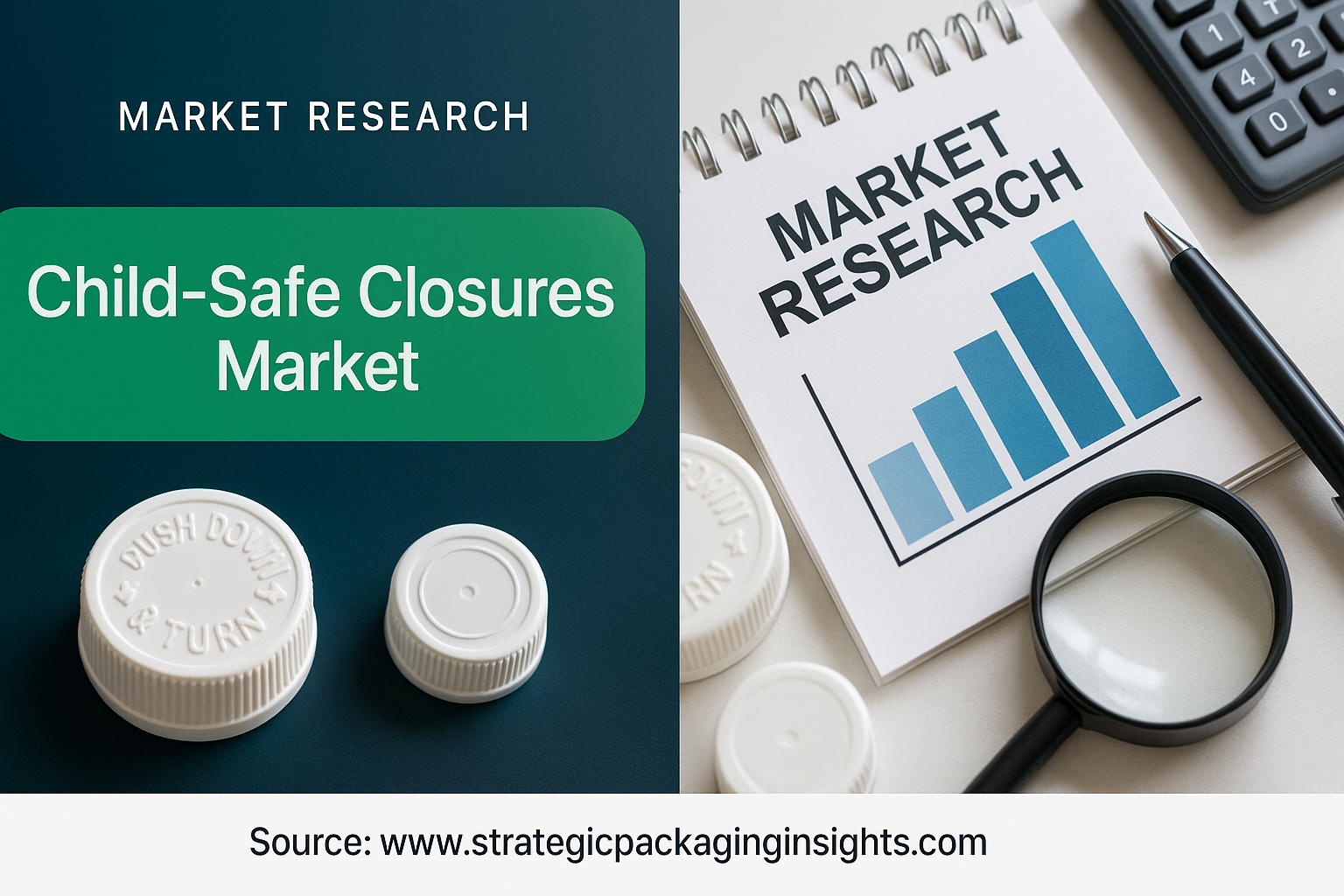
Dive into the Child-Safe Closures Market, analyzing its growth trajectory, segment dynamics, regional influences, and the balance of challenges and opportunities shaping its future.
Why This Market Is Gaining Attention
The Child-Safe Closures Market is increasingly capturing the attention of manufacturers, regulators, and consumers alike. With rising awareness about child safety and stringent regulations mandating the use of child-resistant packaging, this market is poised for significant growth. The demand for child-safe closures is driven by the need to prevent accidental ingestion of potentially harmful substances by children, a concern that resonates with both parents and policymakers. As industries such as pharmaceuticals, household products, and personal care continue to expand, the necessity for reliable child-safe packaging solutions becomes ever more critical.
https://www.strategicpackaginginsights.com/report/child-safe-closures-market
Market Scale & Growth Momentum
The market size for child-safe closures was valued at $1.2 billion in 2024 and is projected to reach $2.5 billion by 2033, reflecting a robust compound annual growth rate (CAGR) of 8.5%. This growth trajectory underscores the increasing adoption of child-safe packaging across various sectors. The market's expansion is fueled by technological advancements in closure designs and materials, which enhance safety features while maintaining user convenience. The steady growth rate also indicates a sustained demand for these products, driven by regulatory compliance and consumer awareness.
Deep Dive into Segments
| Segment | Description |
|---|---|
| Material | Plastic remains the dominant material due to its versatility and cost-effectiveness, while metal closures are preferred for their durability and tamper-evidence. Other materials are emerging as eco-friendly alternatives. |
| Type | Push and Turn closures are widely used for their simplicity and effectiveness, whereas Squeeze and Turn closures offer enhanced safety features. Other types include innovative designs catering to specific product needs. |
| End-User | Pharmaceuticals lead the end-user segment, driven by stringent safety regulations. Household products and personal care items also contribute significantly, with food and beverages adopting closures for specific products. |
| Region | North America and Europe dominate due to strict regulatory frameworks, while Asia Pacific is emerging as a lucrative market with increasing consumer awareness and industrial growth. |
Application & End-Use Relevance
Child-safe closures are crucial across various applications, particularly in the pharmaceuticals industry, where they are mandated by law to prevent accidental drug ingestion by children. In the household products sector, these closures are essential for packaging cleaning agents and chemicals. The food and beverages industry is also exploring child-safe options for products like vitamins and supplements. Personal care products, especially those containing potentially harmful substances, are increasingly adopting child-safe closures to enhance consumer safety and brand trust.
Regional & Industry Dynamics
Regionally, North America and Europe are at the forefront of the child-safe closures market, driven by stringent safety regulations and high consumer awareness. The Asia Pacific region is witnessing rapid growth due to increasing industrialization, urbanization, and a growing middle class that prioritizes child safety. Latin America and the Middle East & Africa are also showing potential, albeit at a slower pace, as regulatory frameworks evolve and consumer awareness increases. Industry dynamics are shaped by technological innovations, regulatory changes, and the competitive landscape, with key players investing in research and development to enhance product offerings.
Challenges vs Opportunities
While the child-safe closures market presents numerous opportunities, it also faces challenges. The primary challenge is balancing safety with user convenience, as overly complex closures can deter consumer use. Additionally, the cost of implementing advanced safety features can be a barrier for smaller manufacturers. However, these challenges are countered by opportunities such as the growing demand for eco-friendly materials and the potential for innovation in closure designs. Companies that can effectively address these challenges while capitalizing on opportunities are likely to thrive in this competitive market.
SWOT Overview
| Strengths | Weaknesses | Opportunities | Threats |
|---|---|---|---|
| Strong regulatory support and consumer demand for safety. | High production costs for advanced closures. | Growing demand for sustainable and innovative solutions. | Intense competition and potential regulatory changes. |
Innovation & Sustainability Angle
Innovation is a key driver in the child-safe closures market, with companies investing in new materials and designs to enhance safety and user experience. Sustainability is also becoming a critical focus, as consumers and regulators push for environmentally friendly packaging solutions. Biodegradable materials and recyclable designs are gaining traction, offering a dual benefit of safety and environmental responsibility. Companies that prioritize innovation and sustainability are likely to gain a competitive edge and meet the evolving demands of consumers and regulators.
What This Means for Packaging Stakeholders
For stakeholders in the packaging industry, the growth of the child-safe closures market presents both challenges and opportunities. Manufacturers must navigate the complexities of regulatory compliance while innovating to meet consumer demands for safety and sustainability. Collaboration with regulatory bodies and investment in research and development are essential strategies for success. As the market continues to evolve, stakeholders who can adapt to changing dynamics and leverage technological advancements will be well-positioned to capitalize on the expanding demand for child-safe closures.