


Zero-Waste Tote Formats Market Outlook
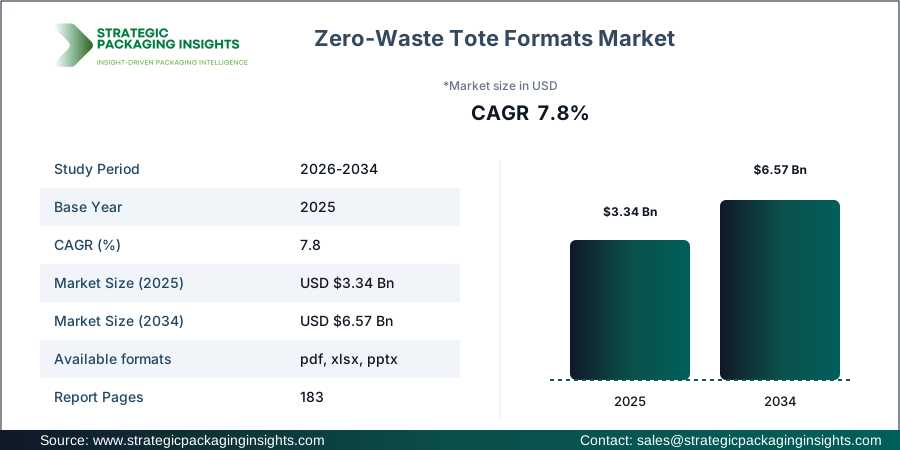
The Zero-Waste Tote Formats market was valued at $3.34 billion in 2025 and is projected to reach $6.57 billion by 2034, growing at a CAGR of 7.8% during the forecast period 2026-2034. This market is driven by increasing consumer awareness about environmental sustainability and the rising demand for eco-friendly packaging solutions. The shift towards zero-waste lifestyles and the growing emphasis on reducing plastic waste are significant factors propelling the market growth. Additionally, the adoption of zero-waste tote formats by major retailers and logistics providers is further boosting the market. The market is also witnessing innovations in material types, such as the use of recycled plastics and biodegradable materials, which are expected to enhance the market's growth trajectory.
Report Scope
| Attributes | Details |
| Report Title | Zero-Waste Tote Formats Market Size, Future Growth and Forecast 2034 |
| By Product Type | Reusable Totes, Collapsible Totes, Returnable Transport Totes |
| By Material Type | PP, HDPE, Recycled Plastic, Fabric |
| By Application | Grocery, E-commerce, Retail, Foodservice |
| By End Use | Retailers, Logistics Providers, Food Brands, Consumers |
| Region | Asia Pacific, North America, Latin America, Europe, Middle East & Africa |
| Base Year | 2025 |
| Historic Period | 2018-2024 |
| Forecast Period | 2026-2034 |
| Number of Pages | 183 |
| Customization Available | Yes* |
Opportunities & Threats
The Zero-Waste Tote Formats market presents numerous opportunities, particularly in the realm of sustainable packaging solutions. As consumers become more environmentally conscious, there is a growing demand for products that minimize waste and reduce environmental impact. This trend is creating opportunities for companies to innovate and develop new products that meet these consumer demands. Additionally, the increasing adoption of zero-waste policies by governments and organizations worldwide is expected to drive the market further. Companies that can align their products with these policies and offer sustainable solutions are likely to gain a competitive edge in the market.
Another significant opportunity lies in the expansion of e-commerce and online retail. As more consumers shop online, the demand for sustainable packaging solutions, including zero-waste tote formats, is expected to rise. E-commerce companies are increasingly looking for ways to reduce their environmental footprint, and zero-waste tote formats offer a viable solution. This trend is expected to create new growth opportunities for companies operating in this market, particularly those that can offer innovative and cost-effective solutions.
However, the market also faces certain threats, primarily related to the high cost of production and the availability of cheaper alternatives. While zero-waste tote formats offer numerous environmental benefits, their higher production costs can be a barrier to widespread adoption. Additionally, the availability of cheaper, non-sustainable alternatives can pose a threat to the market's growth. Companies need to focus on reducing production costs and offering competitive pricing to overcome these challenges and capitalize on the market's growth potential.
Drivers & Challenges
The primary drivers of the Zero-Waste Tote Formats market include the increasing consumer awareness about environmental sustainability and the growing demand for eco-friendly packaging solutions. As consumers become more conscious of their environmental impact, there is a rising demand for products that minimize waste and reduce environmental harm. This trend is driving the adoption of zero-waste tote formats, which offer a sustainable alternative to traditional packaging solutions. Additionally, the implementation of stringent environmental regulations by governments worldwide is further driving the market, as companies are required to comply with these regulations and adopt sustainable practices.
Another significant driver is the growing emphasis on corporate social responsibility (CSR) and sustainability initiatives by companies. Many organizations are adopting zero-waste policies and incorporating sustainable practices into their operations to enhance their brand image and meet consumer expectations. This trend is driving the demand for zero-waste tote formats, as companies look for ways to reduce their environmental footprint and align with consumer values. Furthermore, the increasing adoption of circular economy principles, which focus on reducing waste and promoting resource efficiency, is expected to drive the market further.
Despite these drivers, the market faces several challenges, including the high cost of production and the availability of cheaper alternatives. The production of zero-waste tote formats often involves higher costs due to the use of sustainable materials and innovative manufacturing processes. These higher costs can be a barrier to widespread adoption, particularly for small and medium-sized enterprises (SMEs) with limited budgets. Additionally, the availability of cheaper, non-sustainable alternatives can pose a challenge to the market's growth. Companies need to focus on reducing production costs and offering competitive pricing to overcome these challenges and capitalize on the market's growth potential.
Market Share Analysis
The Zero-Waste Tote Formats market is characterized by a competitive landscape with several key players dominating the market. Companies such as ORBIS Corporation, Schoeller Allibert, IFCO Systems, Tosca, and Rehrig Pacific are among the leading players in this market. These companies have established a strong presence in the market through their extensive product portfolios, innovative solutions, and strategic partnerships. They are continuously investing in research and development to enhance their product offerings and meet the evolving demands of consumers.
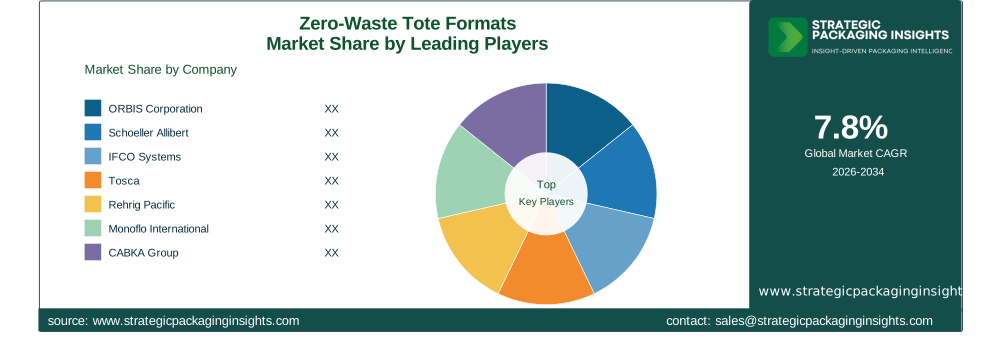
ORBIS Corporation is a prominent player in the market, known for its innovative and sustainable packaging solutions. The company offers a wide range of zero-waste tote formats, including reusable and collapsible totes, which are designed to reduce waste and enhance supply chain efficiency. Schoeller Allibert is another leading player, offering a comprehensive range of returnable transport packaging solutions. The company's focus on sustainability and innovation has helped it maintain a strong position in the market.
IFCO Systems is a global leader in reusable packaging solutions, offering a wide range of zero-waste tote formats for various applications. The company's focus on sustainability and its extensive network of service centers have contributed to its success in the market. Tosca is another key player, known for its innovative and sustainable packaging solutions. The company's zero-waste tote formats are designed to enhance supply chain efficiency and reduce environmental impact.
Rehrig Pacific is a leading provider of sustainable packaging solutions, offering a wide range of zero-waste tote formats for various industries. The company's focus on innovation and sustainability has helped it maintain a strong position in the market. Monoflo International, CABKA Group, Craemer Group, SSI Schaefer, and IPL Plastics are also significant players in the market, offering a wide range of zero-waste tote formats and sustainable packaging solutions.
Key Highlights
- The Zero-Waste Tote Formats market is projected to grow at a CAGR of 7.8% from 2026 to 2034.
- Increasing consumer awareness about environmental sustainability is driving the market.
- The adoption of zero-waste policies by governments and organizations is boosting market growth.
- Innovations in material types, such as recycled plastics and biodegradable materials, are enhancing market growth.
- The expansion of e-commerce and online retail is creating new growth opportunities.
- High production costs and the availability of cheaper alternatives are challenges for the market.
- Key players in the market include ORBIS Corporation, Schoeller Allibert, and IFCO Systems.
- The market is characterized by a competitive landscape with several key players dominating the market.
- Companies are focusing on reducing production costs and offering competitive pricing to overcome challenges.
- The increasing adoption of circular economy principles is expected to drive the market further.
Top Countries Insights
In the Zero-Waste Tote Formats market, the United States is a leading player, with a market size of approximately $1.2 billion and a CAGR of 8%. The country's strong focus on sustainability and environmental regulations is driving the demand for zero-waste tote formats. The increasing adoption of zero-waste policies by major retailers and logistics providers is also contributing to the market's growth. Additionally, the presence of key players such as ORBIS Corporation and Rehrig Pacific is further boosting the market in the United States.
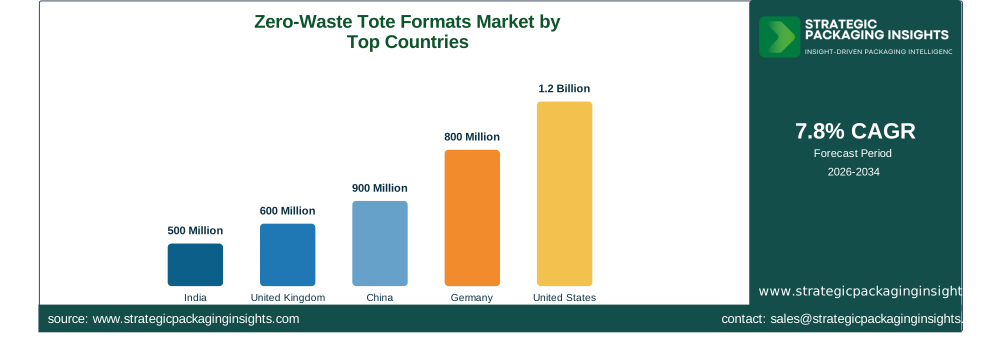
Germany is another significant market for zero-waste tote formats, with a market size of around $800 million and a CAGR of 7%. The country's strong emphasis on environmental sustainability and the implementation of stringent regulations are driving the market. The growing demand for eco-friendly packaging solutions in the retail and logistics sectors is also contributing to the market's growth. Companies such as Schoeller Allibert and SSI Schaefer are key players in the German market.
China is a rapidly growing market for zero-waste tote formats, with a market size of approximately $900 million and a CAGR of 10%. The country's increasing focus on sustainability and the growing demand for eco-friendly packaging solutions are driving the market. The expansion of e-commerce and online retail is also creating new growth opportunities for the market. Key players such as IFCO Systems and CABKA Group are actively expanding their presence in the Chinese market.
In the United Kingdom, the zero-waste tote formats market is valued at around $600 million, with a CAGR of 6%. The country's strong focus on reducing plastic waste and promoting sustainable packaging solutions is driving the market. The increasing adoption of zero-waste policies by retailers and logistics providers is also contributing to the market's growth. Companies such as Craemer Group and IPL Plastics are key players in the UK market.
India is an emerging market for zero-waste tote formats, with a market size of approximately $500 million and a CAGR of 12%. The country's growing awareness about environmental sustainability and the increasing demand for eco-friendly packaging solutions are driving the market. The expansion of the retail and e-commerce sectors is also creating new growth opportunities. Key players such as Monoflo International and Tosca are actively expanding their presence in the Indian market.
Zero-Waste Tote Formats Market Segments Insights

Product Type Analysis
The Zero-Waste Tote Formats market is segmented by product type into reusable totes, collapsible totes, and returnable transport totes. Reusable totes are gaining significant traction due to their durability and cost-effectiveness. These totes are designed for multiple uses, making them an ideal choice for consumers and businesses looking to reduce waste and minimize environmental impact. The growing emphasis on sustainability and the increasing adoption of zero-waste policies by retailers and logistics providers are driving the demand for reusable totes. Additionally, innovations in design and materials are enhancing the functionality and appeal of these totes, further boosting their adoption.
Collapsible totes are also witnessing growing demand, particularly in the logistics and transportation sectors. These totes offer the advantage of space-saving and easy storage, making them a popular choice for businesses looking to optimize their supply chain operations. The increasing focus on reducing transportation costs and enhancing supply chain efficiency is driving the demand for collapsible totes. Furthermore, the development of innovative designs and materials is enhancing the durability and functionality of these totes, making them a preferred choice for various applications.
Returnable transport totes are gaining popularity in the retail and foodservice sectors due to their ability to reduce waste and enhance supply chain efficiency. These totes are designed for multiple uses and are an ideal choice for businesses looking to minimize their environmental impact. The growing emphasis on sustainability and the increasing adoption of circular economy principles are driving the demand for returnable transport totes. Additionally, the development of innovative designs and materials is enhancing the functionality and appeal of these totes, further boosting their adoption.
Material Type Analysis
The Zero-Waste Tote Formats market is segmented by material type into PP, HDPE, recycled plastic, and fabric. PP (polypropylene) is a popular material choice due to its durability, lightweight, and cost-effectiveness. The increasing demand for sustainable packaging solutions and the growing emphasis on reducing plastic waste are driving the demand for PP-based zero-waste tote formats. Additionally, innovations in material technology are enhancing the performance and sustainability of PP-based totes, further boosting their adoption.
HDPE (high-density polyethylene) is another widely used material in the zero-waste tote formats market. HDPE offers excellent durability and resistance to impact, making it an ideal choice for reusable and returnable totes. The growing demand for eco-friendly packaging solutions and the increasing adoption of zero-waste policies by retailers and logistics providers are driving the demand for HDPE-based totes. Furthermore, the development of innovative designs and materials is enhancing the functionality and appeal of these totes, further boosting their adoption.
Recycled plastic is gaining significant traction in the zero-waste tote formats market due to its environmental benefits and cost-effectiveness. The increasing focus on sustainability and the growing demand for eco-friendly packaging solutions are driving the demand for recycled plastic-based totes. Additionally, innovations in material technology are enhancing the performance and sustainability of recycled plastic-based totes, further boosting their adoption. Fabric-based totes are also witnessing growing demand, particularly in the retail and consumer sectors, due to their aesthetic appeal and eco-friendly nature.
Application Analysis
The Zero-Waste Tote Formats market is segmented by application into grocery, e-commerce, retail, and foodservice. The grocery sector is a significant application area for zero-waste tote formats, driven by the increasing demand for sustainable packaging solutions and the growing emphasis on reducing plastic waste. The adoption of zero-waste policies by major grocery retailers and the increasing focus on sustainability are driving the demand for zero-waste tote formats in this sector. Additionally, innovations in design and materials are enhancing the functionality and appeal of these totes, further boosting their adoption.
The e-commerce sector is another significant application area for zero-waste tote formats, driven by the increasing demand for sustainable packaging solutions and the growing emphasis on reducing environmental impact. The expansion of e-commerce and online retail is creating new growth opportunities for the market, as companies look for ways to reduce their environmental footprint and enhance supply chain efficiency. The development of innovative designs and materials is enhancing the functionality and appeal of zero-waste tote formats in the e-commerce sector, further boosting their adoption.
The retail and foodservice sectors are also significant application areas for zero-waste tote formats, driven by the increasing demand for sustainable packaging solutions and the growing emphasis on reducing waste. The adoption of zero-waste policies by major retailers and foodservice providers is driving the demand for zero-waste tote formats in these sectors. Additionally, innovations in design and materials are enhancing the functionality and appeal of these totes, further boosting their adoption. The increasing focus on sustainability and the growing demand for eco-friendly packaging solutions are expected to drive the market further.
End Use Analysis
The Zero-Waste Tote Formats market is segmented by end use into retailers, logistics providers, food brands, and consumers. Retailers are a significant end-use segment, driven by the increasing demand for sustainable packaging solutions and the growing emphasis on reducing waste. The adoption of zero-waste policies by major retailers and the increasing focus on sustainability are driving the demand for zero-waste tote formats in this segment. Additionally, innovations in design and materials are enhancing the functionality and appeal of these totes, further boosting their adoption.
Logistics providers are another significant end-use segment, driven by the increasing demand for sustainable packaging solutions and the growing emphasis on reducing transportation costs and enhancing supply chain efficiency. The adoption of zero-waste policies by major logistics providers and the increasing focus on sustainability are driving the demand for zero-waste tote formats in this segment. Additionally, innovations in design and materials are enhancing the functionality and appeal of these totes, further boosting their adoption.
Food brands and consumers are also significant end-use segments, driven by the increasing demand for sustainable packaging solutions and the growing emphasis on reducing waste. The adoption of zero-waste policies by major food brands and the increasing focus on sustainability are driving the demand for zero-waste tote formats in these segments. Additionally, innovations in design and materials are enhancing the functionality and appeal of these totes, further boosting their adoption. The increasing focus on sustainability and the growing demand for eco-friendly packaging solutions are expected to drive the market further.
Zero-Waste Tote Formats Market Segments
The Zero-Waste Tote Formats market has been segmented on the basis ofBy Product Type
- Reusable Totes
- Collapsible Totes
- Returnable Transport Totes
By Material Type
- PP
- HDPE
- Recycled Plastic
- Fabric
By Application
- Grocery
- E-commerce
- Retail
- Foodservice
By End Use
- Retailers
- Logistics Providers
- Food Brands
- Consumers
Region
- Asia Pacific
- North America
- Latin America
- Europe
- Middle East & Africa




