


Returnable Transport Packaging Market Outlook
The returnable transport packaging market was valued at $98 billion in 2024 and is projected to reach $142 billion by 2033, growing at a CAGR of 4.2% during the forecast period 2025-2033. This market is driven by the increasing demand for sustainable and cost-effective packaging solutions across various industries. The automotive and food & beverage sectors are particularly significant contributors to this growth, as they seek to reduce waste and improve supply chain efficiency. The adoption of returnable transport packaging is further bolstered by advancements in material technology, which enhance the durability and lifespan of packaging products, thereby offering long-term cost savings to businesses.
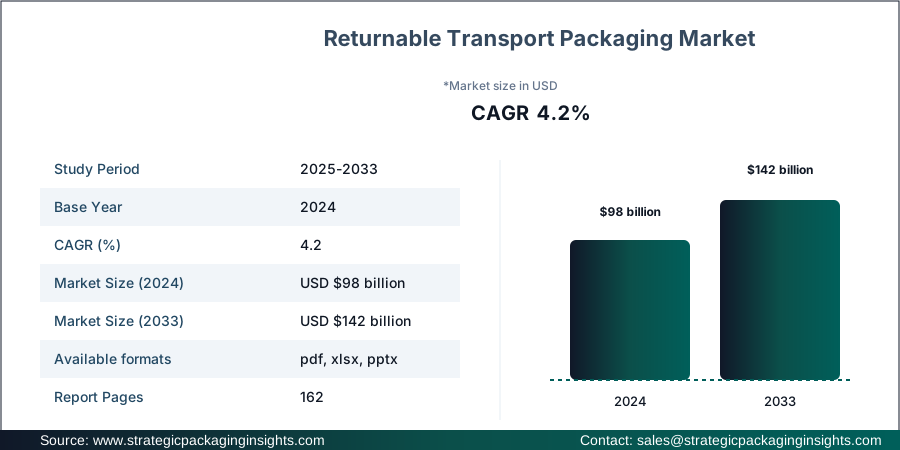
Despite the promising growth trajectory, the market faces challenges such as high initial investment costs and the need for efficient reverse logistics systems. Regulatory frameworks promoting environmental sustainability are expected to drive market expansion, as companies increasingly adopt eco-friendly practices. However, the complexity of managing returnable packaging systems and the need for standardized processes across industries may pose hurdles. Nevertheless, the potential for growth remains substantial, particularly in emerging markets where industrialization and urbanization are accelerating the demand for efficient transport solutions.
Report Scope
| Attributes | Details |
| Report Title | Returnable Transport Packaging Market Size, Future Growth and Forecast 2033 |
| Material | Plastic, Metal, Wood, Others |
| Product Type | Pallets, Crates, IBCs, Drums & Barrels, Others |
| End-User | Automotive, Food & Beverages, Consumer Goods, Pharmaceuticals, Others |
| Region | Asia Pacific, North America, Latin America, Europe, Middle East & Africa |
| Base Year | 2024 |
| Historic Period | 2017-2023 |
| Forecast Period | 2025-2033 |
| Number of Pages | 162 |
| Customization Available | Yes* |
Opportunities & Threats
The returnable transport packaging market presents significant opportunities driven by the growing emphasis on sustainability and environmental responsibility. Companies are increasingly adopting returnable packaging solutions to minimize their carbon footprint and comply with stringent environmental regulations. This shift towards sustainable practices is creating a demand for innovative packaging solutions that are not only reusable but also recyclable. Additionally, the rise of e-commerce and the need for efficient logistics solutions are further propelling the demand for returnable transport packaging, as businesses seek to optimize their supply chains and reduce costs associated with single-use packaging.
Another opportunity lies in the technological advancements in material science, which are enhancing the durability and functionality of returnable packaging products. Innovations such as RFID tagging and IoT integration are enabling better tracking and management of packaging assets, thereby improving operational efficiency. These technological advancements are expected to drive the adoption of returnable transport packaging across various industries, including automotive, pharmaceuticals, and consumer goods. Furthermore, the increasing focus on circular economy principles is encouraging companies to invest in returnable packaging systems, as they offer a sustainable and cost-effective solution for managing product life cycles.
However, the market also faces threats, particularly from the high initial costs associated with implementing returnable packaging systems. The need for significant capital investment in packaging assets and the development of efficient reverse logistics networks can be a barrier for small and medium-sized enterprises. Additionally, the complexity of managing returnable packaging systems, including tracking, cleaning, and maintenance, can pose operational challenges. Companies must also navigate the risk of packaging loss or damage, which can impact the overall cost-effectiveness of returnable solutions. Despite these challenges, the long-term benefits of returnable transport packaging, including cost savings and environmental sustainability, are expected to outweigh the initial hurdles.
Drivers & Challenges
The primary drivers of the returnable transport packaging market include the increasing demand for sustainable packaging solutions and the need for cost-effective logistics operations. As environmental concerns continue to rise, companies are under pressure to adopt eco-friendly practices, leading to a growing preference for returnable packaging systems. These systems not only reduce waste but also offer significant cost savings over time, as they eliminate the need for single-use packaging. Additionally, the rise of e-commerce and the globalization of supply chains are driving the demand for efficient and reliable transport packaging solutions that can withstand the rigors of long-distance shipping.
Technological advancements are also playing a crucial role in driving the market forward. Innovations in material science are enhancing the durability and functionality of returnable packaging products, making them more attractive to businesses. The integration of smart technologies, such as RFID and IoT, is enabling better tracking and management of packaging assets, thereby improving operational efficiency. These advancements are particularly beneficial for industries such as automotive and pharmaceuticals, where the safe and secure transport of goods is critical. As a result, the adoption of returnable transport packaging is expected to continue growing, driven by the need for sustainable and efficient logistics solutions.
Despite the positive drivers, the market faces several challenges that could hinder its growth. One of the main challenges is the high initial investment required to implement returnable packaging systems. Companies must invest in packaging assets and develop efficient reverse logistics networks, which can be a significant financial burden, particularly for small and medium-sized enterprises. Additionally, the complexity of managing returnable packaging systems, including tracking, cleaning, and maintenance, can pose operational challenges. Companies must also address the risk of packaging loss or damage, which can impact the overall cost-effectiveness of returnable solutions. To overcome these challenges, companies must focus on developing standardized processes and leveraging technology to improve the efficiency of their returnable packaging systems.
Market Share Analysis
The competitive landscape of the returnable transport packaging market is characterized by the presence of several key players who are driving innovation and growth in the industry. These companies are focusing on developing advanced packaging solutions that meet the evolving needs of various industries, including automotive, food & beverages, and consumer goods. The market is highly competitive, with companies investing in research and development to enhance the durability and functionality of their products. Additionally, strategic partnerships and collaborations are common, as companies seek to expand their market presence and offer comprehensive packaging solutions to their clients.
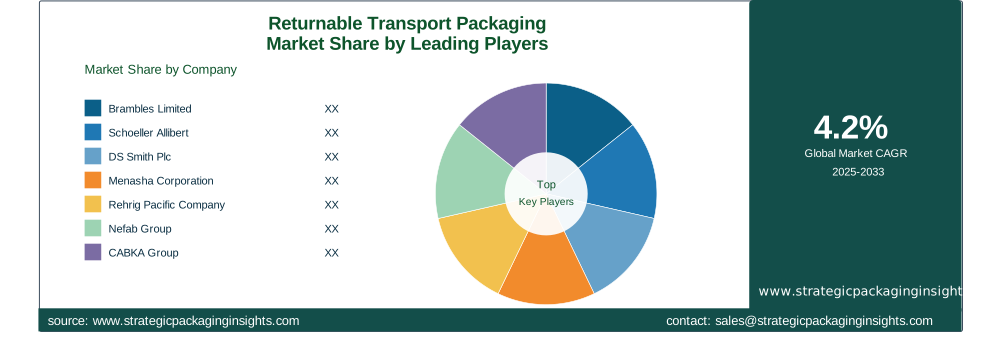
Some of the major companies operating in the returnable transport packaging market include Brambles Limited, Schoeller Allibert, DS Smith Plc, Menasha Corporation, and Rehrig Pacific Company. Brambles Limited, for instance, is a global leader in supply chain logistics, providing reusable pallets and containers to various industries. The company is known for its innovative solutions and commitment to sustainability, which have helped it maintain a strong market position. Schoeller Allibert, on the other hand, specializes in the design and manufacture of returnable plastic packaging solutions, offering a wide range of products for different applications.
DS Smith Plc is another key player in the market, known for its sustainable packaging solutions and focus on innovation. The company has a strong presence in Europe and is expanding its operations globally to cater to the growing demand for returnable transport packaging. Menasha Corporation, a family-owned company, is a leader in the design and manufacture of packaging and merchandising solutions. The company is committed to sustainability and offers a range of returnable packaging products that help clients reduce waste and improve supply chain efficiency.
Rehrig Pacific Company is a prominent player in the returnable transport packaging market, offering innovative solutions for various industries, including agriculture, beverage, and retail. The company is known for its focus on sustainability and customer-centric approach, which have helped it build a strong reputation in the market. Other notable companies in the market include Nefab Group, CABKA Group, and IPL Plastics, each contributing to the growth and development of the returnable transport packaging industry through their innovative products and solutions.
Key Highlights
- The returnable transport packaging market is projected to grow at a CAGR of 4.2% from 2025 to 2033.
- Key drivers include the increasing demand for sustainable packaging solutions and cost-effective logistics operations.
- Technological advancements in material science and smart technologies are enhancing product durability and functionality.
- High initial investment costs and the complexity of managing returnable systems are significant challenges.
- Major players in the market include Brambles Limited, Schoeller Allibert, DS Smith Plc, and Menasha Corporation.
- The automotive and food & beverage sectors are significant contributors to market growth.
- Strategic partnerships and collaborations are common among companies to expand market presence.
- Emerging markets offer substantial growth opportunities due to industrialization and urbanization.
- Regulatory frameworks promoting environmental sustainability are driving market expansion.
- Innovations such as RFID tagging and IoT integration are improving operational efficiency.
Top Countries Insights
In the returnable transport packaging market, the United States stands out as a key player, with a market size of $25 billion and a CAGR of 5%. The country's strong industrial base and focus on sustainability are driving the demand for returnable packaging solutions. Government regulations promoting environmental responsibility are further encouraging companies to adopt these systems. Additionally, the rise of e-commerce and the need for efficient logistics solutions are contributing to market growth.
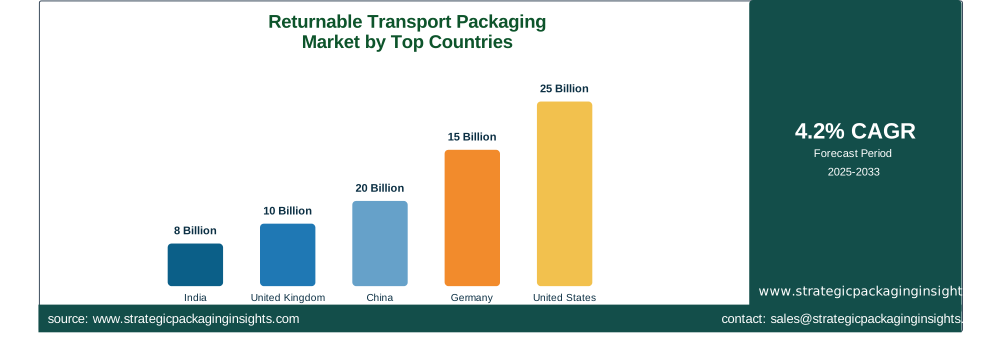
Germany is another significant market, with a market size of $15 billion and a CAGR of 4%. The country's strong manufacturing sector and commitment to sustainability are driving the adoption of returnable transport packaging. Innovations in material science and the integration of smart technologies are enhancing the functionality of packaging products, making them more attractive to businesses. The automotive industry, in particular, is a major contributor to market growth in Germany.
China, with a market size of $20 billion and a CAGR of 6%, is experiencing rapid growth in the returnable transport packaging market. The country's industrialization and urbanization are driving the demand for efficient transport solutions. Government initiatives promoting environmental sustainability are also encouraging companies to adopt returnable packaging systems. The rise of e-commerce and the globalization of supply chains are further propelling market growth in China.
In the United Kingdom, the returnable transport packaging market is valued at $10 billion, with a CAGR of 3%. The country's focus on sustainability and environmental responsibility is driving the adoption of returnable packaging solutions. The food & beverage and consumer goods sectors are significant contributors to market growth, as companies seek to reduce waste and improve supply chain efficiency. Technological advancements are also playing a crucial role in enhancing the functionality of packaging products.
India, with a market size of $8 billion and a CAGR of 7%, is emerging as a key market for returnable transport packaging. The country's rapid industrialization and urbanization are driving the demand for efficient logistics solutions. Government initiatives promoting sustainability and environmental responsibility are encouraging companies to adopt returnable packaging systems. The rise of e-commerce and the need for cost-effective transport solutions are further contributing to market growth in India.
Evolving Market Dynamics (2018-2024) and Strategic Foresight (2025-2033)
| Metric | 2018-2024 | 2025-2033 |
|---|---|---|
| CAGR | 3.5% | 4.2% |
| Market Size Evolution | $85 billion to $98 billion | $98 billion to $142 billion |
| Segment Distribution Shifts | High demand in automotive and food & beverages | Increased adoption in pharmaceuticals and consumer goods |
| Regional Contribution Changes | Strong growth in North America and Europe | Emerging markets in Asia Pacific and Latin America |
| Technological Impact Factors | Material advancements and RFID integration | IoT and smart technology adoption |
| Client Demand Transformations | Focus on sustainability and cost reduction | Emphasis on efficiency and environmental responsibility |
Returnable Transport Packaging Market Segments Insights

Material Analysis
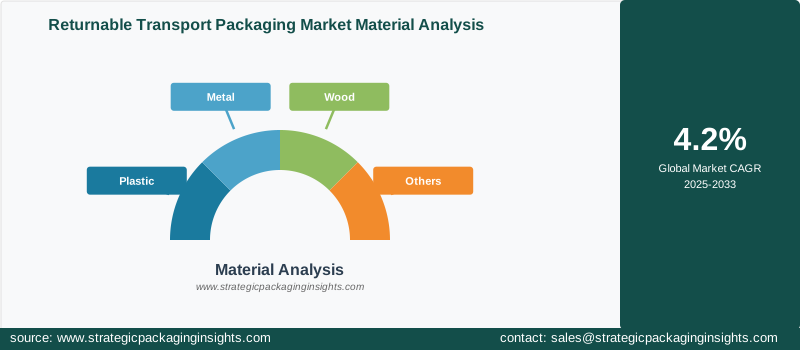
The material segment of the returnable transport packaging market is dominated by plastic, metal, and wood, each offering unique benefits and applications. Plastic is the most widely used material due to its lightweight, durability, and cost-effectiveness. It is particularly popular in the food & beverage and consumer goods industries, where hygiene and ease of handling are critical. Metal, on the other hand, is favored in the automotive and industrial sectors for its strength and ability to withstand harsh conditions. Wood is commonly used in traditional applications, offering a sustainable and biodegradable option for companies focused on environmental responsibility.
Recent advancements in material science are enhancing the performance of returnable packaging products, making them more attractive to businesses. Innovations such as biodegradable plastics and composite materials are gaining traction, offering a balance between durability and sustainability. The integration of smart technologies, such as RFID and IoT, is also improving the functionality of packaging products, enabling better tracking and management of assets. As companies continue to prioritize sustainability and cost-effectiveness, the demand for advanced materials in returnable transport packaging is expected to grow.
Product Type Analysis
The product type segment of the returnable transport packaging market includes pallets, crates, IBCs, drums & barrels, and others. Pallets are the most commonly used product type, offering a versatile and cost-effective solution for transporting goods across various industries. Crates are popular in the food & beverage and agricultural sectors, providing a secure and hygienic option for transporting perishable goods. IBCs, or intermediate bulk containers, are favored in the chemical and pharmaceutical industries for their ability to safely transport liquids and bulk materials.
Drums & barrels are commonly used in the oil & gas and chemical industries, offering a durable and reliable solution for transporting hazardous materials. The demand for these products is driven by the need for efficient and safe transport solutions that comply with regulatory standards. As industries continue to prioritize sustainability and cost reduction, the demand for returnable transport packaging products is expected to grow. Companies are investing in research and development to enhance the functionality and durability of their products, offering innovative solutions that meet the evolving needs of their clients.
End-User Analysis
The end-user segment of the returnable transport packaging market is diverse, with applications across various industries, including automotive, food & beverages, consumer goods, pharmaceuticals, and others. The automotive industry is a major contributor to market growth, driven by the need for efficient and reliable transport solutions that can withstand the rigors of long-distance shipping. The food & beverage industry is also a significant market, as companies seek to reduce waste and improve supply chain efficiency through the use of returnable packaging systems.
The consumer goods industry is increasingly adopting returnable transport packaging solutions to minimize their environmental impact and comply with regulatory standards. The pharmaceutical industry is another key market, as companies prioritize the safe and secure transport of sensitive products. As industries continue to focus on sustainability and cost reduction, the demand for returnable transport packaging solutions is expected to grow. Companies are investing in research and development to offer innovative solutions that meet the evolving needs of their clients.
Region Analysis
The returnable transport packaging market is experiencing significant growth across various regions, with North America and Europe leading the way. These regions have a strong industrial base and a focus on sustainability, driving the demand for returnable packaging solutions. The Asia Pacific region is also experiencing rapid growth, driven by industrialization and urbanization. Emerging markets in Latin America and the Middle East & Africa offer substantial growth opportunities, as companies seek to expand their operations and cater to the growing demand for efficient transport solutions.
Government initiatives promoting environmental sustainability are encouraging companies to adopt returnable packaging systems, further driving market growth. The rise of e-commerce and the globalization of supply chains are also contributing to the demand for returnable transport packaging solutions. As companies continue to prioritize sustainability and cost reduction, the demand for returnable transport packaging is expected to grow across various regions. Companies are investing in research and development to offer innovative solutions that meet the evolving needs of their clients.
Returnable Transport Packaging Market Segments
The Returnable Transport Packaging market has been segmented on the basis ofMaterial
- Plastic
- Metal
- Wood
- Others
Product Type
- Pallets
- Crates
- IBCs
- Drums & Barrels
- Others
End-User
- Automotive
- Food & Beverages
- Consumer Goods
- Pharmaceuticals
- Others
Region
- Asia Pacific
- North America
- Latin America
- Europe
- Middle East & Africa




