


Wooden Barrels Market Outlook
The Wooden Barrels market size was valued at USD 5.27 billion in 2025 and is anticipated to reach USD 7.83 billion by 2034, growing at a CAGR of 4.5% during the forecast period according to Strategic Packaging Insights. The market is witnessing a steady growth trajectory driven by the increasing demand for premium alcoholic beverages such as wine and whiskey, which require aging in wooden barrels to enhance flavor and quality. Companies like Tonnellerie François Frères and Seguin Moreau are at the forefront, innovating in barrel production to meet the evolving needs of the beverage industry. The market's expansion is further supported by the rising trend of craft breweries and distilleries, which emphasize traditional aging processes to differentiate their products.
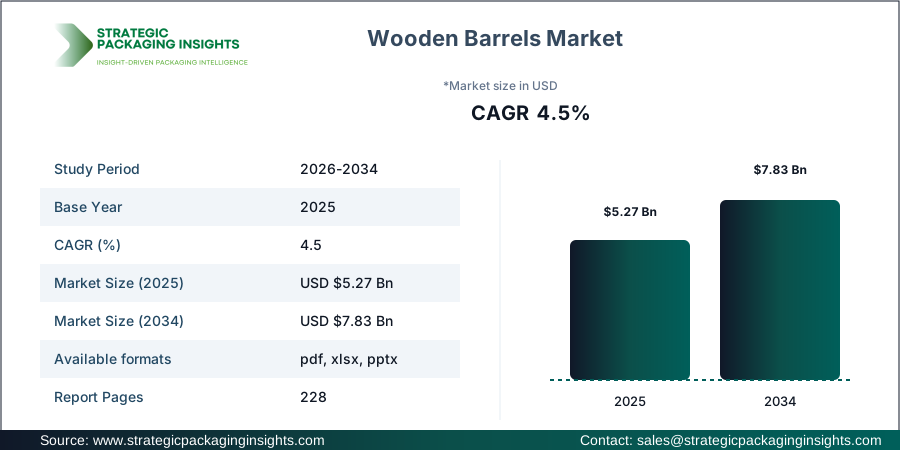
One of the most impactful drivers of the Wooden Barrels market is the growing consumer preference for authentic and high-quality alcoholic beverages. This trend is supported by a report from the Alcohol and Tobacco Tax and Trade Bureau, which highlights a significant increase in the production of craft spirits and wines in recent years. As consumers become more discerning, the demand for wooden barrels, which play a crucial role in the aging process, is expected to rise. Additionally, the sustainability aspect of wooden barrels, being a natural and biodegradable product, aligns with the increasing consumer awareness and demand for eco-friendly products, further propelling market growth.
Report Scope
| Attributes | Details |
| Report Title | Wooden Barrels Market Size, Future Growth and Forecast 2034 |
| Product Type | Oak Barrels, Wine Barrels, Whiskey Barrels, Decorative Barrels |
| Capacity | Below 100 Liters, 100–300 Liters, Above 300 Liters |
| Application | Wine Aging, Spirits Aging, Beer Aging, Food Storage |
| End Use | Wineries, Distilleries, Breweries, Food Producers |
| Region | Asia Pacific, North America, Latin America, Europe, Middle East & Africa |
| Base Year | 2025 |
| Historic Period | 2018-2024 |
| Forecast Period | 2026-2034 |
| Number of Pages | 228 |
| Customization Available | Yes* |
Opportunities & Threats
The Wooden Barrels market presents numerous opportunities, particularly in the premium spirits and wine segments. As the global demand for high-quality aged beverages continues to rise, manufacturers have the chance to expand their product lines and cater to niche markets. The trend towards craft and artisanal products offers a lucrative opportunity for small and medium-sized cooperages to establish themselves in the market. Furthermore, the increasing popularity of whiskey and bourbon in emerging markets presents a significant growth opportunity for barrel manufacturers. Companies like The Barrel Mill and Kelvin Cooperage are well-positioned to capitalize on these trends by offering customized barrel solutions that enhance the flavor profiles of these beverages.
Another opportunity lies in the diversification of applications for wooden barrels beyond traditional beverage aging. The food industry is increasingly exploring the use of wooden barrels for aging and storing various food products, such as sauces and vinegars, to impart unique flavors. This diversification opens up new revenue streams for barrel manufacturers and allows them to tap into different market segments. Additionally, the growing trend of home brewing and distilling presents an opportunity for manufacturers to offer smaller, more affordable barrels to hobbyists and enthusiasts, further expanding their customer base.
Despite the promising opportunities, the Wooden Barrels market faces certain threats that could hinder its growth. One of the primary challenges is the availability and cost of high-quality wood, particularly oak, which is essential for barrel production. Fluctuations in wood supply and prices can impact production costs and, consequently, the pricing of barrels. Additionally, the market faces competition from alternative aging technologies, such as stainless steel and plastic barrels, which offer cost advantages and are gaining popularity among some producers. These alternatives pose a threat to traditional wooden barrels, particularly in price-sensitive markets.
Drivers & Challenges
The primary driver of the Wooden Barrels market is the increasing demand for premium alcoholic beverages that require aging in wooden barrels. The aging process in wooden barrels is crucial for developing the complex flavors and aromas that consumers associate with high-quality wines and spirits. This demand is further fueled by the growing popularity of craft beverages, which emphasize traditional production methods and unique flavor profiles. Companies like Independent Stave Company and Taransaud are leveraging this trend by offering a wide range of barrel options to cater to the diverse needs of beverage producers.
Another significant driver is the sustainability aspect of wooden barrels. As consumers become more environmentally conscious, the demand for sustainable and eco-friendly products is on the rise. Wooden barrels, being made from natural and biodegradable materials, align with this trend and offer a sustainable alternative to synthetic aging containers. This has led to increased adoption of wooden barrels in various industries, including food and beverage, as companies seek to enhance their sustainability credentials. The market is also driven by technological advancements in barrel production, which have improved the quality and consistency of barrels, further boosting their appeal.
However, the Wooden Barrels market faces several challenges that could impact its growth. One of the main challenges is the high cost of production, which is influenced by the price and availability of quality wood. The production process is labor-intensive and requires skilled craftsmanship, which adds to the overall cost. Additionally, the market is subject to regulatory challenges, particularly in terms of import and export restrictions on wood and finished barrels. These regulations can impact the supply chain and limit market expansion. Furthermore, the market faces competition from alternative aging technologies, which offer cost advantages and are gaining traction among some producers.
Market Growth Factors
- U.S. whiskey standards continue to create structural repeat demand for new oak barrels because bourbon whisky, rye whisky, wheat whisky, malt whisky, rye malt whisky, and most straight whiskies must be matured in charred new oak containers to qualify under TTB rules. [TTB ]
- Large bourbon production expansions are increasing barrel filling demand. Buffalo Trace Distillery said its decade-long .2 billion expansion project was completed in January 2025, added 19 new aging warehouses, and increased production capacity by 150%, directly lifting demand for new oak cooperage.
- White oak supply security is becoming a stronger policy priority. The White Oak Resilience Act advanced in committee in January 2026 and proposes restoration coalitions, federal pilot projects, nursery and habitat regeneration support, and additional white-oak-focused research, all of which support long-term cooperage raw material availability.
- EU deforestation rules are pushing barrel suppliers to invest in legality documentation, geolocation traceability, and due-diligence systems for wood and wood-derived products. This favors organized cooperages with transparent sourcing and compliance infrastructure.
- Commercialization of second-life cask services is expanding the addressable market beyond new barrels. OAKING now markets sourcing, logistics, warehousing, reconditioning, inventory management, and lifecycle optimization services, creating additional demand for barrel repair, reuse, and technical cooperage work. [OAKING ]
- Tariff volatility is encouraging wineries and distillers to secure more domestic and customized supply options. Cooperages 1912 responded by holding 2025 pricing on USA-made barrels, pre-shipping French oak staves, and extending its U.S.-crafted custom barrel program, which supports domestic cooperage activity and localized finishing capacity.
Recent Developments
- In April 2025, Cooperages 1912 announced a tariff-response package for wine barrel buyers, including absorbing the 20% tariff on its French-made barrels and the 10% tariff on Heinrich Cooperage barrels from Australia, guaranteeing 2025 pricing on USA-made TW Boswell and World Cooperage barrels, and extending its Custom Barrel Program for U.S.-crafted French oak barrels.
- In June 2025, Charlois launched OAKING, a strategic alliance dedicated to American white oak that combines Graf Brothers and Kelvin Cooperage in an integrated model spanning stave sourcing, barrel manufacturing, reuse, and full barrel lifecycle management for distillers. [Charlois ]
- In January 2026, the U.S. House Natural Resources Committee published its report on the White Oak Resilience Act, recommending passage of legislation that would establish a White Oak Restoration Initiative Coalition, authorize white oak pilot restoration projects in national forests and Interior lands, and create a White Oak and Upland Oak Habitat Regeneration Program. [Congress.gov ]
- In June 2026, CHARLOIS announced significant new investment through OAKING, including full integration and recapitalization of Oakwood Cooperage, a new cooperage-capacity investment plan for Kelvin Cooperage in Louisville, added sherry-cask capacity in Spain, and expanded logistics, storage, and recycling capabilities for global distillers.
Market Share Analysis
The Wooden Barrels market is characterized by a competitive landscape with several key players dominating the market. Companies like Tonnellerie François Frères, Seguin Moreau, and The Barrel Mill hold significant market shares due to their extensive product offerings and strong brand presence. These companies have established themselves as leaders in the industry by consistently delivering high-quality barrels that meet the stringent requirements of premium beverage producers. Their focus on innovation and customization has allowed them to maintain a competitive edge in the market.
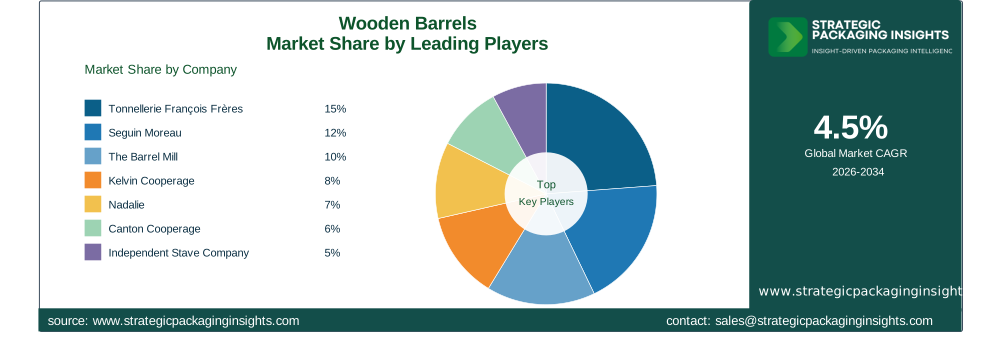
In addition to the established players, there are several emerging companies that are making their mark in the Wooden Barrels market. Kelvin Cooperage and Nadalie are gaining traction by offering unique barrel solutions that cater to the specific needs of craft beverage producers. These companies are leveraging their expertise in barrel production to offer customized solutions that enhance the flavor profiles of beverages, thereby attracting a growing customer base. Their focus on quality and craftsmanship has helped them build a strong reputation in the market.
Another notable player in the market is Canton Cooperage, which has carved a niche for itself by offering a wide range of barrel options for different applications. The company's commitment to sustainability and innovation has enabled it to capture a significant share of the market. Similarly, Independent Stave Company and Taransaud are known for their extensive product portfolios and strong distribution networks, which have helped them maintain a competitive position in the market. These companies are continuously investing in research and development to enhance their product offerings and meet the evolving needs of their customers.
Overall, the Wooden Barrels market is highly competitive, with companies vying for market share through product innovation, quality, and customer service. The market is characterized by a mix of established players and emerging companies, each striving to differentiate themselves through unique product offerings and value-added services. As the demand for premium beverages continues to grow, the competition in the market is expected to intensify, with companies focusing on expanding their product lines and enhancing their distribution networks to capture a larger share of the market.
Key Highlights
- The Wooden Barrels market is projected to grow from USD 5.27 billion in 2025 to USD 7.83 billion by 2034, at a CAGR of 4.5%.
- Increasing demand for premium alcoholic beverages is driving market growth.
- Craft breweries and distilleries are significant contributors to market expansion.
- Wooden barrels are gaining popularity in the food industry for aging and storage.
- Sustainability and eco-friendliness are key trends influencing market dynamics.
- High-quality wood availability and cost are major challenges for manufacturers.
- Alternative aging technologies pose a threat to traditional wooden barrels.
- Companies are focusing on product innovation and customization to gain a competitive edge.
- Emerging markets present significant growth opportunities for barrel manufacturers.
- Regulatory challenges related to wood import and export impact the market.
Wooden Barrels Market Segments Insights

Product Type Analysis
The Wooden Barrels market is segmented by product type into Oak Barrels, Wine Barrels, Whiskey Barrels, and Decorative Barrels. Oak barrels are the most popular choice among beverage producers due to their ability to impart unique flavors and aromas to the aging process. The demand for oak barrels is driven by the growing popularity of premium wines and spirits, which require aging in oak to enhance their quality. Companies like Tonnellerie François Frères and Seguin Moreau are leading the market by offering a wide range of oak barrel options to cater to the diverse needs of producers. Wine barrels are also in high demand, particularly in the wine-producing regions of Europe and North America, where they are used extensively for aging and storage.

Whiskey barrels are another significant segment, driven by the increasing demand for premium whiskeys and bourbons. The aging process in whiskey barrels is crucial for developing the complex flavors and aromas that consumers associate with high-quality spirits. Companies like The Barrel Mill and Kelvin Cooperage are capitalizing on this trend by offering customized whiskey barrel solutions that enhance the flavor profiles of these beverages. Decorative barrels, although a smaller segment, are gaining popularity in the hospitality and home decor industries, where they are used as unique and stylish furniture pieces.
Capacity Analysis
The Wooden Barrels market is segmented by capacity into Below 100 Liters, 100-300 Liters, and Above 300 Liters. Barrels with a capacity of 100-300 liters are the most popular choice among beverage producers, as they offer the ideal size for aging and storage. These barrels are widely used in the wine and spirits industries, where they are valued for their ability to enhance the flavor and quality of the beverages. Companies like Independent Stave Company and Taransaud are leading the market by offering a wide range of barrel sizes to cater to the diverse needs of producers.

Barrels with a capacity of Below 100 Liters are gaining popularity among craft breweries and distilleries, which emphasize traditional aging processes and unique flavor profiles. These smaller barrels are ideal for experimental batches and limited-edition releases, allowing producers to create unique and innovative products. Barrels with a capacity of Above 300 Liters are primarily used in the food industry for aging and storage of various food products, such as sauces and vinegars. The demand for these larger barrels is driven by the growing trend of using wooden barrels for food aging, which imparts unique flavors and enhances the quality of the products.
Application Analysis
The Wooden Barrels market is segmented by application into Wine Aging, Spirits Aging, Beer Aging, and Food Storage. Wine aging is the largest application segment, driven by the increasing demand for premium wines that require aging in wooden barrels to enhance their quality. The aging process in wooden barrels is crucial for developing the complex flavors and aromas that consumers associate with high-quality wines. Companies like Tonnellerie François Frères and Seguin Moreau are leading the market by offering a wide range of barrel options to cater to the diverse needs of wine producers.

Spirits aging is another significant application segment, driven by the growing popularity of premium whiskeys and bourbons. The aging process in wooden barrels is essential for developing the complex flavors and aromas that consumers associate with high-quality spirits. Companies like The Barrel Mill and Kelvin Cooperage are capitalizing on this trend by offering customized barrel solutions that enhance the flavor profiles of these beverages. Beer aging is a smaller segment, but it is gaining popularity among craft breweries, which emphasize traditional aging processes and unique flavor profiles. Food storage is an emerging application segment, driven by the growing trend of using wooden barrels for aging and storage of various food products, such as sauces and vinegars.
End Use Analysis
The Wooden Barrels market is segmented by end use into Wineries, Distilleries, Breweries, and Food Producers. Wineries are the largest end-use segment, driven by the increasing demand for premium wines that require aging in wooden barrels to enhance their quality. The aging process in wooden barrels is crucial for developing the complex flavors and aromas that consumers associate with high-quality wines. Companies like Tonnellerie François Frères and Seguin Moreau are leading the market by offering a wide range of barrel options to cater to the diverse needs of wine producers.
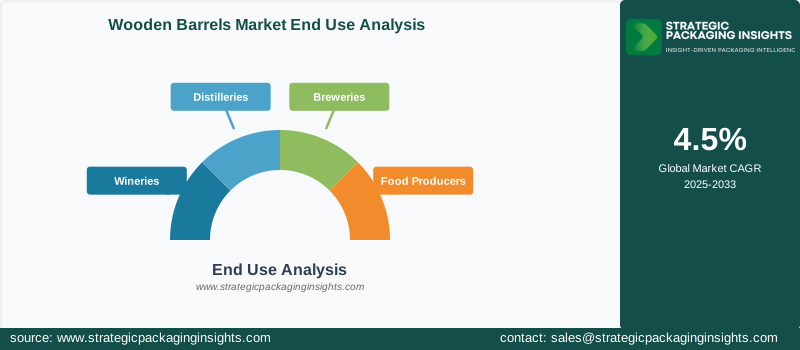
Distilleries are another significant end-use segment, driven by the growing popularity of premium whiskeys and bourbons. The aging process in wooden barrels is essential for developing the complex flavors and aromas that consumers associate with high-quality spirits. Companies like The Barrel Mill and Kelvin Cooperage are capitalizing on this trend by offering customized barrel solutions that enhance the flavor profiles of these beverages. Breweries are a smaller segment, but they are gaining popularity among craft breweries, which emphasize traditional aging processes and unique flavor profiles. Food producers are an emerging end-use segment, driven by the growing trend of using wooden barrels for aging and storage of various food products, such as sauces and vinegars.
Wooden Barrels Market Segments
The Wooden Barrels market has been segmented on the basis ofProduct Type
- Oak Barrels
- Wine Barrels
- Whiskey Barrels
- Decorative Barrels
Capacity
- Below 100 Liters
- 100–300 Liters
- Above 300 Liters
Application
- Wine Aging
- Spirits Aging
- Beer Aging
- Food Storage
End Use
- Wineries
- Distilleries
- Breweries
- Food Producers
Region
- Asia Pacific
- North America
- Latin America
- Europe
- Middle East & Africa




