


Wood Pulp Market Outlook
The Wood Pulp market size was valued at USD 179.53 billion in 2025 and is anticipated to reach USD 262.24 billion by 2034, growing at a CAGR of 4.3% during the forecast period according to Strategic Packaging Insights. The market is driven by the increasing demand for sustainable and biodegradable materials in various industries, including packaging and textiles. Companies like International Paper and Suzano are at the forefront of this growth, leveraging their extensive product portfolios and global reach to meet the rising demand. The shift towards eco-friendly products is further bolstered by regulatory pressures and consumer preferences for sustainable alternatives.
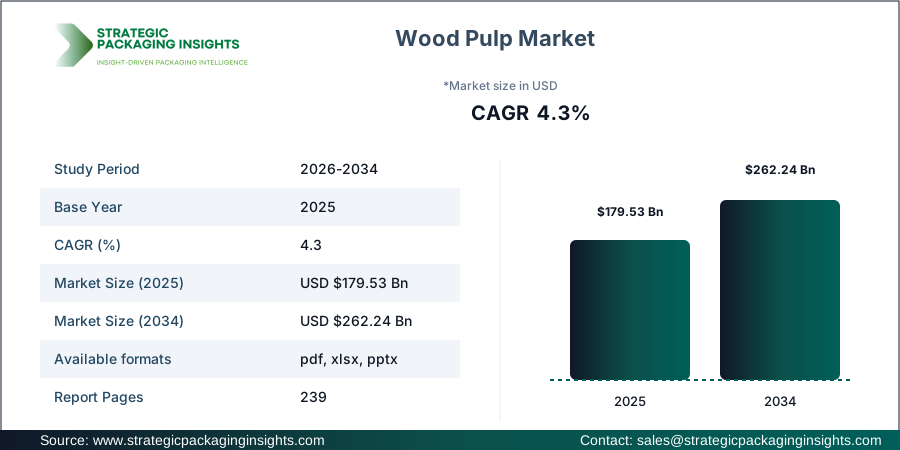
One of the most impactful drivers of the Wood Pulp market is the growing emphasis on sustainability and environmental responsibility. Governments worldwide are implementing stringent regulations to reduce carbon footprints and promote the use of renewable resources. This has led to increased investments in research and development by companies such as UPM and Stora Enso, focusing on innovative wood pulp products that meet these regulatory standards. The demand for wood pulp is also fueled by the expanding packaging industry, which seeks lightweight and recyclable materials to enhance product sustainability. As a result, the market is poised for significant growth, driven by both regulatory compliance and consumer demand for greener products.
Report Scope
| Attributes | Details |
| Report Title | Wood Pulp Market Size, Future Growth and Forecast 2034 |
| By Product Type | Bleached Softwood Kraft Pulp, Bleached Hardwood Kraft Pulp, Dissolving Pulp, Recycled Pulp |
| By Application | Paper, Packaging, Tissue, Specialty Cellulose |
| By End Use | Packaging, Hygiene, Printing, Textiles |
| By Source | Softwood, Hardwood, Recycled Fiber |
| Region | Asia Pacific, North America, Latin America, Europe, Middle East & Africa |
| Base Year | 2025 |
| Historic Period | 2018-2024 |
| Forecast Period | 2026-2034 |
| Number of Pages | 239 |
| Customization Available | Yes* |
Sustainability & Circular Economy Analysis
Sustainability initiatives and circular economy practices are reshaping the wood pulp market, as companies strive to reduce their environmental impact and meet consumer demands for eco-friendly products. The use of recyclable materials and the development of reusable packaging solutions are becoming increasingly important. Companies like Sappi and Mercer International are investing in lightweight packaging and eco-friendly material innovations to minimize waste and reduce carbon footprints. These efforts are not only enhancing the sustainability of their products but also improving their competitive edge in the market.
The influence of sustainability trends extends to packaging design and manufacturing processes, where companies are adopting waste reduction strategies and ESG initiatives. By focusing on carbon footprint reduction and aligning with consumer sustainability preferences, businesses are able to comply with packaging regulations and extended producer responsibility (EPR) requirements. This shift towards sustainable practices is driving investment decisions and supply chain strategies, as companies seek to enhance their long-term market competitiveness and appeal to environmentally conscious consumers.
As sustainability becomes a key driver of market dynamics, companies are increasingly prioritizing regulatory compliance and long-term competitiveness. The integration of eco-friendly practices into the supply chain is essential for maintaining market relevance and meeting the evolving demands of consumers and policymakers. By embracing sustainability, companies can not only reduce their environmental impact but also position themselves as leaders in the wood pulp market, attracting investment and fostering growth in an increasingly eco-conscious world.
Packaging Value Chain & Supply Chain Analysis
The wood pulp market's value chain is a complex ecosystem involving raw material sourcing, packaging converters, manufacturers, and logistics providers. Efficient supply chain management is crucial for maintaining competitiveness, as it directly impacts production capabilities and market performance. Companies like Canfor Pulp and West Fraser are optimizing their procurement strategies and inventory management to ensure a steady supply of raw materials, which is essential for meeting the growing demand for wood pulp products.
Supply chain efficiency is further enhanced by strategic partnerships and localization efforts, which help companies navigate the challenges of global sourcing and transportation. By collaborating with logistics providers and distribution channels, companies can streamline their operations and reduce costs, ultimately improving their market position. The availability of raw materials and the ability to quickly adapt to changing market conditions are critical factors influencing the success of companies in the wood pulp market.
Recycling networks and sustainable practices are also integral to the wood pulp supply chain, as companies seek to minimize waste and enhance their environmental credentials. By investing in recycling technologies and sustainable sourcing, companies can reduce their reliance on virgin materials and improve their overall sustainability. This not only aligns with consumer preferences but also supports regulatory compliance and long-term business growth. As the market continues to evolve, companies that prioritize supply chain resilience and sustainability will be better positioned to capitalize on emerging opportunities and mitigate potential threats.
Opportunities & Threats
The wood pulp market presents numerous opportunities for growth, driven by the increasing demand for sustainable and biodegradable materials. As consumers become more environmentally conscious, there is a growing preference for products made from renewable resources, such as wood pulp. This trend is particularly evident in the packaging industry, where companies are seeking lightweight and recyclable materials to enhance product sustainability. Additionally, the expanding use of wood pulp in the textile industry offers significant growth potential, as manufacturers look for eco-friendly alternatives to synthetic fibers.
Another opportunity lies in the development of innovative wood pulp products that meet the evolving needs of various industries. Companies that invest in research and development to create high-performance, sustainable materials will be well-positioned to capture market share and drive growth. The increasing focus on circular economy practices and waste reduction strategies also presents opportunities for companies to differentiate themselves and enhance their competitive edge. By embracing sustainability and innovation, companies can capitalize on the growing demand for eco-friendly products and strengthen their market position.
Despite the numerous opportunities, the wood pulp market faces several threats that could hinder growth. One of the primary challenges is the volatility of raw material prices, which can impact production costs and profitability. Additionally, the market is subject to regulatory pressures, as governments implement stringent environmental standards and policies to reduce carbon emissions. Companies must navigate these regulatory challenges while maintaining competitiveness and meeting consumer demands for sustainable products. Furthermore, the increasing competition from alternative materials, such as recycled fibers and synthetic substitutes, poses a threat to the growth of the wood pulp market.
Drivers & Challenges
The wood pulp market is driven by several key factors, including the growing demand for sustainable and biodegradable materials. As consumers become more environmentally conscious, there is an increasing preference for products made from renewable resources, such as wood pulp. This trend is particularly evident in the packaging industry, where companies are seeking lightweight and recyclable materials to enhance product sustainability. Additionally, the expanding use of wood pulp in the textile industry offers significant growth potential, as manufacturers look for eco-friendly alternatives to synthetic fibers.
Another major driver of the wood pulp market is the increasing focus on circular economy practices and waste reduction strategies. Companies that invest in research and development to create high-performance, sustainable materials will be well-positioned to capture market share and drive growth. The demand for wood pulp is also fueled by the expanding packaging industry, which seeks lightweight and recyclable materials to enhance product sustainability. As a result, the market is poised for significant growth, driven by both regulatory compliance and consumer demand for greener products.
Despite the numerous drivers, the wood pulp market faces several challenges that could hinder growth. One of the primary challenges is the volatility of raw material prices, which can impact production costs and profitability. Additionally, the market is subject to regulatory pressures, as governments implement stringent environmental standards and policies to reduce carbon emissions. Companies must navigate these regulatory challenges while maintaining competitiveness and meeting consumer demands for sustainable products. Furthermore, the increasing competition from alternative materials, such as recycled fibers and synthetic substitutes, poses a threat to the growth of the wood pulp market.
Market Share Analysis
The wood pulp market is characterized by a competitive landscape, with several key players dominating the industry. Companies such as International Paper, Suzano, and UPM hold significant market shares, leveraging their extensive product portfolios and global reach to meet the rising demand for wood pulp products. These companies are at the forefront of innovation, investing in research and development to create high-performance, sustainable materials that meet the evolving needs of various industries.
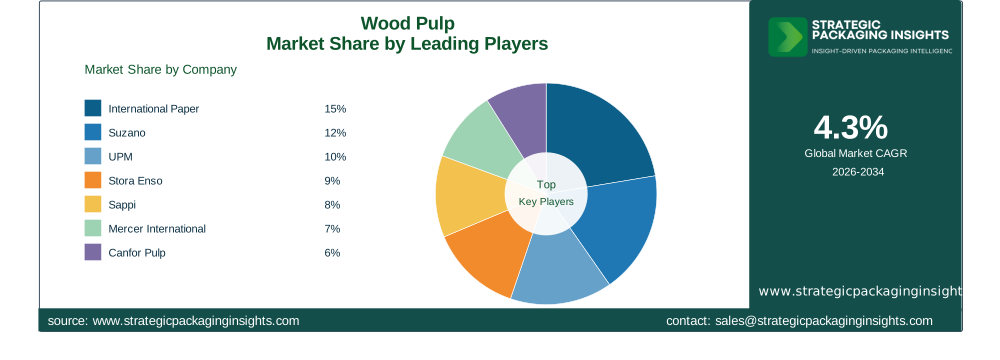
International Paper is a leading player in the wood pulp market, known for its commitment to sustainability and innovation. The company offers a wide range of wood pulp products, catering to diverse applications in the packaging, textile, and hygiene industries. With a strong focus on research and development, International Paper continues to enhance its product offerings and expand its market presence.
Suzano is another major player in the wood pulp market, renowned for its extensive product portfolio and global reach. The company is committed to sustainability, investing in eco-friendly practices and technologies to reduce its environmental impact. Suzano's focus on innovation and customer satisfaction has enabled it to maintain a strong market position and drive growth in the wood pulp industry.
UPM is a key player in the wood pulp market, known for its sustainable practices and high-quality products. The company offers a wide range of wood pulp products, catering to various industries, including packaging, textiles, and hygiene. UPM's commitment to sustainability and innovation has enabled it to maintain a competitive edge and capture significant market share.
Key Highlights
- Market Size: The wood pulp market was valued at USD 179.53 billion in 2025 and is projected to reach USD 262.24 billion by 2034.
- Growth Rate: The market is expected to grow at a CAGR of 4.3% during the forecast period.
- Leading Companies: Key players include International Paper, Suzano, UPM, and Stora Enso.
- Product Segments: Includes Bleached Softwood Kraft Pulp, Bleached Hardwood Kraft Pulp, Dissolving Pulp, and Recycled Pulp.
- Application Segments: Major applications are in Paper, Packaging, Tissue, and Specialty Cellulose.
- Regional Insights: Asia Pacific is expected to witness significant growth, driven by increasing demand for sustainable materials.
- Sustainability Trends: Emphasis on eco-friendly materials and circular economy practices is reshaping the market.
Wood Pulp Market Segments Insights

By Product Type Analysis
The wood pulp market is segmented by product type, including Bleached Softwood Kraft Pulp, Bleached Hardwood Kraft Pulp, Dissolving Pulp, and Recycled Pulp. Bleached Softwood Kraft Pulp is widely used due to its strength and versatility, making it a preferred choice for packaging and paper applications. Companies like International Paper and Suzano are leading producers of this type, focusing on enhancing product quality and sustainability. The demand for Bleached Hardwood Kraft Pulp is also significant, driven by its smooth texture and high absorbency, which are ideal for tissue and specialty cellulose applications.

Dissolving Pulp is gaining traction in the textile industry, as manufacturers seek eco-friendly alternatives to synthetic fibers. This type of pulp is used in the production of viscose and lyocell, which are popular in sustainable fashion. Recycled Pulp is another growing segment, as companies prioritize waste reduction and circular economy practices. The use of recycled fibers not only reduces environmental impact but also aligns with consumer preferences for sustainable products. As the market evolves, companies that invest in innovative product development and sustainable practices will be well-positioned to capture market share and drive growth.
By Application Analysis
The wood pulp market is segmented by application, with major uses in Paper, Packaging, Tissue, and Specialty Cellulose. The paper industry remains a dominant consumer of wood pulp, driven by the demand for high-quality printing and writing papers. Companies like UPM and Stora Enso are key suppliers, offering a wide range of pulp products to meet the diverse needs of the paper industry. The packaging sector is also a significant application area, as companies seek lightweight and recyclable materials to enhance product sustainability.
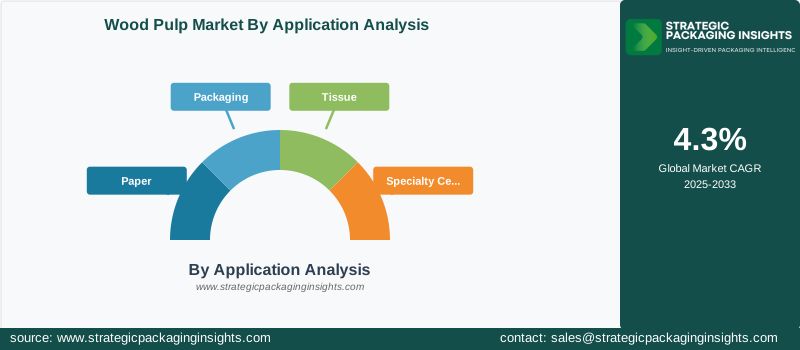
Tissue products, including toilet paper and facial tissues, are another major application of wood pulp. The demand for soft and absorbent tissues is driving the growth of this segment, with companies like Sappi and Mercer International leading the way in product innovation. Specialty Cellulose is a niche but growing segment, used in applications such as pharmaceuticals, food additives, and cosmetics. As the demand for sustainable and high-performance materials increases, companies that focus on product development and innovation will be well-positioned to capture market share and drive growth.
By End Use Analysis
The wood pulp market is segmented by end use, including Packaging, Hygiene, Printing, and Textiles. The packaging industry is a major consumer of wood pulp, driven by the demand for sustainable and biodegradable materials. Companies like Canfor Pulp and West Fraser are key suppliers, offering a wide range of pulp products to meet the diverse needs of the packaging industry. The hygiene sector is another significant end use, with wood pulp used in the production of sanitary products such as diapers and feminine hygiene products.

The printing industry remains a dominant consumer of wood pulp, driven by the demand for high-quality printing and writing papers. Companies like UPM and Stora Enso are key suppliers, offering a wide range of pulp products to meet the diverse needs of the printing industry. The textile industry is also a growing end use, as manufacturers seek eco-friendly alternatives to synthetic fibers. Dissolving Pulp is gaining traction in this sector, used in the production of viscose and lyocell, which are popular in sustainable fashion. As the market evolves, companies that invest in innovative product development and sustainable practices will be well-positioned to capture market share and drive growth.
By Source Analysis
The wood pulp market is segmented by source, including Softwood, Hardwood, and Recycled Fiber. Softwood pulp is widely used due to its strength and versatility, making it a preferred choice for packaging and paper applications. Companies like International Paper and Suzano are leading producers of softwood pulp, focusing on enhancing product quality and sustainability. Hardwood pulp is also significant, driven by its smooth texture and high absorbency, which are ideal for tissue and specialty cellulose applications.

Recycled Fiber is a growing segment, as companies prioritize waste reduction and circular economy practices. The use of recycled fibers not only reduces environmental impact but also aligns with consumer preferences for sustainable products. Companies like Sappi and Mercer International are investing in recycling technologies and sustainable sourcing to enhance their environmental credentials and meet the growing demand for eco-friendly materials. As the market evolves, companies that focus on sustainable sourcing and innovative product development will be well-positioned to capture market share and drive growth.
Wood Pulp Market Segments
The Wood Pulp market has been segmented on the basis ofBy Product Type
- Bleached Softwood Kraft Pulp
- Bleached Hardwood Kraft Pulp
- Dissolving Pulp
- Recycled Pulp
By Application
- Paper
- Packaging
- Tissue
- Specialty Cellulose
By End Use
- Packaging
- Hygiene
- Printing
- Textiles
By Source
- Softwood
- Hardwood
- Recycled Fiber
Region
- Asia Pacific
- North America
- Latin America
- Europe
- Middle East & Africa




