


Hardwood Pulp Market Outlook
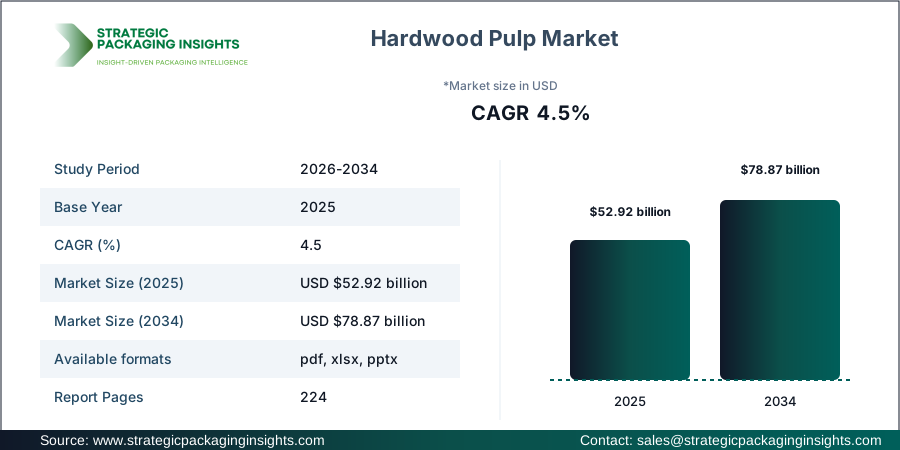
The hardwood pulp market was valued at $52.92 billion in 2025 and is projected to reach $78.87 billion by 2034, growing at a CAGR of 4.5% during the forecast period 2026-2034. This market is driven by the increasing demand for sustainable and eco-friendly packaging solutions, as well as the rising consumption of tissue and printing paper products globally. The shift towards renewable resources and the growing awareness of environmental conservation are further propelling the market growth. Additionally, technological advancements in pulp production processes are enhancing the efficiency and quality of hardwood pulp, making it a preferred choice for various applications.
Despite the promising growth prospects, the hardwood pulp market faces certain challenges. Regulatory restrictions on deforestation and stringent environmental policies are some of the key restraints that could hinder market expansion. However, the potential for growth remains significant, particularly with the increasing adoption of recycled pulp and the development of innovative pulp products. The market is also witnessing a trend towards the use of mixed hardwood sources, which offers a balanced approach to sustainability and cost-effectiveness. As the industry continues to evolve, companies are focusing on strategic partnerships and mergers to strengthen their market position and expand their product offerings.
Report Scope
| Attributes | Details |
| Report Title | Hardwood Pulp Market Size, Future Growth and Forecast 2034 |
| Product Type | Bleached Hardwood Kraft Pulp, Unbleached Hardwood Pulp, Dissolving Hardwood Pulp |
| Source | Eucalyptus, Birch, Mixed Hardwood |
| Application | Tissue, Printing Paper, Packaging Paper |
| End Use | Paper Mills, Tissue Producers, Packaging Converters |
| Region | Asia Pacific, North America, Latin America, Europe, Middle East & Africa |
| Base Year | 2025 |
| Historic Period | 2018-2024 |
| Forecast Period | 2026-2034 |
| Number of Pages | 224 |
| Customization Available | Yes* |
Opportunities & Threats
The hardwood pulp market presents numerous opportunities, particularly in the realm of sustainable packaging solutions. As consumers and businesses alike become more environmentally conscious, the demand for eco-friendly packaging materials is on the rise. This trend is driving the adoption of hardwood pulp in the packaging industry, where it is used to produce biodegradable and recyclable packaging products. Additionally, the growing e-commerce sector is fueling the demand for packaging materials, providing further growth opportunities for the hardwood pulp market. Companies that can innovate and offer sustainable solutions are likely to gain a competitive edge in this evolving market landscape.
Another significant opportunity lies in the expanding tissue paper market. With the increasing global population and rising standards of living, the demand for tissue products is expected to grow substantially. Hardwood pulp, known for its softness and absorbency, is a key raw material in the production of high-quality tissue products. This presents a lucrative opportunity for hardwood pulp manufacturers to cater to the growing needs of the tissue industry. Furthermore, the development of new pulp processing technologies that enhance the quality and efficiency of production processes can open up additional avenues for market growth.
However, the hardwood pulp market is not without its threats. One of the primary challenges is the volatility in raw material prices, which can impact the profitability of pulp manufacturers. Additionally, the market faces competition from alternative materials such as softwood pulp and synthetic fibers, which may offer cost advantages or specific performance benefits. Environmental concerns related to deforestation and the carbon footprint of pulp production processes also pose significant threats to the market. Companies must navigate these challenges by adopting sustainable practices and investing in research and development to stay competitive.
Drivers & Challenges
The hardwood pulp market is primarily driven by the increasing demand for paper and packaging products. As the global population continues to grow, so does the need for paper-based products, including tissue, printing paper, and packaging materials. Hardwood pulp, with its superior quality and versatility, is a preferred choice for manufacturers in these industries. Additionally, the shift towards sustainable and eco-friendly products is further driving the demand for hardwood pulp, as it is a renewable resource that can be sustainably sourced and processed.
Technological advancements in pulp production processes are also playing a crucial role in driving market growth. Innovations in processing techniques have led to improved efficiency and quality of hardwood pulp, making it more competitive in the market. These advancements have also enabled manufacturers to reduce production costs and minimize environmental impact, aligning with the growing emphasis on sustainability. Furthermore, the increasing adoption of digital printing technologies is boosting the demand for high-quality printing paper, which in turn drives the demand for hardwood pulp.
Despite these drivers, the hardwood pulp market faces several challenges. One of the key challenges is the stringent environmental regulations governing the pulp and paper industry. These regulations aim to reduce deforestation and minimize the environmental impact of pulp production processes. Compliance with these regulations can be costly and time-consuming for manufacturers, potentially impacting their profitability. Additionally, the market faces competition from alternative materials such as softwood pulp and synthetic fibers, which may offer cost advantages or specific performance benefits. Companies must navigate these challenges by adopting sustainable practices and investing in research and development to stay competitive.
Market Share Analysis
The hardwood pulp market is characterized by a competitive landscape with several key players dominating the industry. Companies such as Suzano, International Paper, UPM, Stora Enso, and Sappi hold significant market shares, driven by their extensive product portfolios and strong distribution networks. These companies have established themselves as leaders in the market through strategic acquisitions, partnerships, and investments in research and development. Their focus on sustainability and innovation has enabled them to maintain a competitive edge in the evolving market landscape.
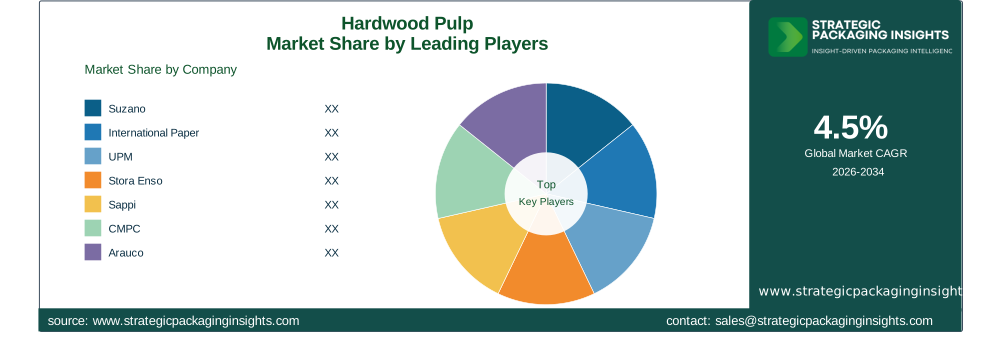
Suzano, a leading player in the hardwood pulp market, has a strong presence in the global market with its extensive product offerings and commitment to sustainability. The company has invested heavily in research and development to enhance its production processes and reduce its environmental impact. Similarly, International Paper, another major player, has focused on expanding its product portfolio and strengthening its distribution network to cater to the growing demand for hardwood pulp products.
UPM and Stora Enso are also prominent players in the market, known for their innovative approaches to pulp production and commitment to sustainability. These companies have leveraged their expertise in the industry to develop high-quality pulp products that meet the evolving needs of their customers. Sappi, with its strong focus on research and development, has been able to maintain its competitive position in the market by offering innovative and sustainable pulp solutions.
Other notable players in the hardwood pulp market include CMPC, Arauco, Asia Pulp & Paper, Domtar, and Mercer International. These companies have established themselves as key players in the market through strategic partnerships and investments in technology and sustainability. Their focus on expanding their product offerings and enhancing their production capabilities has enabled them to capture significant market shares and strengthen their positions in the competitive landscape.
Key Highlights
- The hardwood pulp market is projected to grow from $52.92 billion in 2025 to $78.87 billion by 2034, at a CAGR of 4.5%.
- Increasing demand for sustainable and eco-friendly packaging solutions is driving market growth.
- Technological advancements in pulp production processes are enhancing efficiency and quality.
- Regulatory restrictions on deforestation pose challenges to market expansion.
- Volatility in raw material prices impacts the profitability of pulp manufacturers.
- Competition from alternative materials such as softwood pulp and synthetic fibers is a significant threat.
- Key players in the market include Suzano, International Paper, UPM, Stora Enso, and Sappi.
- The market is witnessing a trend towards the use of mixed hardwood sources for sustainability.
- Strategic partnerships and mergers are common strategies among leading companies to strengthen market position.
Top Countries Insights
In the hardwood pulp market, the United States stands out as a key player with a market size of approximately $12 billion and a CAGR of 3%. The country's robust paper and packaging industry, coupled with a strong focus on sustainability, drives the demand for hardwood pulp. Government policies promoting sustainable forestry practices further support market growth. However, challenges such as regulatory restrictions and competition from alternative materials persist.
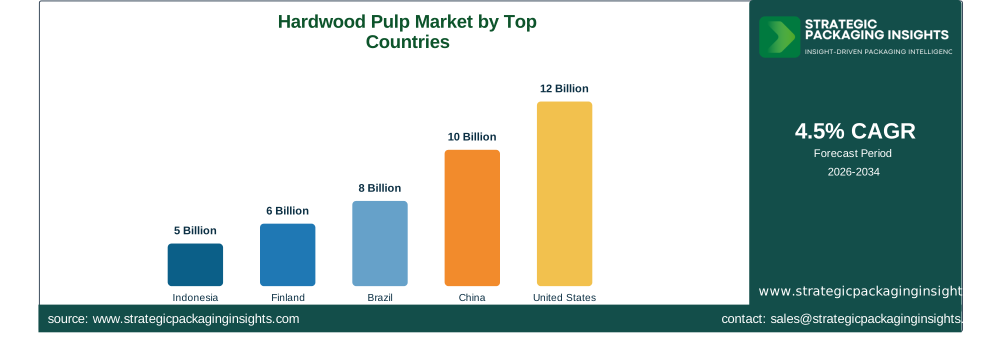
China, with a market size of around $10 billion and a CAGR of 5%, is another significant player in the hardwood pulp market. The country's booming e-commerce sector and increasing demand for packaging materials are key growth drivers. Additionally, government initiatives to promote sustainable practices and reduce environmental impact are supporting market expansion. However, the market faces challenges related to raw material availability and environmental regulations.
Brazil, with a market size of approximately $8 billion and a CAGR of 4%, is a major contributor to the hardwood pulp market. The country's abundant hardwood resources and strong focus on sustainable forestry practices drive market growth. However, challenges such as deforestation concerns and regulatory restrictions pose significant threats to the market.
Finland, with a market size of around $6 billion and a CAGR of 3%, is a key player in the European hardwood pulp market. The country's advanced pulp production technologies and commitment to sustainability are key growth drivers. However, the market faces challenges related to competition from alternative materials and regulatory restrictions.
Indonesia, with a market size of approximately $5 billion and a CAGR of 6%, is an emerging player in the hardwood pulp market. The country's growing paper and packaging industry, coupled with government initiatives to promote sustainable practices, drives market growth. However, challenges such as environmental concerns and competition from alternative materials persist.
Hardwood Pulp Market Segments Insights

Product Type Analysis
The hardwood pulp market is segmented by product type into bleached hardwood kraft pulp, unbleached hardwood pulp, and dissolving hardwood pulp. Bleached hardwood kraft pulp is the most widely used product type, known for its superior quality and versatility. It is primarily used in the production of high-quality printing and writing papers, as well as tissue products. The demand for bleached hardwood kraft pulp is driven by the increasing consumption of paper products and the growing emphasis on sustainability. Unbleached hardwood pulp, on the other hand, is gaining traction due to its eco-friendly nature and lower environmental impact. It is commonly used in packaging applications where strength and durability are key requirements. Dissolving hardwood pulp, known for its high purity and cellulose content, is primarily used in the production of textiles and specialty products. The demand for dissolving hardwood pulp is driven by the growing textile industry and the increasing demand for sustainable and biodegradable fibers.

Source Analysis
The hardwood pulp market is also segmented by source into eucalyptus, birch, and mixed hardwood. Eucalyptus is the most widely used source of hardwood pulp, known for its fast growth and high yield. It is primarily used in the production of high-quality paper products and is favored for its sustainability and cost-effectiveness. Birch, on the other hand, is known for its strength and durability, making it a preferred choice for packaging applications. The demand for birch-based hardwood pulp is driven by the growing packaging industry and the increasing emphasis on sustainable packaging solutions. Mixed hardwood, which combines different hardwood species, offers a balanced approach to sustainability and cost-effectiveness. It is commonly used in applications where a combination of strength, durability, and sustainability is required.

Application Analysis
The hardwood pulp market is segmented by application into tissue, printing paper, and packaging paper. Tissue is the largest application segment, driven by the increasing demand for hygiene products and the growing global population. Hardwood pulp, known for its softness and absorbency, is a key raw material in the production of high-quality tissue products. The demand for tissue products is expected to grow substantially, providing significant growth opportunities for the hardwood pulp market. Printing paper is another major application segment, driven by the increasing adoption of digital printing technologies and the growing demand for high-quality printing paper. Hardwood pulp, known for its superior quality and printability, is a preferred choice for printing paper manufacturers. Packaging paper, driven by the growing e-commerce sector and the increasing demand for sustainable packaging solutions, is another key application segment in the hardwood pulp market.

End Use Analysis
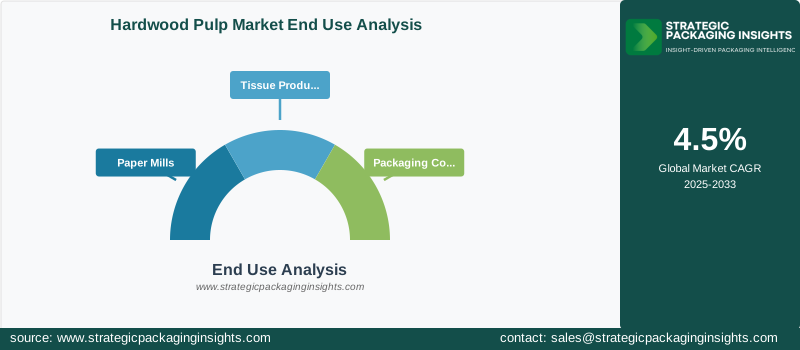
The hardwood pulp market is segmented by end use into paper mills, tissue producers, and packaging converters. Paper mills are the largest end-use segment, driven by the increasing demand for paper products and the growing emphasis on sustainability. Hardwood pulp, known for its superior quality and versatility, is a preferred choice for paper mills in the production of high-quality paper products. Tissue producers, driven by the increasing demand for hygiene products and the growing global population, are another major end-use segment in the hardwood pulp market. Hardwood pulp, known for its softness and absorbency, is a key raw material in the production of high-quality tissue products. Packaging converters, driven by the growing e-commerce sector and the increasing demand for sustainable packaging solutions, are another key end-use segment in the hardwood pulp market.
Hardwood Pulp Market Segments
The Hardwood Pulp market has been segmented on the basis ofProduct Type
- Bleached Hardwood Kraft Pulp
- Unbleached Hardwood Pulp
- Dissolving Hardwood Pulp
Source
- Eucalyptus
- Birch
- Mixed Hardwood
Application
- Tissue
- Printing Paper
- Packaging Paper
End Use
- Paper Mills
- Tissue Producers
- Packaging Converters
Region
- Asia Pacific
- North America
- Latin America
- Europe
- Middle East & Africa




