


Welded Blisters Market Outlook
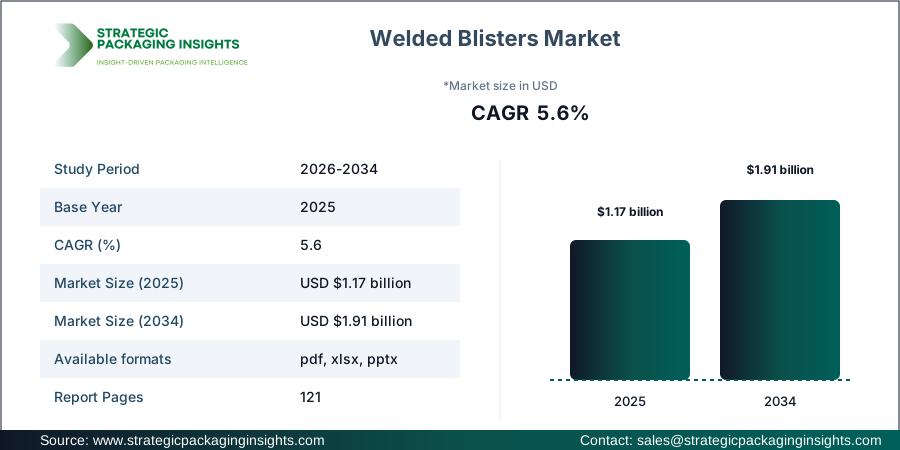
The Welded Blisters market was valued at $1.17 billion in 2025 and is projected to reach $1.91 billion by 2034, growing at a CAGR of 5.6% during the forecast period 2026-2034. This market is experiencing significant growth due to the increasing demand for secure and tamper-evident packaging solutions across various industries. The pharmaceutical sector, in particular, is driving the demand for welded blisters as they provide excellent protection for sensitive products like tablets and medical devices. Additionally, the rise in consumer electronics and the need for robust packaging solutions to prevent damage during transportation are further propelling market growth. The adoption of advanced technologies such as ultrasonic welding and RF welding is enhancing the efficiency and reliability of blister packaging, making it a preferred choice for manufacturers.
Despite the promising growth prospects, the welded blisters market faces certain challenges that could hinder its expansion. Regulatory constraints and stringent packaging standards in the pharmaceutical and medical device industries require manufacturers to adhere to high-quality packaging solutions, which can increase production costs. Moreover, the environmental concerns associated with plastic packaging materials like PVC and PET are prompting companies to explore sustainable alternatives, which could impact market dynamics. However, the growing trend towards eco-friendly packaging solutions presents a significant opportunity for innovation and development in the welded blisters market. Companies are investing in research and development to create biodegradable and recyclable materials that meet regulatory requirements while reducing environmental impact.
Report Scope
| Attributes | Details |
| Report Title | Welded Blisters Market Size, Future Growth and Forecast 2034 |
| By Material Type | PVC, PVDC, PET, Aluminum Foil Laminates |
| By Application | Pharmaceutical Tablets, Medical Devices, Consumer Goods, Electronics |
| By Technology | Heat Sealing, Ultrasonic Welding, RF Welding |
| By End Use | Pharmaceutical Companies, Medical Device Firms, Contract Packers |
| Region | Asia Pacific, North America, Latin America, Europe, Middle East & Africa |
| Base Year | 2025 |
| Historic Period | 2018-2024 |
| Forecast Period | 2026-2034 |
| Number of Pages | 121 |
| Customization Available | Yes* |
Opportunities & Threats
The welded blisters market presents numerous opportunities for growth, particularly in the pharmaceutical and medical device sectors. The increasing demand for tamper-evident and child-resistant packaging solutions is driving innovation in blister packaging technologies. Companies are focusing on developing advanced sealing techniques that enhance the security and integrity of packaged products. Additionally, the rise in chronic diseases and the growing aging population are boosting the demand for pharmaceutical products, thereby increasing the need for effective packaging solutions. The expansion of the healthcare sector in emerging markets offers significant growth potential for welded blisters, as these regions are witnessing increased investments in healthcare infrastructure and services.
Another opportunity lies in the consumer electronics industry, where the demand for protective packaging solutions is on the rise. As electronic devices become more compact and sophisticated, the need for packaging that prevents damage during transportation and storage is becoming increasingly important. Welded blisters provide a reliable solution by offering excellent protection against moisture, dust, and physical impact. The growing trend of online shopping and e-commerce is further driving the demand for secure packaging solutions, as products need to withstand the rigors of shipping and handling. Companies that can offer innovative and cost-effective blister packaging solutions are well-positioned to capitalize on these opportunities.
However, the welded blisters market also faces certain threats that could impact its growth trajectory. The increasing environmental concerns associated with plastic packaging materials are prompting regulatory bodies to impose stricter guidelines and standards. This could lead to increased production costs for manufacturers as they strive to comply with these regulations. Additionally, the availability of alternative packaging solutions, such as flexible packaging and paper-based materials, poses a threat to the growth of the welded blisters market. Companies need to continuously innovate and adapt to changing market dynamics to remain competitive and address these challenges effectively.
Drivers & Challenges
One of the primary drivers of the welded blisters market is the growing demand for secure and tamper-evident packaging solutions in the pharmaceutical industry. As the global population continues to age, the prevalence of chronic diseases is increasing, leading to a higher demand for pharmaceutical products. Welded blisters provide an effective solution for packaging sensitive products like tablets and capsules, ensuring their safety and integrity. The stringent regulatory requirements in the pharmaceutical sector further drive the adoption of welded blisters, as they offer excellent protection against contamination and tampering. Additionally, the rise in healthcare spending and the expansion of healthcare infrastructure in emerging markets are contributing to the growth of the welded blisters market.
Another significant driver is the increasing demand for protective packaging solutions in the consumer electronics industry. As electronic devices become more compact and sophisticated, the need for packaging that prevents damage during transportation and storage is becoming increasingly important. Welded blisters offer excellent protection against moisture, dust, and physical impact, making them a preferred choice for packaging electronic components and devices. The growing trend of online shopping and e-commerce is further driving the demand for secure packaging solutions, as products need to withstand the rigors of shipping and handling. Companies that can offer innovative and cost-effective blister packaging solutions are well-positioned to capitalize on these opportunities.
Despite the positive growth drivers, the welded blisters market faces several challenges that could impact its expansion. One of the primary challenges is the environmental concerns associated with plastic packaging materials like PVC and PET. As consumers and regulatory bodies become more environmentally conscious, there is a growing demand for sustainable packaging solutions. This has prompted companies to invest in research and development to create biodegradable and recyclable materials that meet regulatory requirements while reducing environmental impact. Additionally, the availability of alternative packaging solutions, such as flexible packaging and paper-based materials, poses a threat to the growth of the welded blisters market. Companies need to continuously innovate and adapt to changing market dynamics to remain competitive and address these challenges effectively.
Market Share Analysis
The welded blisters market is characterized by a competitive landscape with several key players vying for market share. Companies like Amcor, TekniPlex, Constantia Flexibles, and Klöckner Pentaplast are some of the major players in this market, each holding a significant share. Amcor, for instance, is known for its innovative packaging solutions and has a strong presence in the pharmaceutical and medical device sectors. TekniPlex, on the other hand, is renowned for its advanced material science capabilities, which enable it to offer high-quality blister packaging solutions. Constantia Flexibles and Klöckner Pentaplast are also prominent players, known for their extensive product portfolios and global reach.
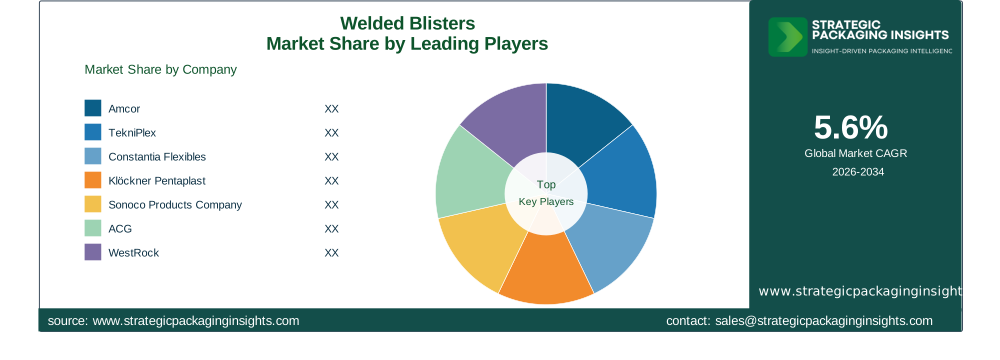
Sonoco Products Company and ACG are other notable players in the welded blisters market. Sonoco Products Company has a diverse range of packaging solutions and is known for its commitment to sustainability and innovation. ACG, a leading provider of pharmaceutical packaging solutions, has a strong focus on research and development, enabling it to offer cutting-edge blister packaging technologies. WestRock, UFlex, Winpak, and Nelipak Healthcare Packaging are also key players in this market, each with its unique strengths and capabilities. WestRock, for example, is known for its sustainable packaging solutions, while UFlex is recognized for its advanced manufacturing capabilities.
The competitive landscape of the welded blisters market is characterized by continuous innovation and strategic partnerships. Companies are investing in research and development to create new and improved packaging solutions that meet the evolving needs of their customers. Additionally, mergers and acquisitions are common in this market, as companies seek to expand their product portfolios and enhance their market presence. The focus on sustainability and eco-friendly packaging solutions is also driving competition, as companies strive to develop materials that reduce environmental impact while maintaining high-quality standards.
Overall, the welded blisters market is highly competitive, with several key players dominating the landscape. Companies that can offer innovative, cost-effective, and sustainable packaging solutions are well-positioned to succeed in this market. The focus on research and development, strategic partnerships, and sustainability will continue to shape the competitive dynamics of the welded blisters market in the coming years.
Key Highlights
- The welded blisters market is projected to grow from $1.17 billion in 2025 to $1.91 billion by 2034, at a CAGR of 5.6%.
- Pharmaceutical and medical device sectors are the primary drivers of market growth, with increasing demand for tamper-evident packaging solutions.
- Advanced technologies like ultrasonic welding and RF welding are enhancing the efficiency and reliability of blister packaging.
- Environmental concerns are prompting companies to explore sustainable packaging materials, driving innovation in the market.
- The consumer electronics industry is a significant growth area, with rising demand for protective packaging solutions.
- Key players in the market include Amcor, TekniPlex, Constantia Flexibles, and Klöckner Pentaplast.
- Strategic partnerships and mergers and acquisitions are common as companies seek to expand their market presence.
- The focus on sustainability and eco-friendly packaging solutions is shaping the competitive dynamics of the market.
- Emerging markets offer significant growth potential due to increased investments in healthcare infrastructure.
Top Countries Insights
In the welded blisters market, the United States stands out as a key player, with a market size of approximately $450 million and a CAGR of 4%. The country's robust pharmaceutical industry and stringent regulatory standards drive the demand for high-quality blister packaging solutions. The focus on innovation and sustainability is also a significant growth driver, as companies invest in research and development to create eco-friendly packaging materials. However, the market faces challenges related to environmental concerns and the availability of alternative packaging solutions.
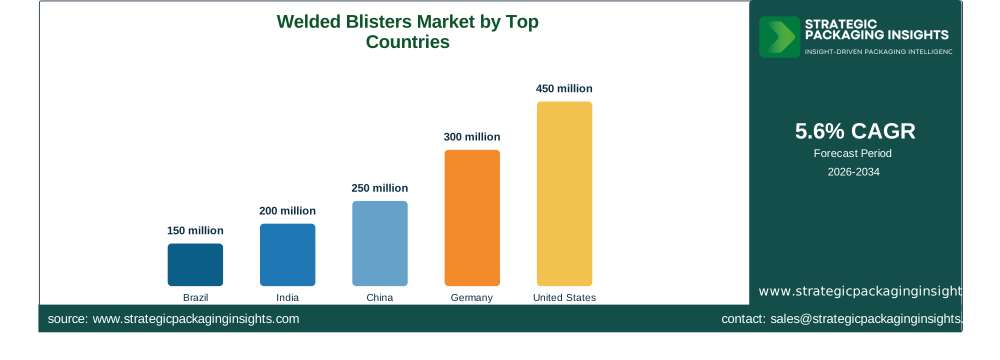
Germany is another prominent market for welded blisters, with a market size of around $300 million and a CAGR of 5%. The country's strong manufacturing base and advanced technology capabilities make it a leader in the production of high-quality blister packaging solutions. The focus on sustainability and compliance with stringent European Union regulations are key growth drivers. However, the market faces challenges related to the high cost of production and the need for continuous innovation to meet changing consumer demands.
China is a rapidly growing market for welded blisters, with a market size of approximately $250 million and a CAGR of 7%. The country's expanding healthcare sector and increasing demand for pharmaceutical products are driving the growth of the blister packaging market. The focus on improving healthcare infrastructure and services is also a significant growth driver. However, the market faces challenges related to regulatory compliance and the need for sustainable packaging solutions.
India is another emerging market for welded blisters, with a market size of around $200 million and a CAGR of 8%. The country's growing pharmaceutical industry and increasing investments in healthcare infrastructure are driving the demand for blister packaging solutions. The focus on innovation and cost-effective packaging solutions is also a significant growth driver. However, the market faces challenges related to regulatory compliance and the availability of alternative packaging solutions.
Brazil is a key market for welded blisters in Latin America, with a market size of approximately $150 million and a CAGR of 6%. The country's expanding healthcare sector and increasing demand for pharmaceutical products are driving the growth of the blister packaging market. The focus on improving healthcare infrastructure and services is also a significant growth driver. However, the market faces challenges related to regulatory compliance and the need for sustainable packaging solutions.
Welded Blisters Market Segments Insights

By Material Type Analysis
The material type segment in the welded blisters market is crucial as it determines the durability, cost, and environmental impact of the packaging. PVC, PVDC, PET, and aluminum foil laminates are the primary materials used in blister packaging. PVC is widely used due to its cost-effectiveness and excellent barrier properties, making it suitable for pharmaceutical and consumer goods packaging. However, environmental concerns associated with PVC are prompting companies to explore alternative materials like PET, which offers similar benefits with a lower environmental footprint. Aluminum foil laminates are preferred for their superior barrier properties, especially in the pharmaceutical sector, where product integrity is paramount.
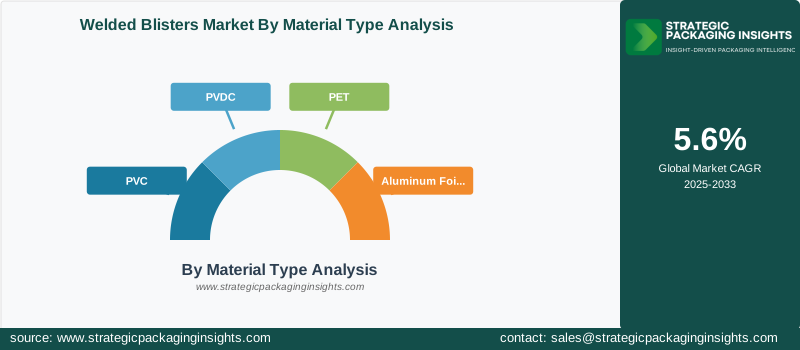
PVDC is another material gaining traction due to its excellent moisture and oxygen barrier properties, making it ideal for packaging sensitive products like pharmaceuticals and medical devices. The demand for sustainable and eco-friendly materials is driving innovation in this segment, with companies investing in research and development to create biodegradable and recyclable materials. The focus on sustainability is expected to drive the growth of the PET and aluminum foil laminates segments, as these materials offer a balance between performance and environmental impact. Overall, the material type segment is characterized by continuous innovation and a focus on sustainability, as companies strive to meet regulatory requirements and consumer demands.
By Application Analysis
The application segment of the welded blisters market is diverse, encompassing pharmaceutical tablets, medical devices, consumer goods, and electronics. The pharmaceutical sector is the largest application segment, driven by the increasing demand for secure and tamper-evident packaging solutions. Blister packaging provides excellent protection for sensitive products like tablets and capsules, ensuring their safety and integrity. The medical device sector is also a significant growth area, with the need for packaging solutions that prevent contamination and damage during transportation and storage.
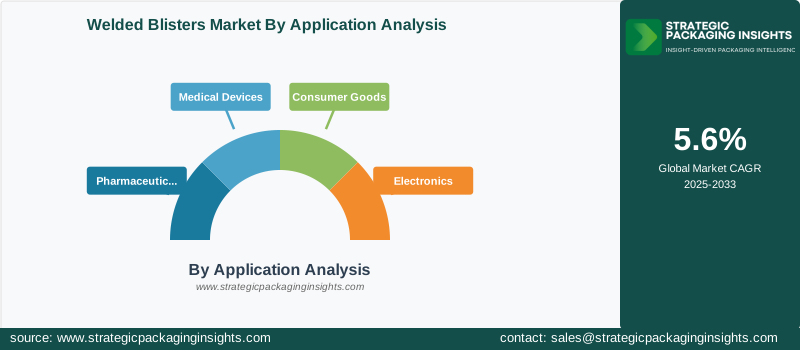
Consumer goods and electronics are other important application segments, with the growing demand for protective packaging solutions. As electronic devices become more compact and sophisticated, the need for packaging that prevents damage during transportation and storage is becoming increasingly important. Welded blisters offer excellent protection against moisture, dust, and physical impact, making them a preferred choice for packaging electronic components and devices. The focus on innovation and cost-effective packaging solutions is driving the growth of these application segments, as companies strive to meet the evolving needs of their customers.
By Technology Analysis
The technology segment in the welded blisters market is characterized by the adoption of advanced sealing techniques like heat sealing, ultrasonic welding, and RF welding. Heat sealing is the most commonly used technology due to its cost-effectiveness and reliability. It provides a strong seal that ensures the integrity of the packaged product, making it suitable for a wide range of applications. However, the demand for more efficient and reliable sealing techniques is driving the adoption of ultrasonic welding and RF welding.
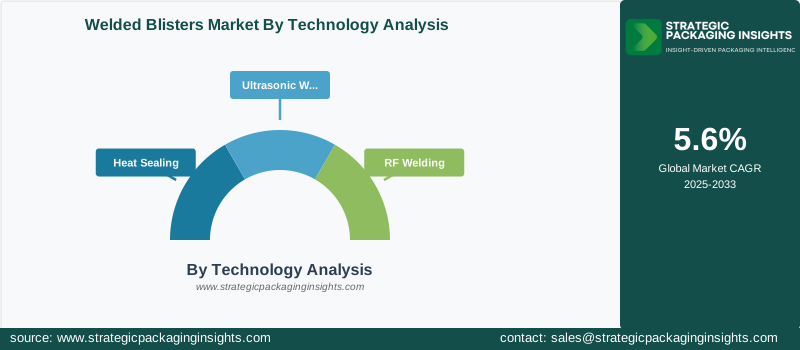
Ultrasonic welding offers several advantages, including faster sealing times, reduced energy consumption, and the ability to seal through contaminants. This makes it ideal for applications where product integrity is critical, such as in the pharmaceutical and medical device sectors. RF welding is another advanced technology gaining traction due to its ability to create strong and durable seals, even in challenging conditions. The focus on innovation and efficiency is driving the growth of the technology segment, as companies seek to enhance the performance and reliability of their blister packaging solutions.
By End Use Analysis
The end-use segment of the welded blisters market includes pharmaceutical companies, medical device firms, and contract packers. Pharmaceutical companies are the largest end-users of blister packaging, driven by the need for secure and tamper-evident packaging solutions. The stringent regulatory requirements in the pharmaceutical sector further drive the adoption of welded blisters, as they offer excellent protection against contamination and tampering. Medical device firms are also significant end-users, with the need for packaging solutions that prevent contamination and damage during transportation and storage.
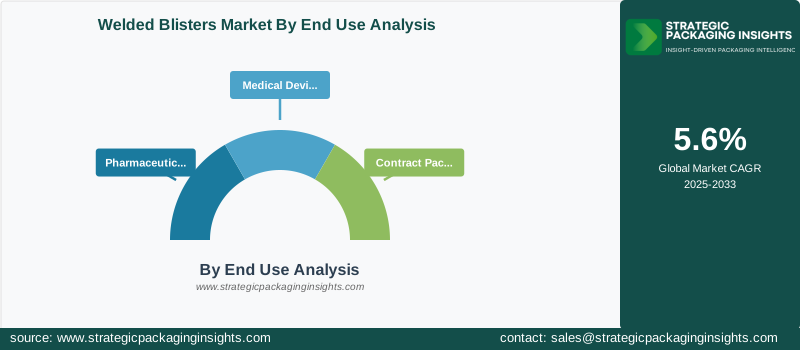
Contract packers are another important end-use segment, providing packaging services to various industries, including pharmaceuticals, consumer goods, and electronics. The demand for cost-effective and efficient packaging solutions is driving the growth of this segment, as companies seek to outsource their packaging needs to specialized service providers. The focus on innovation and sustainability is also shaping the end-use segment, as companies strive to meet regulatory requirements and consumer demands while reducing environmental impact.
Welded Blisters Market Segments
The Welded Blisters market has been segmented on the basis ofBy Material Type
- PVC
- PVDC
- PET
- Aluminum Foil Laminates
By Application
- Pharmaceutical Tablets
- Medical Devices
- Consumer Goods
- Electronics
By Technology
- Heat Sealing
- Ultrasonic Welding
- RF Welding
By End Use
- Pharmaceutical Companies
- Medical Device Firms
- Contract Packers
Region
- Asia Pacific
- North America
- Latin America
- Europe
- Middle East & Africa




