


Water Dissolvable Labels Market Outlook
The Water Dissolvable Labels market was valued at $1.36 billion in 2025 and is projected to reach $2.79 billion by 2034, growing at a CAGR of 8.3% during the forecast period 2026-2034. This market is witnessing significant growth due to the increasing demand for eco-friendly and sustainable labeling solutions across various industries. The rising awareness about environmental conservation and the need to reduce plastic waste are key drivers propelling the adoption of water dissolvable labels. These labels offer a unique advantage as they dissolve completely in water, leaving no residue, which is particularly beneficial for applications in foodservice, healthcare, and logistics sectors. The market is also benefiting from technological advancements in label materials and adhesive formulations, which enhance the performance and reliability of these labels in diverse conditions.
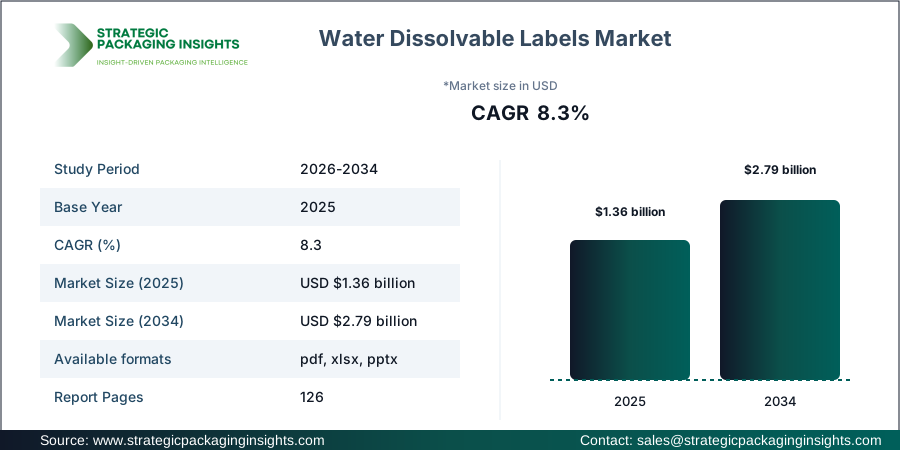
Despite the promising growth prospects, the Water Dissolvable Labels market faces certain challenges that could hinder its expansion. One of the primary restraints is the higher cost associated with water dissolvable labels compared to traditional labeling solutions. This cost factor can be a significant barrier for small and medium-sized enterprises looking to adopt sustainable practices. Additionally, the market is subject to stringent regulatory standards and compliance requirements, particularly in the food and healthcare sectors, which can pose challenges for manufacturers. However, the growing emphasis on sustainability and the increasing adoption of circular economy practices present substantial growth potential for the market. Companies are investing in research and development to innovate and reduce production costs, thereby making water dissolvable labels more accessible to a broader range of industries.
Report Scope
| Attributes | Details |
| Report Title | Water Dissolvable Labels Market Size, Future Growth and Forecast 2034 |
| Label Type | Paper Dissolvable Labels, Film Dissolvable Labels, Adhesive Dissolvable Labels |
| Application | Reusable Containers, Foodservice, Healthcare, Logistics |
| Adhesive Type | Water-Soluble Adhesive, Removable Adhesive |
| End Use | Restaurants, Hospitals, Reusable Packaging Operators |
| Region | Asia Pacific, North America, Latin America, Europe, Middle East & Africa |
| Base Year | 2025 |
| Historic Period | 2018-2024 |
| Forecast Period | 2026-2034 |
| Number of Pages | 126 |
| Customization Available | Yes* |
Opportunities & Threats
The Water Dissolvable Labels market presents numerous opportunities for growth, driven by the increasing demand for sustainable and environmentally friendly labeling solutions. As consumers and businesses become more conscious of their environmental impact, there is a growing preference for products that minimize waste and promote sustainability. Water dissolvable labels, which dissolve completely in water without leaving any residue, align perfectly with these sustainability goals. This trend is particularly evident in the foodservice and healthcare sectors, where hygiene and waste reduction are critical considerations. Additionally, the logistics industry is increasingly adopting water dissolvable labels to streamline operations and reduce environmental impact, further boosting market growth.
Another significant opportunity lies in the technological advancements in label materials and adhesive formulations. Innovations in these areas are enhancing the performance and reliability of water dissolvable labels, making them suitable for a wider range of applications. For instance, the development of more robust and durable label materials ensures that the labels remain intact during transportation and handling, while still being easily dissolvable when exposed to water. This opens up new possibilities for the use of water dissolvable labels in industries such as logistics and reusable packaging, where durability and ease of removal are essential.
However, the market also faces certain threats that could impact its growth trajectory. One of the primary challenges is the higher cost associated with water dissolvable labels compared to traditional labeling solutions. This cost factor can be a significant barrier for small and medium-sized enterprises looking to adopt sustainable practices. Additionally, the market is subject to stringent regulatory standards and compliance requirements, particularly in the food and healthcare sectors, which can pose challenges for manufacturers. Companies need to navigate these regulatory landscapes carefully to ensure compliance and avoid potential legal issues.
Drivers & Challenges
The Water Dissolvable Labels market is primarily driven by the increasing demand for eco-friendly and sustainable labeling solutions. As environmental concerns continue to rise, businesses and consumers are seeking alternatives to traditional plastic labels that contribute to pollution and waste. Water dissolvable labels offer a compelling solution, as they dissolve completely in water, leaving no residue. This characteristic makes them particularly attractive for applications in the foodservice and healthcare sectors, where hygiene and waste reduction are critical considerations. Additionally, the logistics industry is increasingly adopting water dissolvable labels to streamline operations and reduce environmental impact, further boosting market growth.
Technological advancements in label materials and adhesive formulations are also significant drivers of the Water Dissolvable Labels market. Innovations in these areas are enhancing the performance and reliability of water dissolvable labels, making them suitable for a wider range of applications. For instance, the development of more robust and durable label materials ensures that the labels remain intact during transportation and handling, while still being easily dissolvable when exposed to water. This opens up new possibilities for the use of water dissolvable labels in industries such as logistics and reusable packaging, where durability and ease of removal are essential.
Despite the promising growth prospects, the Water Dissolvable Labels market faces certain challenges that could hinder its expansion. One of the primary challenges is the higher cost associated with water dissolvable labels compared to traditional labeling solutions. This cost factor can be a significant barrier for small and medium-sized enterprises looking to adopt sustainable practices. Additionally, the market is subject to stringent regulatory standards and compliance requirements, particularly in the food and healthcare sectors, which can pose challenges for manufacturers. Companies need to navigate these regulatory landscapes carefully to ensure compliance and avoid potential legal issues.
Market Share Analysis
The competitive landscape of the Water Dissolvable Labels market is characterized by the presence of several key players who are actively engaged in product innovation and strategic partnerships to strengthen their market position. Companies such as Avery Dennison, CCL Industries, and UPM Raflatac are leading the market with their extensive product portfolios and strong distribution networks. These companies are focusing on developing advanced label materials and adhesive formulations to enhance the performance and reliability of water dissolvable labels. Additionally, they are investing in research and development to reduce production costs and make these labels more accessible to a broader range of industries.
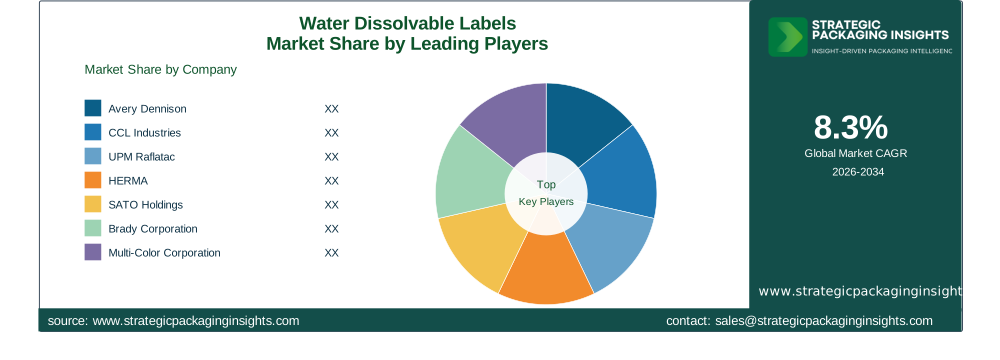
HERMA and SATO Holdings are also prominent players in the Water Dissolvable Labels market, known for their innovative solutions and commitment to sustainability. These companies are leveraging their expertise in label manufacturing to develop eco-friendly products that meet the evolving needs of consumers and businesses. By focusing on sustainability and environmental conservation, they are gaining a competitive edge in the market and attracting a growing customer base.
Brady Corporation and Multi-Color Corporation are other significant players in the market, offering a wide range of labeling solutions for various applications. These companies are known for their high-quality products and customer-centric approach, which have helped them establish a strong presence in the market. They are continuously exploring new opportunities for growth and expansion, particularly in emerging markets where the demand for sustainable labeling solutions is on the rise.
Resource Label Group, General Data, and Weber Packaging are also key contributors to the Water Dissolvable Labels market, providing innovative solutions and exceptional customer service. These companies are focused on expanding their product offerings and enhancing their distribution networks to reach a wider audience. By collaborating with other industry players and investing in advanced technologies, they are positioning themselves as leaders in the market and driving the adoption of water dissolvable labels across various sectors.
Key Highlights
- The Water Dissolvable Labels market is projected to grow at a CAGR of 8.3% from 2026 to 2034.
- Increasing demand for eco-friendly and sustainable labeling solutions is driving market growth.
- Technological advancements in label materials and adhesive formulations are enhancing product performance.
- The foodservice and healthcare sectors are key application areas for water dissolvable labels.
- Higher cost compared to traditional labels is a significant challenge for market expansion.
- Stringent regulatory standards and compliance requirements pose challenges for manufacturers.
- Key players are focusing on product innovation and strategic partnerships to strengthen their market position.
- Emerging markets offer significant growth opportunities for water dissolvable labels.
- Companies are investing in research and development to reduce production costs and improve accessibility.
Top Countries Insights
In the United States, the Water Dissolvable Labels market is experiencing robust growth, driven by the increasing demand for sustainable labeling solutions in the foodservice and healthcare sectors. The market size in the U.S. is substantial, with a CAGR of 7%, supported by favorable government policies promoting environmental conservation and waste reduction. The presence of key market players and technological advancements in label materials further contribute to the market's expansion.
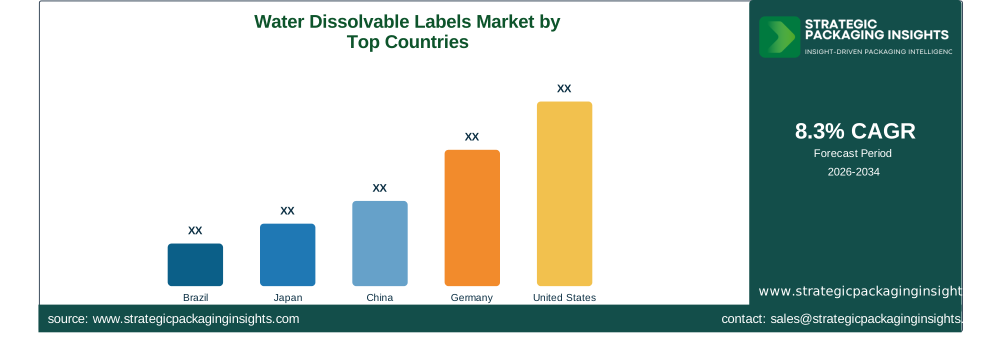
Germany is another significant market for water dissolvable labels, with a strong emphasis on sustainability and eco-friendly practices. The market in Germany is growing at a CAGR of 6%, driven by the increasing adoption of water dissolvable labels in the logistics and reusable packaging sectors. The country's stringent regulatory standards and focus on environmental conservation are key growth drivers, encouraging businesses to adopt sustainable labeling solutions.
In China, the Water Dissolvable Labels market is witnessing rapid growth, with a CAGR of 10%. The country's booming logistics industry and increasing awareness about environmental issues are driving the demand for water dissolvable labels. Government initiatives promoting sustainable practices and the presence of a large consumer base further support market growth in China.
Japan is also a key market for water dissolvable labels, with a CAGR of 5%. The country's advanced technology infrastructure and focus on innovation are driving the adoption of water dissolvable labels in various industries. The healthcare sector, in particular, is a significant contributor to market growth, with increasing demand for hygienic and sustainable labeling solutions.
In Brazil, the Water Dissolvable Labels market is growing at a CAGR of 8%, driven by the increasing demand for eco-friendly labeling solutions in the foodservice and logistics sectors. The country's focus on sustainability and environmental conservation, along with favorable government policies, are key growth drivers for the market.
Water Dissolvable Labels Market Segments Insights

Label Type Analysis
The Water Dissolvable Labels market is segmented by label type into paper dissolvable labels, film dissolvable labels, and adhesive dissolvable labels. Paper dissolvable labels are widely used due to their cost-effectiveness and ease of use. They are particularly popular in the foodservice industry, where they are used for labeling reusable containers and packaging. Film dissolvable labels, on the other hand, offer superior durability and are preferred in applications where the labels need to withstand harsh conditions. Adhesive dissolvable labels are gaining traction due to their versatility and ability to adhere to various surfaces, making them suitable for a wide range of applications.
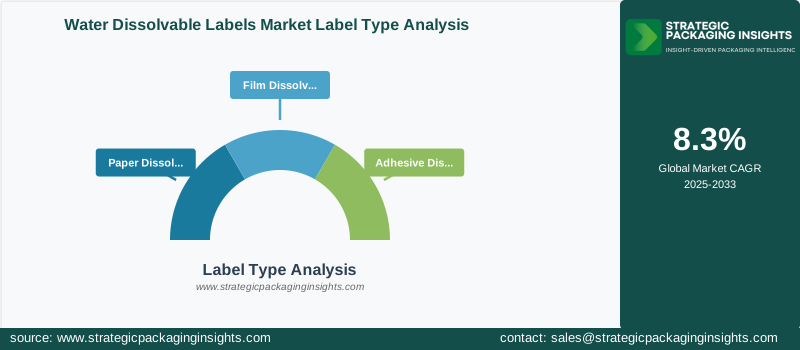
The demand for film dissolvable labels is expected to grow significantly during the forecast period, driven by the increasing need for durable and reliable labeling solutions in the logistics and healthcare sectors. These labels offer enhanced performance and can withstand exposure to moisture and varying temperatures, making them ideal for use in challenging environments. Additionally, advancements in adhesive technologies are further boosting the adoption of adhesive dissolvable labels, as they provide strong adhesion while still being easily removable when exposed to water.
Application Analysis
The application segment of the Water Dissolvable Labels market includes reusable containers, foodservice, healthcare, and logistics. The foodservice industry is a major application area for water dissolvable labels, as they are used for labeling food containers and packaging. These labels help in maintaining hygiene and reducing waste, which are critical considerations in the foodservice sector. The healthcare industry is also a significant contributor to market growth, with increasing demand for hygienic and sustainable labeling solutions for medical equipment and supplies.
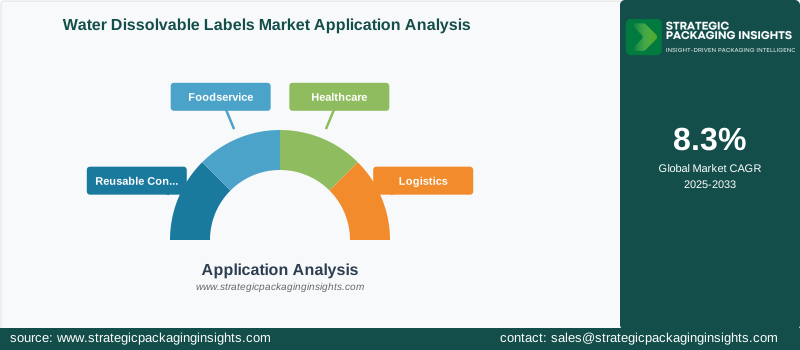
The logistics sector is witnessing a growing adoption of water dissolvable labels, driven by the need for efficient and eco-friendly labeling solutions. These labels help in streamlining operations and reducing environmental impact, making them an attractive option for logistics companies. The reusable packaging industry is also a key application area, as water dissolvable labels offer a convenient and sustainable solution for labeling reusable containers and packaging.
Adhesive Type Analysis
The Water Dissolvable Labels market is segmented by adhesive type into water-soluble adhesive and removable adhesive. Water-soluble adhesives are widely used in the market due to their ability to dissolve completely in water, leaving no residue. This characteristic makes them ideal for applications in the foodservice and healthcare sectors, where hygiene and waste reduction are critical considerations. Removable adhesives, on the other hand, offer the advantage of easy removal without leaving any residue, making them suitable for applications where labels need to be frequently changed or updated.
The demand for water-soluble adhesives is expected to grow significantly during the forecast period, driven by the increasing emphasis on sustainability and environmental conservation. These adhesives offer a compelling solution for businesses looking to reduce their environmental impact and adopt eco-friendly practices. Additionally, advancements in adhesive technologies are further boosting the adoption of removable adhesives, as they provide strong adhesion while still being easily removable when needed.
End Use Analysis
The end-use segment of the Water Dissolvable Labels market includes restaurants, hospitals, and reusable packaging operators. Restaurants are a major end-user of water dissolvable labels, as they are used for labeling food containers and packaging. These labels help in maintaining hygiene and reducing waste, which are critical considerations in the foodservice industry. Hospitals are also a significant contributor to market growth, with increasing demand for hygienic and sustainable labeling solutions for medical equipment and supplies.
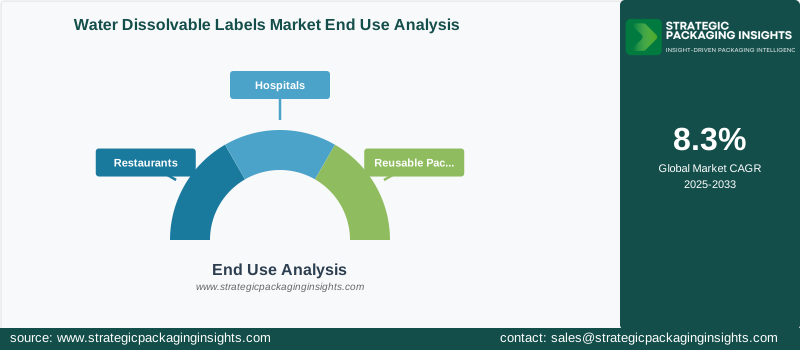
The reusable packaging industry is witnessing a growing adoption of water dissolvable labels, driven by the need for efficient and eco-friendly labeling solutions. These labels offer a convenient and sustainable solution for labeling reusable containers and packaging, making them an attractive option for reusable packaging operators. The increasing emphasis on sustainability and environmental conservation is further boosting the demand for water dissolvable labels in this segment.
Water Dissolvable Labels Market Segments
The Water Dissolvable Labels market has been segmented on the basis ofLabel Type
- Paper Dissolvable Labels
- Film Dissolvable Labels
- Adhesive Dissolvable Labels
Application
- Reusable Containers
- Foodservice
- Healthcare
- Logistics
Adhesive Type
- Water-Soluble Adhesive
- Removable Adhesive
End Use
- Restaurants
- Hospitals
- Reusable Packaging Operators
Region
- Asia Pacific
- North America
- Latin America
- Europe
- Middle East & Africa




