


Unidirectional Tape Market Outlook
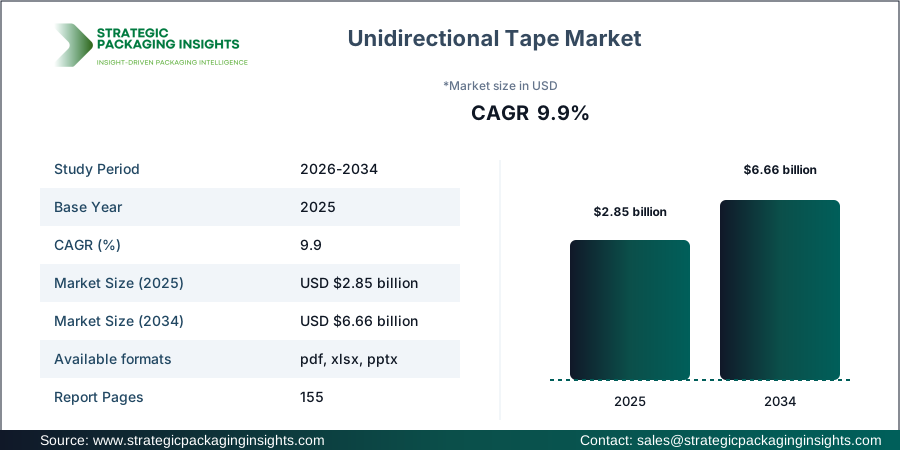
The Unidirectional Tape market was valued at $2.85 billion in 2025 and is projected to reach $6.66 billion by 2034, growing at a CAGR of 9.9% during the forecast period 2026-2034. This market is experiencing significant growth due to the increasing demand for lightweight and high-strength materials across various industries. The aerospace and automotive sectors are particularly driving the demand for unidirectional tapes, as these materials contribute to fuel efficiency and performance enhancement. Additionally, the energy sector is adopting these tapes for wind turbine blades, further propelling market growth. The market's expansion is also supported by advancements in manufacturing technologies and the development of new resin systems that enhance the performance characteristics of unidirectional tapes.
Despite the promising growth trajectory, the Unidirectional Tape market faces certain challenges. Regulatory constraints related to environmental concerns and the high cost of raw materials are potential restrainers. However, the market holds substantial growth potential due to the increasing focus on sustainable and eco-friendly materials. Innovations in recycling processes and the development of bio-based resins are expected to mitigate some of these challenges. Furthermore, the growing trend of electric vehicles and renewable energy projects presents lucrative opportunities for market players to expand their product offerings and capture new customer segments.
Report Scope
| Attributes | Details |
| Report Title | Unidirectional Tape Market Size, Future Growth and Forecast 2034 |
| Fiber Type | Carbon Fiber UD Tape, Glass Fiber UD Tape, Aramid UD Tape |
| Resin Type | Thermoplastic, Thermoset |
| Application | Aerospace, Automotive, Energy, Industrial |
| End Use | OEMs, Composite Fabricators, Defense |
| Region | Asia Pacific, North America, Latin America, Europe, Middle East & Africa |
| Base Year | 2025 |
| Historic Period | 2018-2024 |
| Forecast Period | 2026-2034 |
| Number of Pages | 155 |
| Customization Available | Yes* |
Opportunities & Threats
The Unidirectional Tape market presents numerous opportunities, particularly in the aerospace and automotive industries. As these sectors strive for greater fuel efficiency and reduced emissions, the demand for lightweight materials like unidirectional tapes is expected to surge. The aerospace industry, in particular, is witnessing a shift towards composite materials for aircraft manufacturing, which is anticipated to drive the market significantly. Additionally, the automotive sector's transition towards electric vehicles offers a promising avenue for growth, as manufacturers seek materials that can enhance vehicle performance while reducing weight.
Another opportunity lies in the energy sector, where unidirectional tapes are increasingly used in the production of wind turbine blades. The global push towards renewable energy sources is expected to boost the demand for these tapes, as they offer superior strength-to-weight ratios and durability. Moreover, the industrial sector's adoption of advanced materials for various applications, including construction and infrastructure, is likely to contribute to market expansion. The development of new resin systems and manufacturing technologies further enhances the potential for innovation and product differentiation in this market.
However, the market is not without its threats. One of the primary restrainers is the high cost associated with the production of unidirectional tapes, which can limit their adoption, especially in cost-sensitive industries. Additionally, regulatory challenges related to environmental sustainability and waste management pose significant hurdles. The industry must navigate these challenges by investing in research and development to create cost-effective and eco-friendly solutions. Companies that can successfully address these issues are likely to gain a competitive edge in the market.
Drivers & Challenges
The Unidirectional Tape market is driven by several key factors, including the increasing demand for lightweight and high-performance materials in various industries. The aerospace sector, in particular, is a major driver, as manufacturers seek to reduce aircraft weight to improve fuel efficiency and performance. The automotive industry is also a significant contributor, with the growing trend towards electric vehicles necessitating the use of advanced materials to enhance vehicle range and efficiency. Additionally, the energy sector's focus on renewable sources, such as wind energy, is driving the demand for unidirectional tapes in the production of wind turbine blades.
Technological advancements in manufacturing processes and the development of new resin systems are further propelling market growth. These innovations enable the production of unidirectional tapes with enhanced properties, such as improved strength, durability, and resistance to environmental factors. The increasing adoption of automation and digitalization in manufacturing processes is also contributing to market expansion by improving production efficiency and reducing costs. As a result, the market is witnessing a surge in demand from various end-use industries, including aerospace, automotive, energy, and industrial sectors.
Despite the positive drivers, the Unidirectional Tape market faces several challenges. One of the primary challenges is the high cost of raw materials, which can impact the overall production cost and limit market growth. Additionally, regulatory constraints related to environmental sustainability and waste management pose significant hurdles for manufacturers. The industry must address these challenges by investing in research and development to create cost-effective and eco-friendly solutions. Companies that can successfully navigate these challenges are likely to gain a competitive advantage in the market.
Market Share Analysis
The competitive landscape of the Unidirectional Tape market is characterized by the presence of several key players, each striving to enhance their market position through strategic initiatives such as mergers, acquisitions, and partnerships. Toray Industries, a leading player in the market, holds a significant share due to its extensive product portfolio and strong presence in the aerospace and automotive sectors. Hexcel, another major player, is known for its innovative solutions and focus on research and development, which has enabled it to capture a substantial market share.

SGL Carbon is a prominent player in the market, leveraging its expertise in carbon fiber technology to offer high-performance unidirectional tapes. Teijin, with its strong focus on sustainability and eco-friendly solutions, has gained a competitive edge in the market. Solvay, a key player in the resin segment, is known for its advanced resin systems that enhance the performance characteristics of unidirectional tapes. SABIC and Covestro are also significant players, offering a wide range of products catering to various end-use industries.
Mitsubishi Chemical, Avient, and Celanese are other notable players in the market, each contributing to the competitive landscape through their innovative product offerings and strategic initiatives. These companies are focused on expanding their product portfolios and enhancing their market presence through collaborations and partnerships. The competitive landscape is further intensified by the entry of new players and the increasing focus on research and development to create cost-effective and high-performance solutions.
Overall, the Unidirectional Tape market is highly competitive, with key players continuously striving to enhance their market position through strategic initiatives and innovative product offerings. The market is characterized by a strong focus on research and development, with companies investing heavily in new technologies and materials to meet the evolving demands of various end-use industries. As the market continues to grow, companies that can successfully navigate the challenges and capitalize on the opportunities are likely to gain a competitive advantage.
Key Highlights
- The Unidirectional Tape market is projected to grow at a CAGR of 9.9% from 2026 to 2034.
- The market is driven by the increasing demand for lightweight and high-performance materials in the aerospace and automotive industries.
- Technological advancements in manufacturing processes and resin systems are enhancing the performance characteristics of unidirectional tapes.
- The energy sector's focus on renewable sources is driving the demand for unidirectional tapes in wind turbine blade production.
- Regulatory constraints and high raw material costs are potential challenges for market growth.
- Key players in the market include Toray Industries, Hexcel, SGL Carbon, Teijin, Solvay, SABIC, Covestro, Mitsubishi Chemical, Avient, and Celanese.
- The market is characterized by a strong focus on research and development and strategic initiatives such as mergers, acquisitions, and partnerships.
Top Countries Insights
In the Unidirectional Tape market, the United States holds a significant position, with a market size of approximately $1.2 billion and a CAGR of 10%. The country's strong aerospace and automotive industries drive the demand for unidirectional tapes, as manufacturers seek lightweight materials to enhance fuel efficiency and performance. Government policies supporting renewable energy projects further boost the market, particularly in the wind energy sector.
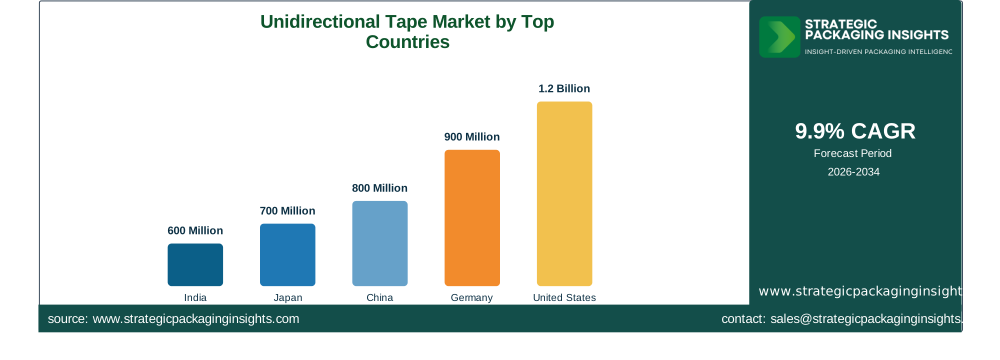
Germany is another key player in the market, with a market size of around $900 million and a CAGR of 9%. The country's robust automotive industry, coupled with its focus on sustainability and innovation, drives the demand for advanced materials like unidirectional tapes. The government's emphasis on reducing carbon emissions and promoting electric vehicles further supports market growth.
China, with a market size of approximately $800 million and a CAGR of 12%, is a rapidly growing market for unidirectional tapes. The country's expanding aerospace and automotive sectors, along with its focus on renewable energy, drive the demand for these materials. Government initiatives to promote domestic manufacturing and reduce reliance on imports further contribute to market expansion.
Japan, with a market size of around $700 million and a CAGR of 8%, is a significant market for unidirectional tapes. The country's advanced manufacturing capabilities and focus on innovation drive the demand for high-performance materials. The automotive and aerospace industries are key contributors to market growth, supported by government policies promoting technological advancements.
India, with a market size of approximately $600 million and a CAGR of 11%, is an emerging market for unidirectional tapes. The country's growing industrial sector and increasing focus on renewable energy projects drive the demand for these materials. Government initiatives to promote domestic manufacturing and infrastructure development further support market growth.
Unidirectional Tape Market Segments Insights

Fiber Type Analysis
The Unidirectional Tape market is segmented by fiber type into carbon fiber UD tape, glass fiber UD tape, and aramid UD tape. Carbon fiber UD tapes are highly sought after due to their superior strength-to-weight ratio, making them ideal for aerospace and automotive applications. The demand for carbon fiber UD tapes is driven by the need for lightweight materials that enhance fuel efficiency and performance. Glass fiber UD tapes, on the other hand, are favored for their cost-effectiveness and versatility, making them suitable for a wide range of industrial applications. Aramid UD tapes are known for their exceptional impact resistance and are primarily used in defense and protective gear applications.

The competition within the fiber type segment is intense, with key players focusing on product innovation and technological advancements to gain a competitive edge. Companies are investing in research and development to create high-performance fiber types that meet the evolving demands of various industries. The growing trend towards sustainable and eco-friendly materials is also influencing the development of new fiber types, with manufacturers exploring bio-based and recyclable options to cater to environmentally conscious consumers.
Resin Type Analysis
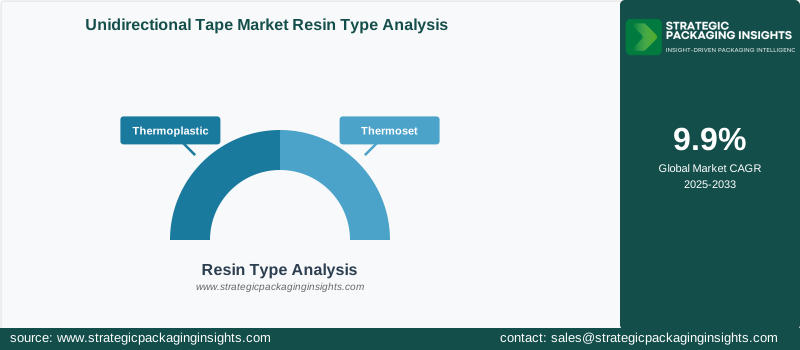
The resin type segment of the Unidirectional Tape market is divided into thermoplastic and thermoset resins. Thermoplastic resins are gaining popularity due to their recyclability and ease of processing, making them an attractive option for industries focused on sustainability. The demand for thermoplastic resins is driven by their ability to be reshaped and reformed, allowing for greater design flexibility and cost savings in manufacturing processes. Thermoset resins, known for their superior mechanical properties and thermal stability, are widely used in applications requiring high strength and durability, such as aerospace and automotive components.
Manufacturers in the resin type segment are focusing on developing advanced resin systems that enhance the performance characteristics of unidirectional tapes. The competition is fierce, with companies striving to create innovative resin solutions that offer improved strength, durability, and resistance to environmental factors. The growing emphasis on sustainability is also driving the development of bio-based and recyclable resin systems, as manufacturers seek to reduce their environmental footprint and meet the demands of eco-conscious consumers.
Application Analysis
The application segment of the Unidirectional Tape market includes aerospace, automotive, energy, and industrial applications. The aerospace sector is a major driver of market growth, as manufacturers increasingly adopt unidirectional tapes to reduce aircraft weight and improve fuel efficiency. The automotive industry is also a significant contributor, with the growing trend towards electric vehicles necessitating the use of lightweight materials to enhance vehicle range and performance. The energy sector's focus on renewable sources, such as wind energy, is driving the demand for unidirectional tapes in the production of wind turbine blades.

In the industrial sector, unidirectional tapes are used in a variety of applications, including construction and infrastructure, where their high strength-to-weight ratio and durability offer significant advantages. The competition within the application segment is intense, with companies focusing on product innovation and technological advancements to meet the evolving demands of various industries. The growing emphasis on sustainability and eco-friendly materials is also influencing the development of new applications for unidirectional tapes, as manufacturers seek to cater to environmentally conscious consumers.
End Use Analysis
The end-use segment of the Unidirectional Tape market is categorized into OEMs, composite fabricators, and defense. OEMs are a major driver of market growth, as they increasingly adopt unidirectional tapes to enhance the performance and efficiency of their products. The demand for unidirectional tapes from OEMs is driven by the need for lightweight materials that offer superior strength and durability. Composite fabricators, on the other hand, are focused on creating innovative solutions that meet the specific requirements of various industries, including aerospace, automotive, and energy.

The defense sector is also a significant contributor to market growth, with unidirectional tapes being used in a variety of applications, including protective gear and military vehicles. The competition within the end-use segment is intense, with companies focusing on product innovation and technological advancements to gain a competitive edge. The growing emphasis on sustainability and eco-friendly materials is also influencing the development of new end-use applications for unidirectional tapes, as manufacturers seek to cater to environmentally conscious consumers.
Unidirectional Tape Market Segments
The Unidirectional Tape market has been segmented on the basis ofFiber Type
- Carbon Fiber UD Tape
- Glass Fiber UD Tape
- Aramid UD Tape
Resin Type
- Thermoplastic
- Thermoset
Application
- Aerospace
- Automotive
- Energy
- Industrial
End Use
- OEMs
- Composite Fabricators
- Defense
Region
- Asia Pacific
- North America
- Latin America
- Europe
- Middle East & Africa




