


Unbleached Softwood Kraft Pulp Market Outlook
The Unbleached Softwood Kraft Pulp market was valued at $21.52 billion in 2025 and is projected to reach $41.76 billion by 2034, growing at a CAGR of 7.6% during the forecast period 2026-2034. This market is witnessing significant growth due to the increasing demand for sustainable and eco-friendly packaging solutions. The rising awareness about environmental conservation and the shift towards biodegradable materials are driving the demand for unbleached softwood kraft pulp. Additionally, the growth in the e-commerce sector and the subsequent rise in demand for packaging materials are further propelling the market. The pulp's superior strength and durability make it a preferred choice for various applications, including kraft paper, linerboard, and specialty paper, which are extensively used in packaging and industrial applications.
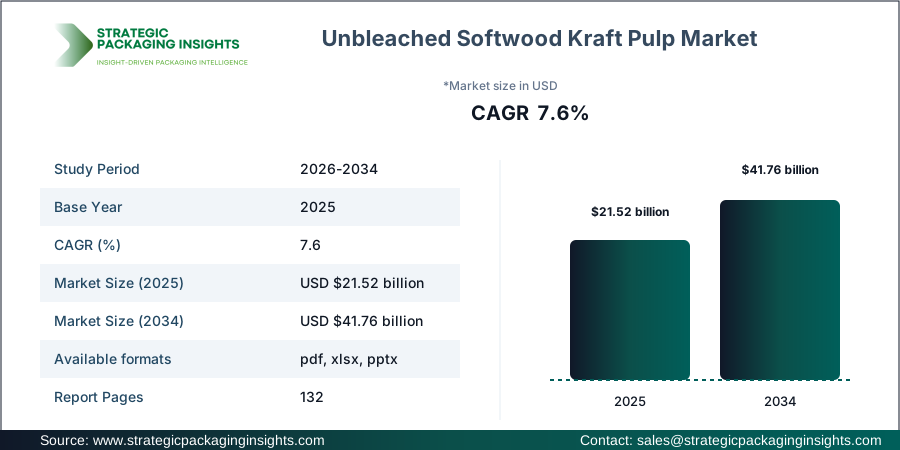
Report Scope
| Attributes | Details |
| Report Title | Unbleached Softwood Kraft Pulp Market Size, Future Growth and Forecast 2034 |
| By Product Type | Northern Softwood Kraft, Southern Softwood Kraft, Unbleached Kraft Pulp |
| By Application | Kraft Paper, Linerboard, Sacks, Specialty Paper |
| By Source | Pine, Spruce, Fir |
| By End Use | Paper Mills, Packaging, Tissue, Industrial Paper |
| Region | Asia Pacific, North America, Latin America, Europe, Middle East & Africa |
| Base Year | 2025 |
| Historic Period | 2018-2024 |
| Forecast Period | 2026-2034 |
| Number of Pages | 132 |
| Customization Available | Yes* |
Opportunities & Threats
The Unbleached Softwood Kraft Pulp market presents numerous opportunities, particularly in the realm of sustainable packaging. As consumers and businesses increasingly prioritize eco-friendly products, the demand for unbleached softwood kraft pulp is expected to rise. This trend is further supported by stringent government regulations aimed at reducing plastic waste and promoting the use of biodegradable materials. The market also benefits from technological advancements in pulp production processes, which enhance the quality and efficiency of the pulp, making it more competitive against alternative materials. Furthermore, the expansion of the e-commerce industry is creating a surge in demand for packaging materials, providing a significant growth opportunity for the market.
Another opportunity lies in the growing demand for specialty papers, which are used in various applications such as printing, writing, and packaging. The unique properties of unbleached softwood kraft pulp, such as its strength and durability, make it an ideal material for producing high-quality specialty papers. Additionally, the increasing focus on sustainable forestry practices and the use of certified wood sources are expected to boost the market's growth. Companies that invest in sustainable sourcing and production processes are likely to gain a competitive edge in the market.
However, the market faces certain threats, including the volatility of raw material prices and the availability of alternative materials. The cost of raw materials, such as wood, can fluctuate due to various factors, including changes in supply and demand dynamics, environmental regulations, and geopolitical tensions. These fluctuations can impact the profitability of pulp manufacturers. Additionally, the availability of alternative materials, such as recycled paper and synthetic fibers, poses a challenge to the market. These materials are often perceived as more cost-effective and environmentally friendly, which can affect the demand for unbleached softwood kraft pulp.
Drivers & Challenges
The primary drivers of the Unbleached Softwood Kraft Pulp market include the increasing demand for sustainable packaging solutions and the growth of the e-commerce industry. As consumers become more environmentally conscious, there is a growing preference for biodegradable and recyclable packaging materials. Unbleached softwood kraft pulp, with its eco-friendly properties, is well-positioned to meet this demand. Additionally, the rapid expansion of the e-commerce sector has led to a surge in demand for packaging materials, further driving the market's growth. The pulp's strength and durability make it an ideal choice for packaging applications, ensuring the safe transportation of goods.
Another significant driver is the advancement in pulp production technologies, which has improved the quality and efficiency of unbleached softwood kraft pulp. These advancements have enabled manufacturers to produce high-quality pulp with reduced environmental impact, making it more competitive against alternative materials. Furthermore, the increasing adoption of sustainable forestry practices and the use of certified wood sources are expected to support the market's growth. Companies that prioritize sustainability in their sourcing and production processes are likely to gain a competitive advantage in the market.
Despite these drivers, the market faces several challenges, including the volatility of raw material prices and the competition from alternative materials. The cost of raw materials, such as wood, can be influenced by various factors, including changes in supply and demand dynamics, environmental regulations, and geopolitical tensions. These fluctuations can impact the profitability of pulp manufacturers. Additionally, the availability of alternative materials, such as recycled paper and synthetic fibers, poses a challenge to the market. These materials are often perceived as more cost-effective and environmentally friendly, which can affect the demand for unbleached softwood kraft pulp.
Market Share Analysis
The Unbleached Softwood Kraft Pulp market is characterized by a competitive landscape with several key players dominating the market. International Paper, Canfor, West Fraser, Mercer International, Domtar, UPM, Stora Enso, Sappi, Suzano, and Arauco are some of the major companies operating in this market. These companies have established a strong presence in the market through strategic initiatives such as mergers and acquisitions, partnerships, and collaborations. They are also investing in research and development to enhance their product offerings and improve their production processes.
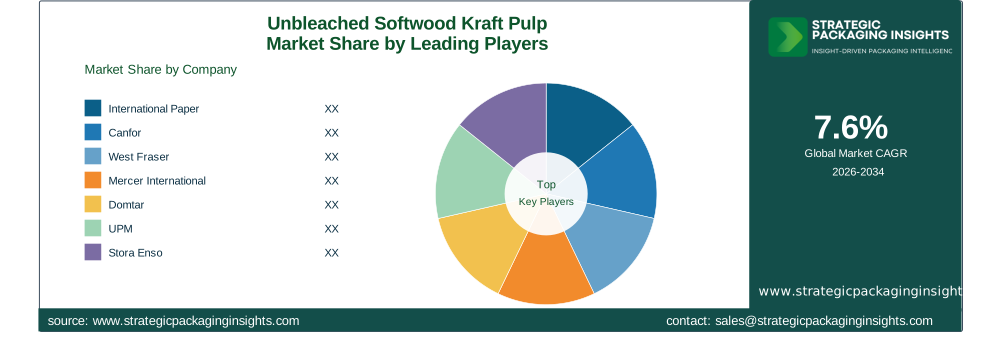
International Paper is one of the leading players in the market, known for its extensive product portfolio and strong distribution network. The company focuses on sustainable sourcing and production practices, which has helped it maintain a competitive edge in the market. Canfor and West Fraser are also prominent players, with a strong focus on innovation and sustainability. These companies have invested in advanced technologies to improve the quality and efficiency of their pulp production processes.
Mercer International and Domtar are other key players in the market, known for their commitment to sustainability and environmental conservation. These companies have adopted sustainable forestry practices and use certified wood sources to produce high-quality pulp. UPM and Stora Enso are also significant players, with a strong focus on research and development. They are continuously investing in new technologies to enhance their product offerings and meet the evolving demands of the market.
Sappi, Suzano, and Arauco are other notable players in the market, known for their extensive product portfolios and strong market presence. These companies have established a robust distribution network and are continuously expanding their operations to cater to the growing demand for unbleached softwood kraft pulp. They are also investing in sustainable sourcing and production practices to maintain their competitive edge in the market.
Key Highlights
- The Unbleached Softwood Kraft Pulp market is projected to grow at a CAGR of 7.6% from 2026 to 2034.
- The market is driven by the increasing demand for sustainable and eco-friendly packaging solutions.
- Technological advancements in pulp production processes are enhancing the quality and efficiency of the pulp.
- The growth of the e-commerce industry is creating a surge in demand for packaging materials.
- Stringent government regulations are promoting the use of biodegradable materials.
- The market faces challenges such as the volatility of raw material prices and competition from alternative materials.
- Key players in the market include International Paper, Canfor, West Fraser, Mercer International, Domtar, UPM, Stora Enso, Sappi, Suzano, and Arauco.
Top Countries Insights
In the Unbleached Softwood Kraft Pulp market, the United States holds a significant share, driven by the strong demand for sustainable packaging solutions and the growth of the e-commerce industry. The market in the U.S. is expected to grow at a CAGR of 6%, supported by favorable government regulations promoting the use of biodegradable materials. Additionally, the presence of major players such as International Paper and Domtar further strengthens the market.
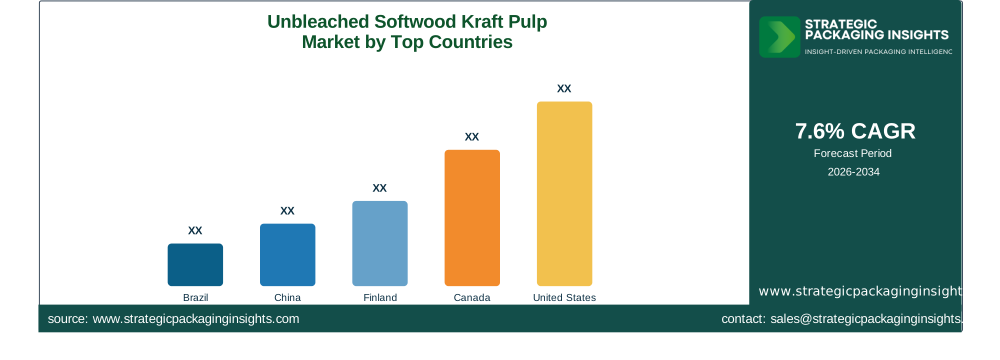
Canada is another key market for unbleached softwood kraft pulp, with a CAGR of 5%. The country's abundant forest resources and strong focus on sustainable forestry practices contribute to the market's growth. Companies like Canfor and West Fraser are leading players in the Canadian market, known for their commitment to sustainability and innovation.
In Europe, countries like Finland and Sweden are prominent markets for unbleached softwood kraft pulp, with a CAGR of 4%. The region's strong emphasis on environmental conservation and sustainable sourcing practices drives the demand for eco-friendly packaging materials. Companies such as UPM and Stora Enso are key players in the European market, known for their extensive product portfolios and strong market presence.
China is a rapidly growing market for unbleached softwood kraft pulp, with a CAGR of 8%. The country's booming e-commerce industry and increasing focus on sustainable packaging solutions are driving the market's growth. The Chinese government's initiatives to reduce plastic waste and promote the use of biodegradable materials further support the market.
Brazil is another significant market, with a CAGR of 7%. The country's abundant forest resources and strong focus on sustainable forestry practices contribute to the market's growth. Companies like Suzano and Arauco are leading players in the Brazilian market, known for their commitment to sustainability and innovation.
Unbleached Softwood Kraft Pulp Market Segments Insights

Product Type Analysis
The Unbleached Softwood Kraft Pulp market is segmented by product type into northern softwood kraft, southern softwood kraft, and unbleached kraft pulp. Northern softwood kraft pulp is known for its superior strength and durability, making it a preferred choice for high-quality packaging applications. The demand for northern softwood kraft pulp is driven by the increasing need for sustainable and eco-friendly packaging solutions. Southern softwood kraft pulp, on the other hand, is favored for its cost-effectiveness and versatility, making it suitable for a wide range of applications, including kraft paper and linerboard. The unbleached kraft pulp segment is gaining traction due to its environmental benefits and the growing preference for biodegradable materials.
The market for northern softwood kraft pulp is expected to witness significant growth, driven by the increasing demand for high-quality packaging materials in the e-commerce sector. The pulp's superior strength and durability make it an ideal choice for packaging applications, ensuring the safe transportation of goods. Southern softwood kraft pulp is also expected to grow, supported by its cost-effectiveness and versatility. The unbleached kraft pulp segment is anticipated to experience robust growth, driven by the rising awareness about environmental conservation and the shift towards biodegradable materials.
Application Analysis
The Unbleached Softwood Kraft Pulp market is segmented by application into kraft paper, linerboard, sacks, and specialty paper. Kraft paper is one of the largest segments, driven by the increasing demand for sustainable packaging solutions. The pulp's strength and durability make it an ideal material for producing high-quality kraft paper, which is extensively used in packaging applications. Linerboard is another significant segment, supported by the growth of the e-commerce industry and the subsequent rise in demand for packaging materials. The demand for sacks and specialty paper is also growing, driven by the increasing focus on eco-friendly and biodegradable materials.
The kraft paper segment is expected to witness significant growth, driven by the increasing demand for sustainable packaging solutions in the e-commerce sector. The pulp's superior strength and durability make it an ideal choice for producing high-quality kraft paper, ensuring the safe transportation of goods. The linerboard segment is also expected to grow, supported by the growth of the e-commerce industry and the subsequent rise in demand for packaging materials. The demand for sacks and specialty paper is anticipated to increase, driven by the rising awareness about environmental conservation and the shift towards biodegradable materials.
Source Analysis
The Unbleached Softwood Kraft Pulp market is segmented by source into pine, spruce, and fir. Pine is one of the most commonly used sources for producing unbleached softwood kraft pulp, known for its strength and durability. The demand for pine-based pulp is driven by the increasing need for high-quality packaging materials in the e-commerce sector. Spruce is another significant source, favored for its cost-effectiveness and versatility. The demand for spruce-based pulp is supported by its wide range of applications, including kraft paper and linerboard. Fir is also used as a source for producing unbleached softwood kraft pulp, known for its environmental benefits and the growing preference for biodegradable materials.
The market for pine-based pulp is expected to witness significant growth, driven by the increasing demand for high-quality packaging materials in the e-commerce sector. The pulp's superior strength and durability make it an ideal choice for packaging applications, ensuring the safe transportation of goods. Spruce-based pulp is also expected to grow, supported by its cost-effectiveness and versatility. The demand for fir-based pulp is anticipated to increase, driven by the rising awareness about environmental conservation and the shift towards biodegradable materials.
End Use Analysis
The Unbleached Softwood Kraft Pulp market is segmented by end use into paper mills, packaging, tissue, and industrial paper. Paper mills are one of the largest segments, driven by the increasing demand for sustainable and eco-friendly packaging solutions. The pulp's strength and durability make it an ideal material for producing high-quality paper products, which are extensively used in packaging applications. The packaging segment is another significant segment, supported by the growth of the e-commerce industry and the subsequent rise in demand for packaging materials. The demand for tissue and industrial paper is also growing, driven by the increasing focus on eco-friendly and biodegradable materials.
The paper mills segment is expected to witness significant growth, driven by the increasing demand for sustainable and eco-friendly packaging solutions in the e-commerce sector. The pulp's superior strength and durability make it an ideal choice for producing high-quality paper products, ensuring the safe transportation of goods. The packaging segment is also expected to grow, supported by the growth of the e-commerce industry and the subsequent rise in demand for packaging materials. The demand for tissue and industrial paper is anticipated to increase, driven by the rising awareness about environmental conservation and the shift towards biodegradable materials.
Unbleached Softwood Kraft Pulp Market Segments
The Unbleached Softwood Kraft Pulp market has been segmented on the basis ofBy Product Type
- Northern Softwood Kraft
- Southern Softwood Kraft
- Unbleached Kraft Pulp
By Application
- Kraft Paper
- Linerboard
- Sacks
- Specialty Paper
By Source
- Pine
- Spruce
- Fir
By End Use
- Paper Mills
- Packaging
- Tissue
- Industrial Paper
Region
- Asia Pacific
- North America
- Latin America
- Europe
- Middle East & Africa




